TL;DR:
- Proper gutters and downspouts are essential to protect homes from rainwater damage and soil erosion.
- Discharging water 5-10 feet from the foundation prevents hydrostatic pressure and foundation cracking.
- Regular maintenance and correct sizing are vital to ensure effective water drainage and avoid costly repairs.
Most homeowners in Lake, Marion, and Sumter counties assume that once gutters are in place, their home is protected from rain damage. That assumption is costly. Gutters collect water, but without downspouts to carry it away, all that water has nowhere to go except straight down your exterior walls and into the soil around your foundation. Central Florida averages over 50 inches of rain per year, making proper water discharge not just helpful but essential. This article breaks down how gutters and downspouts work together, what happens when downspouts are missing or misplaced, and exactly what you should do to protect your home.
Table of Contents
- The role of gutters and downspouts explained
- Risks of gutter systems without downspouts
- How to size and place downspouts for Central Florida homes
- Maintenance tips and common mistakes with downspouts
- The uncomfortable truth most experts won’t tell you about gutter systems
- Protect your home with expert gutter solutions
- Frequently asked questions
Key Takeaways
| Point | Details |
|---|---|
| Downspouts prevent damage | Directing water away from your foundation is vital to avoiding cracks and mold. |
| Proper placement matters | Downspouts must discharge water at least 5-10 feet from your home for best protection. |
| Maintenance is essential | Routine cleaning and inspection keep gutters and downspouts working effectively. |
| Florida codes aren’t enough | Meeting code minimums may leave your home vulnerable, so proactive upgrades are smart. |
| Custom solutions available | Local experts can help tailor gutter and downspout systems for Central Florida’s rainfall. |
The role of gutters and downspouts explained
Gutters and downspouts are two halves of the same system. Neither works properly without the other, yet many homeowners treat them as separate concerns. Understanding how they work together is the first step toward real foundation protection.
Gutters are the horizontal channels attached along your roofline. Their job is to catch rainwater as it runs off your roof and channel it toward a controlled exit point. Without gutters, rain falls freely off the edge of your roof, splashing against your siding, saturating the soil directly beside your foundation, and slowly eroding the ground beneath your home.
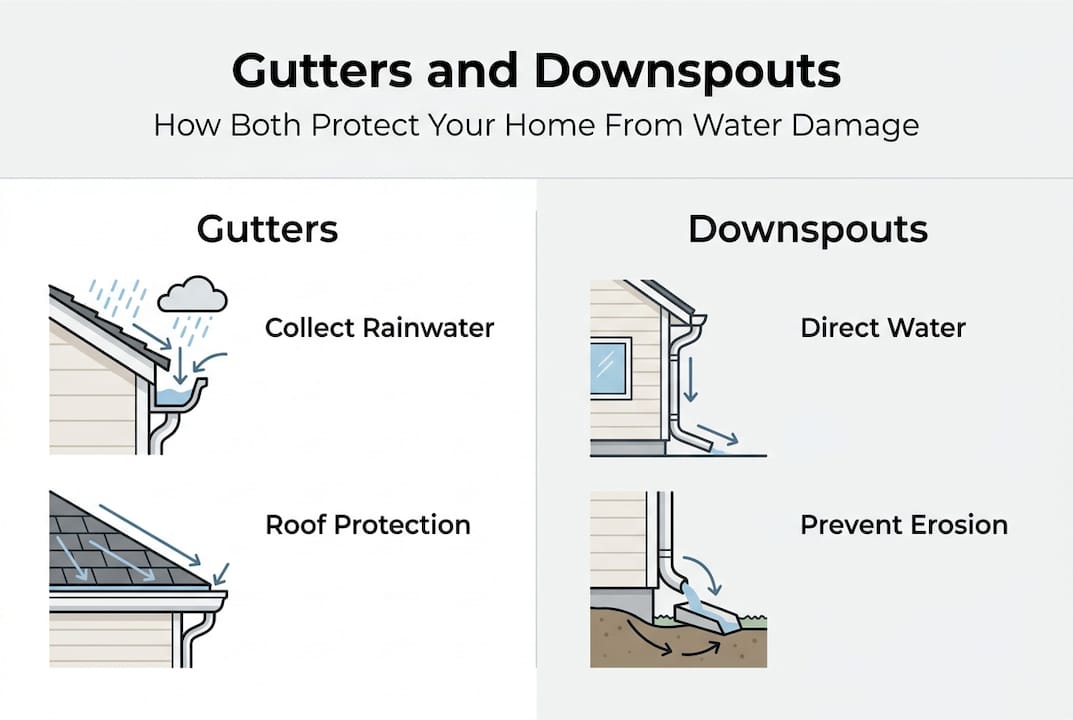
Downspouts are the vertical pipes that carry water from the gutters down to ground level. They are the exit ramp. Once water reaches the bottom of a downspout, it needs to travel far enough from your home to avoid causing damage. Downspouts must discharge water 5-10 feet from the foundation to avoid hydrostatic pressure, soil erosion, and crawlspace flooding. Hydrostatic pressure is the force water exerts against your foundation walls when it saturates the surrounding soil, and it can crack concrete over time.
Here is a quick breakdown of what each component handles:
- Gutters catch and channel roof runoff horizontally
- Downspouts move that water vertically to ground level
- Extensions or underground lines carry water safely away from the structure
- Splash blocks or drain tiles disperse water at the discharge point
The table below shows how each component contributes to your home’s water management:
| Component | Primary function | Failure result |
|---|---|---|
| Gutters | Collect roof runoff | Water cascades down walls |
| Downspouts | Carry water to ground | Pooling at foundation |
| Extensions | Move water away from home | Soil erosion near base |
| Splash blocks | Disperse discharge water | Concentrated ground saturation |
For installing downspouts correctly, placement matters just as much as the hardware itself. A downspout positioned too close to a corner, or one that terminates right at the foundation, creates more risk than having no downspout at all.
Pro Tip: After every major storm, walk your property and check where water is pooling. If you see standing water within 3 feet of your home, your downspout placement or extension length needs attention.
Risks of gutter systems without downspouts
When downspouts are missing, too short, or pointed in the wrong direction, the consequences build slowly and invisibly. By the time most homeowners notice a problem, the damage is already expensive.
Here is how damage typically progresses without proper drainage:
- Rainwater pools near the foundation during and after storms
- Soil becomes saturated, losing its ability to support the structure
- Hydrostatic pressure builds against foundation walls
- Cracks form in the foundation or crawlspace walls
- Moisture enters the home, creating conditions for mold and wood rot
- Landscaping erodes, exposing roots and destabilizing the yard
The comparison below shows the real-world difference between homes with and without proper downspout drainage:
| Issue | Home with proper downspouts | Home without proper downspouts |
|---|---|---|
| Foundation condition | Stable, dry soil around base | Saturated soil, cracking risk |
| Crawlspace moisture | Controlled | High humidity, mold risk |
| Landscaping | Intact, gradual water absorption | Erosion channels, bare soil |
| Exterior walls | Clean, minimal splash damage | Staining, paint peeling |
| Long-term repair costs | Low | Potentially thousands of dollars |
The Florida Building Code does not universally require gutters or downspouts on residential homes unless specific conditions like expansive soils or short overhangs are present. That means your home could be fully code-compliant and still be at serious risk. Code minimums are not the same as adequate protection.
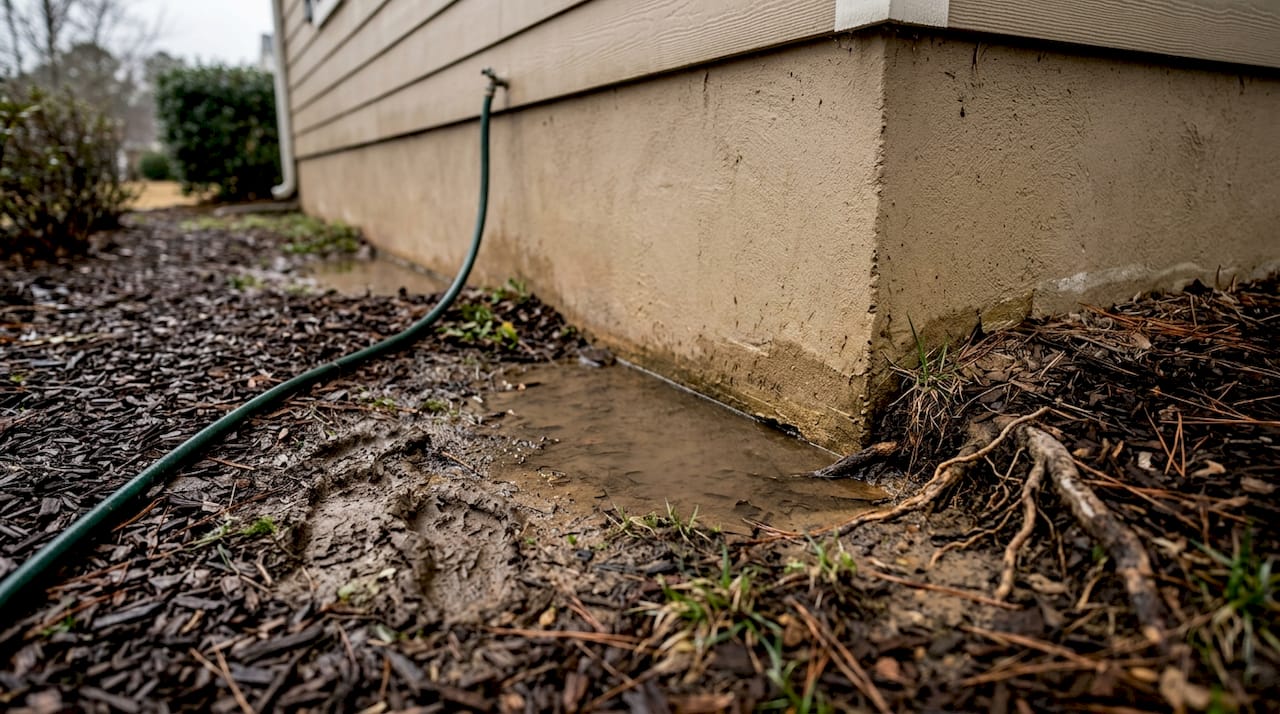
In Central Florida, where summer storms can drop several inches of rain in under an hour, reducing soil erosion around your foundation is not optional. And preventing water damage starts with making sure every drop that hits your roof has a clear, controlled path away from your home. Downspouts that discharge water at least 5-10 feet from the foundation are the baseline standard for avoiding hydrostatic pressure and crawlspace flooding.
How to size and place downspouts for Central Florida homes
Getting the sizing right is where most DIY gutter projects fall short. Too few downspouts, or ones that are too narrow, and your gutters overflow during heavy rain. Proper sizing is based on your roof’s square footage and your local rainfall intensity.
Here is a step-by-step approach to sizing and placing downspouts for a Central Florida home:
- Measure your roof area by multiplying the length by the width of each roof section
- Use NOAA rainfall data to find your area’s design storm intensity (inches per hour)
- Calculate water flow using the formula: roof area x rainfall intensity divided by 96
- Select gutter size based on flow volume (most Central Florida homes use 5-inch or 6-inch gutters)
- Add downspouts at a ratio of one downspout per 20-30 linear feet of gutter
- Position downspouts at low points in the gutter run and away from entry doors or windows
Proper sizing per rainfall intensity using NOAA design storm data is the advised standard for real protection in Florida’s climate.
Here are Florida-specific placement best practices to follow:
- Place downspouts at corners where two roof sections meet, since water converges there
- Avoid discharging near AC units, utility meters, or septic system access points
- Use underground drain lines in areas where surface extensions would create trip hazards
- Angle splash blocks away from the home at a minimum 6-inch drop over 10 feet
- Consider gutter drainage upgrades if your yard has poor natural drainage or flat topography
Pro Tip: Underground drain lines connected to your downspouts are one of the best investments in storm-prone areas like Lake and Marion counties. They eliminate surface pooling entirely and protect your landscaping during heavy rain events.
If you are unsure whether your current setup meets Florida industry standards, a professional inspection can identify gaps before the next storm season. And reviewing home protection solutions specific to your county can help you make smarter upgrade decisions.
Maintenance tips and common mistakes with downspouts
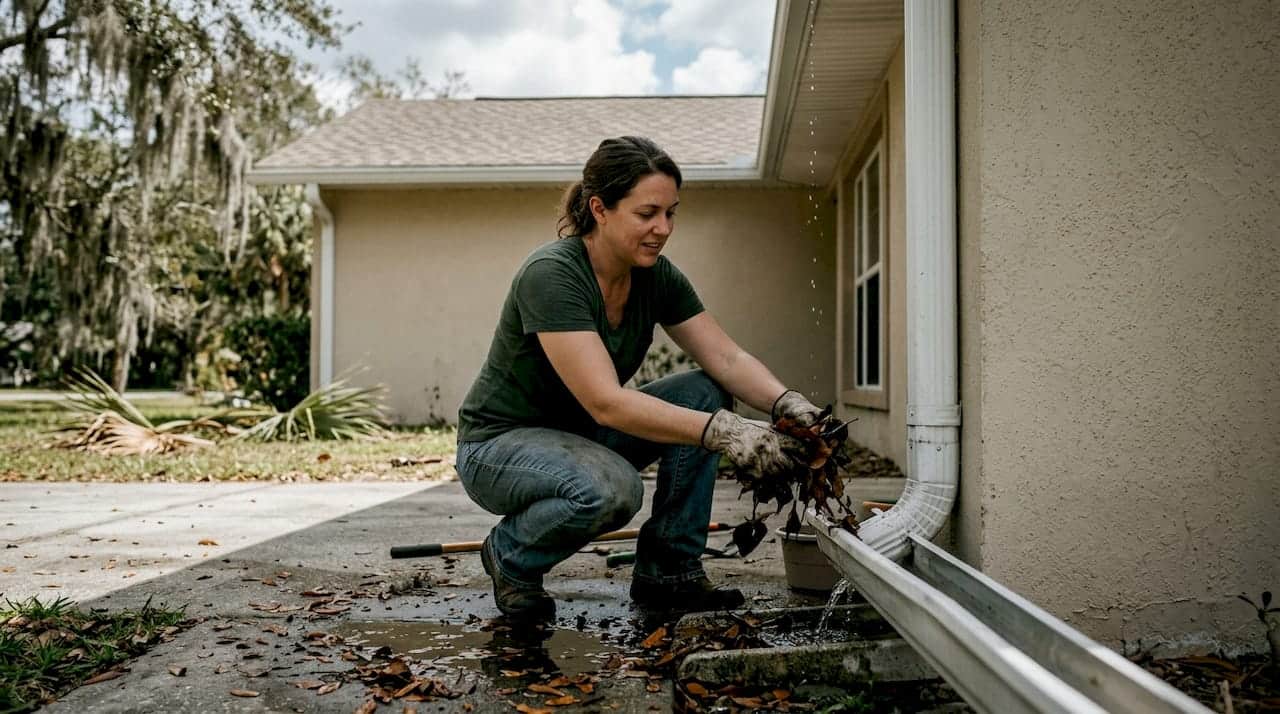
Even a perfectly installed downspout system fails if it is not maintained. Central Florida’s tree canopy, including oaks, palms, and pine trees, means gutters fill with debris faster than homeowners expect.
The most common mistake we see is downspouts that are either too short or angled back toward the home. A downspout that terminates 6 inches from the foundation is almost as bad as having no downspout at all. The second most common mistake is ignoring blockages until water is visibly overflowing.
Here are the top 5 maintenance steps every Central Florida homeowner should follow:
- Clean gutters and downspouts at least twice a year, and after major storms
- Flush downspouts with a garden hose to check for blockages and confirm water flows freely
- Inspect all connections where downspouts meet gutters and where sections join together
- Check extension length and reposition if soil has shifted or extensions have moved
- Look for rust, cracks, or separation at joints, which allow water to leak near the foundation
“Extensions or underground lines are recommended in heavy rain areas” to ensure water travels far enough from the structure to prevent saturation and flooding.
For ongoing gutter maintenance advice tailored to Florida’s conditions, it helps to have a seasonal checklist. Before hurricane season in June and after the dry season in spring are the two most important times to inspect your system. Consistent upkeep is also the most reliable form of water damage prevention available to homeowners.
The uncomfortable truth most experts won’t tell you about gutter systems
Here is something worth saying plainly: Florida’s building codes were written for average conditions, not for the kind of storms that roll through Lake, Marion, and Sumter counties every summer. When a code says gutters and downspouts are not required, that is a legal minimum, not a safety recommendation.
We have seen homes that were fully code-compliant suffer thousands of dollars in foundation and crawlspace damage after a single bad storm season. We have also seen homes with proactive, oversized gutter systems come through hurricane-level rainfall with zero water intrusion. The difference was not luck. It was intentional design.
Homes that exceed code requirements tend to see fewer repair calls, lower moisture-related insurance claims, and longer-lasting landscaping. The upfront cost of adding an extra downspout or running an underground drain line is a fraction of what foundation repair costs.
Our honest advice: do not wait for expert water damage advice to become urgent. The best time to upgrade your system is before the damage happens, not after.
Protect your home with expert gutter solutions
Understanding the relationship between gutters and downspouts is one thing. Getting the sizing, placement, and materials right for your specific home and lot is another challenge entirely. Central Florida’s rainfall patterns vary by county, and what works in a Sumter County retirement community may not be sufficient for a Marion County property with heavy tree cover.

At Larry’s Gutters, we specialize in gutter drainage systems designed for Florida’s real weather conditions, not just code minimums. Whether you need a full seamless gutter installation or want to understand if seamless gutters are worth it for your budget, we can walk you through the options. Contact us today for a free quote and let us help you build a system that actually protects your home.
Frequently asked questions
Do all homes in Central Florida need downspouts?
Downspouts are strongly recommended for all Central Florida homes due to heavy seasonal rainfall, even though the Florida Building Code does not universally require them. Skipping them puts your foundation and landscaping at real risk.
How far should downspouts discharge water from the foundation?
Downspouts should move water at least 5-10 feet from the foundation. Anything shorter risks hydrostatic pressure buildup, soil erosion, and crawlspace flooding over time.
What’s the best way to prevent soil erosion around my home?
Proper downspout placement combined with extensions or underground drain lines is the most effective solution. In heavy rain areas, underground lines eliminate surface pooling and protect the soil around your foundation.
Is gutter maintenance required if I have downspouts?
Yes, absolutely. Even well-placed downspouts clog with leaves and debris, and blocked systems back up just like ones with no downspouts at all. Inspect and clean your full system at least twice a year.
Does Florida law require gutters and downspouts on every home?
No. The Florida Building Code does not universally require gutters or downspouts unless specific site conditions are present. That makes proactive installation a homeowner responsibility, not a legal one.
