TL;DR:
- A gutter soffit is a horizontal panel underneath the roof overhang that seals against pests and supplies attic ventilation. It works with the fascia and gutters to protect the roof and promote airflow, preventing water damage and rot. Proper installation and regular maintenance of soffits help extend roof lifespan and avoid costly repairs.
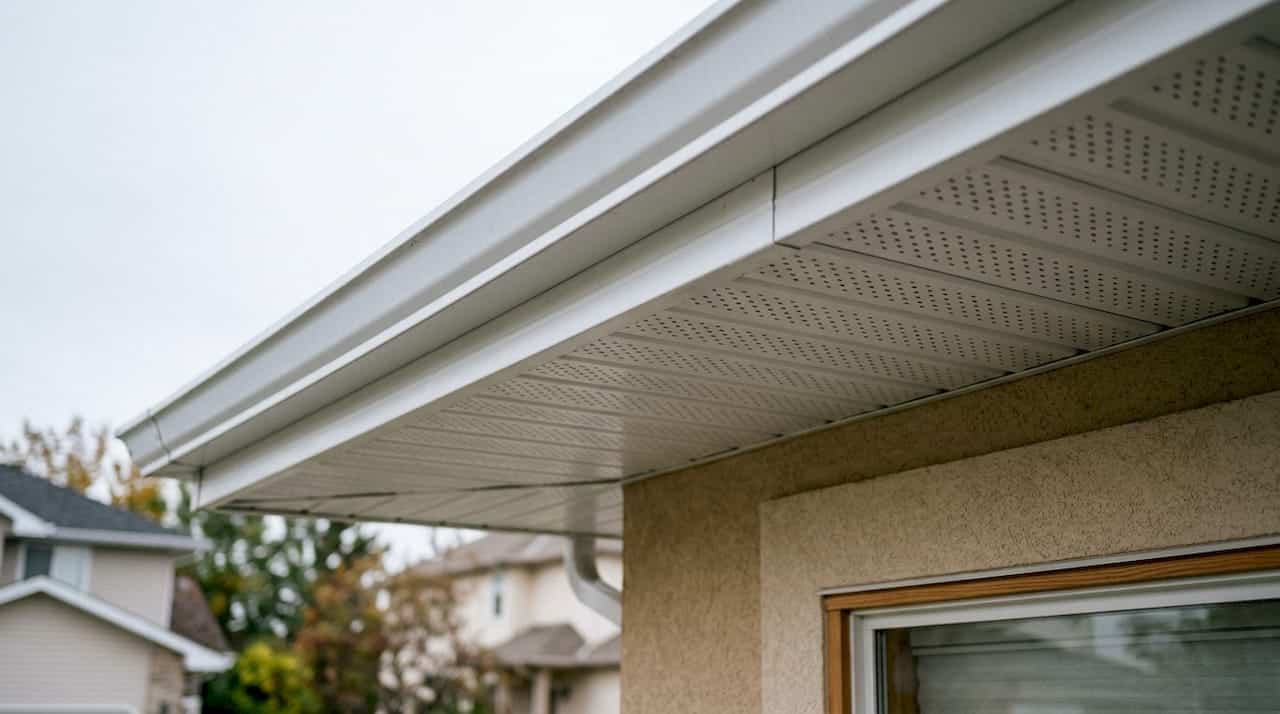
A gutter soffit is the finished horizontal panel on the underside of your roof’s overhang, sitting between the exterior wall and the outer edge of the roofline. Most homeowners walk past it every day without a second thought. That’s a mistake. The soffit does two jobs that directly affect your home’s health: it seals the roof edge against pests and weather, and it supplies fresh air intake to your attic. When it fails, your gutters, fascia, and roof structure pay the price.
What is gutter soffit and how does it fit into your roofline?
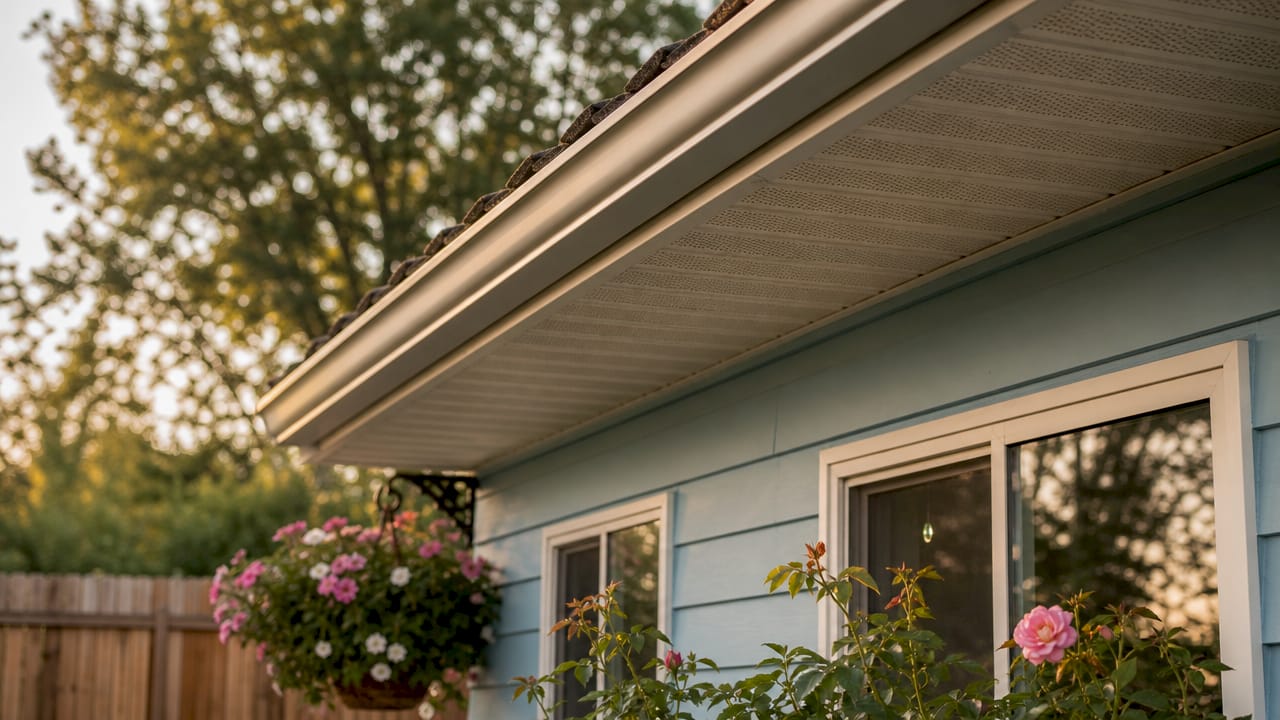
The soffit is the horizontal panel you see when you look up at the underside of your roof’s overhang. The industry term is simply “soffit,” and it sits directly beneath the fascia board and above the exterior wall. Think of it as the ceiling of your roof’s overhang. It closes off the gap between the roof deck and your home’s siding, blocking birds, insects, and moisture from getting into your attic.
The soffit works as part of a three-component system alongside the fascia and the gutters. Each piece has a distinct job. The soffit handles ventilation and sealing. The fascia is the vertical board at the roof’s edge that your gutters mount to. The gutters collect and redirect rainwater away from your foundation. Understanding the gutter system basics helps you see why all three must stay in good condition together.
Most soffits contain perforated panels or built-in vents. These openings pull cool outside air into the attic, which then exits through ridge vents at the roof peak. That airflow cycle is what keeps your attic from turning into an oven in summer or a moisture trap in winter.
How do gutter soffits work with gutters and fascia boards?
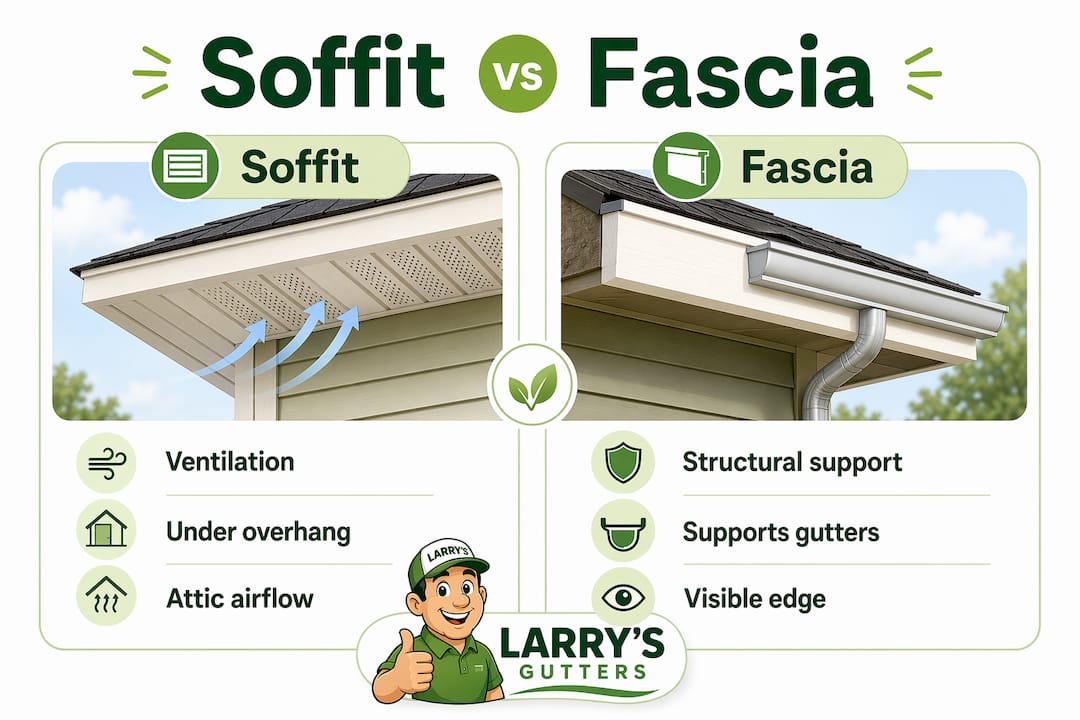
The soffit and fascia are neighbors, but they carry different responsibilities. Fascia is structural and supports the gutters. The soffit controls airflow and seals the attic from pests and weather. Confusing the two leads to wrong repair priorities and wasted money.
| Component | Position | Primary role |
|---|---|---|
| Soffit | Horizontal, under the overhang | Attic ventilation, pest barrier |
| Fascia | Vertical, at roof edge | Structural support for gutters |
| Gutter | Mounted to fascia | Collects and diverts rainwater |
The fascia takes the mechanical load. Hidden hanger brackets for gutters must penetrate the fascia and anchor into rafter tails with screws at least 2.5 inches long for secure mounting. That means the fascia’s condition directly determines whether your gutters stay put during a heavy Florida rainstorm.
The soffit connects to the inner edge of the fascia and runs back to the wall. When the soffit sags or shows staining, it often signals water is already sitting behind the fascia. Roofline components function as a system, and failure in the gutters often signals decay issues behind the fascia and soffit boards. Catching a soft or discolored soffit panel early can prevent a much larger repair.
Pro Tip: Run your hand along the soffit panels after a heavy rain. Any soft spots or paint bubbling are early signs of water intrusion behind the fascia, not just a cosmetic issue.
What materials are used for gutter soffits?
Soffit material determines how long the panel lasts, how well it ventilates, and how much maintenance you will do over the years. Four materials dominate the market in 2026.
- Aluminum: Lightweight, rust-resistant, and available in perforated panels for ventilation. Aluminum holds paint well and handles Florida’s humidity without warping. It is the most common choice for new installations.
- Vinyl (PVC): The lowest-maintenance option. Vinyl does not rot, does not need painting, and resists insects. Perforated vinyl panels are widely available. The trade-off is that vinyl can become brittle in extreme cold, though that is rarely a concern in Central Florida.
- Wood: Traditional and attractive, but demanding. Wood soffits require regular painting or sealing to resist moisture. Untreated wood in a humid climate like Florida will rot within a few years. Wood is best reserved for historic homes where matching original materials matters.
- Fiber cement: A composite of cement, sand, and cellulose fibers. Fiber cement resists rot, fire, and insects better than wood, and it accepts paint well. It is heavier than aluminum or vinyl, which makes DIY installation more physically demanding.
For most Florida homeowners, aluminum or vinyl perforated panels offer the best balance of durability, ventilation, and low upkeep. Improper fastening or low-grade materials contribute to gutter pull-away and water infiltration, so material quality matters as much as installation technique.
Pro Tip: When buying soffit panels, check the Net Free Area (NFA) rating on perforated panels. A higher NFA means more airflow per square foot, which directly improves attic ventilation.
What is involved in installing and maintaining gutter soffits?
Installing a soffit is a straightforward project for a confident DIYer, but the details matter. Skipping steps leads to blocked vents, pest entry points, and water damage that costs far more to fix than the original installation.
Installation basics
- Measure the overhang width. Measure from the exterior wall to the outer edge of the fascia. Cut soffit panels to fit, leaving a small gap at the wall channel for expansion.
- Install the F-channel. Nail an F-channel track along the exterior wall and along the inside edge of the fascia. These channels hold the soffit panels in place without exposed fasteners.
- Slide in the panels. Insert each panel into the F-channel on both sides. Perforated panels should face outward so vents are visible from below.
- Secure the fascia connection. Confirm the fascia is solid before mounting gutters. Gutter bracket screws need to be at least 2.5 inches long to reach the rafter tails behind the fascia for a secure hold.
- Check alignment and pitch. The soffit should sit level. The gutters mounted to the fascia need a slight pitch toward the downspout, typically about 1/4 inch of drop per 10 feet of run, so water drains rather than pools.
For a full walkthrough on mounting gutters correctly after soffit work, the gutter installation guide from Larrysgutters covers fastening, pitch, and downspout placement in detail.
Maintenance that actually matters
Regular soffit vent maintenance includes clearing clogs with compressed air and cleaning with mild detergent to prevent airflow blockages and insect nesting. Do this at least once a year, and again after any major storm.
Sagging or damaged soffit panels often reveal long-term water intrusion behind the fascia and indicate compromised rafter tails. If you press on a panel and it flexes more than it should, probe the rafter tail behind it before assuming the soffit alone needs replacing.
Replacing rotten fascia without fixing the underlying gutter issues leads to repeated failures. Address gutter pitch, drainage, and drip-edge flashing at the same time as any soffit or fascia repair. Otherwise, the new material will rot on the same schedule as the old.
How does gutter soffit ventilation impact roof health?
Soffit ventilation is not optional. Most building codes require a net free ventilation area of 1 square foot per 150 to 300 square feet of attic floor, balanced 50% intake via soffits and 50% exhaust via ridge vents. That balance extends roof life by 10–15%.
| Ventilation condition | Attic effect | Roof consequence |
|---|---|---|
| Balanced (soffit + ridge) | Stable temperature and humidity | Maximum roof lifespan |
| Blocked soffit vents | Heat and moisture buildup | Shingle damage, wood rot |
| No ridge vents | Air stagnates despite soffit intake | Condensation, mold growth |
| Painted-over soffit vents | Zero intake airflow | Ice dams in cold climates |
Blocked or painted-over soffit vents promote attic heat buildup, snow melting, and ice dams, causing gutter and roof damage in winter climates. In Florida, the consequence is different but equally damaging: trapped heat accelerates shingle degradation and drives moisture into the roof deck.
Professional gutter installers inspect soffit panels first to detect hidden water damage behind the fascia before recommending simple gutter repairs or more extensive carpentry. That inspection step is what separates a lasting repair from a temporary fix. If you are dealing with recurring gutter leaks, the soffit and fascia condition is the first place to look.
Key Takeaways
The soffit, fascia, and gutters function as one system, and maintaining all three together is the only way to protect your home’s roof edge long-term.
| Point | Details |
|---|---|
| Soffit definition | The horizontal panel under the roof overhang that ventilates the attic and seals against pests. |
| Soffit vs. fascia | Fascia carries structural load for gutters; soffit manages airflow and sealing. Never treat them as one repair. |
| Material choice | Aluminum and vinyl perforated panels offer the best durability and ventilation for most climates. |
| Ventilation standard | Building codes require balanced 50% soffit intake and 50% ridge exhaust to extend roof life by 10–15%. |
| Maintenance priority | Clear soffit vents annually with compressed air and inspect for soft panels after heavy rain. |
Why homeowners underestimate the soffit every single time
Every week, homeowners call about gutter problems that turn out to be soffit and fascia problems in disguise. The gutters are just the visible symptom. Water backs up, pulls the gutter away from the house, and suddenly there is a $1,500 repair that started as a $40 vent cleaning.
The part that surprises most people is how interconnected these components are. Homeowners often see fascia and soffit as one project, but fascia carries structural loads while soffit controls airflow, requiring distinct repair approaches. Treating them as the same job means you fix one and leave the other to fail on its own schedule.
My honest advice: inspect your soffit panels every spring and fall. Look for paint bubbling, soft spots, or gaps where panels have pulled away from the F-channel. Any of those signs means water has already found a path in. Catching it at the soffit stage costs a fraction of what rafter tail replacement costs six months later.
The other mistake I see constantly is painting over soffit vents during a house repaint. It looks clean from the ground, but it kills attic airflow entirely. If you are hiring a painter, mark every vent with tape before they start. It takes five minutes and saves your roof.
— Results
Larrysgutters: professional soffit and gutter installation in Central Florida
Soffit, fascia, and gutters work together, and getting one component wrong affects all three. Larrysgutters specializes in residential gutter solutions across Central Florida, pairing seamless gutter installation with expert knowledge of how soffits and fascia boards interact with your drainage system.

Seamless gutters eliminate the joints where leaks typically start, and when they are mounted correctly to sound fascia with properly vented soffits behind them, the entire roofline system performs the way it was designed to. Larry’s Gutters offers free quotes and serves homeowners across multiple Florida counties. If your soffit panels are showing wear or your gutters are pulling away from the fascia, get a professional assessment before the next rainy season hits.
FAQ
What is the difference between soffit and fascia?
The soffit is the horizontal panel under the roof overhang that ventilates the attic. The fascia is the vertical board at the roof’s edge that supports the gutters. They are adjacent but serve completely different functions.
Can I install gutter soffit panels myself?
Yes, soffit installation is a manageable DIY project with basic carpentry skills. The key steps are installing F-channel tracks, cutting panels to fit, and confirming all vents remain unobstructed after installation.
How do I know if my soffit vents are blocked?
Press gently on soffit panels and look for soft spots or staining. You can also hold your hand near a vent on a hot day. No airflow from the vent means it is blocked, painted over, or packed with insulation from inside the attic.
How often should soffit vents be cleaned?
Clean soffit vents at least once a year using compressed air to clear debris and insect nests. Inspect them again after any major storm, since wind-driven debris commonly clogs perforated panels.
Does damaged soffit affect my gutters?
Yes. When the soffit and fascia behind it are water-damaged, the rafter tails weaken and gutter brackets lose their anchor point. That leads to gutters pulling away from the house, which is one of the most common causes of gutter failure.
