
TL;DR:
- A gutter outlet connects the gutter to the downspout and controls rainwater flow from the roof. Proper sizing, placement, and sealing are essential to prevent overflow, foundation damage, and gutter failures. Regular cleaning and correct installation ensure long-lasting performance and effective drainage.
A gutter outlet is defined as the transition fitting that connects the horizontal gutter trough to the vertical downspout, acting as the throat that controls how rainwater leaves your roofline. Without it, water has nowhere to go except over the edge of your gutters, straight toward your foundation. Outlets come in aluminum, copper, and galvanized steel, and proper sizing and sealing prevent overflow even when the gutter trough itself is clean. Getting this one fitting right is the difference between a gutter system that works and one that quietly destroys your fascia, siding, and foundation over years.
What is a gutter outlet and how does it work?
A gutter outlet is the critical transition fitting connecting the horizontal gutter trough to the vertical downspout. It controls the rate at which rainwater exits the gutter and enters the downspout. Think of it as a funnel built into the bottom of your gutter. Without it, water has no controlled exit point and will pool, overflow, or back up under your roofline.
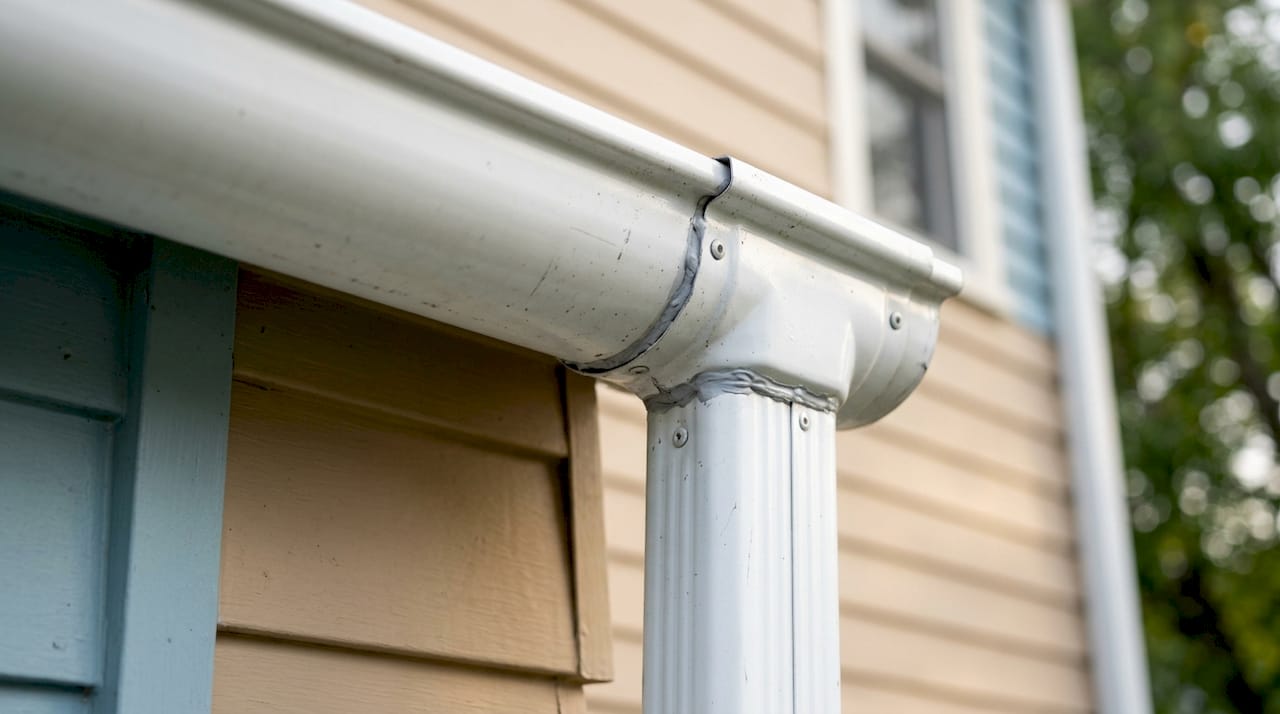
The outlet sits at the lowest point of the gutter run, which is where gravity naturally directs water. It creates a watertight connection between two very different parts of the drainage system: the wide, shallow trough that collects runoff from the roof, and the narrow vertical pipe that carries it away from the house. A well-installed outlet also reduces water turbulence at the transition point, which prevents splash-back that homeowners often mistake for a roof-edge leak. That detail alone saves a lot of unnecessary repair calls.
The outlet is not just a hole in the gutter. It includes a flanged fitting that seats flush against the gutter floor, sealed with exterior-grade silicone and secured with rust-resistant screws or pop rivets. The flange distributes stress across the gutter material, which prevents cracking around the opening over time.
What are the different types of gutter outlets?
Gutter outlets come in several shapes and installation styles. Choosing the right one depends on your gutter profile, material, and how much maintenance you want to do long-term.
Outlet shapes by gutter profile
The three most common outlet shapes are round, oval, and square. Round outlets fit half-round gutters, which are common on older or historic homes. Oval outlets match K-style gutters, the most widely installed profile in American residential construction. Square outlets pair with box gutters, which are typically found on commercial buildings or custom residential projects.

Wide-mouth outlets are a variation worth knowing about. They have a larger opening than standard outlets, which reduces the chance of debris bridging across the throat and blocking flow. For homes surrounded by trees, a wide-mouth outlet can cut down on how often you need to clear the outlet opening.
Pop-in vs. solder-in outlets
The installation method matters as much as the shape. Pop-in outlets are the standard DIY solution. You cut a hole in the gutter, press the outlet in, seal it with silicone, and secure it with screws or rivets. They work well when installed correctly, but the sealant degrades over time and the joint can become a debris trap.
Solder-in outlets create a fused, leak-proof bond that eliminates seams prone to debris accumulation and clogs. They are the preferred choice for copper gutter systems and any installation where long-term durability matters more than installation speed. The trade-off is that soldering requires skill and the right tools. For most homeowners doing their own work, a pop-in outlet with quality sealant is the practical choice. For a professional installation, solder-in is worth requesting.
| Outlet type | Best for | Key advantage | Main drawback |
|---|---|---|---|
| Round pop-in | Half-round gutters, DIY | Easy to install | Sealant degrades over time |
| Oval pop-in | K-style gutters, DIY | Widely available | Joint can trap debris |
| Solder-in | Copper systems, pro install | Leak-proof, long-lasting | Requires soldering skill |
| Wide-mouth | Tree-heavy properties | Reduces debris blockage | Slightly larger opening to maintain |
How do you properly install a gutter outlet?
Correct gutter outlet installation follows a clear sequence. Skipping any step creates leaks, wood rot behind the fascia, and water damage at the foundation.
- Mark the outlet position. Find the lowest point of the gutter run. This is where the outlet goes. Use a level and chalk line to confirm the gutter slopes toward this point at approximately 0.25 inches per 10 feet. Without that slope, water will pool regardless of how well the outlet is installed.
- Trace the opening. Hold the outlet flange against the bottom of the gutter and trace around the inner edge with a marker. This gives you the exact cut line.
- Cut the hole. Use tin snips or a hole saw to cut just inside your traced line. The cut does not need to be perfectly smooth because the outlet flange covers the rough edges. Cut gradually and test-fit the outlet before removing any more material. A hole that is too large will not seat properly.
- Apply sealant. Run a bead of exterior-grade silicone around the inside of the opening before pressing the outlet in. This creates the primary watertight barrier.
- Seat and secure the outlet. Press the outlet firmly into place so the flange sits flush against the gutter floor. Secure it with rust-resistant screws or pop rivets, spaced evenly around the flange. Apply a second bead of sealant around the flange edge on the inside of the gutter.
- Connect the downspout. Attach the downspout to the outlet using the appropriate connector. Confirm the downspout discharges water at least 4–6 feet from the foundation to prevent pooling and soil erosion near the house.
Pro Tip: Test your installation with a garden hose before calling the job done. Run water into the gutter at the high end and watch the outlet for drips or seepage around the flange. Catching a bad seal now costs nothing. Catching it after the fascia has rotted costs hundreds.
Common DIY mistakes include placing the outlet too high on the gutter wall instead of at the floor, skipping the interior sealant bead, and using standard steel screws that rust and stain the gutter within a season. For a full walkthrough of the downspout connection steps, the process is the same whether you are working on a new installation or replacing a failed outlet.
Why does gutter outlet size and placement matter?
Outlet size directly determines how much water your gutter system can handle before it overflows. An undersized outlet creates a bottleneck even if the gutter trough and downspout are both correctly sized. This is one of the most common reasons gutters overflow during heavy rain despite appearing clean and undamaged.
Gutter size and outlet size must match. A 5-inch K-style gutter holds approximately 1.2 gallons per linear foot. A 6-inch K-style gutter holds approximately 2 gallons per linear foot, a 67% capacity increase. Pairing a 6-inch gutter with an outlet sized for a 5-inch system wastes that extra capacity entirely. In areas with heavy rainfall, 3×4-inch downspouts are standard because they move more volume per second than the common 2×3-inch size.
Placement spacing follows a straightforward rule. Industry guidance recommends one downspout for every 20–40 feet of guttering, adjusted for local rainfall intensity. In Central Florida, where summer storms can drop several inches of rain in under an hour, spacing outlets closer to the 20-foot end of that range is the safer choice. A typical home needs at least one downspout per 30–40 feet of gutter run, with more outlets required on complex roofs with multiple slopes.
Strategic placement also protects your foundation. Outlets positioned at corners or low points direct water away from the house perimeter. Downspouts that discharge too close to the foundation push water into the soil directly against your slab or footings. For more on how gutter overflow connects to foundation risk, the relationship is direct and well-documented.
- Match outlet diameter to your gutter size and downspout diameter.
- Space outlets no more than 40 feet apart, closer in high-rainfall areas.
- Position outlets at the lowest point of each gutter run.
- Confirm downspouts discharge at least 4–6 feet from the foundation.
- Use NOAA local rainfall intensity data to verify your system capacity for your region.
What maintenance keeps gutter outlets clear and working?
Gutter outlets clog before the rest of the gutter does. The outlet opening is the narrowest point in the system, so debris collects there first. A handful of wet leaves can block a standard outlet completely, and clearing that blockage resolves the vast majority of flow problems homeowners mistake for leaks or system failures.
Clean your outlets at least twice a year, in late fall after leaves drop and in spring after pollen and seed pods finish falling. In Florida, add a third cleaning after hurricane season. Use a garden trowel or gloved hand to pull debris away from the outlet opening, then flush with a hose to confirm flow. Check the sealant around the flange at the same time. Cracked or separated sealant is the second most common cause of outlet failure after debris blockage.
Pro Tip: Slip a gutter outlet strainer or small wire basket into the outlet opening. It catches debris before it enters the downspout and is far easier to pull out and clean than digging material out of a clogged pipe.
Gutter guards reduce how often you need to clean outlets, but they do not eliminate the need entirely. Fine debris like pine needles and shingle grit still reaches the outlet over time. For homes with heavy tree cover, gutter guard installation paired with annual outlet inspections is the most effective combination. Always use a stable ladder with a standoff bracket when working at gutter height, and follow the gutter safety guidelines specific to Florida homes, where roof pitches and landscaping create unique hazards.
Inspect the outlet-to-downspout connection each season. This joint works loose over time from thermal expansion and contraction, especially in Florida’s heat. A loose connection lets water run behind the fascia without any visible drip from the front of the house.
Key Takeaways
A gutter outlet is the single most critical fitting in your drainage system because it controls water flow rate, prevents overflow, and protects your foundation when correctly sized, placed, and sealed.
| Point | Details |
|---|---|
| Definition and function | A gutter outlet connects the trough to the downspout and controls rainwater flow rate off the roofline. |
| Outlet type selection | Choose pop-in for DIY projects and solder-in for long-term, leak-proof performance in copper systems. |
| Installation precision | Slope the gutter 0.25 inches per 10 feet toward the outlet and seal with exterior-grade silicone before securing. |
| Sizing and spacing | Match outlet size to gutter capacity and space downspouts every 20–40 feet based on local rainfall intensity. |
| Ongoing maintenance | Clear outlet openings at least twice a year and inspect sealant each season to prevent leaks and wood rot. |
What I’ve learned from watching outlets fail
Most gutter problems trace back to the outlet. That is not an exaggeration. After seeing dozens of gutter systems in Central Florida, the pattern is consistent: the outlet was either the wrong size, placed too high on the gutter wall, or sealed with the wrong product. Homeowners rarely notice until water is running behind the fascia or pooling at the foundation.
The detail that surprises most people is the slope. You can install a perfect outlet with flawless sealant and still have standing water in your gutter if the pitch is off. A 0.25-inch slope per 10 feet sounds trivial. It is not. Water sitting in a gutter breeds mosquitoes, accelerates corrosion, and adds weight that pulls the gutter away from the fascia over time.
The other thing worth saying plainly: solder-in outlets are worth the extra cost when you are doing a full installation. Pop-in outlets with quality sealant work, but the sealant will need attention every few years. A soldered connection does not. If you are going to the trouble of installing a gutter system that will last 20 years, do not let the outlet be the weak point.
For DIYers, the honest advice is this: take your time on the cut and the seal. The outlet flange hides rough edges, so perfection is not the goal. A flush seat and a complete sealant bead are the goal. Those two things determine whether your outlet lasts a season or a decade.
— Results
Larrysgutters can handle the hard part for you
Gutter outlets are small fittings with a big job. Getting the size, placement, and seal right requires the right tools and a clear understanding of your roof’s drainage load.

Larry’s Gutters specializes in seamless gutter installation across Central Florida, with outlet placement and sealing done to handle the region’s intense summer rainfall. Seamless systems eliminate most of the joints where leaks start, and seamless gutters are worth the investment for homes that need reliable, low-maintenance drainage year after year. Larrysgutters also installs gutter guards that reduce debris buildup at outlets, cutting down on how often you need to climb a ladder. Request a free quote and get a system sized and placed correctly from the start.
FAQ
What is a gutter drop outlet?
A gutter drop outlet is another name for a standard gutter outlet. It refers to the fitting where water “drops” from the horizontal gutter trough into the vertical downspout.
What size gutter outlet do I need?
Outlet size must match your gutter profile and downspout diameter. A 5-inch K-style gutter typically uses a 2×3-inch outlet, while a 6-inch gutter pairs with a 3×4-inch outlet for higher flow capacity.
How many gutter outlets does a house need?
Industry guidance recommends one outlet and downspout for every 20–40 feet of gutter run. Homes in high-rainfall areas like Central Florida should space them closer to every 20 feet.
Why does my gutter outlet keep clogging?
Debris collects at the outlet opening first because it is the narrowest point in the system. Clearing wet leaves and seed pods from the outlet opening resolves the majority of flow problems without any other repairs needed.
Can I install a gutter outlet myself?
Yes. Mark the lowest point of the gutter run, trace the flange, cut gradually, apply exterior-grade silicone, and secure with rust-resistant screws. Test with a hose before connecting the downspout to confirm a watertight seal.
