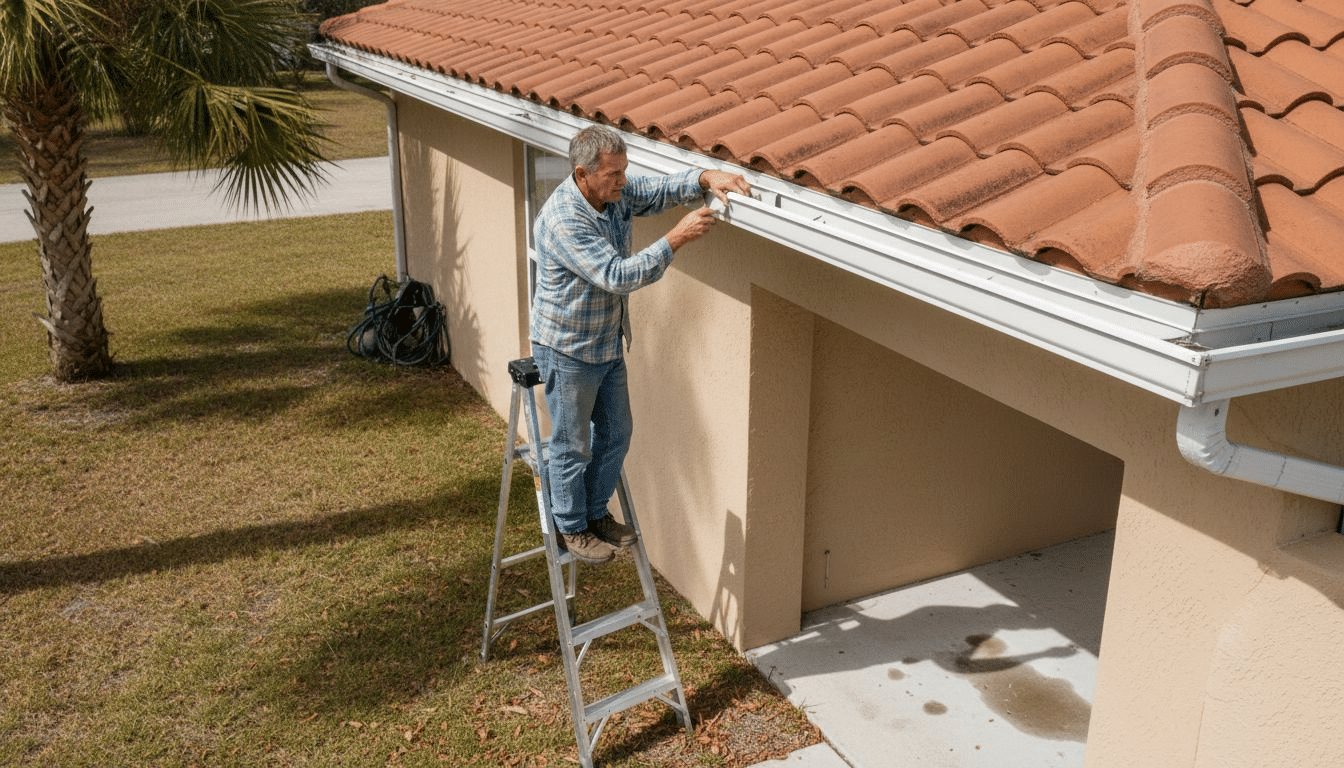
Heavy rain and humidity in Central Florida push every gutter system to its limits. For homeowners in Lake, Marion, and Sumter counties, understanding how long gutters last can save thousands in unexpected repairs. The lifespan of your gutters directly affects your home’s protection against mold, wood rot, and foundation damage. This article outlines how climate, material choice, and maintenance shape the true longevity of your gutter system so you can prevent water damage before it starts.
Table of Contents
- What Gutter Lifespan Means for Homeowners
- Why Gutter Lifespan Matters to You
- How Lifespan Connects to Your Maintenance Costs
- What Changes as Gutters Age
- Gutter Materials and Typical Longevity
- How Material Affects Lifespan
- Lifespan Comparison by Material
- Installation Quality Affects Longevity
- How Florida’s Climate Shortens Gutter Life
- The Humidity and Heat Problem
- Salt Air Accelerates Corrosion
- Hurricane Season Damage
- Increased Rainfall Intensity
- Maintenance and Mistakes That Impact Longevity
- When to Repair or Replace Your Gutters
Key Takeaways
| Point | Details |
|---|---|
| Gutter Lifespan is Crucial | Understanding the lifespan of your gutter system helps plan maintenance, budget for replacements, and protect your home from water damage. |
| Material Choice Matters | Selecting the right gutter material impacts durability and maintenance needs, especially in Florida’s challenging climate. |
| Regular Maintenance is Essential | Neglecting gutter upkeep can lead to significant damage and costly repairs, emphasizing the importance of scheduled inspections and cleaning. |
| Repair vs. Replace Decision | Knowing when to repair or replace gutters is vital; repairs are suitable for minor issues, while extensive damage often necessitates full replacement for long-term safety. |
What Gutter Lifespan Means for Homeowners
Your gutter system is essentially your home’s first line of defense against water damage. Understanding its lifespan directly impacts your budget, maintenance schedule, and long-term home protection.
Gutters won’t last forever, and knowing when to expect replacement helps you avoid costly surprises. Most homeowners in Lake, Marion, and Sumter counties face similar challenges: heavy Florida rainfall, intense sun exposure, and seasonal storms that test gutter durability year-round.
Why Gutter Lifespan Matters to You
A failing gutter system doesn’t just leak. It allows excess water to accumulate near your foundation, leading to mold growth, wood rot, and serious structural damage that costs thousands to repair.
Gutter lifespan tells you how long your system will effectively protect your home before degradation becomes a problem. Different materials last different lengths of time, and Florida’s climate accelerates wear.
Here’s what happens when gutters reach the end of their lifespan:
- Water pools around your foundation instead of draining away
- Seams separate and cracks develop, allowing water infiltration
- Rust and corrosion weaken the structure until complete failure occurs
- Interior walls absorb moisture, creating mold that spreads through your home
- Landscaping erodes and soil subsidence threatens foundation stability
Proper gutter slope and sizing directly affect how long your system survives. When gutters lose their slope or become clogged, water sits and deteriorates the material faster.
How Lifespan Connects to Your Maintenance Costs
A gutter system reaching the end of its lifespan requires increasingly frequent repairs. What started as a simple cleaning job becomes a monthly expense as clogs, leaks, and damage multiply.
Replacing aged gutters upfront costs less than managing years of foundation repairs, mold remediation, and interior water damage. Many Central Florida homeowners wait too long because they don’t understand the true cost of delay.
Your gutter lifespan determines:
- How often you need professional cleaning and maintenance
- Whether repairs will keep working or become temporary fixes
- When complete replacement becomes unavoidable
- How much you’ll spend protecting your foundation over the next decade
What Changes as Gutters Age
As gutters approach the end of their serviceable life, their performance deteriorates. They lose the ability to channel roof water effectively, leaving your home vulnerable during heavy storms.
Aging gutters develop weak spots where water escapes before reaching downspouts. Materials weaken, seams fail, and the entire system becomes unreliable during the very storms that demand protection most.
Recognizing these signs matters because waiting until complete failure means water damage is already happening:
To help homeowners recognize gutter system decline, here are key signs and their impact:
| Sign of Aging | Impact on Home | Suggested Action |
|---|---|---|
| Rust streaks | Promotes leaks and mold | Inspect for corrosion |
| Sagging sections | Water pooling, soil erosion | Reinforce and clean |
| Separated corners | Water infiltration inside | Repair or reseal seams |
| Pinhole leaks | Structural and wall damage | Patch or replace section |
- Visible rust streaks running down gutters
- Sagging sections that pool water visibly
- Standing water that won’t drain after rain
- Separation at corners where sections meet
- Holes or pinhole leaks you can see from the ground
Understanding your gutter’s remaining lifespan helps you plan maintenance and replacement before emergency failures flood your home.
Your gutter’s age and condition directly determine whether today’s repair fixes the real problem or just delays the inevitable replacement.
Pro tip: Schedule a free professional gutter inspection now to identify exactly where your system stands in its lifespan, so you can budget replacement before unexpected foundation damage occurs.
Gutter Materials and Typical Longevity
Not all gutters are created equal. The material you choose dramatically affects how long your system protects your home and how much maintenance it demands from you.
Florida’s humid subtropical climate, salt air in coastal areas, and intense UV exposure accelerate wear on some materials while barely affecting others. Choosing the right material for your specific location matters as much as proper installation.
How Material Affects Lifespan
Gutter material determines three critical factors: durability, maintenance requirements, and replacement timeline. A material that lasts 50 years in one climate might only last 15 years in another.
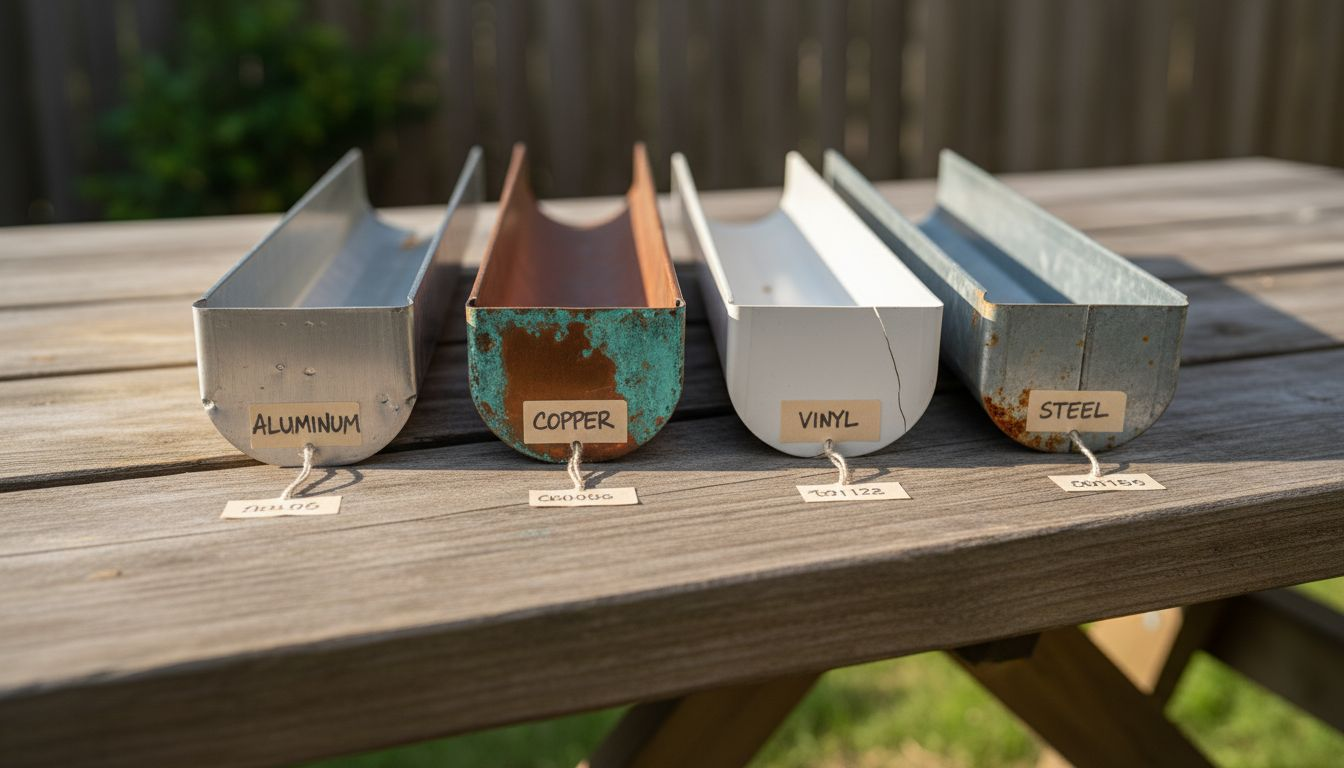
Aluminum gutters are the most common choice for Florida homes. They resist corrosion well and won’t rust like steel, typically lasting 20-25 years with proper maintenance. Aluminum remains affordable and relatively easy to install, making it accessible for most homeowners.
Copper gutters represent the premium option. Copper’s natural corrosion resistance means they require virtually no maintenance and can last 50+ years. They won’t rot, crack, or deteriorate in Florida’s challenging environment. The trade-off: copper costs significantly more upfront, though the extended lifespan justifies the investment for many homeowners.
Steel gutters come coated to prevent rust, but the coating degrades over time. They typically last 15-20 years before corrosion becomes problematic. Steel requires regular repainting or recoating to maintain protection, adding ongoing maintenance costs that offset the lower initial price.
Vinyl gutters are budget-friendly but struggle in Florida heat. They become brittle and crack under intense sun exposure, typically lasting only 10-15 years. Vinyl also sags more easily than metal alternatives, making them less reliable during heavy rainfall.
Lifespan Comparison by Material
Here’s what you can realistically expect from each material in Central Florida conditions:
Here’s a concise comparison of common gutter materials for Florida homes:
| Material | Typical Lifespan | Maintenance Needs | Upfront Cost |
|---|---|---|---|
| Aluminum | 20-25 years | Moderate, annual cleaning | Affordable |
| Copper | 50+ years | Low, minimal cleaning | Expensive |
| Coated Steel | 15-20 years | Frequent recoating needed | Moderate |
| Vinyl | 10-15 years | High, prone to cracking | Very affordable |
| Stainless Steel | 30-40 years | Low, resists corrosion | Higher than aluminum |
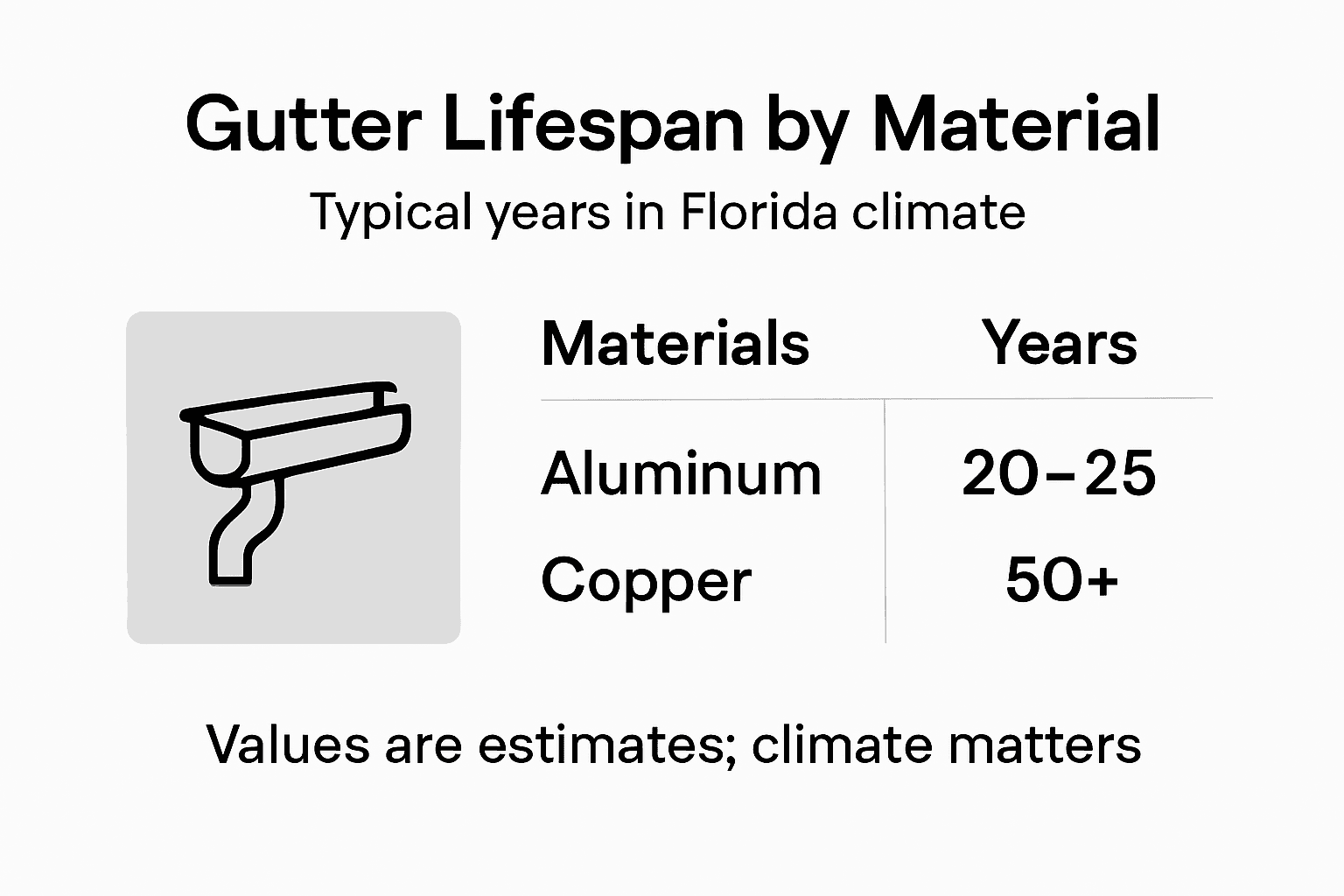
- Aluminum: 20-25 years with regular maintenance
- Copper: 50+ years, minimal maintenance needed
- Coated Steel: 15-20 years, requires periodic recoating
- Vinyl: 10-15 years before degradation accelerates
- Stainless Steel: 30-40 years with excellent corrosion resistance
Stainless steel and copper offer superior durability when properly installed, making them better long-term investments despite higher upfront costs. For Lake, Marion, and Sumter county homeowners concerned about longevity, these materials reduce replacement frequency.
Material choice determines not just how long gutters last, but how much time and money you’ll spend maintaining them before replacement becomes necessary.
Aluminum remains the practical middle ground for most Florida homeowners. It balances affordability with respectable lifespan, provided you maintain it consistently.
Installation Quality Affects Longevity
Even the best material fails prematurely if installation is poor. Improper slope, inadequate fastening, and weak seam joints compress decades off a gutter’s life.
Sloppy installation causes:
- Water pooling that accelerates material degradation
- Seam separation allowing water infiltration behind gutters
- Inadequate fastening leading to sagging and separation
- Improper downspout connections that redirect water back toward your home
Seamless gutters naturally outlast sectional gutters because they eliminate vulnerable joints where water escapes and corrosion accelerates. Fewer seams mean fewer failure points.
Pro tip: Choose aluminum or copper gutters installed by experienced professionals, then commit to annual spring cleaning and inspection to maximize your system’s lifespan and catch problems before they become expensive.
How Florida’s Climate Shortens Gutter Life
Florida’s weather is beautiful most of the year, but it’s brutal on gutters. The combination of heat, humidity, salt air, and intense storms creates conditions that compress decades off a gutter system’s expected lifespan compared to other parts of the country.
Understanding what Florida’s climate does to your gutters helps explain why maintenance can’t be skipped and why material choice matters so much. What survives 40 years in Colorado might fail in 15 years in Lake County.
The Humidity and Heat Problem
Constant moisture and intense heat work together to break down gutter materials faster than almost anywhere else. Florida’s subtropical humidity never really stops, even in winter.
This combination accelerates coating breakdown on steel and aluminum gutters. The protective paint or sealant deteriorates, exposing the metal underneath to moisture and oxygen. Rust forms quickly once protection fails.
Vinyl gutters suffer the worst. The sun’s UV rays and sustained heat cause vinyl to become brittle and crack. Sections that would last 20 years in northern states fail in 10-12 years in Central Florida.
Salt Air Accelerates Corrosion
If you’re anywhere near the coast, salt spray from the ocean accelerates corrosion dramatically. But even inland areas like Marion and Sumter counties experience salt air effects during storms and dry season wind patterns.
Salt water corrodes metal at an exponential rate compared to freshwater environments. Aluminum that resists freshwater corrosion rusts quickly when exposed to saltwater spray. Coated steel loses its protective coating faster when salt is present.
Florida’s hot, humid subtropical climate significantly shortens the lifespan of exterior materials like gutters, requiring more aggressive maintenance schedules than homeowners in other regions. This is why your Lake County gutters need different care than gutters in Pennsylvania.
Hurricane Season Damage
Hurricanes and tropical storms batter gutters with wind, debris, and water volume that normal systems aren’t designed to handle. Heavy rainfall stretches aluminum gutters beyond their intended capacity.
Damage from storms includes:
- Debris impact that dents and cracks gutters
- Fastener failure from sustained wind stress
- Seam separation when water volume overwhelms capacity
- Standing water that remains for days, promoting rust
- Sand and salt deposits that accelerate corrosion
Increased Rainfall Intensity
Climate trends show increasing rainfall intensity in Florida, meaning gutters face more water volume during storm events than in previous decades. Undersized gutters that handled 2010 rainfall barely function during modern storms.
Water that overflows gutters saturates landscaping, erodes soil, and pools near your foundation. This accelerates the very water damage gutters are meant to prevent.
Florida’s climate doesn’t just wear out gutters faster—it creates conditions where inadequate maintenance becomes costly within months instead of years.
Maintenance becomes non-negotiable in Florida, not optional like it might be elsewhere. Skipping your spring cleaning or delaying repairs compounds the climate’s natural damage.
Pro tip: Schedule professional gutter cleaning twice yearly (spring and fall) rather than once, and inspect gutters after major storms to catch damage before corrosion spreads.
Maintenance and Mistakes That Impact Longevity
You can have the best gutter system money can buy, but poor maintenance will destroy it faster than any climate factor. What you do or don’t do every year directly determines whether your gutters last 15 years or 25 years.
Most homeowners underestimate how critical regular gutter care is. A few neglected cleanings compound into rust, damage, and expensive repairs that could have been prevented with simple maintenance.
Clogged Gutters Are the Primary Killer
Debris buildup is the single biggest threat to gutter longevity in Florida. Leaves, pine needles, twigs, and dirt accumulate quickly, especially during spring and fall.
When gutters clog, water has nowhere to go. It pools inside the gutter channel, sitting there day after day in the Florida heat and humidity. This standing water corrodes even durable materials like aluminum and copper.
Proper gutter management requires regular cleaning and inspection to prevent clogs and water damage that shorten lifespan. Blocked gutters force water to overflow, saturating landscaping and pooling against your foundation.
Skipping even one cleaning season allows debris to pack down and promote rust. What should take a few hours to clean becomes a destructive maintenance emergency.
The Downspout Problem
Blocked downspouts are just as destructive as clogged gutters. Water gets trapped in the downspout, backing up into the gutter channel and creating the same standing water damage.
Downspouts must drain water at least 5-6 feet from your foundation. If the outlet clogs or the downspout is positioned wrong, water pools near your house. Your gutters fail while trying to accomplish their mission.
Common downspout mistakes include:
- Missing or disconnected extensions that dump water at the foundation
- Outlet placed where landscaping redirects water backward
- Debris blockages that go unnoticed until damage appears
- Improper slope that creates low points where water collects
Slope and Installation Errors
Improperly installed gutters lose their slope over time. Fasteners corrode and loosen, allowing sections to sag. A gutter that should slope 1/4 inch per 10 feet becomes nearly level or slopes backward.
When slope is lost, water pools instead of flowing. This accelerates corrosion and makes the problem worse—heavier water causes more sagging, which creates more pooling.
Accumulated debris and water buildup damage gutters when proper drainage fails and corrections aren’t made quickly. Sagging gutters also pull away from fascia boards, creating gaps where water infiltrates.
Neglecting Post-Storm Inspections
Florida storms deposit debris, sand, and salt in gutters. After major hurricanes or heavy rainfall, gutters need emergency inspection and cleaning.
Delaying post-storm gutter checks allows salt and debris to sit, accelerating corrosion. Sand particles act like sandpaper against aluminum, speeding deterioration. Storm damage like dents or seam separation goes unnoticed until leaks develop.
Regular maintenance catches problems before they become expensive failures, adding years to your gutter’s working life.
Think of gutter maintenance like oil changes for your car. Skipping one might not hurt, but skipping several will destroy the engine.
Pro tip: Schedule professional gutter cleaning in spring (after winter debris) and fall (after leaf drop), plus inspections after major storms to prevent the maintenance mistakes that compress decades off your system’s lifespan.
When to Repair or Replace Your Gutters
At some point, every gutter system reaches a decision point: should you repair it or replace it? Making the wrong choice costs money either way, but understanding the signs helps you decide wisely.
A repair might extend your gutter’s life a few more years. Replacement protects your home for decades. The key is knowing which situations warrant which solution.
Clear Repair Situations
Small leaks and minor damage respond well to repairs. A pinhole leak, separated seam, or small crack can be patched and sealed, buying you time before replacement becomes necessary.
Repairs make sense when damage is localized and your gutters are still relatively young. A 12-year-old aluminum gutter system with one leak is worth repairing. That same system with multiple leaks in different areas is beyond repair.
Repairs typically cost $200-$500 and extend gutter life by 3-5 years. This works when your gutters still have serviceable lifespan remaining.
When Replacement Is Unavoidable
Extensive rust, widespread sagging, and multiple leaks signal that replacement is the only real solution. Signs that gutters need repair or replacement include water runoff problems, pooling, overflow during rain, visible leaks, rust, sagging, or detachment.
When damage is widespread across multiple sections, repairing individual spots wastes money. The remaining intact sections fail shortly after, requiring repeat repairs that approach replacement cost.
Replacement makes sense when:
- Gutters show rust in multiple locations, not just one spot
- More than 30% of the gutter length is visibly damaged or sagging
- Water pools in multiple sections despite cleaning
- Seams separate or leak in 2+ different areas
- Gutters pull away from fascia boards
- Your system is near or past its typical lifespan
The Age Factor
Your gutter’s age influences the repair-versus-replace decision heavily. A 15-year-old aluminum system starting to fail nearing the end of its expected life. Repairing it extends service briefly, but replacement comes soon anyway.
A 25-year-old copper gutter with a single leak? Repair it. Copper lasts 50+ years, and one leak doesn’t mean the system is failing.
Aluminum gutters past 20 years, vinyl past 12 years, or steel past 18 years are candidates for replacement. Gutters with extensive corrosion or damage beyond patches usually require replacement to prevent cascading failures.
The Cost Comparison
Compare repair cost against replacement cost intelligently. If repairs exceed 50% of replacement cost, replacement usually wins because you gain years of protection versus months.
Replacement for an average Central Florida home costs $2,000-$4,000 depending on house size and material. If a repair costs $800 on a 20-year-old system that might last another 3 years, replacement is the smarter investment.
A single repair is often worthwhile, but multiple repairs approaching replacement cost signal that replacement protects your home better long-term.
Think of it like car repair. Fixing one thing makes sense. Fixing five different problems? Time to replace the vehicle.
Pro tip: Request a free professional inspection to determine your gutter’s remaining lifespan, then make the repair-or-replace decision based on age, damage extent, and cost comparison rather than emotion or temporary budget concerns.
Protect Your Home with Expert Gutter Solutions Designed for Florida
Understanding the lifespan of your gutters is key to preventing costly water damage and foundation issues that so many Florida homeowners face. Common problems like rust, sagging, leaks, and clogged downspouts require timely action to avoid accelerated deterioration. At Larry’s Gutters, we specialize in durable, seamless gutter systems and professional maintenance tailored specifically for Central Florida’s challenging climate. Our services include expert seamless gutter installation, reliable gutter repair and cleaning, and innovative gutter guard installations to keep debris out and water flowing freely.

Don’t wait for your gutters to fail during heavy rain or hurricane season. Safeguard your home with custom-fit gutters designed to last and withstand Florida’s heat, humidity, and storms. Visit Larry’s Gutters now for a free quote and professional inspection. Protect your investment today before water damage threatens your home’s foundation and comfort.
Frequently Asked Questions
How long do different gutter materials last?
The lifespan of gutter materials varies: aluminum gutters typically last 20-25 years, copper gutters can last over 50 years, coated steel gutters last 15-20 years, and vinyl gutters generally last 10-15 years.
What signs indicate that my gutters need replacement?
Key signs include visible rust streaks, sagging sections, separated corners, pinhole leaks, and water pooling in the gutters after rain.
How does Florida’s climate affect gutter lifespan?
Florida’s hot, humid, and salty coastal climate severely shortens gutter lifespan due to accelerated corrosion, heat damage, and increased rainfall intensity compared to other regions.
How often should I clean and inspect my gutters?
It’s recommended to clean and inspect your gutters at least twice a year, ideally in the spring and fall, and after major storms to prevent debris buildup and damage.
