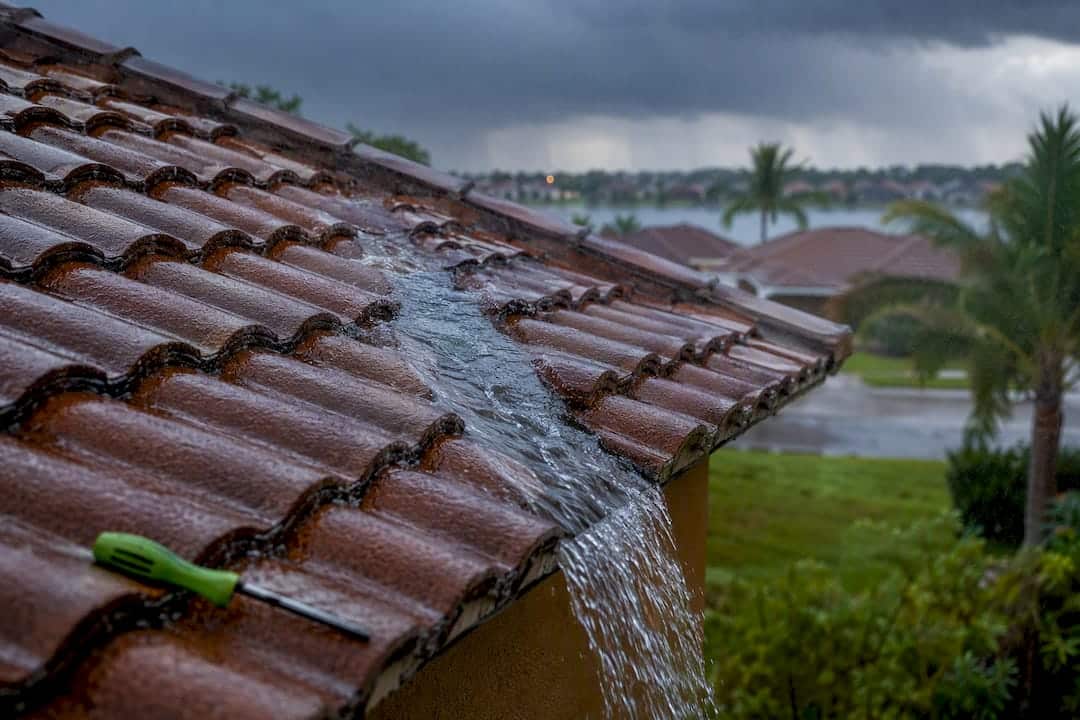
If water is pouring over one section of gutter while the rest of the run stays dry, a roof valley is almost certainly the culprit. Clear the debris in that spot, then run a garden hose over the valley for a few minutes to watch where the water actually goes. If you see staining on the soffit or water tracking inside the house during storms, stop troubleshooting and call a gutter contractor.
TL;DR:
- Valleys can concentrate two to 2.5 times more water flow than a standard gutter section, often causing overflow despite other gutter areas handling rain fine.
- A gutter’s capacity depends on size, slope, and downstream drainage, meaning larger gutters alone might not prevent overflow if other factors like downspout size or flow velocity are inadequate.
- DIY solutions like splash guards and diverters are effective for moderate flows but fail if capacity is inadequate; proper upgrades often require professional assessment and installation.
- Fixes such as adding a dedicated downspout or upgrading to six-inch gutters effectively address capacity issues; alleviating overflow from high-volume valleys often costs a few hundred dollars.
- Regular maintenance, including inspecting flashing, adjusting gutter pitch, and clearing debris twice a year, is essential to prevent valley overflow reoccurring over time.
Table of Contents
- Confirming It’s a Roof Valley Overflow Problem
- Why Roof Valleys Overwhelm Gutters in the First Place
- Quick DIY and Low-Cost Fixes You Can Try This Weekend
- Permanent Fixes: What Contractors Actually Install
- When to Call a Pro (and What the Estimate Should Cover)
- Keeping Valley Overflow From Coming Back
- Larry’s Gutters’ Approach to Diagnosing Valley Overflow
- A Contractor’s Honest Take on Homeowner Mistakes
- How Larry’s Gutters Can Help With Valley Overflow
- Where to Verify Rainfall Data and Water Damage Costs
- Sources
Confirming It’s a Roof Valley Overflow Problem
Before buying a single splash guard, spend fifteen minutes confirming the valley is actually your problem. A lot of homeowners fix the wrong thing because they assume all overflow means “clean the gutters,” when the real issue is a design mismatch between two roof planes and one gutter section.
Look for these signs during or right after a storm:
- Water shoots over the gutter lip at one specific spot, while the rest of the gutter run handles the rain fine.
- A narrow trench or channel has eroded into the mulch, soil, or grass directly below that spot.
- Fascia boards or soffit panels near that section show dark streaking or peeling paint.
- The same section washes out repeatedly after every heavy storm, even after you’ve cleared it.
- Interior ceiling or wall stains appear on the side of the house below the valley, especially after a multi-hour downpour.
The hose test settles most doubts. Run water steadily over the valley for three to five minutes, standing where you can see both the roof junction and the gutter below. Watch how fast the water moves and where it lands. If it clears the gutter entirely and hits the ground, you’ve confirmed the diagnosis without waiting for the next thunderstorm.
While you’re up there (or watching from the ground), check three more things:
- Valley flashing condition — look for rust, lifted edges, or gaps where the metal meets the shingles.
- Gutter alignment and pitch — a gutter that’s level or pitched the wrong way holds water instead of moving it toward the downspout, which is exactly what proper slope should prevent.
- Downspout size and distance — a downspout that’s too small or too far from the valley outlet can’t drain fast enough during peak flow, and debris caught at the outlet makes it worse.
Documenting what you find with photos, and noting how long into a storm the overflow starts, gives a contractor useful diagnostic information if you end up needing one.
Why Roof Valleys Overwhelm Gutters in the First Place
A roof valley is the V-shaped seam where two roof slopes meet, and it acts as a funnel for every drop of rain that lands on both adjoining planes. Instead of water sheeting evenly off one roof section into one gutter run, a valley collects runoff from two directions and dumps it into a single point.
By the numbers: Valleys can concentrate roughly 2 to 2.5 times the local flow compared to a standard gutter section fed by just one roof plane. That’s the core reason a valley section overflows while the rest of your gutters handle the same storm just fine.
Gutter capacity matters here, but so does velocity, and most homeowners only think about the first one. A standard 5 inch gutter and a 6 inch gutter don’t just differ in how much water they can hold. The 6 inch option has meaningfully more cross section, which is why upgrading from 5 inch to 6 inch gutters can boost capacity by around 40 percent in the sections that need it most.
But a wider gutter alone doesn’t always solve the problem. Water moving fast enough can form what engineers call a hydraulic jump, where the flow suddenly piles up on itself instead of draining smoothly, similar to the ripple you see below a fast-moving stream hitting a rock. Experimental gutter-flow studies confirm that slope, flow distribution, and outlet conditions determine where that depth spikes, which is why a bigger gutter without a matching downspout can still overflow.
A few physical factors stack the deck against a valley section:
- Steep roof pitch speeds up water before it even reaches the gutter, adding force to the impact.
- Long valleys collect runoff over a bigger area, so more water arrives at the same exit point.
- Undersized or distant downspouts create a bottleneck, backing water up right where the valley dumps it.
Put those together and you get a section of gutter asked to do two or three times the work of every other foot of gutter on the house, with no extra capacity to handle it.
Quick DIY and Low-Cost Fixes You Can Try This Weekend
Start cheap before you start expensive. Here’s a ranked list, from lowest cost to highest, along with where each one hits its limit.
- Splash guards ($10 to $40 per pair). These small metal or plastic barriers clip onto the gutter’s inner edge right at the valley outlet, deflecting water back down into the trough instead of letting it shoot past the lip. They work well for occasional overflow during moderate storms, but flat splash guards can trap leaves and pine needles, turning your fix into a new clog point if you don’t check them regularly.
- Rain diverters ($20 to $75). Funnel-shaped or L-shaped diverters sit slightly higher up the valley and physically redirect the stream before it reaches full speed. Screened, funnel-style diverters tend to outperform flat splash guards because the screen keeps debris from building up while the funnel shape controls direction instead of just blocking flow.
- Temporary landscape protection. A flat paver, a bed of river rock, or a splash block placed under the overflow point buys you time and stops soil erosion while you test other fixes. This won’t stop the overflow itself, but it protects your flower beds and foundation grading in the meantime.
Pro Tip: Test any DIY fix with the same hose method you used for diagnosis, not by waiting for the next big storm. Five minutes of steady water flow will tell you whether a $15 splash guard solved the problem or whether you’re looking at a capacity issue that needs a professional fix.
If you’ve tried a diverter or splash guard and water still overshoots during heavy rain, that’s a signal the problem is capacity, not deflection. No accessory can compensate for a downstream system that’s simply too small.
Permanent Fixes: What Contractors Actually Install
When DIY accessories aren’t enough, the fixes shift from “add a deflector” to “rebuild the flow path.” These jobs typically run from a few hundred dollars for targeted repairs to over a thousand for a full valley section upgrade, and a contractor should walk you through why each one applies to your roof.
- Custom extreme miters and flow-through fittings. Instead of a standard 90 degree corner piece, a fabricator builds a wider, gently curved miter specifically for the valley junction. This slows the water’s velocity and spreads it across more gutter width before it hits the downspout, which addresses the hydraulic jump problem directly rather than just blocking the splash.
- Adding a dedicated downspout near the valley. If the nearest downspout sits too far away, a contractor can install a new one closer to the outlet, matched in size to the flow it needs to handle. This is often the single most effective fix because it removes the bottleneck rather than just redirecting water toward an already-overloaded exit.
- Upgrading to 6 inch gutters, either locally or whole-house. You don’t always need to replace every gutter on the house. Many contractors will upgrade just the valley-affected run to a seamless 6 inch section while leaving 5 inch gutters elsewhere, which keeps costs down while solving the actual capacity shortfall.
- Valley flashing repair or replacement. Rusted, lifted, or improperly lapped flashing lets water sneak behind the gutter instead of into it, which looks like an overflow problem but is actually a leak problem. A “valley with diverter” flashing profile controls both water direction and volume at the roof level, before it ever reaches the gutter.
- Landscape regrading as Plan B. When the gutter system is working correctly but the ground below still floods, a French drain or regraded slope away from the foundation solves the actual water destination problem instead of the collection problem.
Given the cost of water damage claims that homeowners insurance tracks industry-wide, a few hundred dollars spent on a properly sized downspout or flashing repair is cheap insurance against a soaked crawl space or rotted fascia board down the line.
When to Call a Pro (and What the Estimate Should Cover)
Stop experimenting and pick up the phone if you notice any of these:
- Water tracking behind the gutter instead of into it, which usually points to a flashing failure rather than a capacity issue.
- Interior stains that keep reappearing on ceilings or walls after storms, even after gutter cleaning.
- Soft, rotted, or peeling fascia boards near the valley, which signal water has been getting behind the gutter for a while.
- Deep erosion cuts near the foundation, especially if they’re widening season after season.
A contractor doing this right will measure valley length, check gutter pitch with a level, evaluate your existing downspout capacity, and inspect flashing condition before recommending anything. That diagnostic step matters. Diagnosing the actual water path before choosing hardware is what separates a fix that lasts from one that fails again next season.
When you’re getting quotes, ask about material warranty length, expected timeline, and whether the company carries liability insurance. Request a written scope of work that spells out exactly what’s being installed and why, plus what the “worst case” alternative would look like if the first fix doesn’t fully solve it.
Pro Tip: Ask any contractor to explain their diagnosis in plain terms before they quote a fix. If they jump straight to a price without walking the roofline or checking your downspouts, get a second opinion.
Keeping Valley Overflow From Coming Back
A fix only holds if you maintain it. Build this into your seasonal routine instead of waiting for the next overflow to remind you.
- Inspect and clear valleys twice a year, plus after any major storm that drops heavy leaf litter or storm debris.
- Check flashing and fasteners for rust, lifting, or loosening, particularly at the top of the valley where it meets the ridge.
- Verify gutter pitch hasn’t sagged; a properly set quarter inch of slope per ten feet keeps water moving toward the downspout instead of pooling.
- Confirm downspout discharge paths are clear and extended away from the foundation, especially if you’ve added a new one near the valley.
- Add landscape protection where needed: rock pads, splash blocks, or a French drain for chronic wet spots.
If you’re considering gutter guards, know that they interact differently with valley sections than with straight runs. A guard that works fine on a standard gutter can actually slow water entry at a high-volume valley point if it’s not rated for that flow, so ask specifically about valley performance when comparing guard types.
Pro Tip: Mark your calendar for a spring and fall gutter check, tied to when trees near your house drop the most debris. Consistency beats intensity here.
Larry’s Gutters’ Approach to Diagnosing Valley Overflow
Fixing a valley overflow problem right means working through it in order, not jumping straight to hardware. The sequence that holds up over time looks like this:
- Inspect the valley’s geometry and flashing condition first, since a leak disguised as an overflow wastes money on the wrong repair.
- Clear all debris and confirm the gutter’s pitch and alignment before testing anything.
- Run a hose test to observe real flow behavior, not guesswork.
- Fit a diverter or custom miter if the issue is deflection and moderate volume.
- Add a dedicated downspout or move to a 6 inch upgrade if the issue is genuine capacity overload.
Each repair type has a different expected outcome. A properly matched diverter should eliminate the overshoot you see during moderate storms. A new downspout near the valley typically stops the erosion trench from reappearing. A 6 inch upgrade paired with correct flashing addresses both the volume and the leak risk at once, which matters most for homes with steep roofs or long valley runs.
Central Florida’s storm patterns push valley systems harder than most regions see, which is part of why matching the fix to the actual cause, rather than the cheapest available accessory, pays off over multiple rainy seasons.
A Contractor’s Honest Take on Homeowner Mistakes
The most common mistake isn’t skipping maintenance. It’s misdiagnosing the problem, installing a splash guard, and assuming the job is done. A flat guard placed on a valley that’s actually undersized will hold for a few storms and then fail again, often worse, because the homeowner stops watching for it.
The second mistake is leaning entirely on gutter guards to solve a flow problem they weren’t designed for. Guards manage debris. They don’t add capacity or slow velocity, and expecting them to fix a valley overflow issue sets you up for disappointment.
If you’ve got multiple valleys or heavy tree cover, prioritize by damage risk, not by which section looks worst. Fix the valley closest to your foundation or main living space first, even if a smaller valley elsewhere looks more dramatic during a storm.
— Results
How Larry’s Gutters Can Help With Valley Overflow
If your valley overflow is a moderate deflection issue, a splash guard or diverter might genuinely solve it. But if the hose test shows real capacity trouble, or your gutters need seamless installation, a custom miter, or an added downspout, that’s a job worth having measured properly rather than guessed at. A professional gutter service can fit seamless gutters, gutter guards, and repair work to the exact valley geometry on your roof, not a generic size off a shelf.

Before you request a quote, grab a few photos of the overflow spot during or right after rain, note roughly how many minutes into a storm the overshoot starts, and jot down any measurements you can get safely from the ground. That information speeds up the downspout installation assessment and helps our team recommend the right fix instead of the most expensive one. DIY splash guards are a fine first step for minor overflow, and there’s no shame in trying one before you call. But if the problem keeps coming back, reach out and we’ll walk the roofline with you and give you a straight answer.
Where to Verify Rainfall Data and Water Damage Costs
For readers who want to dig deeper into the numbers behind valley overflow, a few sources stand out:
- The National Weather Service publishes local rainfall intensity data, which helps you judge whether your storms are pushing unusually hard on your gutter system.
- The Insurance Information Institute tracks water damage claim statistics that put the cost of prevention into perspective.
- Engineering-focused readers can review the gutter flow modeling research behind the hydraulic jump and flow depth concepts referenced throughout this guide.
Sources
- Roof Valley Gutter Overflow: Why Your Gutters Overflow at One Spot and How to Fix It
- Roof Valley Rain Water Diverter Guide
- Spatially varying flow model and experimental gutter-flow study (Still et al.)
- How to divert water from roof valleys — DaBella
- Insurance Information Institute — homeowners insurance facts and statistics
