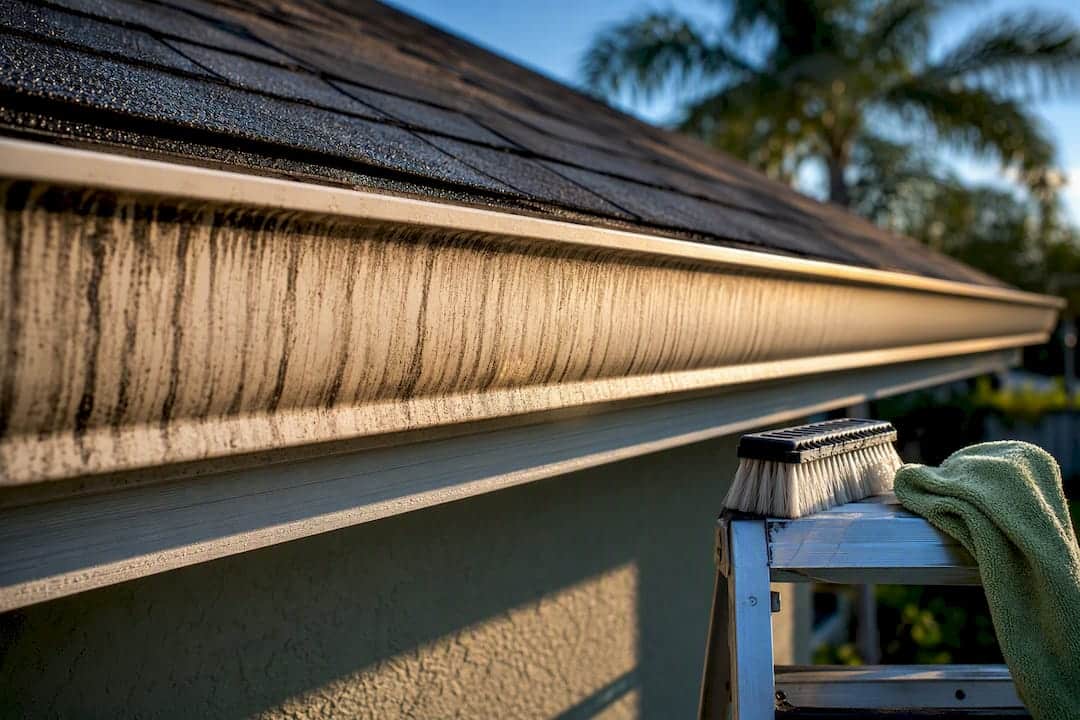
Tiger stripes are the black vertical streaks running down your gutter face, and they’re caused by asphalt runoff and airborne grime bonding chemically to oxidized aluminum or painted finishes. Pressure washing and dish soap rarely remove them because the stain isn’t sitting on the surface, it’s fused to it. A dedicated gutter brightener paired with soft-bristle scrubbing and a top-down rinse breaks that bond reliably. Gutter guards and a yearly wipe-down keep the stripes from coming back as fast.
TL;DR:
- Using a dedicated gutter brightener with soft-bristle scrubbing effectively breaks the electrostatic bond that causes tiger stripe stains, unlike pressure washing or soap.
- Orange and yellow discoloration near overflows or on south and west-facing gutters indicate deeper oxidation or long-term bonding that may require professional-grade cleaners and multiple treatments.
- Preventing stripes relies more on installing gutter guards and regular maintenance than on chemical cleaning alone, with routine wipe-downs significantly reducing recurrence.
- Heat, high UV exposure, older shingles, and frequent overflows accelerate stain formation and bonding, especially in hot climate regions like the Sun Belt.
- When stains are multi-year, deeply baked in, or the finish shows signs of damage, hiring a professional is recommended, as DIY products have limited effectiveness on stubborn or underlying damage.
Table of Contents
- What Causes Tiger Stripes on Gutters?
- Which Removal Method Actually Works?
- How to Remove Tiger Stripes Step by Step
- Choosing the Right Product and Staying Safe
- Preventing Tiger Stripes From Coming Back
- When Should You Hire a Professional Instead?
- What Our Crews See on Real Gutter-Stripe Jobs
- What Actually Matters Here
- Get a Free Gutter Inspection and Quote
- Sources
What Causes Tiger Stripes on Gutters?
The stains form when water carrying asphalt shingle residue, pollen, and road pollutants runs off your roof and drips over the front lip of the gutter. That runoff doesn’t just sit there and dry. It chemically and electrostatically bonds to the oxidized or painted aluminum underneath, creating a stain that’s part of the metal’s surface rather than a layer sitting on top of it, according to the breakdown from Sacramento Gutter Guard. That’s the whole reason soap and water bounce right off without touching the discoloration.
A few conditions make the bond form faster and cling harder:
- Roof pitch and overhang: steeper roofs and closer overhangs concentrate runoff into the same drip points, so those spots stripe first and worst.
- Shingle age: older asphalt shingles shed more oil and granule residue, feeding the stain.
- Sun exposure: south and west-facing gutters bake in UV light, which speeds oxidation on the aluminum and helps the stain cure into the surface.
- Overflow history: any section that’s overflowed even once tends to develop a stubborn stripe, because standing water gives the residue more contact time to bond.
Heat plays a bigger role than most homeowners realize. In hot climates, the combination of UV exposure and high surface temperature can bake stripes into the gutter faster than in cooler regions, and it also means any cleaning product you apply evaporates faster than the label expects. Pros working in Sun Belt states typically shorten their working sections and keep the surface wet throughout the dwell time for exactly this reason. If you’ve noticed your gutters restriping within a single season, heat and overflow are usually why.
Curious what other stain patterns mean? Different gutter discoloration types point to different root causes, from rust spotting to algae streaking, and tiger stripes are only one of them.
Which Removal Method Actually Works?
Not every cleaner sold for gutters actually removes tiger stripes, and the ones that do fall into a few clear categories.
- Ready-to-use sprays: pre-mixed cleaners you spray straight from the bottle. Easiest option for a small number of stripes, but you pay more per square foot of coverage.
- Concentrates: mix-it-yourself formulas that cover far more linear footage per dollar, better suited to a whole-house job or repeat use.
- Professional-grade brighteners: stronger formulations pros use for baked-on, multi-year staining that consumer sprays can’t touch.
- What doesn’t work: pressure washing alone, dish soap, all-purpose degreasers, and bleach.
Dedicated gutter brighteners work because they’re formulated to break the electrostatic bond between the stain and the oxidized aluminum, not just lift surface grime. Brands like Gutter Butter, Krud Kutter Gutter Wash, Gutter Zap, and CHOMP Gutter Cleaner are built specifically around that chemistry, and pro-grade concentrates like F-13 (Gutter Grenade) step up the strength for stains that have had years to set in. Southeast Softwash’s cleaning guide confirms this is the standard professional approach, not a shortcut.
Pressure washing gets recommended constantly online, and it’s often the wrong call. Blasting a stripe at close range can strip paint, dent soft aluminum, and force water up behind the fascia board where it causes rot you won’t see for months. Roanoke’s pressure washing pros point out that gutter brightening relies on chemical action and gentle agitation, not water pressure, and that’s the distinction that separates a clean gutter from a damaged one.
How to Remove Tiger Stripes Step by Step
This workflow assumes you’re comfortable on a ladder and working with mild acid-based cleaners. If either of those makes you nervous, skip ahead to the section on hiring a pro.
1. Clear the gutters and check the downspouts first.
Scoop out leaves and debris before you touch a brightener. Run a hose through each downspout to confirm water exits freely. Cleaning a gutter that’s still clogged just means you’re scrubbing stains next to standing water, and any overflow during the job soaks your ladder footing.
2. Pre-wet everything around the work zone.
Soak the siding below the gutter, nearby plants, and any concrete or pavers the runoff will hit. Wet surfaces dilute stray brightener before it can etch or discolor them. If you’ve got delicate landscaping directly under the drip line, lay down plastic sheeting or an old tarp.
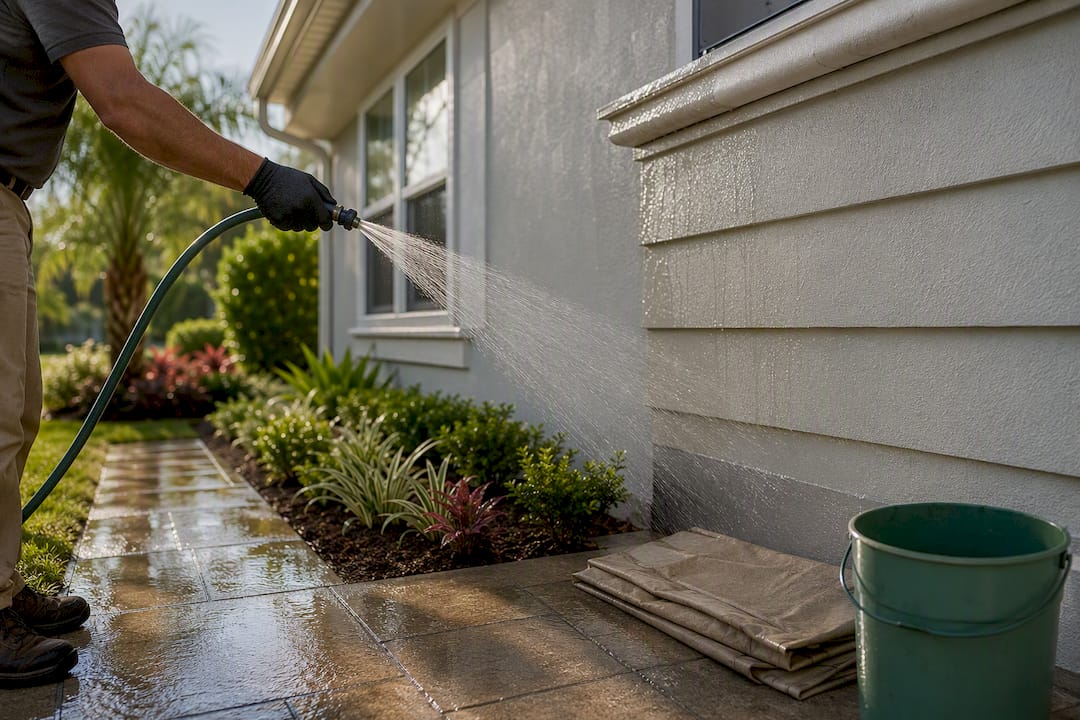
**3. Concentrates need accurate dilution ratios, not eyeballed guesses. Too weak and you’ll be scrubbing forever; too strong and you risk lifting paint off an older finish. Read the bottle every time, even if you used the same product last year.
4. Work in 3 to 6 foot sections.
Don’t apply brightener to the whole run of gutter at once. Small sections keep the solution wet and active instead of drying out before you can scrub it, especially in direct sun or high heat.
5. Apply, then let it dwell for 2 to 5 minutes.
Dwell time is where the chemical does the actual work of breaking the stain’s bond to the metal. Shorten this in hot weather since the solution evaporates faster; extend it slightly on cooler, shaded sections. Never let it dry completely on the surface.
6. Agitate gently with a soft-bristle brush.
A car wash brush or a dedicated gutter brush works fine. Skip wire brushes entirely. They scratch the finish and create tiny abrasions where the next round of runoff bonds even faster than before.
7. Rinse top-down with a garden hose.
Start rinsing from the top edge of the gutter and let gravity carry the loosened stain and chemical residue downward and off. Rinsing bottom-up just pushes dirty runoff back up into clean sections.
8. Repeat on stubborn spots.
Multi-year stripes rarely lift in one pass. Reapply brightener, dwell again, and scrub a second time rather than reaching for a stronger chemical or a wire brush out of frustration.
9. Do a post-work walk-around.
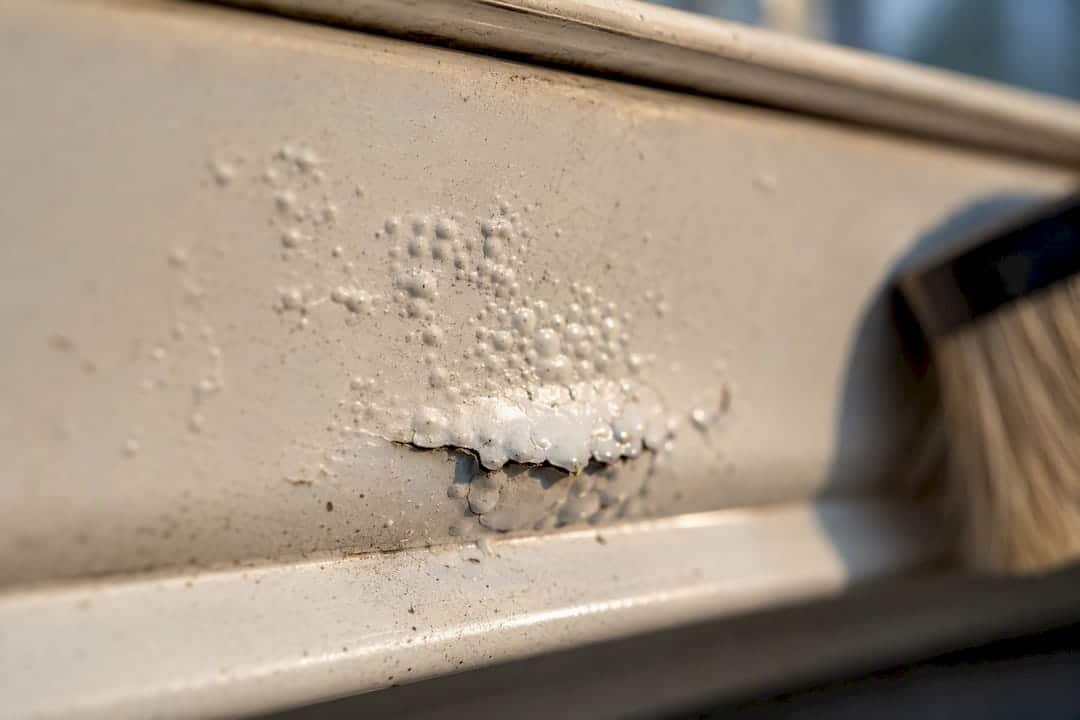
Check for any spots where paint looks lifted, bubbled, or duller than surrounding sections; that’s a sign the dwell time ran too long or the mix was too strong there. Rinse any brightener runoff off nearby plants and concrete, and neutralize per the product label if it calls for it.
Pro Tip: Work the shaded side of the house first thing in the morning and save sun-baked, west-facing runs for late afternoon. The cleaner stays wet longer on cooler surfaces, which means better results with less scrubbing.
If a section shows heavy discoloration remaining even after two passes with brightener, that’s often the point where you’re dealing with either failed paint or aluminum oxidation deep enough that a topical cleaner won’t fully reverse it. At that stage, repainting the gutter face or planning a section replacement becomes the more realistic fix.
Choosing the Right Product and Staying Safe
Match the product to the severity of the staining rather than grabbing whatever’s cheapest on the shelf. Light, single-season stripes usually respond to a ready-to-use spray like Gutter Zap or CHOMP applied straight from the bottle. Moderate, multi-year staining calls for a concentrate like Krud Kutter Gutter Wash or Gutter Butter, mixed at full strength per the label. Heavily baked-on stripes, the kind that have survived a previous cleaning attempt, are where pro-grade formulas like F-13 earn their higher price tag.
Coverage varies by brand and dilution, but as a rough guide, a quart of concentrate mixed at standard ratios typically stretches across 100 to 150 linear feet of gutter, while a gallon can cover a full-size single-story home. Always check the specific product label for its exact coverage claim, since dilution ratios differ across manufacturer product lines.
Protective gear isn’t optional here, even for a job that looks simple from the ground:
- Chemical-resistant gloves to keep acid-based brighteners off your skin.
- Safety goggles, since splash-back off an overhead gutter is common.
- Old clothes or an apron, because these products can bleach fabric.
- Plant covers or a heavy pre-soak for anything growing directly beneath the gutter line.
- A downstream diversion so runoff doesn’t pool against concrete or pavers, which acid-based cleaners can etch or discolor over repeated exposure.
New Home Glow’s guide on gutter staining is blunt about the risk: oxalic and acid-based brighteners can damage skin, eyes, plants, and concrete if you skip the dilution instructions or let the product sit too long. That’s not a scare tactic, it’s the same chemistry that makes these products effective against stains working against you if it’s misused.
Watch for these red flags while you work, and stop immediately if you see them: bubbling or lifting paint, a strong fizzing reaction on an older or already-weathered finish, or discoloration spreading beyond the area you applied product to. Those signs usually mean the underlying finish is already compromised, and continuing to scrub or apply more chemical will make the damage worse, not the stain better. That’s a call-a-pro moment, not a stronger-cleaner moment.
If you’re buying online, pro-grade concentrates like F-13 Gutter Grenade are widely available through major retail listings, so sourcing isn’t the hard part. Using it correctly on an older finish is.
Preventing Tiger Stripes From Coming Back
Cleaning removes the stripe; it doesn’t stop the next one from forming. Prevention is where most homeowners drop the ball, because it’s less satisfying than a visible before-and-after.
- Install gutter guards. Guards keep leaf litter and asphalt grit from sitting in the trough and washing over the lip, and pros commonly report guards slowing stripe recurrence dramatically once debris dams stop feeding the drip line, according to Southeast Softwash. If you’re comparing guard styles, this rundown of guard types breaks down which ones handle heavy debris versus fine grit best.
- Wipe the exterior annually, ideally right before your region’s heaviest rain season, so residue never gets more than a year to bond.
- Clean the interior on a regular schedule rather than waiting for visible overflow. Clogged interiors are what cause the overflow points that stripe fastest.
- Fix drainage issues at the source. A gutter pitched wrong or a downspout that’s undersized will keep creating the same overflow drip point no matter how many times you brighten it.
Pro Tip: After brightening, wipe a light coat of automotive paste wax, like a standard product used for car finishes, along the gutter face. It creates a barrier that slows how quickly new residue can re-bond to the surface, and reapplying every 12 to 18 months keeps that protection active.
None of this is glamorous work, but the combination of guards plus an annual wipe-down is the closest thing to a permanent fix short of replacing the gutters entirely.
When Should You Hire a Professional Instead?
Some situations are worth paying for, and pretending otherwise usually costs more in the end. Call a pro when:
- The staining is multi-year and baked-on. If a stripe has survived a previous cleaning attempt, it’s likely bonded deeper into an already-oxidized surface than a single DIY pass will fix.
- Access is genuinely risky. Two-story runs, steep rooflines, or gutters near power lines aren’t worth the fall risk to save a weekend.
- The paint or finish looks fragile. Chalky, peeling, or already-discolored paint can lift entirely under brightener, turning a cleaning job into a repaint job.
- You’ve tried once and it didn’t work. That’s usually a sign the stain, the finish, or both need a professional-strength approach.
On cost, DIY brightener products generally run $15 to $40 for enough product to handle a typical house, while professional brightening services are often priced around $1 per linear foot, or roughly $150 to $400 for a standard single-family home. Get a local quote for your exact footage and stain severity, since pricing varies by region and access difficulty.
Before hiring anyone, ask a few direct questions: what product they’re using and why, how long they let it dwell, how they’re protecting your landscaping and concrete, whether they carry insurance, and whether they can show photos of comparable jobs. A pro who hesitates on any of those is worth skipping.
Realistic expectations matter too. Most gutters come back looking close to new after a proper brightening treatment. Very old aluminum with deep oxidation underneath the stain may retain a faint shadow even after the black streaking lifts, and that’s a sign of surface age, not a failed cleaning job. If a section is severely pitted or the finish has failed structurally, replacing that run of gutter is often more cost-effective than repeated brightening attempts.
What Our Crews See on Real Gutter-Stripe Jobs
A local gutter service provider handles seamless gutter installation, gutter guard installation, and cleaning and repair across homes in Central Florida, and tiger stripes come up constantly on service calls, especially on homes near heavy tree cover or with asphalt shingle roofs shedding onto older aluminum runs.
A few things installers notice in the field that don’t always make it into general cleaning guides: finish age changes which cleaner makes sense. A gutter installed within the last five to seven years usually has enough factory-baked paint left to handle a standard brightener without issue. Anything older, especially if it’s already showing chalking or fading, needs a gentler approach or a test patch first, because that finish has less protective coating left to lose.
Logistics matter more than people expect. On jobs near dense landscaping, crews typically pre-soak beds and cover anything directly under the drip line before applying any chemical, since runoff direction from a gutter isn’t always obvious until water’s actually running down it. And on homes where staining keeps returning to the exact same three-foot section year after year, that’s rarely a cleaning problem. It’s almost always a pitch or overflow issue that needs a fix at the drainage level, not another round of scrubbing. Central Florida’s rain intensity tends to expose those design flaws faster than milder climates would.
What Actually Matters Here
Most gutter advice online treats tiger stripes as a one-time cleaning problem, and that’s the biggest misread in this whole topic. The stripe you’re scrubbing off today came from a specific overflow point or roof geometry, and if that point doesn’t change, the stain comes back on a predictable schedule, usually faster than homeowners expect.
The conventional wisdom oversells the cleaner and undersells the maintenance cadence. A $30 brightener bottle gets all the attention because it’s satisfying to watch a black stripe disappear. Guards and annual wipe-downs get ignored because there’s no dramatic before-and-after photo. But the research is consistent: prevention through guards and routine wiping does more to keep gutters clean long-term than any single brightening product.
If you’re only going to do one thing well, prioritize fixing whatever’s causing the overflow point before you worry about which cleaner to buy. A brightener without a prevention plan just means you’ll be back on that ladder again next season.
— Results
Get a Free Gutter Inspection and Quote
If scrubbing stripes off a ladder every season sounds like a fight you’d rather skip, that’s exactly the gap Larrysgutters fills. Central Florida’s mix of asphalt shingle runoff, heavy rain, and intense sun bakes stripes onto aluminum faster than milder climates, and a professional brightening visit paired with the right prevention plan solves the problem instead of just resetting the clock.

A typical service call starts with an inspection of your current gutters, including finish condition, overflow points, and how much staining has built up. From there, Larrysgutters recommends the right fix, whether that’s a brightening treatment, a gutter guard installation to stop the debris causing the drip lines in the first place, or a repair to the drainage issue creating the overflow. You’ll get an estimated price range before any work starts, no surprises once a crew is on your roofline.
If your gutters are older, showing paint failure, or the staining keeps returning to the same section no matter how often you clean it, that’s usually a sign it’s time to look at full replacement options instead of another cleaning cycle. Request a free quote and inspection today, and find out which fix actually solves your tiger stripe problem for good.
For readers dealing with runoff near garden beds or delicate plantings during any brightening treatment, this mold and moisture prevention checklist offers a useful routine for protecting surfaces from chemical runoff between cleanings.
Sources
- Gutter Tiger Stripes Sacramento | Remove Black Streaks | Sacramento Gutter Guard
- How to Clean Gutters and Remove Tiger Stripes – Southeast Softwash
- What Causes Black Streaks on Gutters (And How to Get Rid of Them) | New Home Glow
- Tiger Stripe | Gutter Cleaner & Brightener
- What is gutter brightening? Roanoke’s guide to ‘Tiger Stripe’ removal – Pro Pressure Washing Solutions
