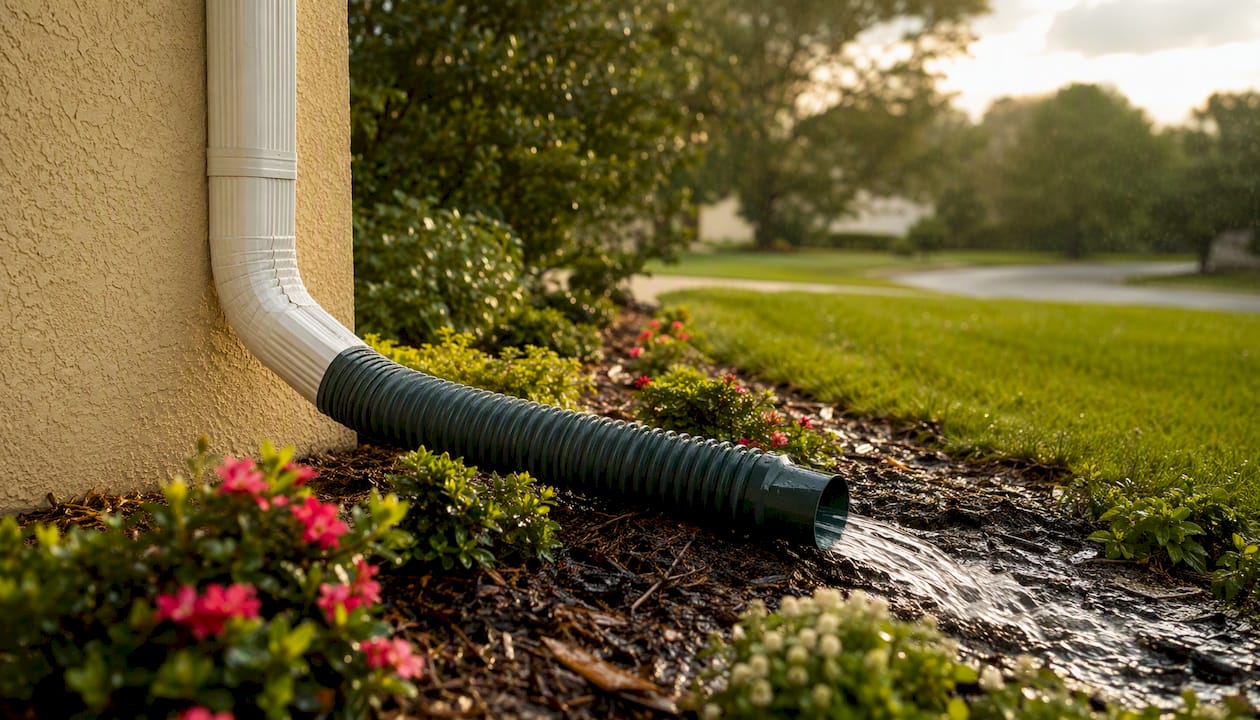
The fastest way to cut your risk of costly water damage is a focused maintenance routine that secures your roof, gutters, drainage, and plumbing before a problem starts. The Insurance Information Institute identifies exterior envelope maintenance as the single most effective strategy for avoiding the most common non-flood water damage claims, and the National Flood Insurance Program echoes that regular inspections and prompt repairs are what separate homeowners who file claims from those who don’t. Larrysgutters adds a local layer to that advice: in Central Florida’s heavy-rain climate, gutters and downspouts are often the first line of defense that fails.
Do these this week:
- Locate your main water shutoff valve and confirm it turns freely (15 minutes)
- Walk your gutters and clear any visible debris from downspout openings (30 minutes)
- Check under every sink and behind the washing machine for drips or mineral staining (20 minutes)
- Test your sump pump by pouring a bucket of water into the pit (10 minutes)
- Look at your water heater’s base pan for rust or pooling (5 minutes)
- Inspect window and door caulk for cracks or gaps (20 minutes)
- Confirm smoke and CO detectors work, then add a basic leak sensor near your water heater (30 minutes)
Table of Contents
- Your seasonal home water damage prevention checklist
- 1. Keep gutters clear and downspouts pointed away from the foundation
- 2. Inspect your roof, flashing, and attic after every major storm
- 3. Grade your soil and manage landscape runoff
- 4. Seal basement walls, floors, and entry points
- 5. Install and maintain a backflow valve to prevent sewer backup
- 6. Maintain your interior plumbing, appliances, and water heater
- 7. Prevent pipes from freezing during cold snaps
- 8. Install leak sensors and consider an automatic shutoff system
- 9. Recognize early warning signs and respond immediately
- 10. Understand typical costs and maintenance timelines
- 11. Why gutters are the highest-leverage exterior protection for your home
- Key Takeaways
- The case for spending $200 now instead of $20,000 later
- Larrysgutters protects Central Florida homes from the outside in
- Useful sources and further reading
Your seasonal home water damage prevention checklist
Staying ahead of water damage is mostly a scheduling problem. Most homeowners know what to check; they just don’t have a calendar for it. The table below turns the highest-impact tasks into a repeatable schedule.
| Task | Frequency | DIY or Pro? |
|---|---|---|
| Clear gutters and downspouts regularly throughout the year | DIY or pro | |
| Inspect roof, flashing, and pipe boots | Twice yearly + after major storms | Pro recommended |
| Test sump pump with bucket method | Monthly during wet season | DIY |
| Check appliance hoses periodically | DIY | |
| Flush AC condensate drain line periodically | DIY | |
| Inspect water heater T&P valve and base pan regularly | DIY; replace with pro | |
| Check caulk around windows, doors, and tubs periodically | DIY | |
| Confirm main shutoff valve operation regularly | DIY | |
| Backflow valve inspection regularly | Licensed plumber | |
| Full gutter cleaning and guard inspection periodically | Pro recommended |
Who to call and when:
- Plumber: active leak, no water pressure, water heater failure, backflow valve work
- Roofer: missing shingles, visible flashing damage, attic moisture after a storm
- Gutter specialist (Larrysgutters): clogged or sagging gutters, improper downspout discharge, guard installation or replacement
- Restoration company: any standing water, visible mold, or water-soaked drywall after an event
For a quick 10-minute check, locate your main shutoff (usually near the water meter or where the main line enters the house), confirm it moves freely, then pour 5–10 gallons into the sump pit and watch the float switch trigger the pump. These two checks alone can prevent the most common large-loss scenarios.
1. Keep gutters clear and downspouts pointed away from the foundation
Blocked gutters concentrate roof runoff directly at your foundation instead of routing it safely away. That concentrated flow is one of the leading contributors to basement seepage, siding rot, and fascia decay. Clean gutters at least twice a year, spring and fall, and add a third cleaning after any major storm if you have overhanging trees.
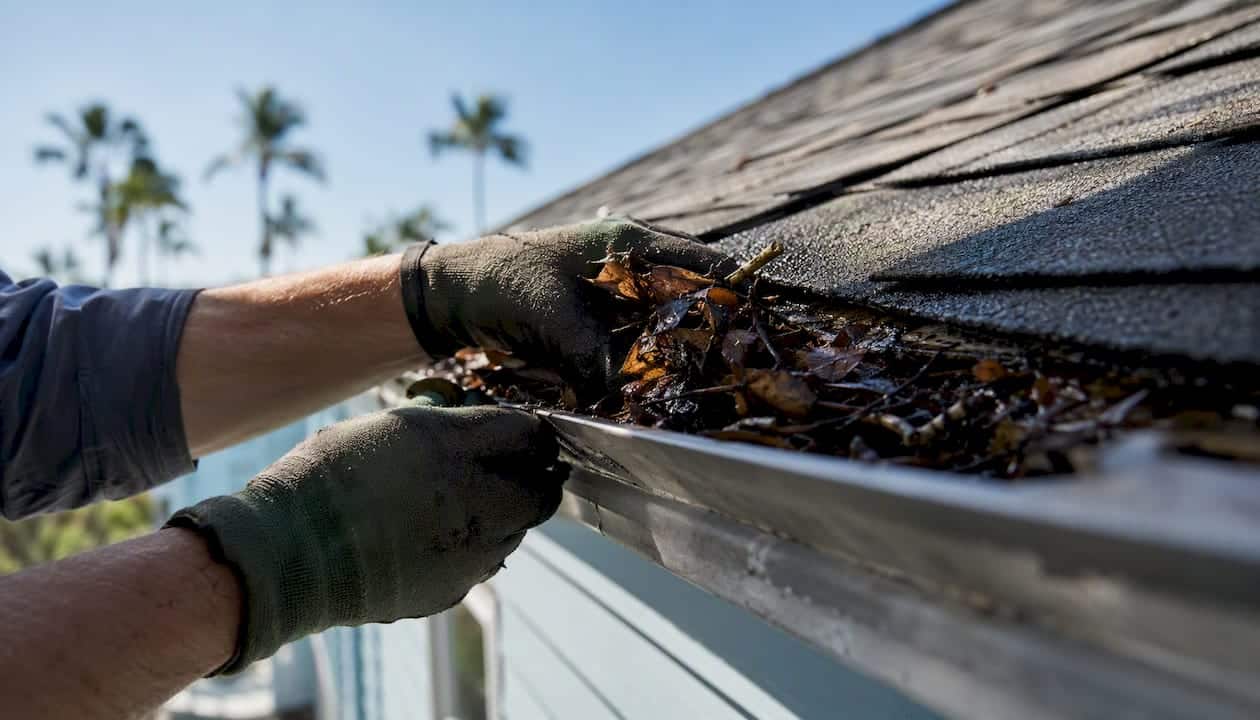
Downspout discharge matters as much as the cleaning itself. Extensions should carry water at least 5–6 feet from the foundation, per exterior maintenance guidance. A $15 plastic extension from a hardware store is one of the cheapest water damage prevention investments you can make.
Pro Tip: If you’re tired of cleaning gutters twice a year, gutter guards don’t eliminate maintenance entirely, but they do reduce the frequency and the risk of a clog going unnoticed between cleanings. Ask a contractor about mesh or micro-mesh options sized for your tree type.
2. Inspect your roof, flashing, and attic after every major storm
Roof failures are almost always visible before they become expensive. From the ground, look for missing or curled shingles, dark staining around chimney bases, and any flashing that appears lifted or buckled. Inside the attic, a flashlight scan after heavy rain will reveal wet insulation, water trails on rafters, or daylight through penetrations.
Pipe boots (the rubber collars around plumbing vents) crack and shrink over time and are among the most common entry points for water. They’re inexpensive to replace but easy to miss. Homes in hurricane-prone regions like Central Florida need post-storm flashing checks as a standard habit, not an occasional one.
Hire a licensed roofer any time you see active staining, lifted flashing, or damaged valleys. Walking an unfamiliar roof without proper equipment creates more risk than it solves.
3. Grade your soil and manage landscape runoff
The ground around your foundation should slope away from the house at roughly 1 inch per foot for the first 6 feet. When soil settles or landscaping raises grade against the siding, water pools against the foundation wall instead of draining away. A splash block under each downspout extension helps redirect the final discharge.

Mulch beds are a common culprit. Piling mulch against the siding traps moisture against wood or stucco for weeks at a time. Keep mulch at least 6 inches back from the foundation and check that the grade hasn’t shifted after heavy rains.
4. Seal basement walls, floors, and entry points
Basement waterproofing works in layers. Hydraulic cement fills active cracks in concrete block or poured walls. Elastomeric paint or a crystalline waterproofing compound applied to interior walls slows vapor transmission. Neither replaces proper exterior drainage, but both reduce the moisture load on interior finishes.
Window wells on basement windows need covers and proper drainage at their base. A clogged window well can fill with water during a storm and push directly through the frame. Check them every spring.
5. Install and maintain a backflow valve to prevent sewer backup
Sewer backups are among the messiest and most expensive water damage events a homeowner can face, and standard homeowner’s insurance policies typically exclude them. A backflow prevention valve (sometimes called a check valve or backwater valve) installed on the main sewer line prevents sewage from reversing into the home during heavy rain events or municipal system overloads.
Installation requires a licensed plumber and typically involves cutting into the main drain line. Have the valve inspected annually to confirm the flap moves freely and hasn’t accumulated debris.
6. Maintain your interior plumbing, appliances, and water heater
Most interior water damage starts small. Slow drips and minor staining are the typical early signs that precede large claims. A 30-minute monthly walk-through catches most of them.
- Locate and label shutoff valves. Every toilet, sink, and appliance has a local shutoff. Know where each one is before you need it. The main shutoff is your last resort; zone shutoffs let you isolate a problem without cutting water to the whole house.
- Replace rubber supply hoses. Standard rubber hoses on washing machines and dishwashers degrade and fail, often without warning. Replace them every 5 years or switch to braided stainless steel lines, which resist cracking and kinking.
- Check the refrigerator icemaker line. Plastic icemaker supply lines are a frequent source of slow leaks behind the fridge. Inspect the connection annually and replace any line showing discoloration or brittleness.
- Test the sump pump monthly during wet season. Pour a 5–10 gallon bucket into the pit and confirm the float switch triggers the pump. If the pump runs but doesn’t clear the water quickly, the discharge line may be blocked. Consider a battery backup for properties in flood-prone areas.
- Inspect the water heater annually. Check the base pan for rust or standing water. Test the temperature and pressure (T&P) relief valve by lifting the lever briefly — water should discharge and stop when you release it. A water heater over 10 years old warrants a professional assessment; most units last 8–12 years.
- Flush the AC condensate drain line quarterly. In humid climates, algae clogs condensate lines fast. A diluted bleach solution poured into the drain pan access point every three months keeps the line clear and prevents hidden overflow into ceilings or wall cavities.
7. Prevent pipes from freezing during cold snaps
Florida homeowners rarely think about frozen pipes, but a single hard freeze can split copper or PVC in an uninsulated garage or crawl space. Northern homeowners face this risk every winter.
- Insulate exposed pipes in attics, crawl spaces, and exterior walls with foam pipe insulation or fiberglass wrap. For very cold climates, heat tape rated for the pipe type adds a second layer of protection.
- Keep cabinet doors open under sinks on exterior walls during freezes so warm interior air reaches the pipes.
- Let faucets drip on lines that run through unheated spaces. Moving water resists freezing.
- Hold the thermostat at 55°F minimum even when the house is vacant. The cost of the heat is trivial compared to a burst pipe.
- Never use an open flame to thaw a frozen pipe. A heat gun on a low setting or warm towels are safer options. If a pipe has already burst, shut off the main water supply immediately before attempting any thaw.
8. Install leak sensors and consider an automatic shutoff system
Early detection is what separates a mopped-up puddle from a gutted kitchen. Leak sensors have dropped in price to the point where there’s no good reason not to have them in the highest-risk spots.
- Basic audible sensors ($15–$30 each) sit on the floor under sinks, behind appliances, and near the water heater. They sound an alarm when wet. Simple, reliable, and cheap.
- Wi-Fi connected sensors ($30–$80 each) send a phone alert when triggered. Useful for vacation homes or anyone who travels frequently.
- Whole-home automatic shutoff systems ($300–$800 installed) monitor flow patterns and shut off the main supply when they detect an anomaly. The ROI is strongest for homes with finished basements, older plumbing, or frequent vacancies.
Place sensors at: under every sink, behind the washing machine and dishwasher, near the water heater base, at the sump pit, and at any low point in a basement or crawl space. Check batteries every six months when you change smoke detector batteries.
9. Recognize early warning signs and respond immediately
Major claims usually start with signs homeowners notice but don’t act on. Practitioners report that musty smells, small stains, and persistent damp spots are the typical precursors to large losses.
Watch for:
- Musty or earthy odors in closets, under sinks, or in the basement
- Water stains on ceilings or walls, even old-looking ones
- Doors or windows that suddenly stick (framing swells when wet)
- Unexplained spikes in your water bill
- Visible mold or mildew on grout, drywall, or wood trim
When you find a leak, do this in order:
- Stop the source. Use the nearest zone shutoff or the main shutoff if you can’t isolate it.
- Move valuables and electronics out of the affected area.
- Document everything with photos and video before touching anything.
- Call your insurer to report the event and ask about emergency mitigation coverage.
- Contact a licensed restoration company if there is standing water, wet drywall, or any sign of mold.
Standard homeowner’s insurance covers sudden, accidental water damage (burst pipe, appliance failure) but not flooding from outside the home. Flood coverage requires a separate policy through the National Flood Insurance Program or a private carrier. Know which you have before you need it.
10. Understand typical costs and maintenance timelines
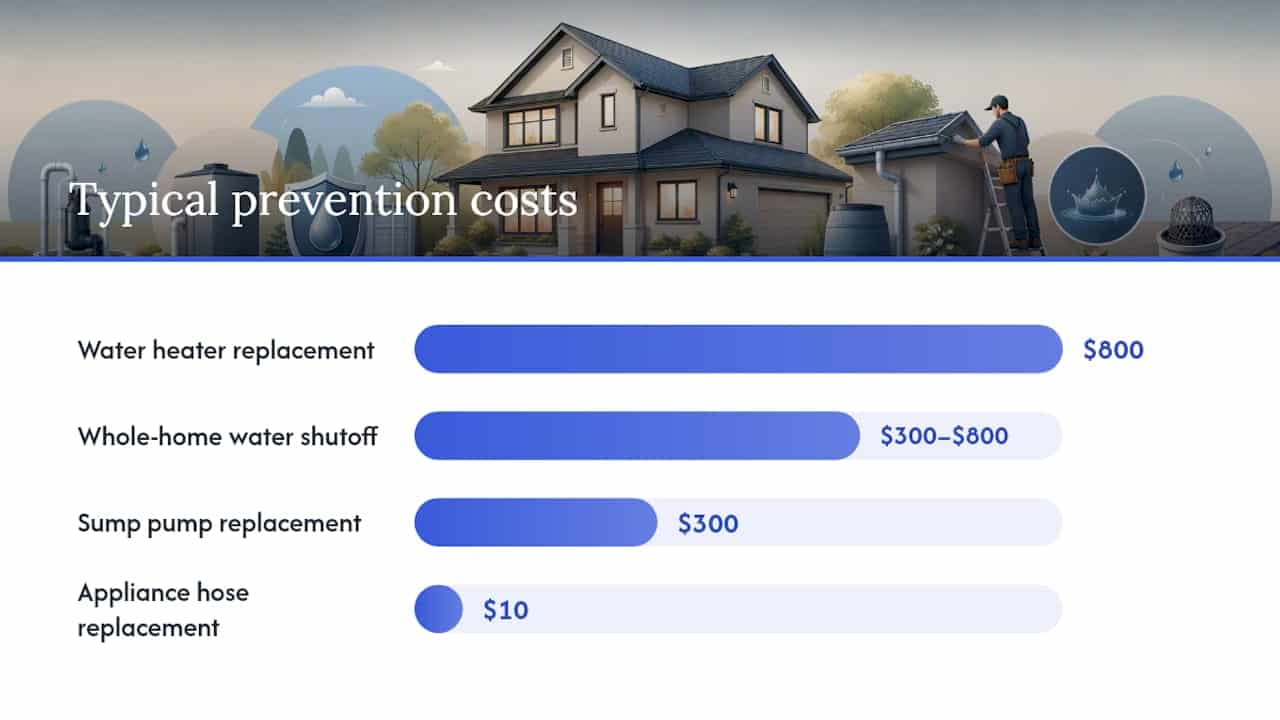
Budgeting for prevention is far easier than budgeting for restoration. The table below gives realistic ranges for the most common tasks.
| Task | Typical Cost Range | Recommended Frequency |
|---|---|---|
| Gutter cleaning | — | Twice yearly |
| Gutter guard installation | — | Once; inspect annually |
| Roof patching (minor) | — | As needed after inspection |
| Appliance supply hose replacement | $10 DIY | Every 5 years |
| Sump pump replacement | $300 installed | Every 7–10 years |
| Whole-home water shutoff system | $300–$800 installed | Once; test annually |
| Water heater replacement | $800 installed | Every 8–12 years |
| Backflow valve installation | — | Once; inspect annually |
| Basement waterproofing (interior) | — | As needed |
For homeowners with limited budgets, prioritize in this order: gutter cleaning and downspout extensions first (highest frequency of claim prevention per dollar), then appliance hose replacement, then a basic leak sensor kit. Professional interventions like sump pump replacement and backflow valve installation are worth scheduling before a failure, not after.
11. Why gutters are the highest-leverage exterior protection for your home
Properly sized, installed, and maintained gutters do more than catch rain. They route every drop that falls on your roof away from the foundation, fascia, siding, and landscaping in a controlled path. When that system fails, whether from a clog, a sag, or a downspout that discharges too close to the house, the consequences concentrate at the most vulnerable points of the building envelope.
Blocked or misdirected gutters are a direct contributor to foundation seepage and siding rot. The fix is rarely the gutter itself; it’s the discharge point and the maintenance cadence.
What to ask any gutter contractor before hiring:
- Are the gutters sized for my roof’s square footage and pitch? (5-inch K-style is standard; 6-inch is often better for large roofs or high-rainfall areas)
- Where exactly will each downspout discharge, and how far from the foundation?
- What warranty covers both materials and labor?
- What pitch are you setting the gutters at, and how will you handle the corners?
- Which guard type do you recommend for my tree coverage, and does it require annual cleaning?
Seamless vs. sectional gutters: Sectional gutters have joints every few feet, and every joint is a potential leak point. Seamless gutters are fabricated on-site to the exact length of each run, eliminating most of those failure points. For Central Florida’s heavy rainfall and frequent storms, seamless aluminum is the standard recommendation.
Guard types at a glance:
- Screen/mesh guards: block large debris; require occasional cleaning for fine particles
- Micro-mesh guards: block nearly all debris including pine needles and shingle grit; higher upfront cost, lowest maintenance
- Reverse-curve guards: work well in moderate debris environments; can overflow in very heavy rain
Central Florida’s combination of afternoon downpours, hurricane-season storms, and year-round tree debris means gutters need more frequent inspection than in drier climates. A post-storm check of downspout discharge and guard condition should be standard practice after any named storm. Larrysgutters’s gutter maintenance checklist for Florida covers the specific inspection points relevant to the region.
Pro Tip: After a heavy storm, check that each downspout is actually flowing. A guard that’s holding debris can cause the gutter to overflow at the roofline, which looks like a roof leak from inside the attic.
Key Takeaways
Preventing water damage comes down to maintaining the exterior envelope, knowing your shutoffs, and catching small problems before they escalate into large claims.
| Point | Details |
|---|---|
| Exterior envelope first | Gutters, roof, flashing, and grading prevent the largest share of non-flood water damage claims. |
| Schedule beats intention | Clean gutters twice yearly, flush AC drain lines quarterly, and test the sump pump monthly during wet season. |
| Sensors pay for themselves | Basic leak sensors ($15–$30 each) placed under sinks and behind appliances catch slow leaks before they cause structural damage. |
| Know your coverage gap | Standard homeowner’s insurance covers sudden leaks, not flooding; a separate NFIP or private flood policy is required for flood events. |
| Larrysgutters for Central Florida | Larrysgutters provides seamless gutter installation, guard installation, and cleaning and repair tailored to Central Florida’s rainfall patterns and storm season. |
The case for spending $200 now instead of $20,000 later
Most homeowners treat water damage prevention the same way they treat dental cleanings: they know they should do it, they keep meaning to schedule it, and then they don’t until something hurts. The math on that approach is brutal. A gutter cleaning costs much less than the expense of foundation repair from years of misdirected runoff. A burst washing machine hose replacement is far less costly than repairs after a flooded kitchen.
What I find most underestimated is the cumulative effect of small, deferred maintenance. No single missed gutter cleaning destroys a foundation. But three years of overflow against the same corner of a house, combined with a cracked window well and a sump pump that was never tested, creates a loss that looks sudden but was years in the making. The insurer calls it a claim. The homeowner calls it bad luck. The restoration contractor calls it Tuesday.
The emotional cost matters too. Water damage in a finished basement or a primary bedroom is genuinely disruptive in ways that go beyond the repair bill. The displacement, the smell, the weeks of contractors in and out. Prevention is not just cheaper. It’s quieter.
Larrysgutters protects Central Florida homes from the outside in
If the checklist above made you realize your gutters haven’t been cleaned in two years, or your downspouts are discharging right against the foundation, that’s exactly the kind of problem Larrysgutters fixes every day across Central Florida.

Larry’s Gutters installs custom-fit seamless gutters fabricated on-site to your home’s exact dimensions, installs gutter guards matched to your tree coverage and rainfall load, and handles cleaning and repair for existing systems. Every job starts with a site visit and a written estimate, so you know the scope and cost before any work begins. For homeowners weighing whether to repair or replace, the gutter replacement guide for Florida homeowners walks through exactly what that decision involves.
Central Florida’s storm season doesn’t wait for a convenient time. Request a free quote from Larrysgutters and get your gutters assessed before the next heavy rain puts them to the test. You can also explore the full gutter guard installation workflow to see what a professional installation looks like from start to finish.
Useful sources and further reading
The recommendations in this article draw from the following authoritative resources. Keep this list handy alongside your local emergency contacts (insurer, plumber, restoration company, and Larrysgutters).
- How to protect your home from water damage | Insurance Information Institute — Insurer-backed guidance on exterior envelope maintenance as the primary non-flood claim prevention strategy.
- Five Facts to Help New Homeowners Protect Against Water Damage | NFIP for Agents — Federal flood insurance program guidance on inspection habits and coverage distinctions.
- Gutter Maintenance Checklist: Preventing Florida Water Damage | Larrysgutters — Region-specific gutter inspection and cleaning guidance for Central Florida homeowners.
- IICRC — Industry standards body for water damage restoration and remediation; useful for understanding restoration scope and contractor credentials.
