TL;DR:
- Gutter underlayment is a waterproof layer installed between the roof deck and roofing materials to protect against water damage. It plays a critical role in extending roof and gutter lifespan by preventing rot, leaks, and structural issues. Proper installation and quality underlayment choices are essential for effective water management in homes, especially in heavy rainfall areas.
Gutter underlayment is a waterproof barrier installed between the roof deck and roofing materials that channels water directly into your gutters and away from the home’s structure. The industry term for this layer is roof underlayment, and it functions as a secondary defense when shingles or metal roofing fail to stop water on their own. The Asphalt Roofing Manufacturers Association (ARMA) recognizes underlayment as a required performance component in steep-slope roofing systems. Without it, even a small gap in your shingles can send water straight into the wood beneath, causing rot, mold, and structural damage that costs far more than the underlayment itself.
What is gutter underlayment and how does it work?
Roof underlayment is the water-resistant layer installed directly on the roof deck before any shingles, tiles, or metal panels go on. It acts as a backup waterproofing system. When wind-driven rain gets under a shingle or a tile cracks, the underlayment stops that water from reaching the wood deck below.
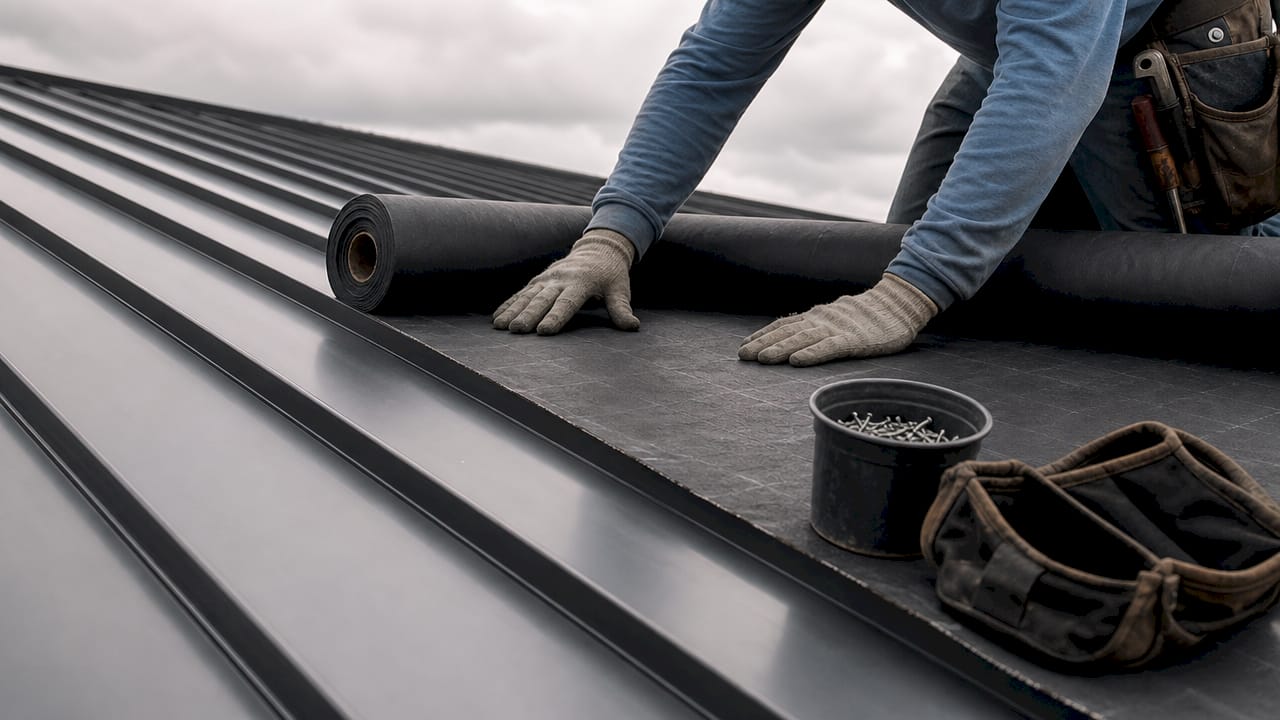
The connection to your gutters is direct. Underlayment at the roof’s lower edge works with the drip edge to guide water off the roof and into the gutter channel. Without proper underlayment at the eaves, water can travel sideways along the fascia board and rot the wood behind the gutter. That kind of damage is invisible until it becomes expensive.
ARMA’s performance standards now push contractors toward materials that meet specific water-resistance thresholds, not just any product that fits the budget. This shift matters for homeowners because it means the underlayment on a code-compliant roof today is meaningfully better than what was installed 20 years ago.
What are the common types of gutter underlayment?
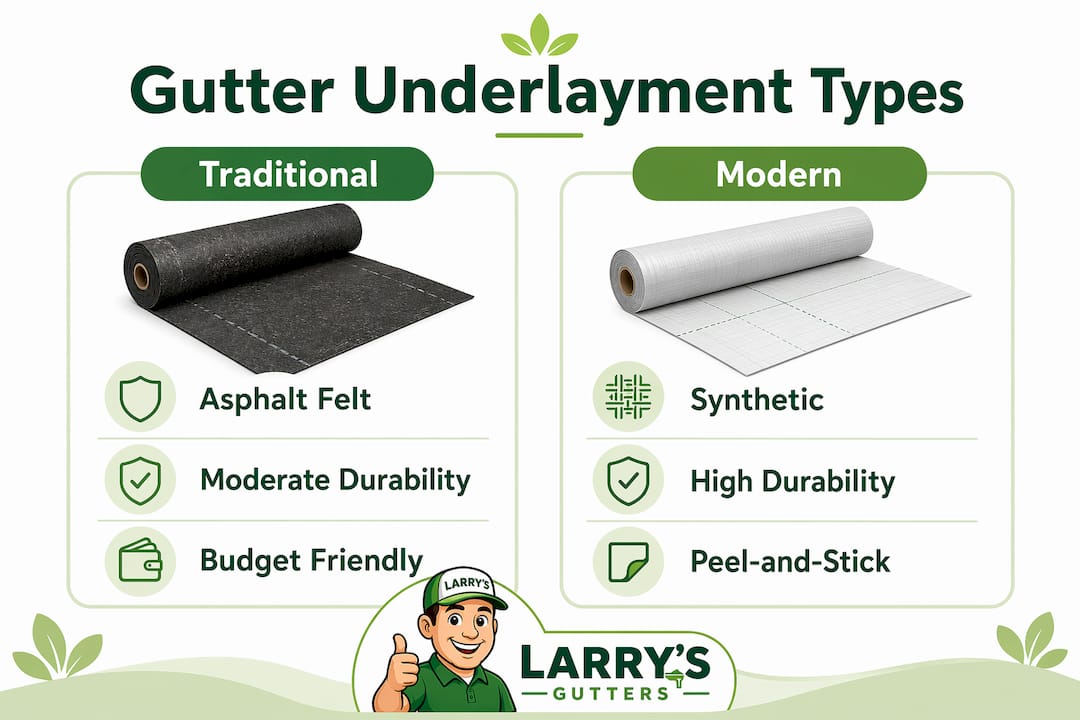
Three main types of roof underlayment are used in 2026: asphalt-saturated felt, synthetic underlayment, and peel-and-stick membrane. Each has a different performance profile and a different price point.
Asphalt-saturated felt
Felt underlayment is the traditional option. It is made from paper or fiberglass saturated with asphalt and comes in two weights: 15-pound and 30-pound. It is the least expensive option and works fine in mild climates with quick installation timelines. The downside is that felt tears easily during installation, absorbs moisture when left exposed, and degrades faster than newer materials.
Synthetic underlayment
Synthetic underlayment is 6–10 times stronger than felt and carries a service life of 30–50 years. That strength difference is significant. It means fewer tears during installation, better resistance to wind uplift, and a much longer window before the material needs replacement. Synthetic is also lighter, which reduces labor time and partially offsets its higher material cost.
Peel-and-stick membrane
Peel-and-stick is a self-adhering, fully waterproof membrane. It bonds directly to the roof deck and seals around nails, which prevents water from entering through fastener holes. It is the most expensive option and is typically reserved for high-risk zones like valleys, eaves, and areas prone to ice damming.
| Type | Durability | Best Use | Key Limitation |
|---|---|---|---|
| Asphalt felt | Low to moderate | Budget installs, mild climates | Tears easily, degrades when exposed |
| Synthetic | High (30–50 years) | Full-roof field coverage | Higher upfront cost |
| Peel-and-stick | Highest | Valleys, eaves, coastal zones | Cost-prohibitive for full coverage |
Pro Tip: A hybrid system works best for most homes. Use synthetic underlayment across the main roof field and peel-and-stick membrane at the eaves and valleys where water concentrates. You get maximum protection where it counts without paying premium prices everywhere.
Why is gutter underlayment important for your home?
Underlayment is the true waterproofing layer of your roof. Shingles shed most of the rain, but they are not a sealed system. Underlayment fills that gap. When a shingle blows off during a Florida storm, the underlayment is the only thing standing between the rain and your roof deck.
The benefits of gutter underlayment extend beyond the roof surface itself:
- Rot prevention: Underlayment at the eaves stops water from wicking into the fascia board and soffit, which are the wood structures your gutters attach to.
- Vapor control: In humid climates like Central Florida, underlayment reduces condensation buildup on the underside of the roof deck.
- Roof lifespan: Quality underlayment extends roof life by 5–10 years compared to downgraded materials.
- Gutter system integrity: Proper underlayment keeps the fascia dry, which keeps gutter hangers anchored securely.
Cutting corners on underlayment is a false economy. Downgrading underlayment quality saves a contractor roughly $400 on a job but costs the homeowner 5–10 years of roof service life. That trade-off almost never makes sense when you run the numbers over the full roof replacement cycle.
Pro Tip: When reviewing a roofing bid, ask the contractor to specify the underlayment brand and type in writing. If the bid just says “standard underlayment,” push for clarification. The difference between felt and synthetic is not visible once the shingles go on, but it shows up clearly in how long the roof lasts.
How is gutter underlayment installed correctly?
Installation sequence is everything. Getting the order wrong is one of the most common mistakes on residential roofs, and it directly affects how well your gutters perform.
The correct sequence for the eave edge is:
- Install peel-and-stick membrane at the eaves. Start at the bottom edge of the roof deck and run the membrane up the slope at least 24 inches past the interior wall line.
- Install the drip edge over the peel-and-stick membrane. The drip edge sits on top of the membrane at the eaves so water flows off the edge and into the gutter.
- Install synthetic or felt underlayment over the drip edge. The underlayment laps over the top of the drip edge flange, locking the system together.
- At the rake edges (sides of the roof), install the drip edge over the underlayment, not under it.
- Install gutters last, positioned so the drip edge directs water into the gutter channel without overshooting.
Incorrect drip edge placement causes water to run behind the gutter and rot the fascia board. This is one of the most common sources of gutter damage on older homes. The fix requires removing the gutters, replacing the fascia, and reinstalling everything correctly.
Pro Tip: Before any roofing work starts, check that your contractor knows the eave drip edge goes over the membrane but under the underlayment. This single detail separates a watertight installation from one that fails in the first heavy rain.
For a full walkthrough of how underlayment and gutters work together, the roof and gutter coordination guide at Larrysgutters covers the sequencing in practical detail.
What are the pitfalls of choosing the wrong underlayment?
The most common mistake homeowners make is accepting whatever underlayment the contractor defaults to without asking questions. Budget shortcuts at this stage have long-term consequences.
Common pitfalls to watch for:
- Choosing felt in a high-rainfall area. Felt absorbs moisture and degrades faster in humid or coastal climates. Florida homes need at minimum a quality synthetic product.
- Skipping peel-and-stick at the eaves. The eave is where water concentrates during heavy rain. Leaving this zone unprotected with standard felt or synthetic invites leaks.
- Ignoring UV exposure ratings. Synthetic underlayment typically allows up to 6 months of outdoor exposure without degrading. Felt degrades quickly if left exposed, which matters when roofing projects get delayed by weather.
- Mismatching underlayment and roofing material. Metal roofing requires a different underlayment specification than asphalt shingles. Using the wrong type voids manufacturer warranties.
- Overlooking vulnerable zones. Valleys, skylights, and chimney flashings need peel-and-stick coverage. Skipping these areas to save money creates the exact leak points that cause the most damage.
A hybrid underlayment system using synthetic as the main field layer with peel-and-stick in vulnerable zones balances performance and cost better than any single-material approach. This is the standard Larrysgutters recommends for Central Florida homes dealing with heavy seasonal rainfall.
How does underlayment affect gutter maintenance and home protection?
Good underlayment reduces the maintenance burden on your entire gutter system. When the fascia stays dry, gutter hangers hold their position and gutters stay properly pitched. When the fascia rots, gutters sag, pull away from the house, and overflow during rain events.
Practical maintenance benefits of proper underlayment include:
- Gutters stay aligned longer because the wood they attach to remains structurally sound.
- Eave and soffit inspections stay simple because there is no hidden rot to find.
- Gutter guard systems perform better when the underlying structure is solid and level.
- Seamless gutter installations last longer when the fascia beneath them is protected from moisture intrusion.
Understanding gutter lifespan in Florida starts with recognizing that the roof system and the gutter system are not separate. They are one connected water management system. Underlayment is the link between them. Neglect it and both systems suffer.
For homeowners who want a complete picture of what keeps a gutter system working year after year, the gutter maintenance guide at Larrysgutters covers inspection schedules, cleaning tips, and signs of underlayment-related damage.
Key takeaways
Roof underlayment is the most overlooked component in a home’s water management system, yet it directly determines how long both the roof and the gutters last.
| Point | Details |
|---|---|
| Underlayment is the real waterproof layer | Shingles shed rain; underlayment stops water from reaching the roof deck when shingles fail. |
| Synthetic outperforms felt significantly | Synthetic underlayment is 6–10 times stronger than felt and lasts 30–50 years. |
| Installation sequence determines performance | Drip edge must go over the eave membrane but under the underlayment to direct water into gutters. |
| Skipping peel-and-stick at eaves is costly | Eaves and valleys need fully waterproof membrane coverage to prevent the most common leak points. |
| Underlayment protects your gutter system too | Dry fascia boards keep gutters anchored, pitched, and functional for their full service life. |
The part of your roof you never think about until it fails
Most homeowners spend their roofing budget on shingles because shingles are visible. Underlayment is invisible the moment the last shingle goes down, and that invisibility is exactly why it gets undervalued.
After seeing what Florida’s summer storm season does to homes with substandard underlayment, the pattern is clear. The homes that hold up are not always the ones with the most expensive shingles. They are the ones where someone paid attention to what went on before the shingles. Felt underlayment installed in a high-humidity climate with no peel-and-stick at the eaves is a slow-motion problem. You will not see it for three or four years. Then one wet season, the fascia softens, the gutters start pulling away, and suddenly you are looking at a repair bill that dwarfs what a synthetic upgrade would have cost.
The other thing homeowners miss is the drip edge sequencing. Getting that order wrong is surprisingly common, even among experienced contractors. Water running behind a gutter instead of into it does not announce itself. It just quietly rots the wood until the gutter falls off the house. Asking your contractor to walk you through the drip edge installation sequence before work starts is one of the highest-value questions you can ask. It costs nothing and tells you immediately whether the person on your roof knows what they are doing.
Underlayment is not glamorous. But it is the reason a well-built roof stays dry for 30 years while a poorly built one starts leaking in five.
— Larrysgutters
Larrysgutters and complete roof-to-gutter protection
Underlayment sets the foundation, but the gutter system that works with it determines how well your home handles Florida’s heavy rainfall season after season.

Larry’s Gutters specializes in seamless gutter installation designed to work with properly installed drip edges and roof underlayment. Seamless gutters eliminate the joints where leaks start, and when they are paired with a correctly sequenced roof edge, water flows exactly where it should. If you are weighing the long-term value, the breakdown of whether seamless gutters are worth it covers the cost and performance case clearly. Larrysgutters serves homeowners across Central Florida with free quotes and professional installations built for the local climate.
FAQ
What is the difference between roof underlayment and gutter underlayment?
Roof underlayment and gutter underlayment refer to the same product. The term “gutter underlayment” describes how the roof underlayment at the eave edge works with the drip edge to direct water into the gutter channel.
Which underlayment type is best for Florida homes?
Synthetic underlayment is the best choice for most Florida homes because it resists humidity, handles UV exposure for up to 6 months, and lasts 30–50 years. Peel-and-stick membrane should be added at eaves and valleys for full protection in high-rainfall areas.
Can I install gutter underlayment myself?
A confident DIY homeowner can install underlayment, but the drip edge sequencing at the eaves requires precision. Incorrect drip edge placement causes water to run behind gutters and rot the fascia, so reviewing a detailed installation guide before starting is strongly recommended.
How does underlayment affect how long my gutters last?
Underlayment keeps the fascia board dry. Since gutters attach to the fascia, a dry fascia means gutters stay properly anchored and pitched for their full service life. Rotted fascia causes gutters to sag and pull away from the house.
Does building code require a specific underlayment type?
Building codes increasingly require performance-based water resistance standards rather than a specific material. In practice, this pushes most code-compliant installations toward synthetic underlayment over traditional felt.
