
TL;DR:
- Proper gutter assessment and safety precautions are vital before removal to prevent hidden damage and accidents.
- Disposing of old gutters through recycling or proper disposal methods ensures environmental responsibility and legal compliance.
- Inspecting and repairing fascia thoroughly before installing new gutters safeguards your home’s long-term water management and structural integrity.
Picture this: a summer afternoon in Central Florida, the sky opens up, and sheets of rain start hammering your roof. Instead of flowing neatly into your gutters and away from your foundation, water cascades over the edge of sagging, rust-stained channels and pools against your siding. That overflow isn’t just an eyesore. It can rot your fascia boards, erode your landscaping, flood your crawl space, and crack your foundation over time. If your gutters have reached that point, removal is not optional. This guide walks you through every phase of the job safely and thoroughly, from the first inspection to prepping for brand-new gutters.
Table of Contents
- Assessing your gutters before removal
- Gathering tools and safety equipment
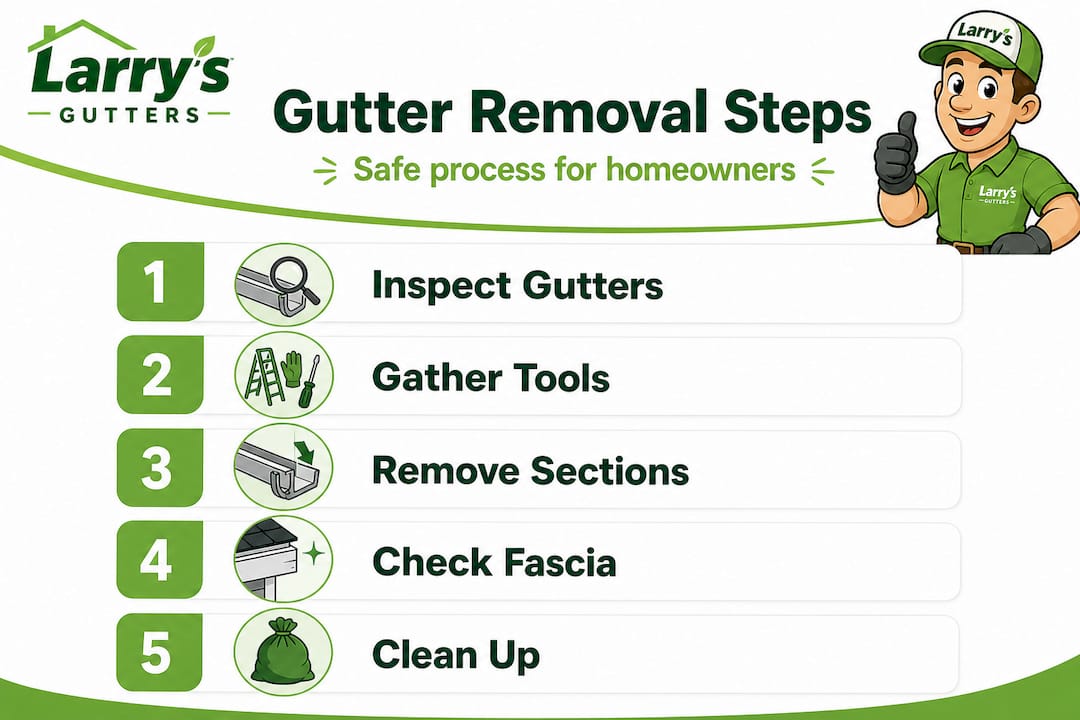
- Step-by-step removal process
- Disposal and recycling: What to do with old gutters
- Preparing for new gutters: Verifying and cleaning fascia
- The real challenge: Why gutter removal demands careful attention
- Get professional help or explore advanced gutter solutions
- Frequently asked questions
Key Takeaways
| Point | Details |
|---|---|
| Know when to remove | Look for leaks, sagging, and rust before starting gutter removal. |
| Safety is crucial | Wear gloves and goggles, use sturdy ladders, and follow clear steps to avoid injury. |
| Dispose responsibly | Recycle metal gutters or pay proper fees; avoid dumping old materials illegally. |
| Prep for new gutters | Clean, inspect, and repair fascia to ensure a strong foundation for new gutter installation. |
| Professional help available | If unsure or needing repairs, local experts offer installation and replacement services. |
Assessing your gutters before removal
Before you climb a single ladder rung, take a hard look at what you’re dealing with. Gutter removal sounds straightforward, but skipping a proper assessment leads to surprises mid-job, like discovering a hornet nest tucked behind a downspout or realizing the fascia beneath is far more rotted than it appeared.
Signs your gutters genuinely need removal include:
- Visible sagging or sections that have pulled away from the fascia
- Rust stains, orange streaking, or holes in the gutter channel
- Persistent leaks at seam joints that reappear after caulking
- Standing water inside the gutter after rain (indicating slope problems)
- Gutter spikes or screws that have backed out and cannot be refastened
- Sections that have separated completely at the corners or end caps
Knowing when gutters need replacing versus when a simple repair will do saves you unnecessary labor. Not every problem requires pulling down the whole system. A single leaking joint might only need resealing. But when you’re stacking up three or more of the issues listed above, full removal and replacement almost always makes more financial sense than patching.
Before you pull anything loose, document the entire system. Walk the perimeter and photograph each section from ground level. Note the number of downspouts, the gutter pitch (angle toward the downspout), and any areas where gutter guards or screens are attached. This documentation becomes your blueprint when the new system goes in.
Don’t overlook potential hazards hiding in plain sight. In Florida’s humid climate, gutters that have been neglected for a few seasons are prime real estate for common gutter problems like pest intrusion, mold growth inside the channel, and damage to the roofline itself. Look for shingle lifting near the gutter edge, check for any electrical conduit or service wires running near the roofline, and probe the fascia with a screwdriver to test for soft spots that signal hidden rot.
Pro Tip: Do your assessment after a heavy rain when problems are most visible. Leaks, overflow points, and pooling areas are obvious when the system is under real stress.
Gathering tools and safety equipment
You’ve decided removal is necessary. Now let’s make sure the job doesn’t land you in urgent care. Working at heights with metal materials is genuinely dangerous, and a few minutes of preparation prevents most accidents.
Tools and equipment you’ll need:
- Extension ladder rated for your weight plus 50 lbs of gear
- Work gloves (heavy leather or cut-resistant synthetic)
- Safety goggles to protect against falling debris and metal shards
- Power drill with screwdriver bits and a hex bit set
- Flat pry bar (a 15-inch bar is ideal for most residential gutters)
- Tin snips for cutting sections when needed
- Bucket or tarp to collect screws and hardware
- Garden hose to flush remaining debris before working
It helps to compare basic homeowner tools against what a professional crew brings to a removal job.
| Task | Homeowner tool | Professional-grade alternative |
|---|---|---|
| Removing screws and spikes | Cordless drill | Impact driver (faster, less fatigue) |
| Prying gutter loose | Flat pry bar | Wide-face gutter pry tool |
| Cutting sections | Tin snips | Power shears or reciprocating saw |
| Working at heights | Standard extension ladder | Scaffolding or roof jacks |
| Carrying long sections | Two-person carry | Strap-and-hook gutter carrier |
For most single-story homes, standard homeowner tools get the job done safely. Two-story jobs shift the risk profile considerably, and that’s where professional help starts to make more financial and physical sense.
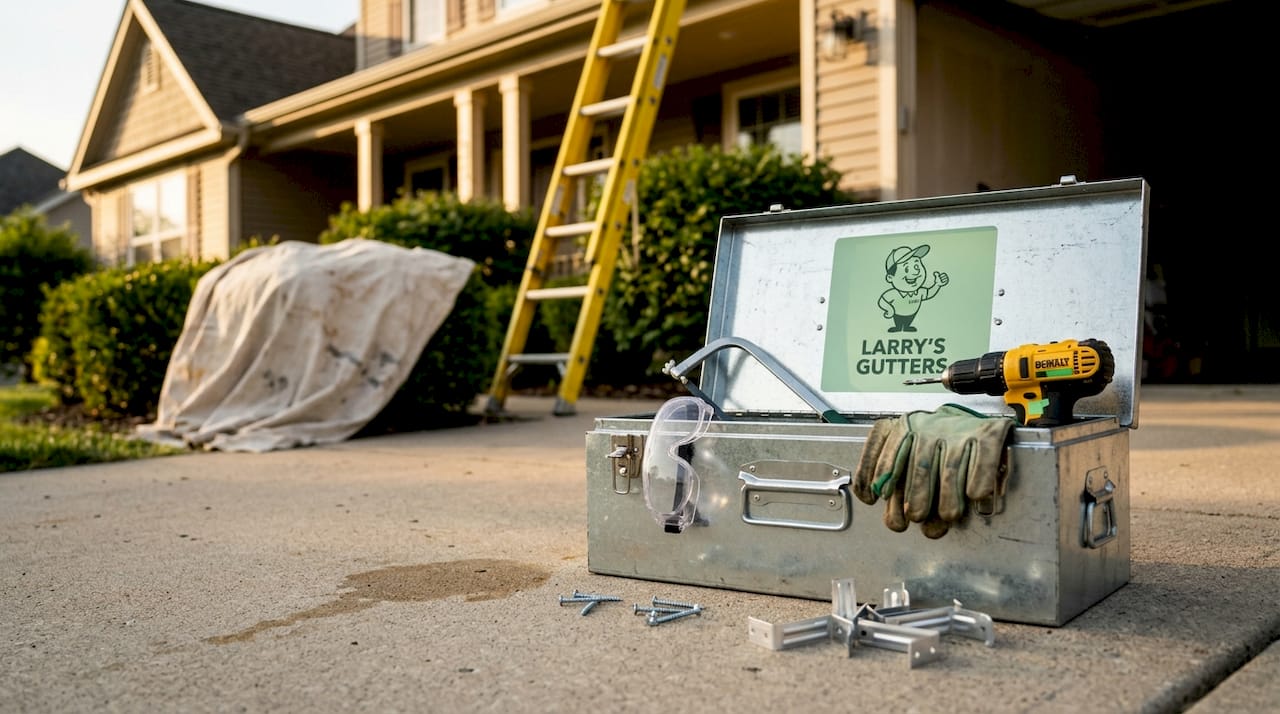
A full gutter maintenance tools list gives you a deeper breakdown of what each tool is used for if you want to build out your kit beyond the basics.
Safety steps that are non-negotiable when working at heights:
- Position your ladder on solid, level ground and never lean it on the gutter itself
- Have someone spot the base whenever possible
- Never reach more than one arm’s length to either side while on the ladder
- Wear rubber-soled shoes with ankle support
- Clear the area below of kids, pets, and bystanders
If your DIY gutter cleaning tips practice has already taught you ladder discipline, you’re ahead of most homeowners starting a removal project.
Pro Tip: Foam ladder stabilizers (also called standoffs) are a worthwhile investment. They keep the ladder away from the wall and give you much better stability near the roofline without resting weight on the gutters.
Step-by-step removal process
With your tools ready and safety gear on, here’s how the actual removal unfolds. Follow the steps in order. Skipping ahead creates unnecessary risk and often damages the fascia you’ll need in good condition for your next gutter installation.
- Clear debris from the gutters first. Scoop out leaves, shingle grit, and standing water using a small garden trowel or gutter scoop. This prevents debris from raining down on you and makes the sections lighter to handle.
- Detach downspouts at the bottom. Loosen the screws connecting the downspout elbows to the underground drain or splash block, then work your way up to where the downspout connects to the gutter outlet. Remove the downspout sections and set them aside.
- Remove downspout brackets from the wall. These are usually screwed directly into the siding or masonry. Keep these screws, as you may need them to patch the holes later.
- Locate and remove gutter fasteners. Most residential gutters are held up by hex-head screws or older spike-and-ferrule systems. Use your drill or impact driver to back out screws. For old spikes, use the pry bar to work them free carefully.
- Pry gutter sections loose gently. Starting at one end, apply slow, steady pressure with your pry bar between the gutter and the fascia. Do not yank or twist sharply. Aluminum gutters dent and crumple easily, and more importantly, aggressive prying can tear chunks of fascia wood away with the gutter if it’s attached with excessive sealant.
- Work in manageable sections. Standard gutter lengths run 10 to 20 feet. Have a helper take one end as you lower each section from the ladder. Never try to remove a long section alone.
- Check for sealant bridges. Where two gutter sections were joined, a heavy bead of gutter sealant often bonds them tightly. Use a utility knife to score the sealant line before prying.
| Gutter material | Typical weight per foot | Pry bar force needed | Risk of fascia damage |
|---|---|---|---|
| Aluminum (standard) | 0.4 to 0.7 lbs | Light to moderate | Low if careful |
| Steel (older homes) | 1.2 to 1.8 lbs | Moderate to heavy | Moderate |
| Vinyl | 0.3 to 0.5 lbs | Light | Very low |
| Copper | 1.0 to 1.5 lbs | Light to moderate | Low |
“After removal, inspect and clean the fascia, patch holes, and dispose of or recycle old gutters properly.” — This Old House
That advice from This Old House is spot on. The removal itself is only half the work. What you do immediately after is equally important for your home’s long-term health.
Disposal and recycling: What to do with old gutters
Once sections are on the ground, you have a pile of long metal pieces that won’t fit in a standard trash can. Here’s how to handle disposal without creating a neighborhood eyesore or running into legal trouble.
Your main disposal options as a Central Florida homeowner:
- Metal recycling: Aluminum gutters have real scrap value. Local scrap yards in the Orlando and Tampa metro areas accept aluminum by the pound. Call ahead to confirm current prices and whether they require the material to be free of sealant.
- Curbside bulk pickup: Many Central Florida counties offer scheduled bulk or heavy item pickup. Contact your county’s solid waste department to schedule it. Note that some areas charge a small fee for metal materials.
- Dumpster rental: If you’re tackling a large job or doing other renovation work at the same time, renting a dumpster is often the cleanest option. Costs typically run between $250 and $450 for a short-term rental.
- Habitat for Humanity ReStore: Some locations accept metal building materials in good condition. This is a great option if any sections of your old gutters are still functional.
It’s worth knowing that disposal requires planning because old gutters may require dumpster rental or recycling fees for scrap metal. Budget for this before you start the project.
Tips for minimizing mess and avoiding fines:
- Bundle sections tightly and secure them with rope or bungee cords for easier handling
- Never dump old gutters in retention ponds, vacant lots, or storm drains
- Check local HOA rules before leaving material on your curb for more than 24 hours
- Keep gutter sealant tubes and old fasteners out of standard recycling bins
Knowing how to clean gutters safely and responsibly dispose of materials keeps your project on the right side of your city’s regulations.
Pro Tip: Aluminum gutter scrap currently fetches between $0.25 and $0.60 per pound at most Central Florida scrap yards. A full gutter removal from a typical home can yield 30 to 50 pounds of aluminum, so a quick trip to the scrap yard might cover part of your disposal costs.
Preparing for new gutters: Verifying and cleaning fascia
Here’s where a lot of homeowners drop the ball. They pull the old gutters, toss everything in the truck, and call the new installer without ever examining what’s underneath. The fascia board is the critical mounting surface for your new gutters, and installing over damaged wood is a guaranteed path back to the same problems within a few seasons.
What to look for during fascia inspection:
- Soft or spongy areas when you press with your thumb (rot)
- Dark staining or visible mold growth on the surface
- Holes left by old fasteners, especially from spike-and-ferrule systems
- Gaps where the fascia has pulled away from the rafter tails
- Pest damage, including termite tunneling or carpenter bee holes
According to This Old House, inspecting and cleaning the fascia and patching holes before new installation is essential. That’s not a nice-to-have. It’s foundational.
Cleaning and patching steps:
- Brush off dirt, old caulk, and gutter sealant residue with a wire brush
- Fill old screw holes with exterior wood filler and let it cure fully before painting
- Treat any surface mold with a diluted bleach solution and rinse thoroughly
- Prime and paint bare wood sections before the new gutter goes up, since fascia covered by a gutter is almost impossible to paint afterward
When to call a professional for fascia repairs: if rot extends more than a few inches, if rafter tails are also damaged, or if you find evidence of active termite infestation, those are jobs for a licensed contractor before gutters go back up. Skipping those repairs and covering them with a new gutter channel only delays a much more expensive reckoning.
Once your fascia is solid, you’re ready for the next phase. Understanding the full gutter replacement steps from sizing to pitch to mounting positions your new system for years of reliable performance.
The real challenge: Why gutter removal demands careful attention
After seeing many gutter removal and replacement jobs across Central Florida, one pattern keeps appearing: the homeowners who struggle most aren’t the ones who lack physical ability. They’re the ones who underestimate what’s behind the metal channel.
Florida’s climate accelerates wood decay faster than most people expect. A gutter that’s been leaking at a seam joint for two seasons can leave the fascia directly behind it essentially hollow. When a homeowner pries that gutter loose aggressively, they don’t just remove the gutter. They take chunks of fascia with it, sometimes exposing raw rafter ends to the next rain cycle before anyone has time to make repairs.
The connection between careful removal and long-term home value is not trivial. Real estate agents in the Orlando market consistently flag water damage and gutter failures as among the most common discoveries in pre-sale inspections. Deferred maintenance in this area can reduce a home’s perceived value by thousands of dollars, not because gutters are expensive to replace, but because they signal to buyers that water management hasn’t been taken seriously.
There’s also a disposal blind spot that catches homeowners off guard. People focus heavily on the removal itself, then improvise with the old material. Sections get leaned against the side of the house for weeks, or dumped in a retention area nearby. In Central Florida counties, illegal dumping fines can run several hundred dollars for a first offense.
The smarter approach is to treat removal as a full project with a defined start, middle, and cleanup phase. Think through common gutter problems before you start so you’re not surprised when you find them. Plan the disposal before the first ladder goes up. Inspect the fascia before calling for installation quotes. That sequence turns a stressful weekend job into a well-executed home improvement that actually protects your investment.
Get professional help or explore advanced gutter solutions
If your fascia inspection revealed serious damage, your home is two stories, or you simply want the job done with confidence and a warranty behind it, Larry’s Gutters is ready to help. We’ve been protecting Central Florida homes from water damage with professionally installed, custom-fit seamless gutters designed specifically for Florida’s heavy, fast rainfall patterns.

Whether you need someone to handle removal and full replacement, or you’re starting fresh with a better system, our team walks you through every step. Check out our detailed guide on gutter replacement steps to understand exactly what professional installation involves, review our downspout installation guide for proper drainage positioning, or explore the full seamless gutter installation process to see how a custom-formed system outperforms anything you’ll find in a hardware store. Contact us today for a free quote and stop worrying every time the sky clouds over.
Frequently asked questions
What safety hazards should I be aware of when removing old gutters?
Falls from ladders, sharp metal edges, and nearby electrical wires are the biggest hazards. Always use proper safety gear, keep your weight centered on the ladder, and never work on wet or slippery surfaces.
How do I dispose of old gutter material in Central Florida?
Recycle aluminum gutter sections at local scrap yards or arrange for curbside bulk pickup through your county’s solid waste program. Keep in mind that disposal fees may apply for metal recycling or dumpster rental.
What should I check for on my roofline after removing gutters?
Inspect the fascia carefully for rot, holes, and pest damage before any new installation. As recommended by This Old House, patch all holes and clean the board thoroughly so your new gutters mount to a solid, stable surface.
Can I reuse old gutter fasteners or brackets?
It’s best to install all new fasteners and brackets when putting up a replacement system. Old hardware is often corroded or stripped, and reusing it undermines the holding strength of your new gutters, especially under the weight of Florida storm runoff.
