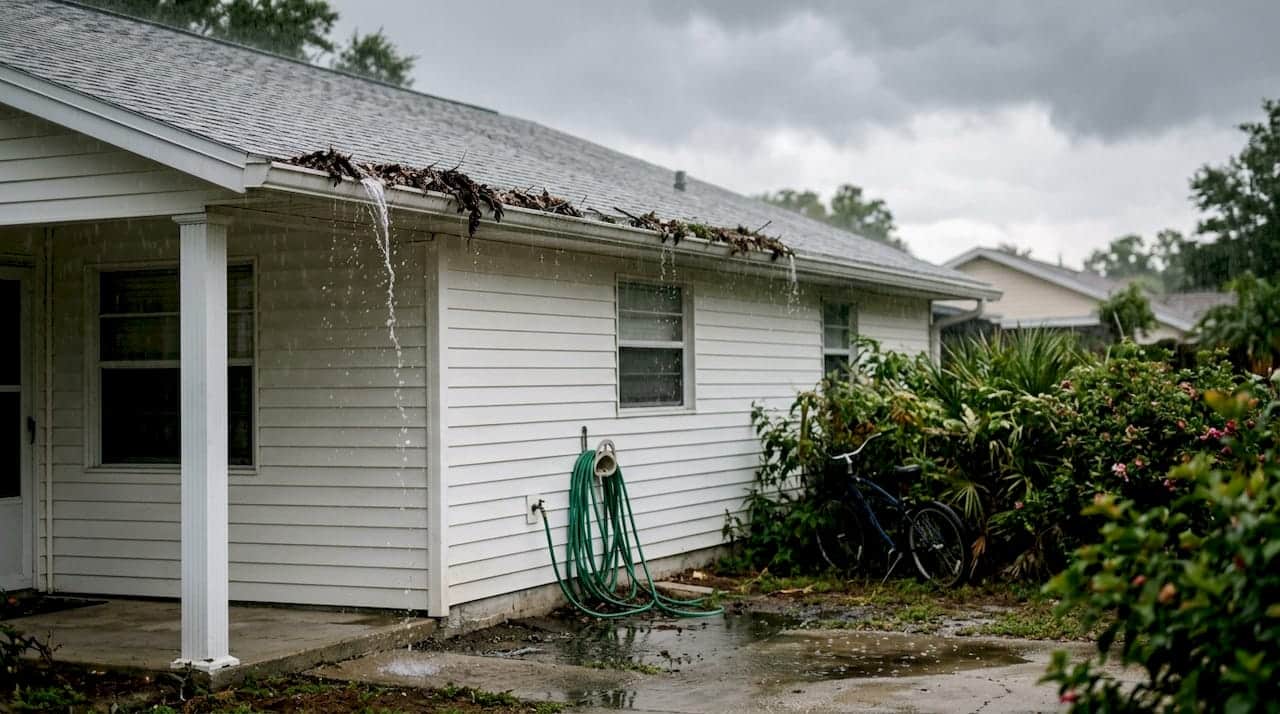
Central Florida homeowners face a quiet threat every rainy season: gutters that look fine from the street but are quietly failing. When gutters stop working, water has nowhere to go except down your walls, under your foundation, and into your landscaping. Repairs for water damage can run into the thousands, and the worst part is that most of it is preventable. Florida’s intense storms, humidity, and dense tree canopy make gutter problems worse and faster than in most other states. This guide walks you through the most common gutter issues, how to spot them early, and what you can do to protect your home.
Table of Contents
- Clogged gutters: Leaves, debris, and Florida storms
- Sagging, pulling away, and failing attachments
- Leaking seams and joints
- Poor pitch and drainage issues
- Rust, corrosion, pest infestations, and storm damage
- What we’ve learned after years of Florida gutter work
- Protect your home with the right gutter system
- Frequently asked questions
Key Takeaways
| Point | Details |
|---|---|
| Clogs are most common | Debris and leaves cause overflows and require cleaning several times a year. |
| Florida weather accelerates damage | Humidity, heavy rain, and storms make proactive maintenance crucial. |
| Minor issues escalate fast | Neglecting small leaks or sagging can lead to expensive structural repairs. |
| Proper drainage prevents pests | Ensuring correct slope and clear downspouts reduces mosquito and pest problems. |
Clogged gutters: Leaves, debris, and Florida storms
Clogged gutters are the single most common gutter problem for homeowners in Lake, Marion, and Sumter counties. Florida’s mix of oak trees, pine trees, and palm fronds means debris falls year-round, not just in autumn. Add in the frequent afternoon thunderstorms that wash sediment and organic matter into your gutters, and buildup happens fast.
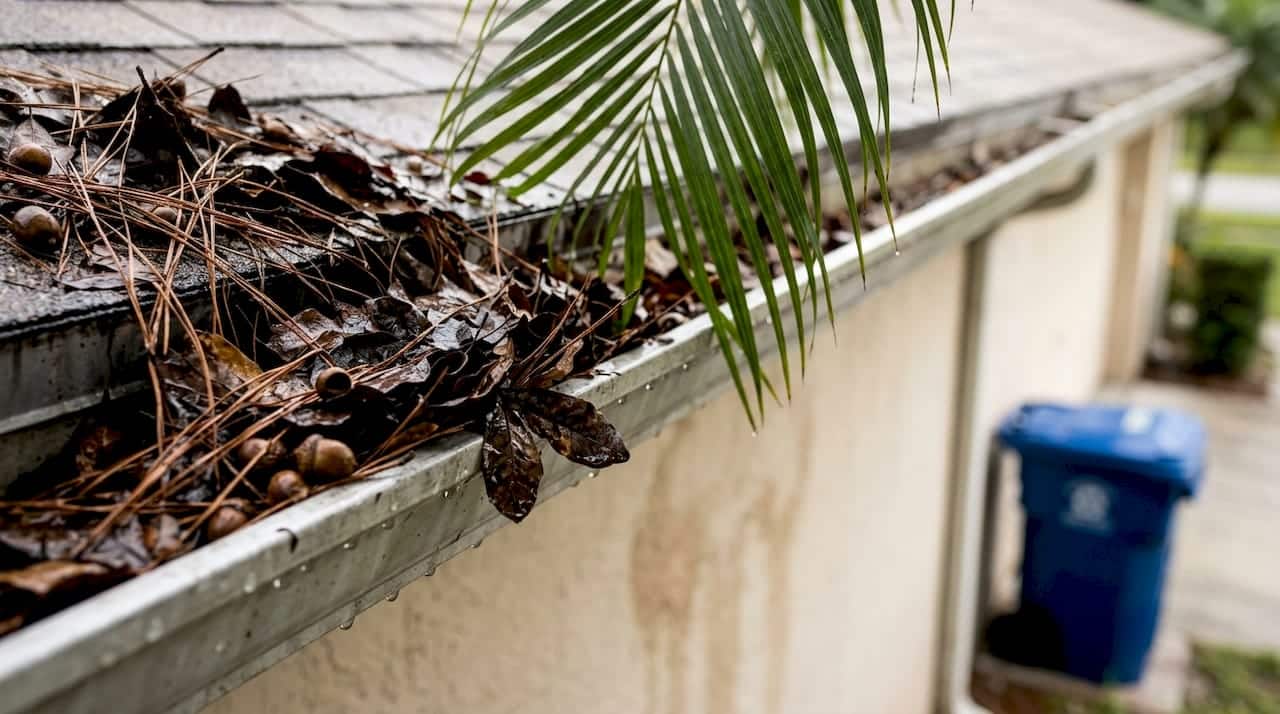
Leaves, debris, pine needles, and sediment are the leading cause of overflow and water damage in Central Florida. When gutters clog, water spills over the edge and soaks into your siding, stains your exterior walls, and floods your landscaping beds. Over time, that overflow erodes the soil around your foundation, which can lead to settling and structural problems that cost far more than a gutter cleaning.
Here are the most common signs your gutters are clogged:
- Water spilling over the sides during rain
- Staining or streaking on your exterior walls
- Sagging sections weighed down by wet debris
- Mosquitoes hovering near your roofline (standing water is a breeding ground)
- Plants growing from your gutters
Standing water in clogged gutters is a real mosquito problem in Florida. Even a small pool of water can produce hundreds of mosquitoes in under a week, which is a serious concern for families spending time outdoors.
Pro Tip: If your yard has heavy tree coverage, plan to clean your gutters at least three to four times per year. Homes with fewer trees can get by with two cleanings annually. Check out these DIY cleaning tips to make each session faster and safer.
Understanding the full scope of water damage risks from neglected gutters helps you take this maintenance seriously before it becomes an emergency.
Sagging, pulling away, and failing attachments
Now that you know the hazards of clogs, let’s examine what happens when gutter attachments fail under Florida’s conditions. Gutters are held to your fascia boards with brackets and screws. Over time, those fasteners loosen, especially when gutters are repeatedly loaded with heavy, wet debris after storms.
Sagging or pulling away from loose brackets or hardware failure is one of the most visible signs of gutter trouble. Florida’s humidity keeps debris heavier longer, which puts constant stress on attachment points. A gutter that sags even slightly will drain poorly, letting water pool in low spots and eventually overflow.
Watch for these early warning signs:
- Visible gaps between the gutter and the fascia board
- Sections that look uneven or sloped the wrong direction
- Water dripping behind the gutter instead of through the downspout
- Gutters that swing or move when you touch them
- Rotting or discolored fascia boards directly behind the gutter
When gutters pull away from the fascia, they expose the wood underneath to constant moisture. That leads to rot, which spreads quickly in Florida’s warm, humid climate. What starts as a loose bracket can turn into a full fascia board replacement if ignored.
Pro Tip: Walk around your home after a heavy rain and look up at the gutter line. If you see water dripping anywhere other than the downspout, that’s your cue to investigate. Having the right tools for gutter repair on hand makes it easy to tighten brackets before the problem gets worse.
Routine inspection twice a year, ideally before and after hurricane season, catches most attachment problems while they’re still minor.
Leaking seams and joints
Beyond loose attachments, the next big threat comes from what you can’t always see: water sneaking through leaks. Traditional sectional gutters are assembled in pieces, and every connection point is a potential leak. The sealant used at seams and joints breaks down over time, especially under Florida’s intense UV exposure and temperature swings.
Leaking seams and joints often seep water into your fascia and walls without any obvious dripping. You might notice staining on your siding, soft spots in the wood near the roofline, or mold growth on interior walls near the eaves. By the time those signs appear, the damage has usually been building for months.
Here’s how to address leaking seams step by step:
- Dry the gutter section completely before attempting any repair.
- Remove old, cracked sealant with a putty knife or scraper.
- Apply a fresh bead of gutter sealant rated for outdoor use.
- Allow it to cure fully before the next rainfall.
- If the same seam leaks again within a season, consider replacing that section.
Seamless gutters eliminate most seam-related leaks because they’re custom-fabricated in one continuous piece. For homes in Central Florida where storms are frequent and intense, this is one of the most practical upgrades you can make.
Learning the basics of fixing gutter leaks yourself can extend your gutter’s lifespan by several years. But if leaks keep returning, that’s a sign the material itself has reached the end of its useful life.
Poor pitch and drainage issues
Aside from structural failure and leaks, even minor alignment errors can result in big drainage headaches. Gutters need to slope slightly toward the downspout so water flows rather than sits. This slope is called pitch, and getting it right is more precise than most homeowners realize.
Proper slope is 1/4 inch per 10 feet, and downspouts should direct water at least 4 to 6 feet from your foundation, with 5 to 10 feet being the ideal range. When pitch is off, water pools in flat sections, accelerating rust and creating mosquito habitat. During a heavy Florida storm, a poorly pitched gutter can back up and overflow in minutes.
| Issue | Recommended spec | Risk if ignored |
|---|---|---|
| Gutter slope | 1/4 inch per 10 feet | Pooling, rust, overflow |
| Downspout distance | 4 to 6 feet minimum | Foundation erosion |
| Downspout size | 3×4 inch minimum | Backup during heavy rain |
| Cleaning frequency | 2 to 4 times per year | Clogs, overflow, pests |
Blocked or undersized downspouts are a common issue in older Florida homes. During a storm that drops several inches of rain in an hour (which happens regularly in Central Florida), an undersized downspout simply can’t move water fast enough. The result is overflow that goes straight down your exterior wall and pools at your foundation.
If you’ve noticed water backing up during storms, the heavy rain fixes available for Central Florida homes can help you identify whether the issue is pitch, downspout size, or something else entirely.
Rust, corrosion, pest infestations, and storm damage
Florida’s climate brings out a final set of dangers: from rust to animal invaders to hurricane-force winds. Even well-maintained gutters face accelerated wear in this environment.
Rust and corrosion on metal gutters are sped up by Florida’s humidity, salt air, and UV exposure. Aluminum gutters, which are the most common type installed in Central Florida, typically last 20 to 25 years with proper maintenance. Neglect that maintenance and you can cut that lifespan nearly in half.
Pest and animal infestations, along with storm damage from high winds and hurricanes, are two more threats that Florida homeowners deal with more than most. Birds, squirrels, and insects nest in gutters filled with debris. Hurricanes and tropical storms can twist, dent, or completely detach gutter sections.
Here’s what to look for during your seasonal checks:
- Orange or brown staining along the gutter exterior (early rust)
- Holes or thin spots in the gutter bottom
- Evidence of nesting material inside gutters
- Sections that are bent, twisted, or separated at corners
- Gutters that have shifted position after a storm
| Maintenance action | Frequency | Benefit |
|---|---|---|
| Full cleaning | 2 to 4 times per year | Prevents clogs and overflow |
| Bracket inspection | Twice per year | Catches sagging early |
| Seam and joint check | Annually | Stops hidden leaks |
| Storm damage inspection | After each major storm | Limits repair costs |
Pro Tip: Gutter guards can cut your cleaning frequency by up to 75%, but they still need an annual inspection to make sure debris isn’t building up on top of the guard itself. Review this maintenance checklist to build a routine that fits your home’s specific needs.
Routine checks limit repair costs significantly. Catching a loose bracket or a small rust spot early costs almost nothing. Waiting until the damage spreads to your fascia, siding, or foundation is a very different story.
What we’ve learned after years of Florida gutter work
Here’s something most gutter articles won’t tell you: the homeowners who spend the least on gutter repairs over time are not the ones who buy the most expensive gutters. They’re the ones who inspect their gutters consistently, even when nothing looks wrong.
We’ve seen brand-new gutters fail within two years because the pitch was set incorrectly at installation. We’ve also seen 15-year-old aluminum gutters that look nearly new because the homeowner cleaned them every spring and fall without fail. The gutter material matters, but the habit matters more.
Another thing worth saying plainly: seamless gutters are not just a marketing upgrade. In a climate like Central Florida’s, where storms are intense and frequent, every seam in a traditional sectional gutter is a liability. Seamless gutters cost more upfront, but the reduction in leak-related repairs typically makes up the difference within a few years.
Finally, don’t underestimate what your downspouts are doing. Most homeowners focus on the gutter trough itself and ignore where the water goes after it exits the downspout. If that water is landing within a foot or two of your foundation, you’re slowly creating a problem that no amount of gutter cleaning will fix. Extending your downspouts is one of the cheapest, most impactful things you can do for your home’s long-term health.
Protect your home with the right gutter system
If any of these problems sound familiar, you don’t have to figure it out alone. Larry’s Gutters specializes in residential gutter solutions across Lake, Marion, and Sumter counties, and we know exactly what Central Florida homes need to handle the rain, humidity, and storm season.

From seamless gutter installation to gutter guard systems and professional cleaning, we offer everything your home needs to stay protected year-round. Our gutters are custom-fabricated on-site to fit your home precisely, which means no weak seams and no guesswork. Whether you need a repair, a full replacement, or just a free inspection, we’re ready to help. Contact Larry’s Gutters today for a free quote and find out what the right gutter system can do for your home.
Frequently asked questions
How often should I clean gutters in Central Florida?
Clean your gutters 2 to 4 times per year depending on how many trees surround your home. Homes with heavy tree coverage should aim for quarterly cleanings.
What are signs my gutters need repair or replacement?
Sagging, leaking seams, rust, or pooling water near your foundation are the clearest indicators that your gutters need attention. Don’t wait for interior damage to confirm what the exterior is already telling you.
Are gutter guards effective in Central Florida?
Gutter guards reduce cleaning by up to 75% but should still be inspected once a year to make sure debris isn’t accumulating on top of the guard itself.
Can clogged gutters really cause foundation damage?
Yes. Neglected clogs cause overflow that erodes the soil around your foundation, which can lead to settling and structural damage over time.
Recommended
- 7 Essential Gutter Repair Tips 2025 for Florida Homeowners
- 7 Smart Gutter Upgrade Ideas for Florida Homeowners
- 7 Top Gutters for Florida Homes: Protect Your Investment
- 7 Essential Gutter Repair Tips for Florida Homeowners
- Does Pressure Washing Tampa FL Really Matter in 2026? – Florida Cleaning Crew
