TL;DR:
- Gutter guards in Central Florida significantly reduce cleaning frequency and enhance safety by lowering ladder risks.
- Micro-mesh guards are most effective in handling Florida’s heavy rainfall and fine debris like oak pollen and pine needles.
- Proper product selection and maintenance are essential for long-term gutter protection and preventing costly water damage.
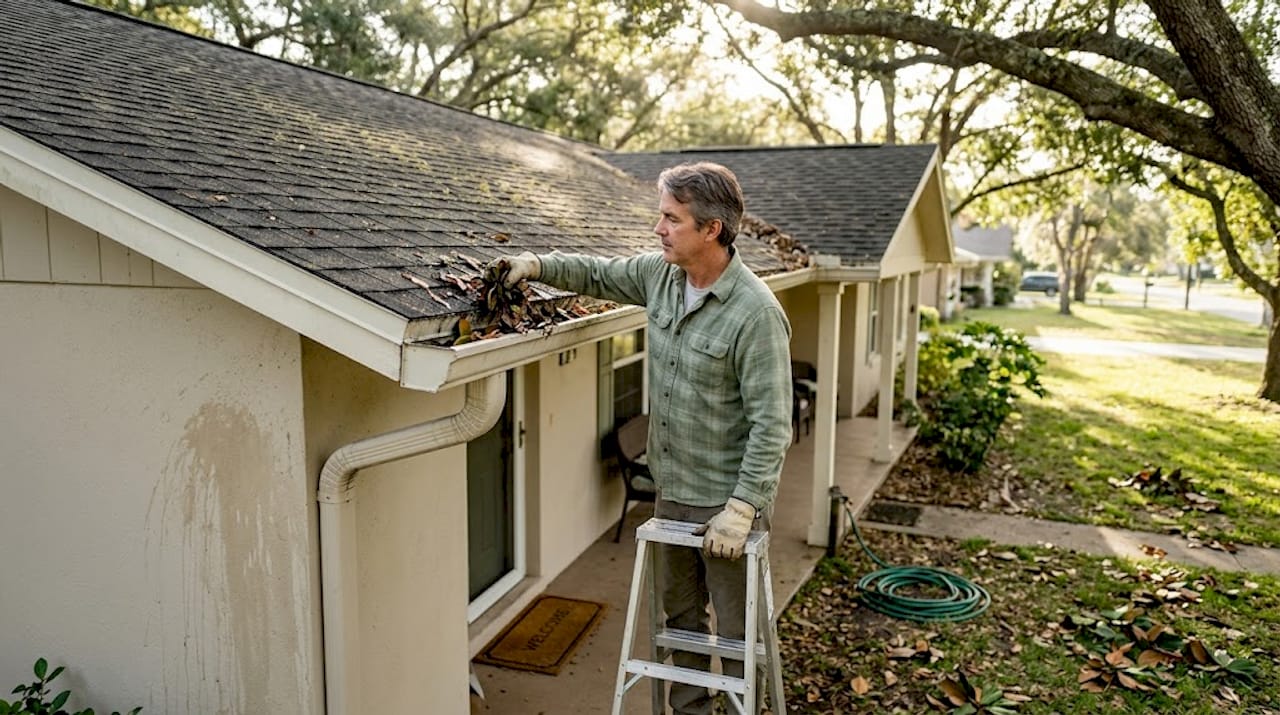
Most Central Florida homeowners climb a ladder to clean their gutters three or four times a year without thinking twice about it. Here’s what changes that mindset: installing gutter guards can cut that number down to just once or twice annually, and it dramatically lowers the risk of a dangerous fall. In Lake, Marion, and Sumter counties, where oak trees drop leaves year-round and summer storms can dump several inches of rain in a single afternoon, gutters clog fast and overflow faster. This guide walks you through why gutter guards matter here specifically, which types perform best in Florida’s climate, and what you can realistically expect from them.
Table of Contents
- Why gutters matter: The Florida water damage challenge
- Top benefits of gutter guards for Central Florida homes
- Comparing types of gutter guards: What works best for Florida homes?
- Maintaining gutter guards: Realistic expectations for 2026
- Our perspective: What most Central Florida homeowners misunderstand about gutter guards
- Ready to protect your home? Start with expert gutter guard solutions
- Frequently asked questions
Key Takeaways
| Point | Details |
|---|---|
| Reduce gutter cleaning | Gutter guards cut maintenance to just one or two cleanings per year compared to several without them. |
| Protect your home | Gutter guards help prevent costly water damage to your home’s foundation and structure. |
| Boost home safety | With fewer trips up the ladder, installing gutter guards means reduced risk of falls and home accidents. |
| Choose the right type | Select gutter guards suited to Florida’s unique rain and debris to maximize effectiveness. |
Why gutters matter: The Florida water damage challenge
Central Florida is not a typical gutter environment. Most parts of the country deal with seasonal leaf drop in autumn and a quiet winter. Here, the trees shed constantly, pine needles fall in spring, oak pollen covers everything in early summer, and then hurricane season arrives with a vengeance. That combination means gutters fill up faster than homeowners expect, often within a few weeks of cleaning them.
The result goes beyond an overflowing trough. Clogged gutters lead to water pooling against your fascia boards, soaking into your roofline, and eventually trickling down your foundation walls. The same overflow saturates the soil immediately around your slab, which in Florida’s sandy terrain can shift surprisingly quickly. Water damage from gutters is one of the most underestimated threats to a home’s structural integrity, and it’s almost entirely preventable.
Here’s what makes the challenge specific to this region:
- Heavy, fast rainfall: Central Florida averages more than 50 inches of rain per year, and much of that falls in concentrated bursts during afternoon thunderstorms.
- Year-round debris: Unlike northern states, there is no clean, debris-free winter. Pine needles, oak leaves, Spanish moss, and seed pods fall every month.
- Flat lot grades: Many homes in Lake, Marion, and Sumter counties sit on relatively flat lots, meaning water has nowhere to go except toward your foundation if gutters fail.
- High humidity: Standing water inside clogged gutters does not evaporate quickly here. It becomes a breeding ground for mosquitoes and promotes wood rot on your fascia.
The bottom line: Clogged or overflowing gutters in Florida can lead to water damage and costly repairs that far exceed what you would spend on a preventive solution.
Homeowners often underestimate this because the damage happens slowly and out of sight. By the time you notice a stain on your interior wall or a crack running along your slab, the water has already been doing its work for months.
Top benefits of gutter guards for Central Florida homes
Now that you understand the threat, let’s turn to the benefits of a proven solution: gutter guards.
Gutter guards are covers or inserts that sit over or inside your gutters to let water in while keeping leaves and debris out. The payoff for Central Florida homeowners is significant and shows up in several areas at once.
- Fewer cleanings per year. Gutter guards reduce cleaning from multiple times per year to just 1-2 times annually, which means fewer ladder climbs and less weekend time spent on maintenance. For a single-story home surrounded by oak trees, that’s a real quality-of-life improvement.
- Lower risk of injury. Falls from ladders send more than 500,000 Americans to the hospital every year. Reducing how often you climb to clean gutters directly lowers that risk for you and your family.
- Protection against pest infestations. Standing water and wet leaf debris in open gutters attract mosquitoes, carpenter ants, and even roof rats. Gutter guards eliminate the habitat these pests rely on.
- Prevention of expensive repairs. Water damage to siding, fascia, foundations, and basements can easily run into the thousands. Gutter guards are a fraction of that cost.
- Improved home value. Buyers and inspectors notice well-maintained gutter systems. A protected gutter system signals that a homeowner takes water damage prevention seriously, which can make a difference in negotiations.
Pro Tip: If your home sits under a mature live oak, look for a fine-mesh gutter guard rated for small debris. Oak leaves break down into tiny fragments that can pass through coarser screen designs and build up inside the gutter unnoticed.
“The value of gutter guards is not just in what they catch. It’s in the ladder climbs they eliminate and the repair bills they prevent.” This is especially true in a region like Central Florida where debris season never truly ends.
Understanding how gutter guards work in the context of Florida’s specific rainfall and foliage helps you choose a product that actually delivers on these promises rather than one that looks good in a brochure.
Comparing types of gutter guards: What works best for Florida homes?
With the reasons for installing gutter guards clear, understanding which type is best for your home is the next step.
There are four main categories of gutter guards available to Florida homeowners, and they are not created equal. Not all gutter guards are equally effective under Florida’s heavy rainfall and debris load, and the wrong choice can leave you with a system that overflows during a summer downpour or fills with pine needle sludge within a season.
| Type | How it works | Best for | Watch out for |
|---|---|---|---|
| Micro-mesh | Fine stainless mesh filters debris while allowing water flow | Homes with oak trees, pine needles, small debris | Higher upfront cost |
| Screen/perforated | Holes or slots block larger debris | Light debris areas, basic protection | Small debris can still enter |
| Reverse curve | Water follows the curve in; debris falls off | Larger leaf debris in moderate rain | Can overflow in heavy Florida storms |
| Brush/foam inserts | Sit inside the gutter to catch debris on bristles or foam | Short-term use, DIY installs | Debris embeds in material, harder to clean |
For most homes in Lake, Marion, and Sumter counties, micro-mesh designs come out on top. Here’s why:
- They handle fine debris like oak pollen, pine needles, and broken-down leaf matter that other designs let through.
- They manage high water volume without the overflow that reverse-curve designs can experience during a Florida downpour.
- Quality stainless steel mesh resists the UV degradation that breaks down cheaper plastic options in Florida’s intense sun.
Screen and perforated guards are a step up from nothing and work reasonably well in areas with lighter tree cover. They are more budget-friendly and easier to install, which makes them popular for DIY projects. The trade-off is that they require more frequent inspection.
Reverse-curve guards look elegant and work well in many climates, but Central Florida’s rainfall intensity can overwhelm them. Water moving at high volume in a heavy storm sometimes shoots right over the curve instead of following it into the gutter channel.
Brush and foam inserts are best thought of as temporary solutions. They trap debris inside the material itself, which means cleaning them is actually harder than cleaning an unguarded gutter. In a humid Florida environment, that trapped debris also accelerates mold growth.
Pro Tip: When you review gutter protection systems, ask for the flow rate rating. A good system should handle at least 11 to 13 inches of rain per hour to manage Florida’s peak storm conditions without backing up.
When evaluating types of gutter guards for Florida, also factor in your specific tree coverage. A home on a cleared lot needs a different solution than one shaded by three large live oaks.
Maintaining gutter guards: Realistic expectations for 2026
Once you’ve chosen the right system, it’s important to know what to expect in day-to-day upkeep.
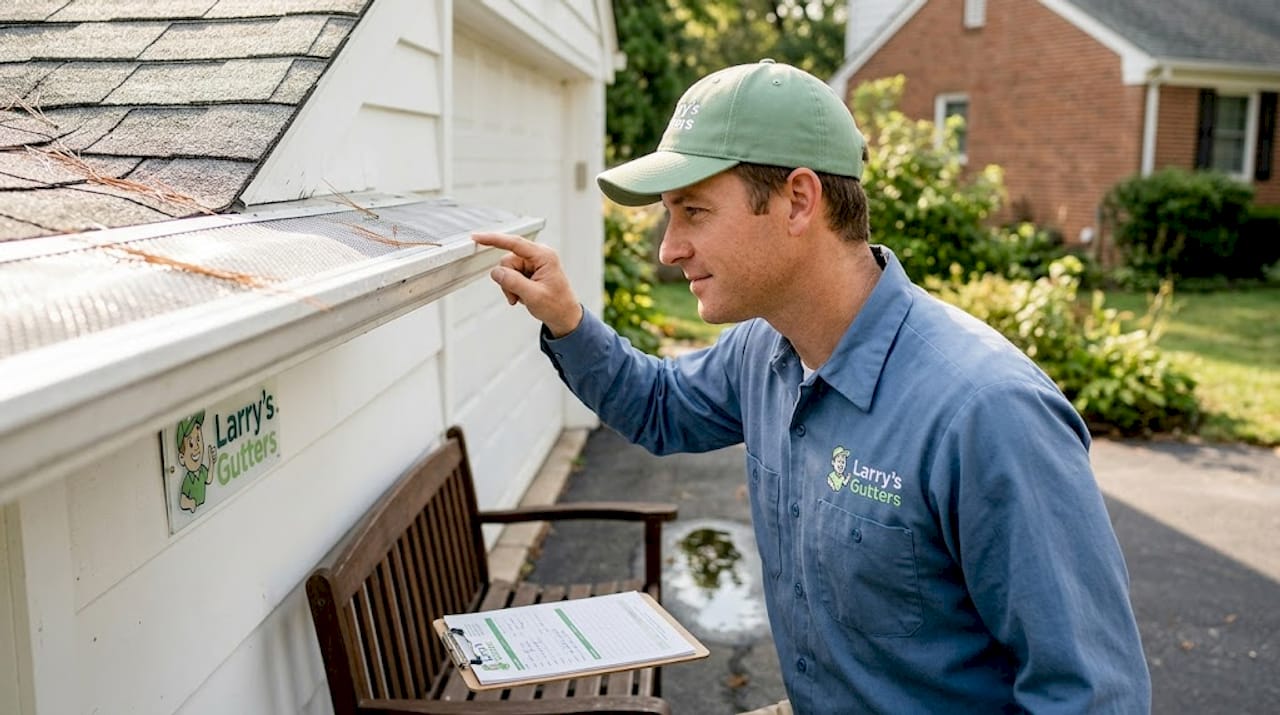
This is where a lot of homeowners feel let down, not because gutter guards fail, but because they expected a completely hands-off experience. Gutter guards are a major improvement over unguarded gutters, but they are not invisible shields. They reduce your workload significantly while still requiring periodic attention.
Here’s a realistic comparison of what your maintenance schedule looks like before and after installation:
| Task | Without gutter guards | With gutter guards |
|---|---|---|
| Full gutter cleaning | 3-4 times per year | 1-2 times per year |
| Post-storm inspection | After every major storm | After severe storms only |
| Debris removal from guard surface | N/A | Light brushing 1-2 times per year |
| Pest check | Every cleaning | Annual check |
| Fascia and downspout inspection | Every cleaning | Once per year |
“Gutter guards reduce cleaning frequency but still require occasional checks, especially after storms.” This is the honest reality that protects you from disappointment and keeps your system working properly year after year.
Here is a simple maintenance routine that works for most Central Florida homes in 2026:
- After hurricane season ends (November): Do a full inspection of the guards and gutters. Clear any debris that has collected on top of the mesh or screen surface. Check for any sections that may have shifted in high winds.
- In late spring (May): This is when oak pollen and seed pods peak. Rinse the guard surface with a garden hose to clear the fine material that builds up during this period.
- After any named storm: Walk the perimeter and look for sagging gutters, displaced guard sections, or debris that has bridged across the top of the guards. Storms can force material under edges that would otherwise stay clear.
- Annually: Have a professional check the downspouts and end caps. These are the spots where debris that does get through tends to accumulate.
For a complete guide on what to track throughout the year, the gutter maintenance checklist from Larry’s Gutters breaks it down season by season. The guide to maintaining gutter guards in 2026 also covers what to look for as newer guard materials age under Florida’s UV exposure.
The key mindset shift is this: think of gutter guards as a tool that multiplies your efficiency rather than eliminating the need for any effort. That framing keeps your expectations accurate and your gutters in top shape.
Our perspective: What most Central Florida homeowners misunderstand about gutter guards
Here is the candid take based on what we see in Central Florida homes every year.
The most common misconception is that gutter guards are either magic or useless. Homeowners either expect them to eliminate all maintenance forever, or they’ve heard one complaint from a neighbor and decided not to bother. Both positions miss the point entirely.
The real value of gutter guards in this region is not about achieving zero maintenance. It’s about reducing the frequency of risky ladder climbs, cutting down the chances of expensive overflow damage, and giving you a system that keeps working through Florida’s most aggressive weather months without constant attention. That’s a practical improvement that compounds over years.
We’ve seen homeowners in Lake County skip gutter guards on a home sitting under three large live oaks, then spend $4,000 on fascia board replacement two years later. We’ve also seen homeowners install the cheapest foam inserts from a hardware store, get frustrated when they clog within a season, and declare that gutter guards don’t work. Neither experience is representative of what a well-chosen, professionally installed system actually delivers.
Gutter guards are not a “set and forget” solution, but they do substantially improve safety and reduce work for the average homeowner. That’s the honest framing. And in Central Florida’s climate specifically, where the debris load and rainfall intensity are higher than most of the country, the benefit-to-cost ratio is actually stronger here than it would be for a home in a drier, less wooded state.
The other thing most homeowners miss is that product selection matters enormously in this market. A mesh guard rated for light debris in a mild northeastern climate will not perform the same way on a home in Ocala or The Villages. Local climate knowledge is not a marketing phrase. It’s the difference between a guard that lasts ten years and one that fails in two.
Our advice is to treat gutter guards as a long-term investment in gutter maintenance and home safety rather than a shortcut to skip maintenance entirely. That perspective leads to better product choices, better installation decisions, and ultimately a system that protects your home the way it was designed to.
Ready to protect your home? Start with expert gutter guard solutions
Equipped with the facts and an honest assessment, here is how to put these insights into action for your home this year.
Larry’s Gutters specializes in residential gutter solutions across Lake, Marion, and Sumter counties, and we understand that Central Florida’s climate demands more than a one-size-fits-all approach. Whether you are starting from scratch or upgrading an existing system, our gutter guard installation workflow is designed to match the right product to your specific tree coverage, roof pitch, and rainfall exposure.

Not sure which guard type fits your home? Browse the full breakdown in our types of gutter guards guide, or explore the broader Florida gutter solutions guide to see how gutters, guards, and cleaning schedules work together as a complete water damage prevention system. Contact us today for a free quote and let’s get your home protected before the next storm season arrives.
Frequently asked questions
How much maintenance do gutter guards actually save?
Gutter guards reduce cleaning from several times a year to just 1-2 times annually for most Florida homes, which also means fewer ladder climbs and lower risk of injury over time.
Do gutter guards prevent all clogs and water damage?
Gutter guards greatly reduce clogs but still require occasional checks, especially after storms, so periodic inspection remains an important part of home maintenance even with guards installed.
Which type of gutter guard is best for Central Florida homes?
Micro-mesh designs tend to perform best here because they handle fine debris like oak pollen and pine needles, and they manage high water volume without the overflow issues that affect other types during Florida’s intense summer storms. Not all gutter guards perform equally under Florida’s rainfall and debris conditions, so product selection matters.

Will gutter guards add resale value to my home?
Yes, gutter guards signal to buyers and inspectors that the home has been properly maintained for water damage prevention, which can strengthen your position during negotiations and reduce buyer concerns about long-term structural issues.
