TL;DR:
- Aluminum gutters offer longer lifespan and better resistance to Florida’s harsh weather than vinyl.
- Vinyl gutters are cheaper upfront but tend to crack and fail earlier in Florida’s heat and storms.
- Choosing seamless aluminum gutters provides superior durability, lower long-term costs, and better home protection.
Choosing the right gutter material might seem like a minor detail compared to roofing or siding, but in Central Florida, it’s one of the most consequential decisions you can make for your home. The combination of punishing summer downpours, relentless UV exposure, and high humidity creates conditions that will expose every weakness in a poorly chosen gutter system within just a few years. Aluminum and vinyl are the two most popular options you’ll encounter, yet they perform dramatically differently in this climate. This guide cuts through the marketing noise to give you a straightforward, honest comparison built specifically for Florida homeowners.
Table of Contents
- Why gutter material matters for Central Florida homes
- Comparing aluminum vs vinyl gutters: Performance, cost, and curb appeal
- Long-term value: Lifespan and maintenance requirements
- Key pros and cons recap: Quick decision checklist for homeowners
- Expert perspective: What most homeowners get wrong about gutter materials
- Connect with Central Florida’s seamless gutter experts
- Frequently asked questions
Key Takeaways
| Point | Details |
|---|---|
| Aluminum outlasts vinyl | Aluminum gutters survive Florida’s weather far longer than vinyl, often justifying a higher initial price. |
| Climate impacts material choice | Central Florida’s heavy rain and sunlight strain gutters—making the right material essential for long-term performance. |
| Maintenance affects lifespan | Regular cleaning and care can add years to your gutter system, especially for aluminum. |
| Vinyl is less durable in Florida | Vinyl gutters may warp or crack, especially during intense storms and heat common in Florida. |
| Upfront cost vs. long-term savings | While vinyl is cheaper now, aluminum’s durability means fewer replacements and lower costs over decades. |
Why gutter material matters for Central Florida homes
Central Florida is not your average gutter environment. The region averages more than 50 inches of rainfall per year, with intense summer storms that can dump two to three inches of rain in under an hour. Add to that year-round UV radiation strong enough to degrade plastics over time, humidity that rarely drops below 50 percent, and hurricane-season winds, and you have a testing ground that separates good gutter materials from poor ones very quickly.
Many homes in the Orlando, Tampa, and surrounding metro areas were built in the 1980s and 1990s with gutter systems that were never designed to last through decades of Florida weather. Older vinyl installations in particular are showing their age, with sections that have turned brittle, cracked at the seams, or sagged away from the fascia board entirely. Even some aluminum systems installed without the right gauge or without proper slope have developed corrosion issues at the joint points.
The material you choose needs to accomplish several things at once:
- Handle rapid, high-volume water flow without leaking or overflowing during storms
- Resist UV degradation so it doesn’t crack, fade, or warp over years of sun exposure
- Withstand humidity and heat without expanding or contracting to the point of failure
- Stay attached to your fascia under wind loads and the weight of standing water
“Aluminum gutters can resist corrosion and withstand Florida’s harsh sun better than vinyl.”
That’s not a small distinction. When a gutter fails mid-storm, water doesn’t just run off harmlessly. It pools against your foundation, seeps under your siding, and can cause thousands of dollars in structural damage. Looking at top gutter options for Florida confirms that the material you select is essentially the first line of defense for your entire home’s structure.
Comparing aluminum vs vinyl gutters: Performance, cost, and curb appeal
Now let’s put these two materials side by side across the factors that matter most to Florida homeowners. Both aluminum and vinyl have genuine advantages, and neither is completely without merit. But in Florida’s specific climate, the differences are stark enough to make one a clear frontrunner for most homes.
| Factor | Aluminum gutters | Vinyl gutters |
|---|---|---|
| Lifespan | 20 to 30 years (or more) | 10 to 15 years in hot climates |
| UV resistance | High | Low to moderate |
| Heat tolerance | Excellent | Poor (warps above 90°F) |
| Corrosion resistance | Does not rust | Does not rust |
| Color options | Wide range, custom painted | Limited factory colors |
| Weight capacity | Handles heavy water volume | Can sag under heavy flow |
| Seamless option | Yes, widely available | Rarely available seamless |
| Upfront cost | Moderate to moderately high | Low |
| Long-term cost | Lower (fewer replacements) | Higher (more frequent repairs) |
The gutter lifespan details tell a telling story: aluminum gutters last 20 to 30 years, while vinyl gutters are prone to cracking in high heat and may only last 10 to 15 years in hot climates. For a Florida homeowner, that gap could mean replacing your vinyl system twice in the time your neighbor’s aluminum gutters are still going strong.
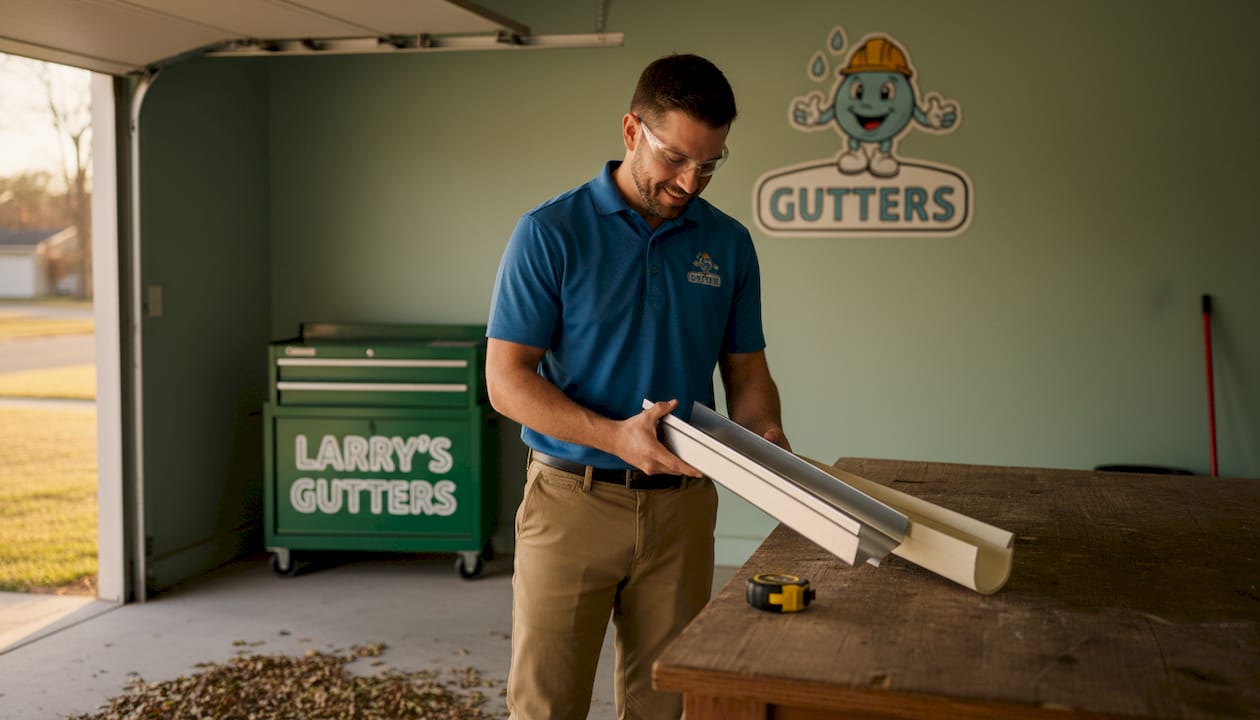
Here’s what each material does well:
Aluminum gutters:
- Can be fabricated on-site as seamless sections, eliminating joint failures
- Expand and contract with temperature changes without cracking
- Hold paint well and can be matched to virtually any home exterior color
- Strong enough to support gutter guards without bending
- Lightweight but structurally capable of handling Florida’s heaviest rain events
Vinyl gutters:
- Genuinely affordable upfront, often costing 30 to 50 percent less than aluminum per linear foot
- Completely rust-free and won’t corrode in salty or humid air
- Easy to install as a DIY project for budget-conscious homeowners
- A reasonable choice for sheds, garages, or outbuildings where longevity isn’t critical
Understanding what aluminum gutters are helps explain why they dominate professional installations across Florida. They can be custom-formed on a truck in your driveway, meaning the entire run from corner to downspout is one continuous piece with no seams to leak.
Pro Tip: If you’re comparing quotes from gutter companies, ask specifically whether they use sectional or seamless aluminum. Seamless aluminum is almost always the smarter long-term investment for Florida homes, even if the upfront price is slightly higher.
Long-term value: Lifespan and maintenance requirements
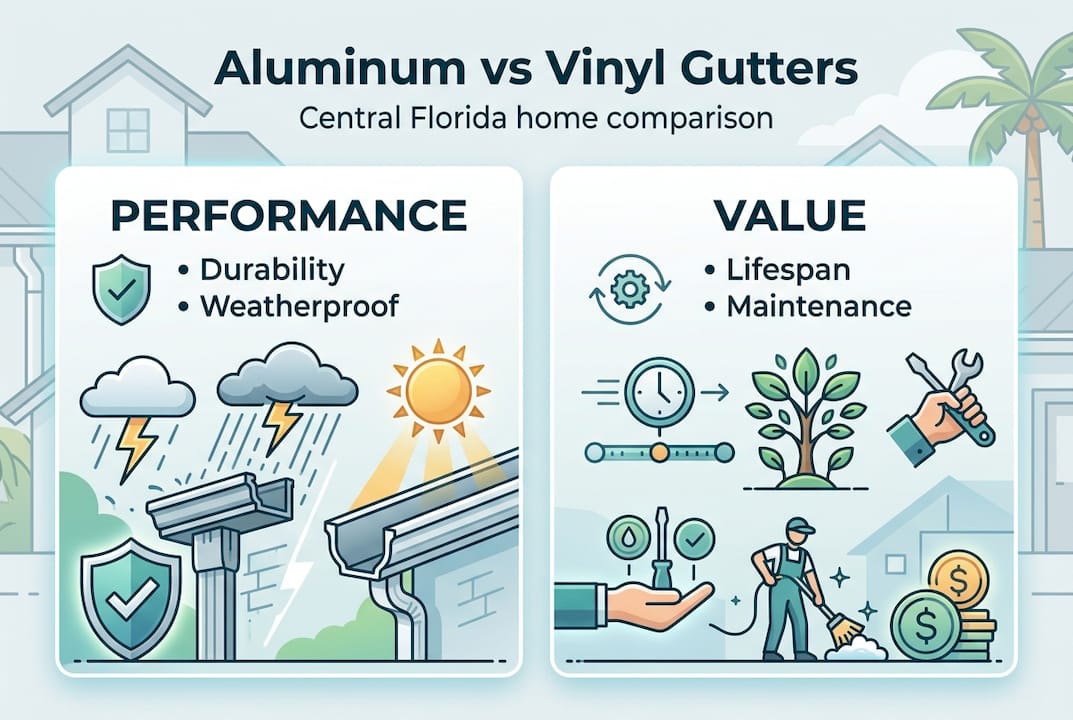
Upfront cost is only part of the equation. When you factor in how much time and money you’ll spend maintaining each type of gutter over a decade or more, the calculus changes significantly. Let’s look at the real cost of ownership for both materials in a Florida context.
| Cost factor | Aluminum (per 10 years) | Vinyl (per 10 years) |
|---|---|---|
| Installation cost (avg. 150 ft home) | $1,200 to $2,000 | $700 to $1,200 |
| Cleaning (twice yearly) | $400 to $800 | $400 to $800 |
| Repairs and replacements | $100 to $300 | $400 to $900 |
| Full replacement likelihood | Unlikely within 20 years | High within 10 to 15 years |
| Total 10-year estimated cost | $1,700 to $3,100 | $1,500 to $2,900 |
The numbers are closer than most people expect over a 10-year window, but vinyl’s real cost comes when you stretch the timeline to 20 or 30 years. You’re likely replacing vinyl at least once, possibly twice. Properly maintained aluminum gutters can last over 30 years, while vinyl gutters often fail due to warping or cracking in Florida sun. That’s a compelling argument for paying a bit more at the start.
Maintaining either system in Florida requires a consistent routine. Here’s how to maximize the lifespan of whichever material you choose:
- Clean gutters at least twice a year, ideally in early spring and after hurricane season. Florida’s oak trees and pine needles create serious clog risks that can cause water to back up and overflow.
- Inspect all fasteners and hangers after major storms. High winds can loosen spikes or screws, causing gutters to pull away from the fascia.
- Check for sagging sections every season. A gutter that isn’t properly sloped will hold standing water, which accelerates corrosion in aluminum and cracking in vinyl.
- Flush downspouts with a garden hose at each cleaning to confirm water flows freely and exits well away from the foundation.
- Look for joint sealant failures in sectional systems. Aluminum sectional gutters can develop leaks at joints over time, especially after temperature swings.
Following solid gutter maintenance tips can add years to any gutter system’s life. For a complete seasonal routine, a thorough Florida maintenance checklist walks you through everything step by step, from inspecting gutter guards to checking downspout extensions after storm season.
One often overlooked factor is the role of gutter guards. Both aluminum and vinyl gutters can accept guards, but aluminum’s structural strength means it can support heavier, more effective micro-mesh guard systems without bending. Vinyl gutters may deflect slightly under the added weight, which can affect drainage angle and water flow.
Key pros and cons recap: Quick decision checklist for homeowners
By now, you have the data. Let’s bring it into a practical format you can use when talking to contractors or making your final decision.
Choose aluminum gutters if:
- Your home is your long-term residence (10 or more years)
- You want a seamless installation with no joint leak points
- You’re in a neighborhood where curb appeal matters for resale value
- You’ve had a vinyl system fail or require frequent repairs
- You want the option to add high-quality gutter guards without structural concerns
- You’re replacing gutters on a two-story or larger home where water volume is high
Vinyl gutters may be worth considering if:
- You’re outfitting a secondary structure like a workshop, barn, or storage building
- You need a very short-term or budget-constrained solution
- The gutter run is short (under 20 feet) and less exposed to direct sun
- You’re a landlord working on a rental property where immediate cost control outweighs longevity
A key statistic that shouldn’t be overlooked: aluminum gutters outlast vinyl in Florida, justifying a slightly higher cost for most homeowners. When you stack that longevity against Central Florida’s demanding climate, the long-term aluminum gutter advantages become impossible to ignore.
Pro Tip: Before you commit to any material, ask your gutter contractor to show you examples of vinyl installations in your area that are at least 10 years old. In Florida, the visual evidence alone often makes the decision for homeowners.
One more consideration: resale value. Florida’s real estate market moves quickly, and buyers and their inspectors notice gutter condition. A failing or brittle vinyl system can become a negotiating point that costs you far more than the price difference between aluminum and vinyl ever would have.
Expert perspective: What most homeowners get wrong about gutter materials
Here’s an uncomfortable truth we’ve seen play out on thousands of Central Florida homes: most people who choose vinyl gutters do so because they’re comparing the price on day one and ignoring everything that happens after that.
We understand the impulse. Saving $400 or $600 upfront feels smart. But we’ve seen that same homeowner calling us five years later because their vinyl gutters have sagged, cracked along three sections, and are pulling water toward the foundation instead of away from it. The repair cost at that point often exceeds what they saved.
What’s more frustrating is that most of these homeowners weren’t given a fair comparison in the first place. Some contractors push vinyl because it’s faster to install, not because it’s better for the customer. Others quote aluminum correctly but fail to explain the total cost of ownership over 20 years, which almost always favors aluminum.
The deeper issue is that Florida is genuinely different from other states. What works reasonably well in a cooler, less sunny climate simply doesn’t hold up here. Vinyl that lasts 20 years in Michigan may fail in 8 years in Orlando. We’ve seen it happen repeatedly, and it’s entirely predictable when you understand how UV radiation and sustained heat affect plastic materials over time.
There’s also a tendency to underestimate installation quality’s role. Even the best aluminum gutter installed at the wrong slope or with improper hanger spacing will fail prematurely. This is why working with experienced local professionals who understand Florida’s specific drainage demands matters as much as the material itself. Exploring cost-effective gutter options isn’t about finding the cheapest product, it’s about finding the best value for your specific home and climate.
The honest recommendation for the vast majority of Central Florida homeowners is seamless aluminum. Not because it’s the most expensive option, but because it’s the one that delivers consistent protection across Florida’s full range of weather conditions without requiring frequent replacement or constant repairs.
Connect with Central Florida’s seamless gutter experts
If this comparison has helped clarify your decision, the next step is getting the right system installed by people who know Florida gutters inside and out.

At Larry’s Gutters, we specialize in seamless aluminum gutter installation across Central Florida’s counties, custom-forming every section on-site so your gutters fit your home perfectly with no weak joints. Whether you’re building new or replacing a failing system, our team walks you through every option based on your home’s specific roof pitch, drainage needs, and aesthetic goals. You can explore the full seamless gutter installation process to understand exactly what to expect, or review our gutter replacement guide if you’re ready to swap out an underperforming system. Contact us today for a free, no-pressure quote.
Frequently asked questions
Do aluminum gutters rust in Florida’s humid climate?
Aluminum gutters do not rust, making them a naturally strong fit for Florida’s high humidity. As noted, aluminum remains rust-free in humid climates, giving them a major durability edge over steel options.
Are vinyl gutters really maintenance-free?
Vinyl gutters are sometimes marketed as low-maintenance, but that claim overstates the reality. They still need regular cleaning, and as confirmed by gutter lifespan data, vinyl gutters need periodic cleaning and can warp in high heat, which is a constant concern in Florida.
Can vinyl gutters handle Florida’s heavy storms?
Vinyl can struggle significantly under the intense rainfall and wind loads common in Central Florida. According to Florida gutter lifespan research, vinyl may crack or sag under heavy rainfall common to Florida, making it a risky choice for primary storm protection.
How much longer do aluminum gutters last than vinyl?
Aluminum gutters commonly last 10 to 20 years longer than vinyl when properly maintained in Florida’s climate. Gutter lifespan comparisons show aluminum reaching up to 30 years, while vinyl typically tops out around 10 to 15 years in hot climates.
Is the higher upfront cost of aluminum worth it?
For most Florida homeowners, yes. Aluminum’s longer lifespan makes it a better long-term investment, especially when you factor in the cost of replacing a vinyl system one or more times over the same period.
