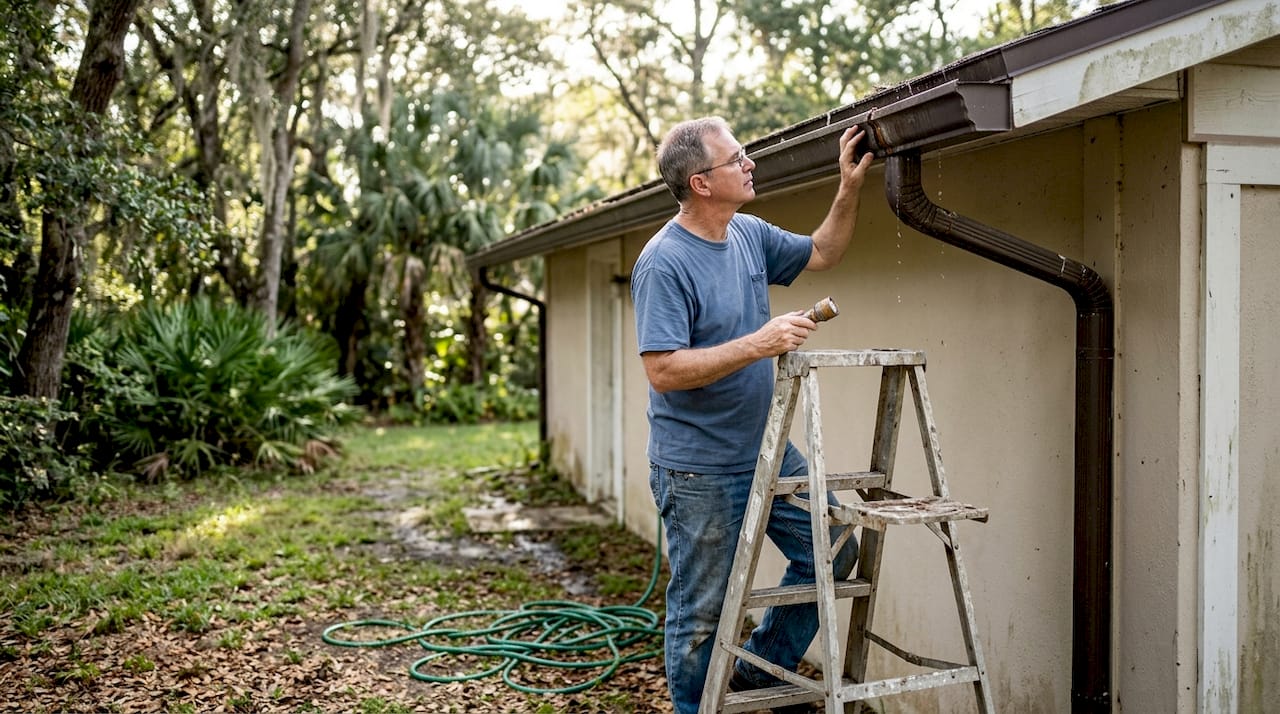
Most Central Florida homeowners believe gutter leaks are minor nuisances easily patched with caulk. Yet gutter joint leakage causes thousands in foundation and fascia damage annually across Lake, Marion, and Sumter counties. Florida’s relentless rain and heat accelerate joint failures that sectional gutters experience within just three to five years. This guide explains what gutter joint leakage is, why it happens so quickly in our climate, and how you can prevent or fix it before water destroys your home’s structure.
Table of Contents
- Key takeaways
- Understanding gutter joint leakage and its causes
- How gutter joints fail: mechanics and environmental factors
- Identifying and repairing gutter joint leaks effectively
- Preventing gutter joint leaks: best practices for Central Florida homeowners
- Protect your Central Florida home with expert gutter solutions
- Frequently asked questions
Key Takeaways
| Point | Details |
|---|---|
| Climate accelerates sealant failure | Florida’s climate with heavy rain and heat accelerates sealant damage and joint separation, making proactive maintenance crucial. |
| Maintenance and correct pitch | Regular maintenance and proper gutter pitch toward the downspouts reduce leaks and protect fascia and foundation. |
| Seamless gutters reduce leaks | Seamless gutters significantly lower leak risk compared with sectional gutters that have many joints. |
| Upgrade to seamless | Professional repair or upgrading to seamless gutters is often the most effective long term solution. |
Understanding gutter joint leakage and its causes
Gutter joint leakage refers to water escaping from connection points between sectional gutter sections. Sectional gutters use multiple pieces joined together, creating vulnerable spots where water can seep through. These joints include lap seams where sections overlap, miter corners at roof angles, and end caps sealing gutter runs.
Each connection point relies on sealant to keep water contained. When sealant fails, leaks appear. The most common leak points include seams where two gutter sections meet, lap joints with overlapping edges, mitered corners forming 90 degree angles, and end caps closing off gutter runs. Every joint represents a potential failure point in your gutter system.
Several factors cause these joints to fail. Sealant degradation tops the list, especially in Florida where humidity and heat accelerate failure. Metal corrosion weakens joints over time as aluminum oxidizes. Debris buildup creates water pressure that stresses seals. Improper installation leaves gaps from the start. Natural aging breaks down materials. Thermal expansion causes metal to shift. Sagging gutters pull joints apart.
Florida’s intense UV exposure, high humidity, and temperature swings degrade gutter sealants two to three times faster than moderate climates, making joint maintenance critical for Central Florida homeowners.
Central Florida’s environment creates perfect conditions for rapid joint failure. Summer heat reaches 95 degrees regularly, softening sealants. Afternoon thunderstorms dump inches of rain in minutes, overwhelming compromised joints. High humidity prevents proper sealant curing. This combination means sectional gutters in Lake, Marion, and Sumter counties face accelerated wear compared to homes in drier, cooler regions.
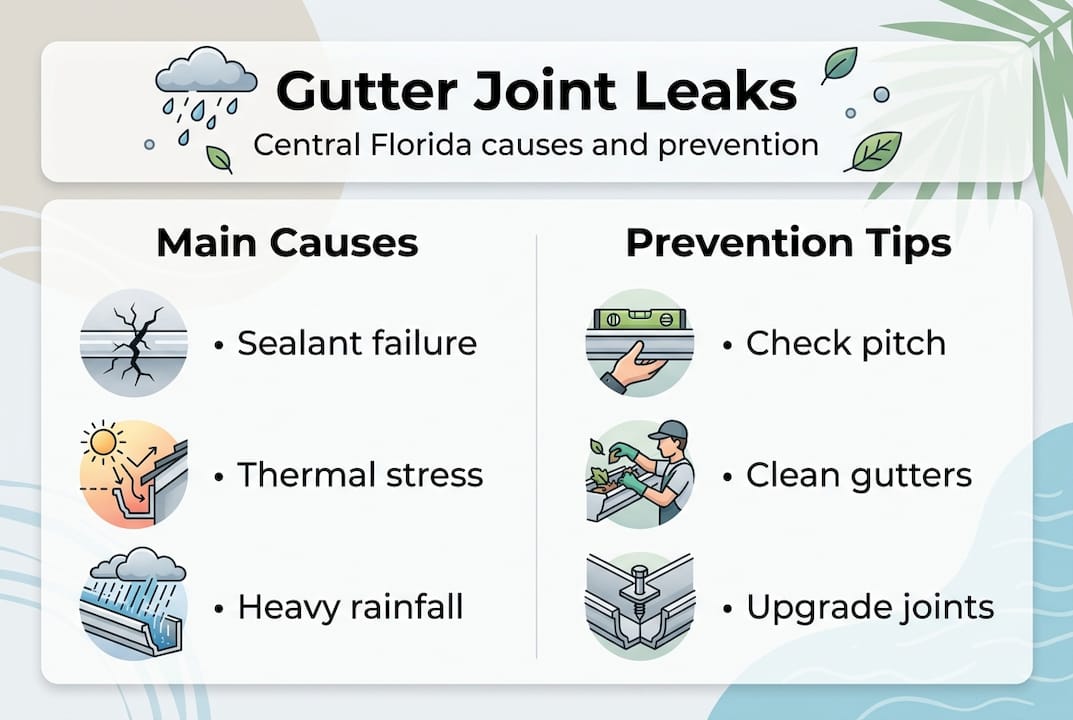
Debris pressure intensifies the problem. Pine needles, oak leaves, and roof granules clog gutters during Florida’s frequent storms. When gutters fail in heavy rain, water backs up at joints, finding any weak spot to escape. The added weight and pressure from standing water breaks seals faster than normal flow conditions.
Common causes of gutter joint leakage:
- Sealant failure from UV exposure and temperature extremes
- Corrosion of aluminum or steel at connection points
- Debris clogs creating overflow pressure on joints
- Improper installation with inadequate sealing
- Aging materials losing flexibility and adhesion
- Thermal expansion separating metal sections
- Sagging gutters pulling joints apart
Understanding these causes helps you recognize warning signs before minor leaks become major damage. Water escaping at joints doesn’t just create stains. It saturates fascia boards, rots wood trim, erodes foundation soil, and invites mold growth. For detailed repair techniques, sealing gutter joints properly requires addressing root causes, not just surface symptoms.
How gutter joints fail: mechanics and environmental factors
Thermal expansion creates significant stress on gutter joints. Metal gutters expand and contract with temperature changes. Aluminum expands up to 3/16 inch every 20 feet when temperatures swing from morning cool to afternoon heat. In Central Florida, daily temperature variations of 20 to 30 degrees are common. This constant movement gradually separates joints sealed with rigid materials.
Gutter pitch plays a crucial role in joint integrity. Proper pitch is 1/4 inch per 10 feet toward downspouts. Incorrect pitch traps water at joints instead of moving it along. Standing water weighs down sections, stresses seals, and finds microscopic gaps to exploit. Many older homes have gutters that have settled over time, losing their original pitch and creating water pooling zones right at vulnerable joints.
Debris clogs transform minor joint weaknesses into major failures. When leaves and granules block downspouts, water backs up throughout the gutter system. The added weight and pressure concentrate at joints, forcing water through any imperfection. A single clogged downspout can cause multiple joint failures along an entire gutter run during one heavy storm.
Mechanical failure sequence leading to joint leakage:
- Thermal cycling expands metal sections, creating microscopic gaps in sealant
- Debris accumulation blocks water flow, causing backup at joints
- Trapped water saturates and degrades sealant compounds
- Joint separation occurs as weakened seals fail under pressure
- Leaks worsen with each rain cycle, expanding damaged areas
Central Florida receives over 70 inches of rainfall annually, concentrated in summer months with intense afternoon thunderstorms. This rainfall pattern creates repeated stress cycles on gutter joints. Unlike gradual drizzle, sudden downpours test every weak point simultaneously. A joint that holds during light rain may fail completely when four inches fall in an hour.
Water pressure physics compound the problem. When gutters overflow, water doesn’t just spill over the front edge. It seeks the path of least resistance, which often means pushing through compromised joints. The hydraulic pressure from backed up water can separate joints that appear solid during dry conditions.
Fascia attachment affects joint stability. Gutters mounted to deteriorating fascia boards shift position as wood rots. This movement pulls joints apart even when sealant remains intact. Florida’s humidity accelerates fascia rot, especially where leaking joints have already saturated the wood. The cycle becomes self perpetuating as leaks cause rot, which causes more leaks.
For homeowners maintaining older gutter systems, understanding these mechanics helps prioritize preventive maintenance. Addressing pitch problems, clearing debris regularly, and monitoring thermal stress points prevents the cascade of failures that turn small leaks into expensive repairs.
Identifying and repairing gutter joint leaks effectively
Detecting leaks early prevents extensive damage. Visual inspection during rainfall reveals active leaks at joints. Look for water dripping or streaming from seams rather than flowing to downspouts. Check for water stains on fascia boards directly behind joints, indicating previous leaks. Examine the ground below gutters for erosion patterns or concentrated water flow.

Hose testing identifies leaks when it’s not raining. Place a running hose in the gutter upstream from suspected joints. Watch carefully as water reaches each connection point. Even small leaks become visible under steady water flow. This method helps you locate multiple problem areas in one inspection session.
Step by step repair process for gutter joint leaks:
- Clean joint area thoroughly, removing all debris, old sealant, and loose material
- Dry the joint completely using towels and allowing air drying time in Florida humidity
- Apply flexible sealant rated for aluminum gutters, such as silicone, polyurethane, or butyl rubber
- Reinforce with waterproof gutter tape if gaps exceed 1/8 inch or consider section replacement
- Test repair by running water through the gutter and inspecting for leaks
Proper surface preparation determines repair success. Sealant applied on wet surfaces fails within one to two rainfalls. Florida’s humidity makes thorough drying challenging but essential. Many homeowners rush this step, leading to repeated failures. Allow at least four hours of dry weather after cleaning before applying sealant.
Sealant selection matters for Florida conditions. Standard exterior caulk breaks down quickly under UV exposure and temperature swings. Choose products specifically formulated for metal gutters and outdoor use. Silicone sealants offer excellent flexibility and weather resistance. Polyurethane provides strong adhesion. Butyl rubber works well for aluminum gutters. Avoid products that become brittle in heat or lose adhesion in humidity.
Gutter tape provides reinforcement for larger gaps. Apply tape over freshly sealed joints for added protection. Quality gutter tape bonds to metal and remains flexible through temperature changes. It’s particularly useful for repairing older joints where sections have separated beyond what sealant alone can bridge.
Pro Tip: Always complete gutter joint repairs during dry weather with low humidity. Morning repairs allow maximum drying time before afternoon thunderstorms arrive.
Section replacement becomes necessary when joints show extensive corrosion or repeated failures. Cutting out damaged sections and installing new pieces with fresh seals often costs less long term than repeated patch attempts. Repair costs range from $135 to $425 per incident, making prevention and proper initial repair worthwhile investments.
Know when to call professionals. Fascia damage behind leaking joints requires carpentry skills beyond simple gutter repair. Multiple failing joints across your system suggest underlying problems with pitch, attachment, or gutter age. Recurring leaks at the same joints indicate the need for section replacement or system upgrade. Professional assessment helps you avoid throwing money at temporary fixes when comprehensive solutions are needed. For reliable repair guidance, explore resources on fixing gutter leaks permanently.
Preventing gutter joint leaks: best practices for Central Florida homeowners
Prevention costs far less than repair. Gutter guards reduce debris accumulation that causes clogs and overflow pressure on joints. Quality guards keep leaves and granules out while allowing water to flow freely. This single upgrade dramatically reduces the stress cycles that break down joint seals.
Maintaining correct gutter pitch prevents water pooling at joints. Check pitch annually by observing water flow during rain. Water should move steadily toward downspouts without standing in sections. Adjusting hangers to restore proper slope takes minimal time but prevents joint saturation and seal degradation.
Cleaning frequency matters in Central Florida’s environment. Clean gutters at least twice yearly, ideally before and after summer storm season. Homes surrounded by oak, pine, or palm trees need quarterly cleaning. Inspect and clean after major storms that deposit heavy debris loads. Regular cleaning prevents the overflow conditions that stress joints to failure.
| Feature | Sectional Gutters | Seamless Gutters |
|---|---|---|
| Upfront cost | $3 to $5 per linear foot | $6 to $12 per linear foot |
| Leak risk | High, multiple joint failure points | Minimal, joints only at corners |
| Maintenance frequency | Every 3 to 6 months | Every 6 to 12 months |
| Typical lifespan in Florida | 3 to 5 years before joint issues | 20+ years with proper care |
| Repair costs over 10 years | $800 to $2,000+ | $200 to $400 |
Seamless gutters eliminate most joint failure points by using continuous sections custom formed to your home’s measurements. Joints exist only at inside and outside corners, reducing leak potential by 80% or more compared to sectional systems. The higher initial investment pays for itself through reduced maintenance and repair costs, especially in Florida’s challenging climate.
Pro Tip: Schedule gutter inspections immediately after tropical storms or hurricanes. High winds and heavy rain expose weaknesses before they become major failures.
Essential maintenance practices reducing joint leakage:
- Install quality gutter guards to minimize debris entry
- Verify and maintain 1/4 inch pitch per 10 feet toward downspouts
- Clean gutters at minimum twice yearly, more often near trees
- Inspect joints after every major storm for early leak detection
- Trim overhanging branches to reduce debris load
- Check fascia boards for rot and repair promptly
- Tighten loose gutter hangers to prevent sagging
Understanding seamless gutter installation benefits helps you make informed decisions about system upgrades. Professional installation ensures proper pitch, secure mounting, and strategic downspout placement. These factors work together to minimize stress on the few joints that remain in seamless systems.
Gutter guard selection impacts long term joint health. Mesh guards work well for most Central Florida homes. Reverse curve systems handle heavy rainfall but cost more. Foam inserts provide budget options but require more frequent replacement. Choose guards rated for Florida’s rainfall intensity. Poor quality guards that allow debris through or create overflow defeat their purpose.
Florida’s heat and humidity accelerate all sealant degradation. Even seamless gutter corners need periodic inspection and resealing. Budget for professional inspection every three to five years. Technicians check corner joints, end caps, and downspout connections for early signs of seal failure. Catching problems early prevents the cascade of damage that occurs when leaks go unaddressed. Learn more about professional gutter guard installation designed for Florida conditions.
Protect your Central Florida home with expert gutter solutions
Larry’s Gutters specializes in seamless gutter installation and comprehensive gutter guard systems engineered for Central Florida’s unique climate challenges. Serving homeowners throughout Lake, Marion, and Sumter counties, we understand how Florida’s intense rainfall and heat affect gutter performance and joint integrity.

Our team provides detailed guidance on seamless gutter installation that eliminates the joint failure problems plaguing sectional systems. We also offer professional gutter guard installation to keep debris out and water flowing properly. When repairs are needed, our experts deliver reliable leak fixes that address root causes rather than temporary patches. Contact us for a professional evaluation and protect your home investment from water damage.
Frequently asked questions
What causes gutter joint leakage?
Gutter joint leakage mainly results from sealant failure, corrosion, debris pressure, and thermal expansion that separate joints. Florida’s heat, humidity, and heavy rains accelerate sealant wear significantly faster than moderate climates. Improper installation and sagging from deteriorating fascia also contribute to premature joint failures.
How can I detect if my gutters have joint leaks?
Look for water dripping at joints during or immediately after rainfall rather than flowing to downspouts. Use hose tests to simulate rain and carefully inspect each seam for leaks. Notice indirect signs like water stains on fascia boards, foundation dampness below gutters, or soil erosion patterns indicating concentrated water escape.
What are the best repairs for gutter joint leaks in Central Florida?
Clean and dry joints thoroughly before applying flexible sealant like silicone or polyurethane rated for outdoor metal use. Reinforce larger gaps with waterproof gutter tape or replace damaged sections entirely if corrosion is present. Consider professional repair when fascia shows rot damage or when the same joints leak repeatedly despite proper sealing attempts.
Are seamless gutters worth the extra cost for preventing leaks?
Seamless gutters have fewer joints, drastically reducing leak points by 80% or more compared to sectional systems. Though they cost more upfront at $6 to $12 per linear foot versus $3 to $5 for sectional, they save significantly on maintenance and repair costs over their 20 plus year lifespan. They’re highly recommended in Florida’s environment with intense rainfall and conditions that stress gutter joints.
