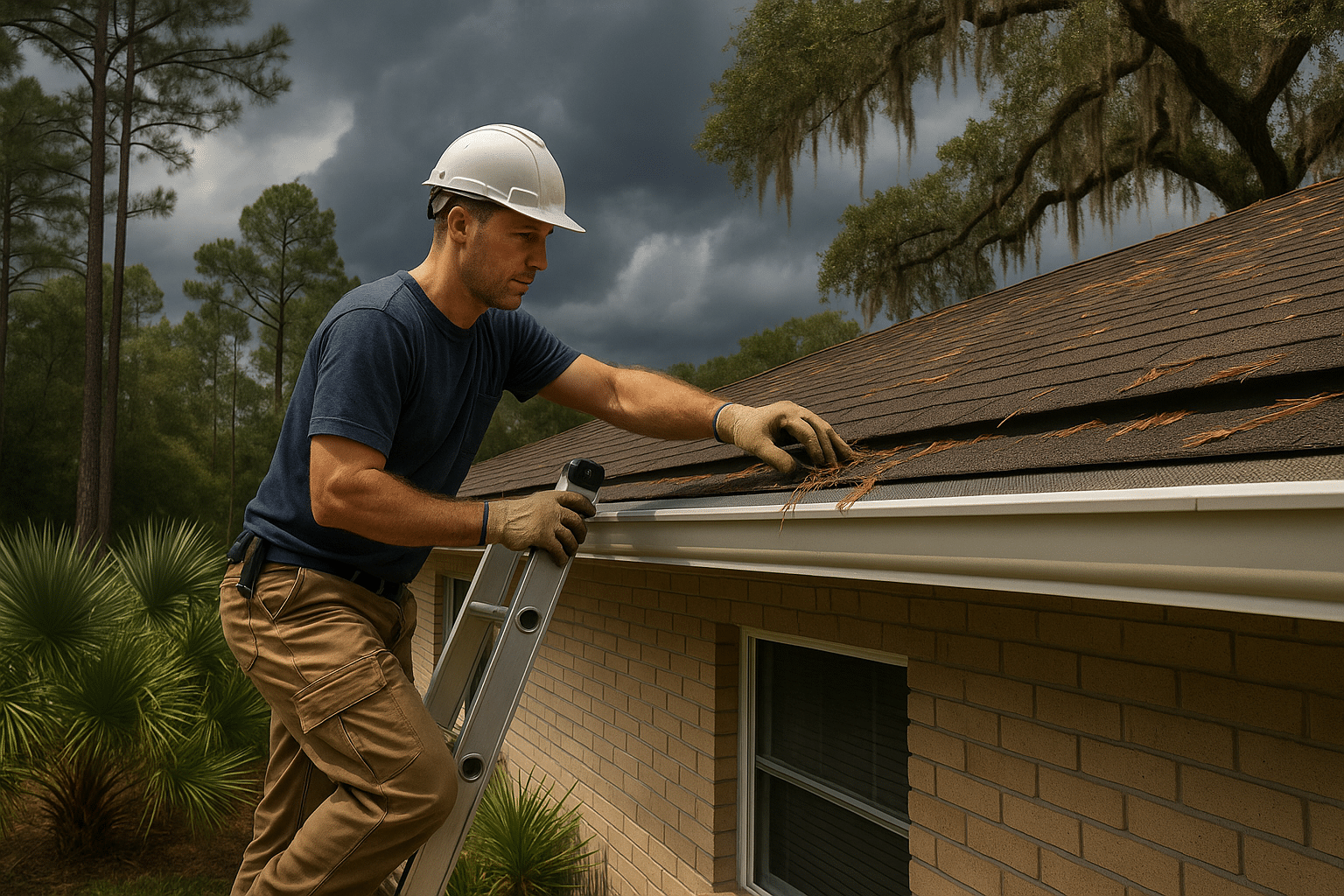
TL;DR: Atlantic hurricane season runs June 1 through November 30, with the peak from mid-August to mid-October, so Central Florida homeowners have a narrow window to get gutters storm-ready. This checklist walks through the inspection, cleaning, and reinforcement steps that matter most for Leesburg, Gainesville, Alachua, Archer, Astatula, and Astor properties sitting on sandy soil with high water tables.
Atlantic hurricane season officially runs from June 1 through November 30, with the peak activity typically falling between mid-August and mid-October. That’s exactly when Central Florida’s afternoon thunderstorm pattern overlaps with tropical systems, dumping heavy rain on roofs that may already be carrying a full season of live oak leaves, Spanish moss, and pine needles.
For homeowners in Leesburg, Gainesville, Alachua, Archer, Astatula, and Astor, gutters aren’t a cosmetic afterthought during storm season — they’re part of your home’s flood defense. Here’s a practical, do-it-before-the-watch-is-issued checklist.
1. Clear every gutter and downspout of debris
Debris removal is the single most important pre-season task. Leaves, twigs, and silt build up and act like a dam, and once they’re saturated they can add
hundreds of pounds of weight to your roofline
. During a tropical system, any existing blockage causes an almost immediate backup onto fascia, soffits, and walls.
Both FEMA and the American Red Cross list this as a core pre-storm task:
clean out drains, gutters and downspouts
before flooding becomes a risk. If you’d rather not get on a ladder before a storm, our gutter cleaning and repair service covers seasonal maintenance and emergency clean-outs across Lake, Marion, Sumter, and Alachua Counties.
2. Flush the system with a hose to find hidden clogs
Visible debris is only half the problem. After clearing the troughs,
run water through the channels to ensure there are no hidden clogs in the elbows of the downspouts
. A downspout that looks clear from the top can still be packed solid at the elbow, which is exactly where water backs up and overflows onto fascia boards during a downpour.
3. Check for sagging, gaps, and loose fasteners
Walk the perimeter of your home and look for any spot where the gutter line dips or pulls away from the fascia. A visible gap between the gutter and fascia board means
the fasteners are pulling out
, and a gutter that rattles when you nudge it needs attention before storm winds test it for you. On seamless K-Style gutters like the ones we fabricate on site, sagging is almost always a hanger or fascia issue rather than a seam failure, since there are no joints to separate in the first place.
4. Confirm downspouts direct water away from the foundation
This step matters more in Central Florida than almost anywhere else in the state. Many local lots sit on sandy soil with a high water table, and
high water table and permeable soils make foundations particularly vulnerable to water intrusion
when gutters dump water right at the base of the house. FEMA’s flooding guidance recommends homeowners
clean gutters and downspouts so rainwater is carried away from the foundation instead of pooling against it
, and extend downspouts several feet further where possible.
5. Inspect valley shields and roof transitions
Florida roofs with multiple hips and valleys concentrate a surprising amount of water into a few feet of gutter during a downpour. If valley shields are missing, damaged, or clogged, water sheets straight over the back of the gutter instead of into it, soaking fascia and siding during the exact storms you’re trying to prep for. If your home doesn’t have valley protection or you’re not sure, it’s worth a look before the season’s heaviest rain arrives.
6. Trim overhanging branches near oaks and pines
Hurricane-force winds turn dead limbs into projectiles and knock down healthy ones too, both of which can crush gutters, dent fascia, or tear hangers loose. Ready.gov’s hurricane guidance specifically calls for homeowners to
trim any limbs overhanging your home and clear any tree debris from your yard
before a storm arrives. In our service area, that usually means live oak and laurel oak canopy limbs, plus longleaf and slash pine branches that shed heavily in high wind. If your property backs up to tree cover, our guide to oak and pine debris by season breaks down what to expect and when.
7. Consider gutter guards before peak season, not during it
If you’re tired of climbing a ladder before every named storm, pre-season is the right time to add protection rather than during an active watch. We install two systems matched to what actually falls on Central Florida roofs: Hydro-Flo micro-mesh for live oak, laurel oak, and Spanish moss debris, and Bulldog reverse-curve guards for longleaf, slash, and sand pine needle loads. Either system cuts down on the clogs that cause overflow during the exact heavy-rain events hurricane season brings.
8. Document gutter and roofline condition with photos
Before the season’s first watch is issued, walk the exterior and photograph your gutters, downspouts, fascia, and roofline. Insurance guidance for Florida homeowners recommends you
photograph the roof and each exterior side from a safe location
and store copies off-site or in the cloud. If a storm does cause damage, this baseline makes any claim faster and more defensible.
9. Schedule a professional inspection if you see any of these red flags
- Gutters that pull away from the fascia or visibly sag between hangers
- Downspouts that are dented, disconnected, or clogged at the elbow
- Rust streaks, peeling paint, or soft fascia wood behind the gutter line
- Standing water or erosion channels near downspout outlets
- Old sectional gutters with failing seams (a problem seamless systems don’t have)
A licensed local contractor can usually spot slope, hanger, and attachment problems a homeowner misses from the ground. If you’re budgeting for repairs or a full replacement before the season ramps up, our guide to what affects gutter installation costs in Florida and our seamless gutter pricing guide both break down what drives the price up or down.
When to do this checklist
NOAA’s seasonal outlooks are issued in late May, right before the June 1 start date, which makes late spring the ideal window to inspect, clean, and repair before the system is under pressure. Waiting until a storm is named and tracking toward Florida means contractors are booked solid and ladder work in gusty conditions is genuinely dangerous. Get ahead of it in April or May instead.
Get a free inspection before the next storm watch
Larry’s Gutters fabricates seamless K-Style aluminum gutters on site, sized for Florida’s heavy summer downpours, with no seams to fail under storm-driven rain. We serve Alachua, Lake, Marion, and Sumter Counties from offices in Leesburg and Gainesville, and every installation is backed by a Lifetime Workmanship Guarantee. Visit our Central Florida gutter services page to request a free, no-obligation quote before the next watch is issued.
Recommended Reads
- Oak Catkins, Acorns, and Leaf Drop: A Season-by-Season Guide to Gutter Clogs in Central Fl
- Gutter Services in Leesburg & Central Florida
- Gutter Cleaning & Repair in Leesburg & Central Florida
