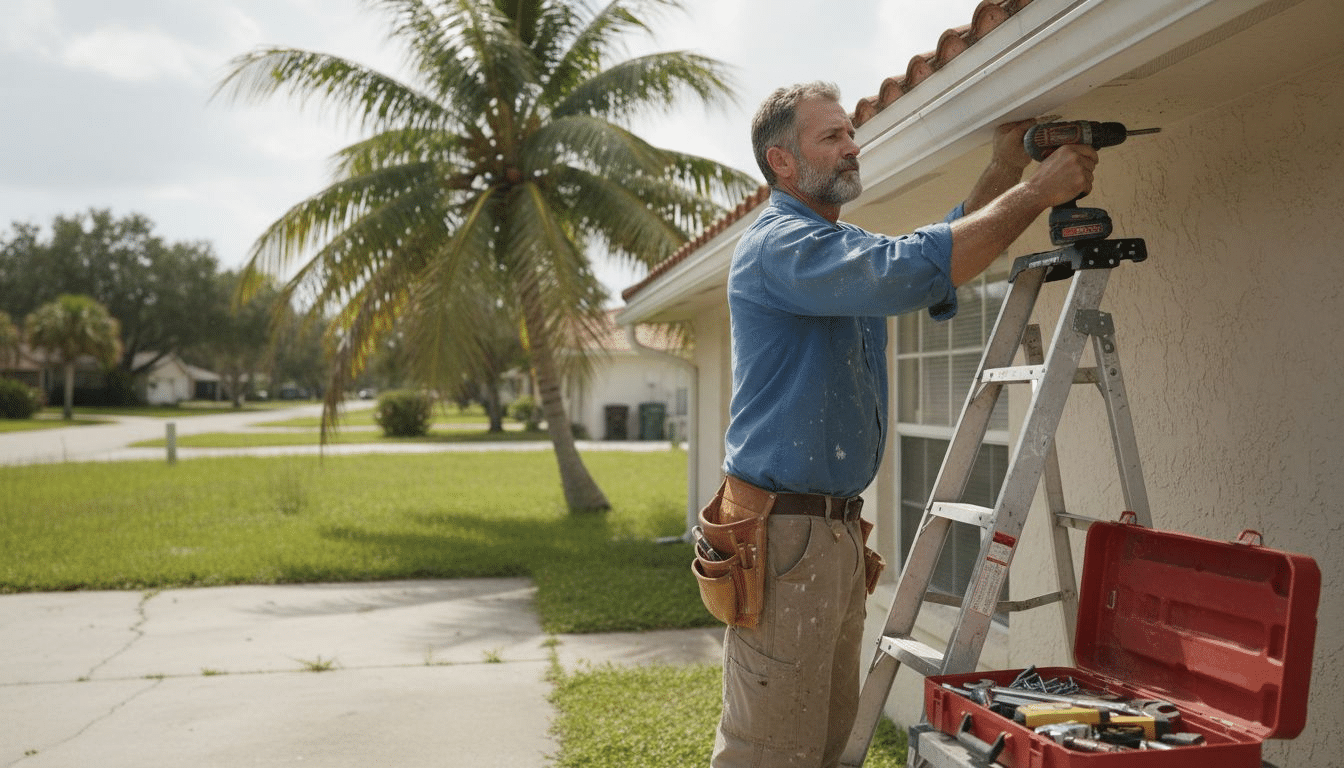
Rainstorms in Central Florida can turn a small gutter mistake into major home repairs. If your gutters and downspouts are not chosen and installed with Florida’s harsh weather in mind, you risk water damage to your foundation, expensive repairs, and constant maintenance headaches.
The right approach protects your home by directing intense rainfall away from your structure and keeps your living space dry and safe. This guide will walk you through proven methods for selecting the best materials, sizing gutters, and making critical installation choices specifically for Florida homes.
Get ready to discover practical tips that every Florida homeowner needs for peace of mind during the next big storm. These key steps will help you safeguard your property and avoid problems before they start.
Table of Contents
- 1. Choose The Right Gutter Material For Florida Weather
- 2. Measure Your Roof To Determine Gutter Requirements
- 3. Plan Proper Downspout Placement For Drainage
- 4. Select Seamless Gutter Systems To Prevent Leaks
- 5. Install Gutter Guards For Reduced Maintenance
- 6. Ensure Professional Mounting And Secure Fasteners
- 7. Conduct Final Inspection And Test For Water Flow
Quick Summary
| Takeaway | Explanation |
|---|---|
| 1. Choose durable gutter materials | Select stainless steel or copper for better corrosion resistance and longevity in Florida’s climate. |
| 2. Measure roof dimensions accurately | Precise measurements ensure gutters effectively manage heavy rainfall, preventing overflow or drainage issues. |
| 3. Strategically place downspouts | Position downspouts to direct water at least 5 feet from the foundation to avoid structural damage. |
| 4. Consider seamless gutters | Seamless designs minimize leaks and provide superior water flow management compared to traditional gutters. |
| 5. Schedule regular inspections | Annual checks help maintain system efficiency and catch potential problems before they escalate. |
1. Choose the Right Gutter Material for Florida Weather
Selecting the optimal gutter material is crucial for protecting your Central Florida home from intense rainfall and unpredictable weather conditions. Not all gutter materials are created equal particularly in a climate that experiences severe storms and high humidity.
When evaluating gutter materials for Florida homes homeowners should prioritize durability corrosion resistance and water management capabilities. Stainless steel and copper gutters offer superior performance in challenging environmental conditions.
Key considerations for gutter material selection include:
- Corrosion Resistance: Critical in Florida’s humid saltwater environment
- Durability: Ability to withstand intense rainfall and potential hurricane conditions
- Maintenance Requirements: Lower maintenance materials save time and money
- Cost Effectiveness: Balancing initial investment with long-term performance
Aluminum and coated steel gutters present limitations in Florida’s harsh climate. These materials are more prone to coating degradation and have shorter functional lifespans compared to premium options like stainless steel and copper.
Professional installation becomes equally important as material selection. Proper sizing and strategic placement ensure effective water redirection away from your home’s foundation preventing potential moisture damage.
Investing in high-quality gutter materials is not an expense but a critical home protection strategy.
Pro tip: Schedule annual professional inspections to assess your gutter system’s condition and catch potential issues before they become expensive repairs.
2. Measure Your Roof to Determine Gutter Requirements
Accurate roof measurement is the foundation of an effective gutter system in Central Florida where heavy rainfall demands precise water management. Understanding your roof’s specific dimensions ensures you install gutters capable of handling intense storm conditions.
Roof measurement involves more than simple length and width calculations. You need to account for total roof surface area and specific architectural features that influence water drainage. Gutter sizing depends on multiple roof characteristics/Book%3A_To_Catch_the_Rain_(Grafman)/04%3A_Calculations/4.03%3A_Gutter_and_Downspout_Sizing) including pitch slope and individual section dimensions.
Essential steps for accurate roof measurement:
- Use a laser measuring device for precise dimensions
- Measure each roof section separately
- Calculate total square footage of all roof surfaces
- Consider roof pitch and slope angles
- Account for complex architectural features
Professional gutter installers typically recommend measuring roof area during dry weather when accessing different sections is safer. Complex roof designs might require professional assessment to ensure accurate measurements.
Precise roof measurement is your first defense against potential water damage in Florida’s challenging climate.
Homeowners should understand that oversized or undersized gutters can lead to significant water management problems. Gutters too small will overflow during heavy rainfall while overly large systems can create unnecessary structural stress.
Pro tip: When measuring your roof take multiple measurements and calculate an average to account for potential measurement errors and ensure maximum accuracy.
3. Plan Proper Downspout Placement for Drainage
Downspout placement is a critical component of an effective gutter system that protects your home from water damage during Florida’s intense rainfall seasons. Strategic positioning ensures rainwater is efficiently directed away from your home’s foundation and landscaping.
Downspout drainage systems require careful planning to prevent potential moisture issues. Each downspout should be positioned to carry water at least 5 feet away from the foundation reducing the risk of structural damage and soil erosion.
Key considerations for downspout placement:
- Space downspouts every 50 feet of gutter length
- Direct water away from foundation and septic systems
- Use splash blocks or gravel trenches to disperse water flow
- Avoid areas with poor drainage or landscaping challenges
- Ensure downspouts point toward street or designated drainage areas
Homeowners in Central Florida must be particularly attentive to water management given the region’s frequent thunderstorms and potential for flooding. Proper downspout placement acts as a first line of defense against water-related property damage.
Strategic downspout positioning is more than a technical detail it’s a critical home protection strategy.
Additional drainage solutions like underground catchment systems can further improve water management particularly in areas with challenging soil conditions or limited natural drainage.
Pro tip: Consider installing downspout extensions during rainy seasons to provide additional water redirection and foundation protection.
4. Select Seamless Gutter Systems to Prevent Leaks
Seamless gutters represent the gold standard for water management in Florida’s challenging climate. Unlike traditional sectional gutters these innovative systems provide superior protection against leaks and water damage.
Seamless gutters are custom-fabricated onsite to match your home’s precise roof perimeter eliminating weak points where water might escape. Their continuous design dramatically reduces potential leak locations compared to traditional segmented gutter systems.
Key advantages of seamless gutter systems:
- Minimized joint points reduce potential leak risks
- Custom fitted to your home’s exact measurements
- Enhanced aesthetic appeal with clean continuous lines
- Improved water flow management
- Longer lasting with reduced maintenance requirements
In Central Florida’s intense rainfall environment selecting the right gutter system can mean the difference between protecting your home and facing costly water damage. Copper and aluminum are particularly effective materials for seamless gutter construction offering durability and corrosion resistance.
A well-designed seamless gutter system is your home’s first line of defense against water intrusion.
Professional installation ensures that your seamless gutters are precisely measured fabricated and mounted to provide maximum water management efficiency.
Pro tip: Schedule an annual professional inspection to maintain your seamless gutter system’s optimal performance and catch potential issues early.
5. Install Gutter Guards for Reduced Maintenance
Gutter guards represent a smart investment for Florida homeowners seeking to minimize home maintenance and protect their property from water damage. These innovative systems provide a critical barrier against debris accumulation while ensuring smooth water drainage.
Gutter guards significantly reduce cleaning frequency by preventing leaves twigs and other organic materials from clogging your drainage system. They act as a protective shield that allows water to flow freely while keeping unwanted debris out.
Key benefits of installing gutter guards:
- Minimize dangerous ladder maintenance tasks
- Reduce frequency of gutter cleaning
- Prevent water damage to home foundations
- Limit potential fire risks from debris buildup
- Extend overall gutter system lifespan
In Central Florida’s environment with frequent thunderstorms and abundant vegetation gutter guards become even more critical. They help protect homes from potential water intrusion and structural damage by maintaining consistent water flow.
Gutter guards are not just an accessory they are a strategic home protection solution.
While no system is completely maintenance-free periodic inspections will ensure your gutter guards continue performing optimally. Professional installation ensures maximum effectiveness and proper fit for your specific roof configuration.
Pro tip: Choose gutter guards specifically designed for Florida’s unique climate and have them professionally installed to maximize their protective capabilities.
6. Ensure Professional Mounting and Secure Fasteners
Secure gutter installation requires more than just hanging metal channels on your home. Professional mounting and selecting the right fasteners are critical to protecting your home from potential water damage and ensuring long-term performance.
Architectural guidelines emphasize precise fastener installation to withstand environmental challenges like high winds intense rainfall and temperature fluctuations common in Central Florida.
Key considerations for professional gutter mounting:
- Use corrosion-resistant fasteners
- Account for material expansion and contraction
- Match fastener type to specific roof and gutter materials
- Space fasteners at appropriate intervals
- Ensure secure attachment to structural supports
Professional installers understand that improper mounting can lead to significant issues like gutter detachment water leakage and potential structural damage. They utilize specialized techniques to anchor gutters securely while maintaining aesthetic appeal.
Proper gutter mounting is not an expense it is an investment in your home’s long-term protection.
In Florida’s challenging climate professional installation becomes even more crucial. Homeowners should prioritize expertise and precision over quick DIY solutions.
Pro tip: Request documentation of installation techniques and fastener specifications from your gutter installation professional to ensure comprehensive quality assurance.
7. Conduct Final Inspection and Test for Water Flow
Your gutter installation is not complete until you perform a comprehensive final inspection and water flow test. This crucial step ensures your newly installed system will effectively protect your home during Florida’s intense rainfall events.
Home inspectors recommend thorough gutter testing to verify proper water management and identify potential installation issues before they become costly problems.
Key elements of a comprehensive gutter inspection:
- Check for proper slope toward downspouts
- Test entire system with simulated rainfall
- Verify water diversion at least 4-6 feet from foundation
- Look for potential leaks or pooling
- Examine fastener integrity and gutter alignment
During testing homeowners should observe how water moves through the system. Proper drainage means water flows smoothly without overflow backing up or creating puddles near the home’s foundation.
A final water flow test is your last line of defense against potential water damage.
Professional installers will typically conduct this testing as part of their service ensuring your gutter system meets performance standards required for Florida’s challenging weather conditions.
Pro tip: Schedule your water flow test during a dry period so you can carefully observe and document the system’s performance without weather interference.
Below is a comprehensive table summarizing the essential guidance for choosing and maintaining gutter systems suitable for Florida’s unique climatic conditions, as discussed in the article.
| Topic | Key Details | Recommendations |
|---|---|---|
| Gutter Material Selection | Stainless steel and copper offer unmatched durability and resistance against Florida’s humid climate. | Opt for high-performance materials despite higher cost. |
| Precise Roof Measurement | Accurate calculation of roof dimensions and slope ensures proper gutter sizing for heavy rainfall. | Utilize professional tools or services for accuracy. |
| Downspout Placement | Proper downspout positioning ensures water is efficiently directed away from the home’s foundation. | Space every 50 feet and avoid problematic areas. |
| Seamless Gutter Systems | Seamless designs eliminate leaks and manage water flow more effectively than segmented systems. | Invest in custom-fabricated, seamless systems. |
| Gutter Guards | Gutter guards prevent debris clogging and reduce maintenance while protecting property integrity. | Use guards suited for local vegetation and climate. |
| Professional Installation | Experienced installers ensure secure mounting and effective gutter performance under extreme weather conditions. | Verify expertise and installation methods. |
| Final System Inspection | Testing ensures operability and verifies drainage effectiveness to mitigate water damage risks. | Conduct tests during dry weather for detailed assessment. |
This table highlights the strategic approaches and practices necessary to maintain efficient and resilient gutter systems in regions prone to intense rainfall and humidity.
Protect Your Central Florida Home with Expert Gutter Solutions
The article highlights critical challenges homeowners face with gutter installation such as selecting the right materials to withstand Florida’s intense rainfall, accurate roof measurements, and the importance of downspout placement. You need gutters that resist corrosion, minimize leaks with seamless design, and reduce maintenance through effective gutter guards. These essential steps are vital to preventing costly water damage and preserving your home’s foundation.
At Larry’s Gutters we specialize in addressing these exact pain points with high-quality, custom-fit seamless gutter systems and professional installation tailored for Florida’s unique climate. Our expert team ensures precise mounting, secure fasteners, and optimal downspout positioning to protect your home from severe weather. Whether you need a new seamless gutter installation, gutter guard installation, or reliable gutter repairs we are your trusted local resource.
Ready to safeguard your home with a gutter system that meets all seven essentials in your checklist Discover how our seamless gutter installation can provide lasting protection and peace of mind.

Get your free quote today at Larry’s Gutters and experience expert solutions designed specifically for Central Florida homeowners. Don’t wait for the next storm to uncover gutter problems Act now to secure your home with professionals who understand your needs and the local environment. Contact us and take the first step toward a durable, maintenance-friendly gutter system.
Frequently Asked Questions
What gutter materials work best for Florida’s climate?
Choosing the right gutter material is crucial for Florida’s weather. Opt for materials like stainless steel or copper that resist corrosion and can endure heavy rainfall. Evaluate durability and maintenance needs before making your decision.
How do I accurately measure my roof for gutter installation?
Accurate roof measurement is essential for an effective gutter system. Use a laser measuring device to record the lengths and widths of your roof sections, and calculate the total square footage to ensure you install the right size gutters.
What factors should I consider for downspout placement?
When planning downspout placement, space them at least every 50 feet along the gutter line and ensure they direct water away from your home’s foundation. This reduces the risk of water damage and erosion around your property.
Why are seamless gutters a better choice than traditional sectional gutters?
Seamless gutters offer a continuous design that minimizes potential leak points, making them superior for managing water flow. For optimal performance, ensure they are custom-fitted to your roof’s precise measurements during installation.
How can I reduce gutter maintenance after installation?
Installing gutter guards can significantly reduce maintenance needs by preventing debris buildup. This allows water to flow freely and minimizes the frequency of cleaning required.
What should I do after installing my gutters?
Conduct a final inspection and water flow test to ensure proper installation. Check that the gutters slope toward the downspouts and that water flows away from your foundation at least 4-6 feet to prevent potential damage.
