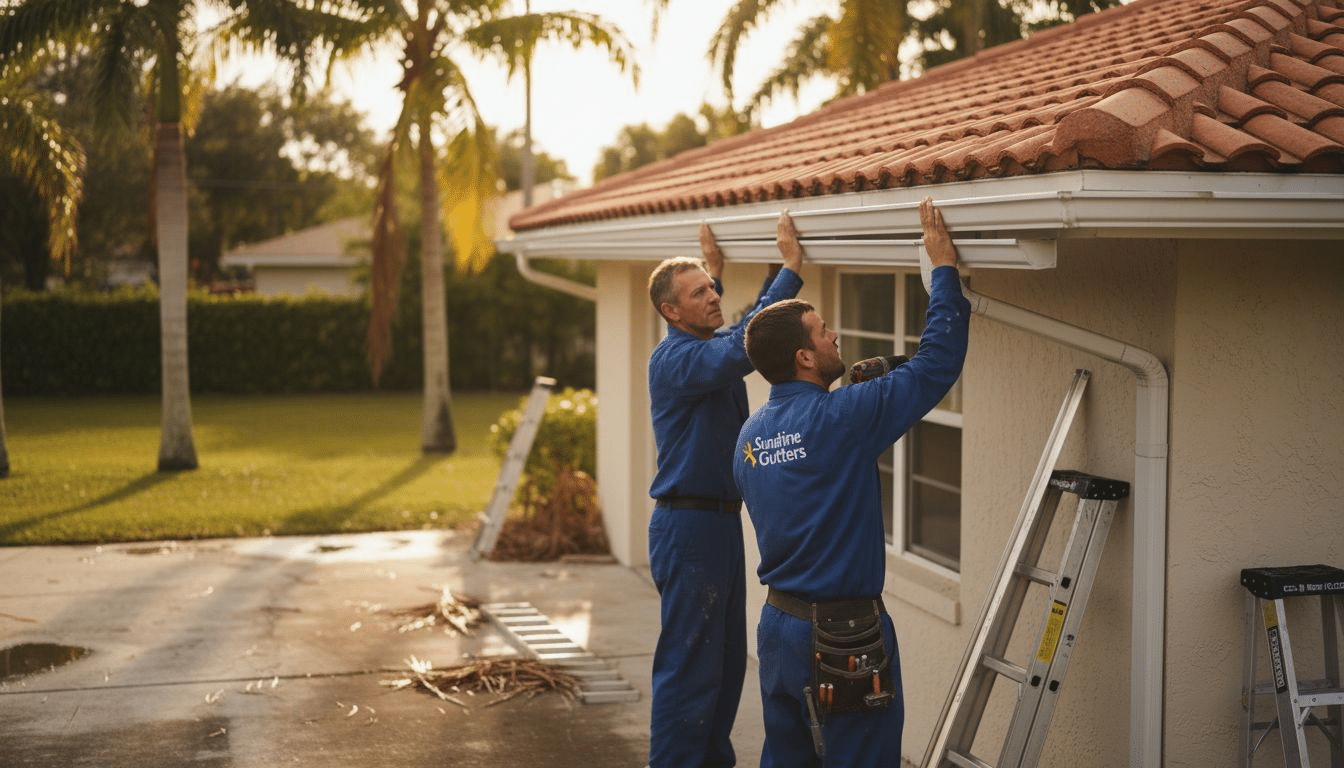
Every summer in Central Florida, a sudden downpour can transform quiet neighborhoods in Lake, Marion, and Sumter Counties into streams of rushing water around homes. With rainfall arriving in torrents, the risk of foundation damage and costly repairs becomes real for every homeowner. Professional gutter installation is your best defense, offering custom sizing, expert drainage, and reliable water diversion to keep your property dry and safe during even the heaviest storms.
Table of Contents
- What Professional Gutter Installers Do
- Seamless Gutters Versus DIY Solutions
- Protecting Homes From Water Damage
- Guarantees, Safety, and Long-Term Savings
- Avoiding Common Installation Mistakes
Key Takeaways
| Point | Details |
|---|---|
| Professional Installation Ensures Longevity | Seamless gutters installed by professionals typically last 20–30 years, while DIY options usually last only 10–15 years. |
| Importance of Proper Slope | Correct gutter slope (¼ inch per 10 feet) is critical to prevent pooling and overflow, which can cause costly damage to your home. |
| Warranty and Safety Advantages | Hiring certified professionals provides warranty protection and minimizes safety risks associated with ladder and roof work. |
| Prevent Water Damage | Professionally installed gutters effectively manage heavy rainfall, reducing the risk of water damage to your home’s foundation and structure. |
What Professional Gutter Installers Do
When you hire professional gutter installers, you’re getting much more than someone to nail some metal to your roof. These specialists handle the complete assessment, measurement, selection, and installation of a gutter system designed specifically for your home. In Central Florida, where afternoon thunderstorms dump inches of rain in minutes, having someone who knows exactly what they’re doing makes the difference between a home that stays dry and one that faces foundation damage, basement flooding, and rotting fascia boards.
Professional installers start by evaluating your home’s roofline, drainage patterns, and existing conditions. They measure the exact dimensions of your roof edges, calculate the proper slope and sizing needed for optimal water flow, and determine the best downspout placement to direct water away from your foundation. This is where experience matters. An installer who has worked through dozens of Florida storms understands that during the heavy rainfall common in Lake, Marion, and Sumter Counties, standard gutter sizing often falls short. They know how to properly size gutters and downspouts to handle the volume of water your roof will collect. They’ll assess your roof pitch, the total square footage being drained, and local rainfall patterns to recommend gutters that won’t overflow when Mother Nature decides to test them.
Once measurements are complete, professional installers handle the material selection and fabrication. If you’re choosing seamless gutters, they’ll often fabricate them on-site using specialized equipment, ensuring a perfect fit for your home’s unique dimensions. They select materials appropriate for Florida’s climate, considering factors like salt spray near coastal areas and the intense UV exposure that comes with our subtropical sun. They’ll discuss the pros and cons of different materials, styles, and colors, and explain how choices like aluminum with proper backing will resist corrosion and maintain their appearance year after year. Professional installers know the specific gutter installation standards and best practices established by industry training and certification programs, ensuring your system meets professional quality benchmarks.
The actual installation is where the technical expertise becomes obvious. Professional installers properly secure gutters to your home’s fascia boards using the correct spacing for fasteners, ensuring the system won’t sag or pull away from the roofline under the weight of standing water or debris. They establish the correct slope for drainage, typically about one quarter inch for every ten feet of gutter run, so water flows reliably toward downspouts. They seal all joints securely, install downspouts at the right angles to prevent bending and kinking, and ensure downspouts extend at least four to six feet from your foundation to divert water safely away from the home. They’ll also handle any gutter guard installation if you’ve chosen that option, and they’ll leave your property clean once the job is complete. What separates true professionals from DIY attempts or inexperienced contractors is attention to these details and the knowledge that small installation errors become big water problems during Florida’s rainy season.
Pro tip: _Ask your professional installer to explain the slope and drainage pattern they’re creating before they start work. Understanding how water will flow through your system helps you spot any issues early and ensures you know what proper operation looks like after installation.
Seamless Gutters Versus DIY Solutions
The choice between seamless gutters installed by professionals and a DIY approach often comes down to one question: how much is your home worth to you? On the surface, DIY gutter solutions seem attractive. You can buy sectional gutters from a big box store, rent some equipment, and spend a weekend installing them yourself. The initial cost savings look significant. But here’s what actually happens in practice. DIY sectional gutters are made of pre-sized pieces that you connect together with slip joints and sealant. Every single joint becomes a potential failure point. During Florida’s intense summer storms, water pressure builds up in your gutters, testing every seal and connection. When one joint fails, water doesn’t just leak out slowly. It pours behind your fascia boards, soaks into your soffit, and eventually reaches the wood structure of your home. You end up spending thousands on water damage repair to save a few hundred on installation.
Seamless gutters work completely differently. Rather than assembling pieces, professional installers use specialized equipment to fabricate custom gutters on-site from a continuous roll of material, creating one long channel with zero joints except at the corners and downspout connections. This design eliminates the most common failure points that plague DIY systems. A properly installed seamless system in Lake, Marion, or Sumter County homeowner won’t wake up after a thunderstorm to discover water damage in the attic or foundation problems from overflowing gutters. The other critical difference is slope and sizing. DIY installers often miss the proper slope requirement, thinking that as long as water generally flows toward a downspout, it’s good enough. Wrong. Gutters need a specific slope, typically about a quarter inch for every ten feet of run, to ensure water flows consistently without pooling. When water pools in gutters, it becomes standing water that attracts mosquitoes, provides a home for mold and algae, and adds tremendous weight that causes sagging. Professional installers calculate the exact slope your roof requires based on its dimensions and pitch, ensuring proper drainage every single time.
Maintenance burden also separates these approaches dramatically. DIY sectional gutters require constant attention. You’ll be cleaning them more frequently because debris collects in joints and around seams where water sits. You’ll inspect seals regularly for cracks. You’ll probably re-seal joints every few years as the original sealant deteriorates under Florida’s intense sun and temperature swings. Seamless gutters require less frequent cleaning since debris doesn’t accumulate in joints the same way, and the professionally sealed connections last far longer. When you factor in the hours you’ll spend on maintenance, plus the eventual repair costs when DIY joints fail, the supposedly cheaper DIY option becomes remarkably expensive.
Then there’s the issue of warranty and liability. When you install gutters yourself and something goes wrong, you own that problem completely. Your homeowner’s insurance may not cover water damage from a DIY installation failure since it wasn’t done to professional standards. Professional gutter installers carry liability insurance and typically offer warranties on their work. If something fails within the warranty period, they fix it at no cost to you. That protection has real value. In Central Florida, where afternoon storms can dump several inches of rain in an hour, you need a gutter system you can trust completely. Professional seamless gutters, properly sized and installed with attention to every technical detail, give you that confidence. DIY solutions offer savings on labor, but they cost you peace of mind and put your home at risk.
Here’s a concise comparison of professional seamless gutter installation versus DIY solutions:
| Aspect | Professional Seamless Gutters | DIY Sectional Gutters |
|---|---|---|
| Potential Failure Points | Few (only at corners) | Many (at each joint) |
| Lifespan | 20–30 years | 10–15 years |
| Maintenance Frequency | Minimal | Frequent |
| Warranty Coverage | 5–10 years typically | Usually none |
| Risk of Water Damage | Very low when installed properly | High due to leaks/overflow |
| Long-term Cost | Lower over decades | Higher (repairs, upkeep) |
Pro tip: _If you’re considering a DIY approach, at minimum hire a professional to assess your roof slope and calculate the proper gutter sizing for your specific home. This one-hour consultation costs far less than repairing water damage from an undersized or poorly sloped system later.
Protecting Homes From Water Damage
Water damage ranks among the most expensive home repairs homeowners face, and the worst part is that much of it is preventable. In Central Florida, your home faces unique water threats that most of the country never encounters. During the intense thunderstorm season from June through September, a single afternoon downpour can dump several inches of rain on your roof in just 30 minutes. If your gutters aren’t properly sized, sloped, and installed, that water doesn’t channel safely away from your home. Instead, it overflows, pools around your foundation, and begins its destructive work. Water seeping into basements, crawl spaces, and foundation cracks creates conditions for mold growth, wood rot, and structural deterioration that can cost $10,000 to $25,000 or more to repair.
The foundation is where water damage becomes most dangerous. Your home’s foundation sits in the soil surrounding your property, and that soil acts like a sponge when water isn’t properly diverted. When gutters fail to properly channel rainwater away from foundations, that water saturates the soil, increasing hydrostatic pressure against foundation walls. This pressure forces moisture through concrete cracks and mortar joints, even tiny ones you can’t see. Once water enters, it creates the perfect environment for mold and mildew to thrive, compromising your home’s indoor air quality and putting your family at health risk. The moisture also causes wood components in your crawl space or basement to swell, warp, and rot. Metal fasteners and pipes corrode. Drywall and insulation deteriorate. What started as inadequate gutters becomes structural damage that requires excavation, waterproofing treatments, and potentially foundation repair.
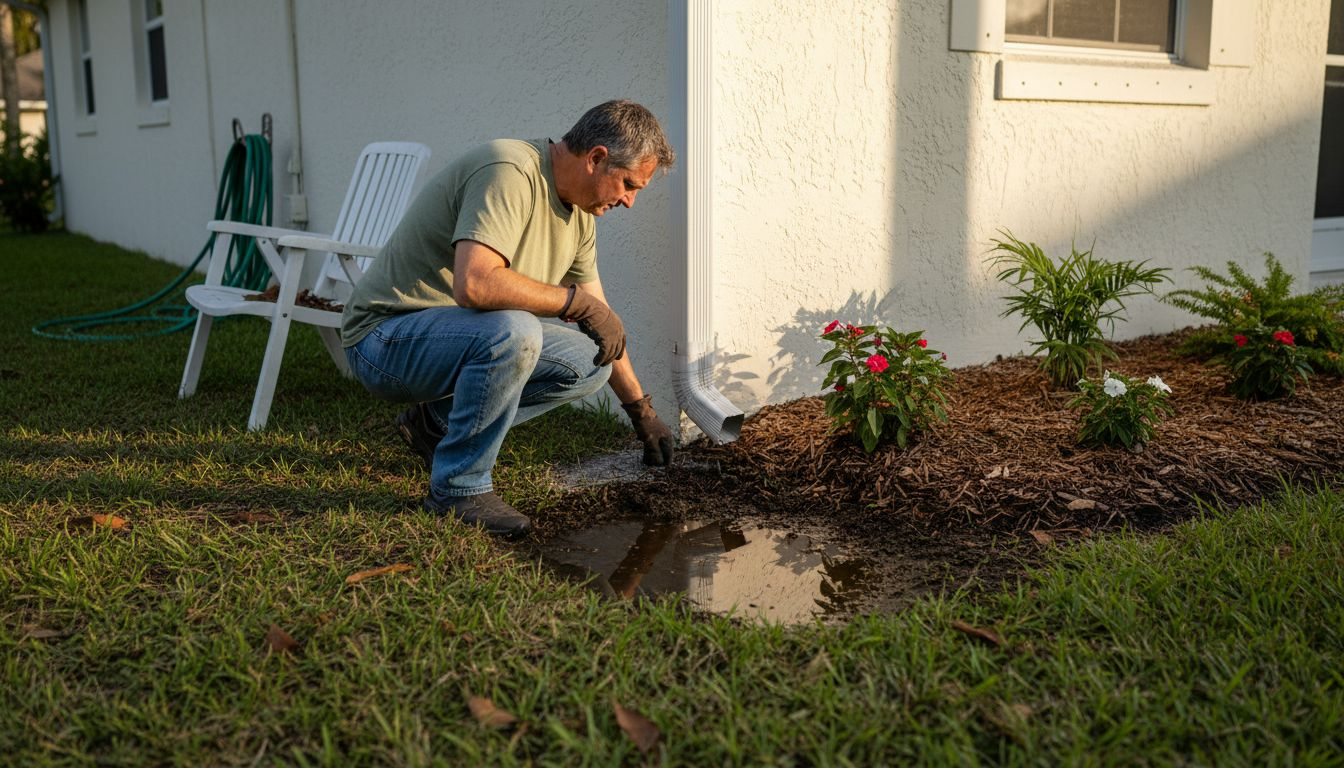
Beyond the foundation, water damage affects your entire home’s durability. Overflowing gutters pour water down your exterior walls, saturating the wood fascia boards and soffits that protect your roof system. Wet wood attracts carpenter ants and termites that tunnel through and weaken structural components. Water running down walls can penetrate behind siding, soaking the wood sheathing underneath and creating hidden decay that you won’t discover until the damage is severe. In the attic, improper gutter drainage allows water to back up under the roofline, damaging insulation and roof decking. Ice dams in winter worsen the problem by preventing proper drainage and pushing water up under shingles. The cost to repair roof damage, replace rotted fascia and soffits, treat termite damage, and remediate mold can easily exceed $15,000 to $30,000. Professional gutter installation prevents all of this by ensuring water runoff is properly directed and gutter sizing matches your roof area, preventing the overflow and saturation that causes damage.
Professional gutter installers protect your home through precision in three critical areas. First, they size your gutters to handle the rainfall intensity your area receives. Central Florida gets approximately 53 inches of rain annually, with much of that falling in intense storms rather than gradual rain. Second, they establish the correct slope so water flows consistently toward downspouts without pooling or backing up. Third, they position downspouts to discharge water at least 4 to 6 feet from your foundation, directing it away from vulnerable areas. They may also recommend extensions or splash blocks to further direct water away. Some professionals integrate gutters with drainage systems that channel water to appropriate discharge points. This complete approach protects your foundation, prevents soil saturation, maintains indoor air quality, and preserves the structural integrity of your home for decades.
Pro tip: _If you notice water pooling in your basement during heavy rains or see moisture marks on foundation walls, your gutters may be undersized or improperly sloped. Schedule a professional inspection immediately rather than waiting for visible structural damage to develop.
Guarantees, Safety, and Long-Term Savings
When you hire a professional gutter installer, you’re not just paying for labor. You’re purchasing peace of mind, safety assurance, and financial protection that lasts for years. Professional installers who have undergone formal certification and training programs understand the technical requirements, safety protocols, and best practices that ensure your gutter system performs reliably from day one. These aren’t contractors operating from YouTube tutorials. They’ve studied proper installation techniques, learned how to handle different roof configurations, and been trained in the safety protocols required when working at heights on residential homes. That training translates directly into a system that works right the first time, stays in place during Florida’s intense storms, and doesn’t develop problems six months after installation.
Warranties and guarantees separate professional work from DIY or inexperienced contractor approaches. When a certified professional installs your gutters, they typically provide a warranty on both materials and workmanship. If a seam fails, a fastener pulls loose, or a slope develops that causes pooling, the company that installed the system fixes it at no cost to you. This warranty protection usually covers five to ten years of service, and in some cases longer. That’s not just a marketing promise. It’s a legal commitment backed by the company’s liability insurance and reputation. If something goes wrong during that warranty period, you don’t face a $3,000 repair bill. The installer handles it. When you install gutters yourself or hire an unlicensed contractor, you have zero warranty protection. Water damage from an improperly installed system becomes your financial responsibility completely. Your homeowner’s insurance likely won’t cover it since the damage resulted from improper installation rather than a covered peril.
Safety matters in ways that extend beyond just warranty coverage. Professional gutter installation involves working at heights on ladders and roofs, which carries genuine risk of serious injury or death. Professional installers have training in fall protection, ladder safety, and roof safety protocols. They use proper equipment like fall harnesses, roof brackets, and safety lines. They know how to move across a roof safely in different weather conditions. They understand weight distribution and how to avoid stepping through weak spots on older roofs. They carry liability insurance that protects them and their customers. When you attempt DIY gutter installation, you’re assuming all that risk personally. Falls from heights rank among the leading causes of serious home injuries and deaths. A fall from a single-story roof or even a tall ladder can result in permanent disability. The money you save on installation costs becomes insignificant against the potential cost of a traumatic injury.
Long-term savings accumulate through reduced maintenance and extended system lifespan. Professional installations that meet industry performance standards for durability and resist wind, water, ice, and snow loadings require far less maintenance over time. A properly installed seamless gutter system with correct slope and secure fastening will function reliably for 20 to 30 years with minimal attention. DIY sectional gutters typically last 10 to 15 years and require constant maintenance throughout that period. You’ll spend hours cleaning joints, re-sealing connections, and replacing fasteners. You’ll deal with occasional overflows and the water damage they cause. Professional installation costs more upfront, but spreads the cost per year across two or three decades of reliable service. Add in the water damage repairs you avoid, the pest infestations you prevent, and the foundation issues you never develop, and professional installation delivers exceptional financial value.
Beyond the numbers, professional gutter installation provides something less tangible but equally important: confidence. After a major rainstorm, you don’t worry. You don’t check the attic for leaks or inspect the crawl space for moisture. You don’t lie awake wondering if water is seeping into your foundation. You know your home is protected because the system was installed by professionals who understand their craft and backed their work with guarantees. That peace of mind has real value, especially in Central Florida where severe weather isn’t a possibility but a certainty.
Pro tip: _Always ask to see proof of professional certification and request a detailed warranty in writing before signing any installation contract. The warranty document should specify what’s covered, how long coverage lasts, and what steps you need to take to make a claim if problems develop.
Avoiding Common Installation Mistakes
Gutter installation looks straightforward until you actually start doing it. Then the complications emerge. Inexperienced installers and DIY homeowners make predictable mistakes that compromise system performance and create expensive problems down the line. Understanding these errors helps you recognize whether a contractor knows what they’re doing and why professional installation matters so much in Central Florida’s challenging climate.
The most common mistake is improper slope. Gutters need to slope gradually toward downspouts so water flows consistently without pooling or backing up. The standard is about one quarter inch of drop for every ten feet of gutter run. This sounds simple until you’re actually on a roof trying to measure and account for the existing roofline irregularities. Many DIY installers think that as long as there’s some slope, it’s good enough. They might achieve a slope of one eighth inch per ten feet, or worse, install gutters that are nearly level. Water pools in sections that lack proper slope. This standing water becomes heavy, adding tremendous weight that causes gutters to sag and pull away from fascia boards. The pooled water also provides breeding grounds for mosquitoes and mold. When gutters finally fail from the extra weight, you’re looking at replacement costs and potential water damage underneath.
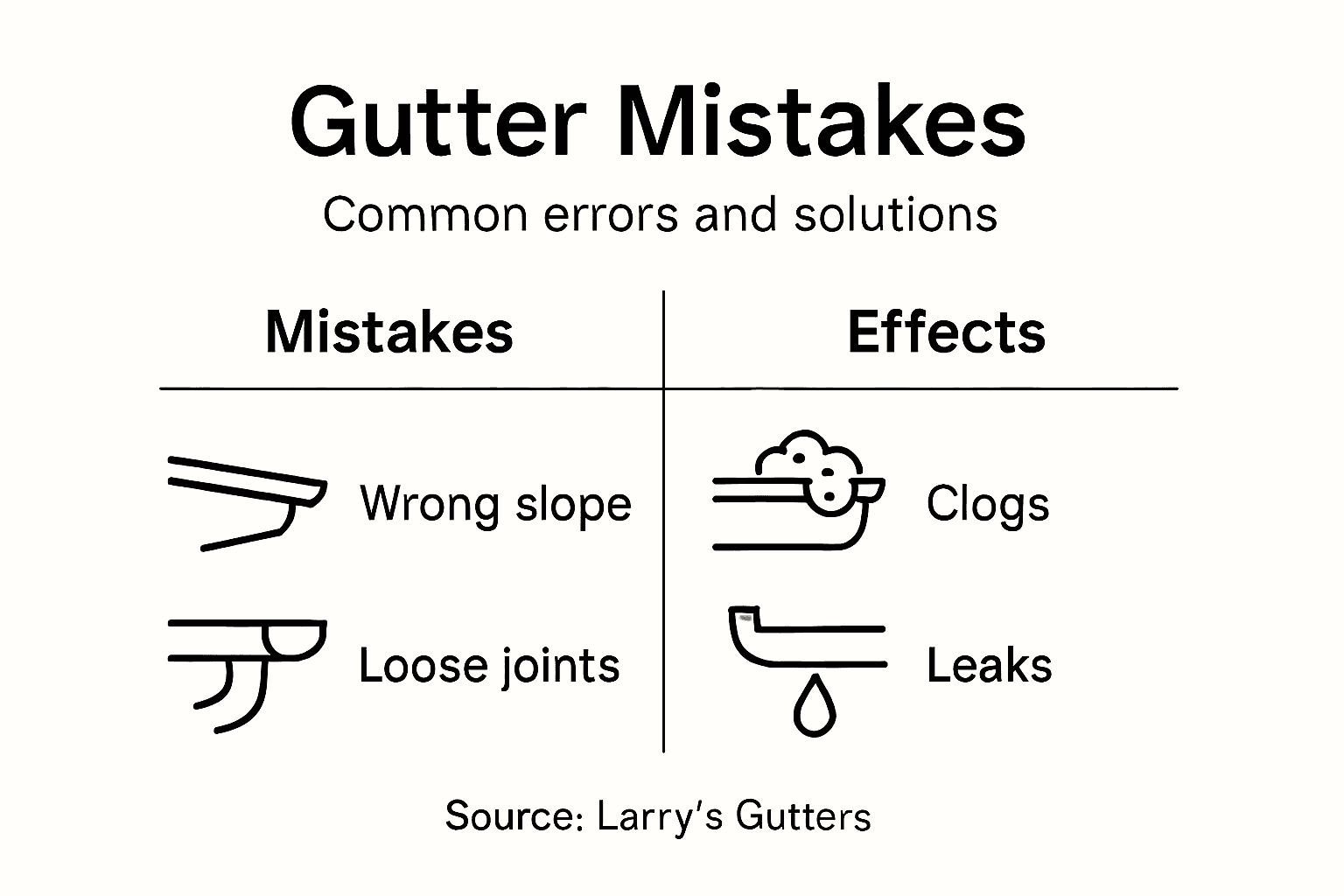
Material incompatibility and joint sealing failures represent the second major category of mistakes. When gutter sections are joined together, the connection must be watertight using compatible materials and proper sealing techniques. Mixing aluminum gutters with galvanized fasteners, or using incorrect sealant types, creates corrosion and joint failure. Some DIY installers skip proper joint sealing entirely, thinking gravity alone will handle it. During heavy rain or when leaves and debris block a section of gutter, water backs up and finds its way through inadequately sealed joints. The water then runs behind the fascia board where you can’t see it, soaking wood and creating rot that won’t become apparent until structural damage is advanced.
Understanding proper slope, sizing, and downspout capacity prevents the most destructive mistakes. Gutters sized too small for your roof area cannot handle the volume of water during Florida’s intense downpours. Undersized gutters overflow during heavy rain, pouring water down exterior walls instead of channeling it safely. Downspouts positioned too close to the foundation, or discharging directly against the foundation wall, allow water to saturate soil and create hydrostatic pressure that forces moisture into basements and crawl spaces. Proper installation requires downspouts to extend at least four to six feet from the foundation, directing water away from vulnerable areas. Professional installers know to measure roof area, calculate rainfall intensity, and size gutters and downspouts accordingly. They know to position downspouts to divert water safely. They understand that every detail matters when Florida storms deliver several inches of rain in minutes.
Another overlooked mistake involves fastener spacing and mounting security. Gutters must be securely attached to fascia boards using proper fastener spacing, typically every 24 inches or closer depending on materials and local building codes. Insufficient fasteners or poor spacing allows gutters to sag, twist, or separate from the roofline under the weight of standing water, ice dams, or accumulated debris. Wind can also pull improperly mounted gutters away from the house. Professional installers know the specific requirements for different materials and roof configurations. They use fasteners designed for the materials they’re installing and space them correctly for secure attachment. They also know how to identify roof conditions that require special attention, like wood that’s rotted or compromised, which needs repair before gutters can be properly mounted.
This table summarizes common gutter installation mistakes and their consequences:
| Mistake Type | Description | Typical Consequence |
|---|---|---|
| Improper Slope | Not enough drop per 10 feet | Pooling, sagging, overflow |
| Material Incompatibility | Mixing fastener or gutter types | Corrosion, joint failure |
| Poor Joint Sealing | Not fully sealed connections | Water leaks, hidden rot |
| Insufficient Fasteners | Spacing wider than recommended | Sagging, separation from fascia |
| Inadequate Downspout Placement | Too close to foundation | Soil saturation, basement leaks |
Pro tip: _Before hiring a contractor, ask them to explain how they’ll establish slope, what materials they’ll use for sealing joints, and what size gutters they recommend for your roof. Their detailed answers reveal whether they understand the technical requirements or are just guessing.
Protect Your Florida Home with Expert Gutter Installation from Larry’s Gutters
The challenges highlighted in the article show exactly why trusting professional gutter installers is crucial for Central Florida homeowners. From ensuring the correct slope and seamless design to avoiding costly water damage and foundation issues, these factors all point to one clear solution: high-quality, custom-fit gutters installed by experienced professionals who understand the unique demands of Florida’s weather.
At Larry’s Gutters, we specialize in seamless gutter installation that meets all the technical standards mentioned. Our team handles precise measurement, fabrication, and installation to protect your home from heavy rainfall and storms common in your area. We also offer gutter guard installation and efficient repair services that reduce maintenance and extend the lifespan of your gutter system. When you choose us, you get peace of mind knowing your home has the protection it deserves.
Ready to safeguard your home with expert craftsmanship and quality materials designed for Florida’s climate?
[Image:cta_image]
Don’t wait for the next heavy rain to reveal costly damage. Request your free quote today at Larry’s Gutters and see how our professional installation can help you avoid expensive repairs and enjoy long-term savings. Visit our website now and take the first step toward a worry-free, durable gutter system.
Frequently Asked Questions
What are the benefits of hiring professional gutter installers?
Hiring professional gutter installers ensures proper sizing, slope, and installation techniques that effectively manage rainwater, protecting your home from water damage and structural issues.
How does the installation of seamless gutters differ from sectional gutters?
Seamless gutters are fabricated on-site as a single continuous piece, reducing failure points and ensuring better performance during heavy rain, while sectional gutters can develop leaks at joints.
How can I prevent water damage in my home from inadequate gutters?
Properly sized and installed gutters direct water away from your foundation, preventing soil saturation and minimizing risks of mold, rot, and structural deterioration.
What should I look for in a professional gutter installation warranty?
A quality warranty should cover both materials and workmanship, typically lasting five to ten years, ensuring you are protected against installation failures or material defects.
Recommended
- Why Hire Professional Gutter Cleaners in Florida
- Gutter Troubleshooting: Prevent Water Damage in Florida
- How Seamless Gutters Work to Protect Florida Homes
- Why Seasonal Gutter Cleaning Matters in Florida
- 4 Steps to Weatherproof Your Roof in Storm Season
- Gutter Services Gainesville FL
- Gutter Services The Villages FL
