TL;DR:
- Effective gutter safety requires layering PPE, ladder accessories, fall arrest systems, and dropped-object controls tailored to the specific height and task. Proper equipment, setup, and risk assessment significantly reduce the chances of falls or injuries during gutter maintenance or installation. When in doubt, hiring professionals ensures safety for high or complex gutter projects, especially on two-story homes.
Essential gutter safety gear is defined as the combination of personal protective equipment (PPE) and ladder accessories that together prevent falls, cuts, eye injuries, and dropped-object accidents during gutter maintenance or installation. The full gutter safety gear list includes cut-resistant gloves, ANSI-rated safety goggles, non-slip boots, a properly rated extension ladder, ladder stabilizers, and fall arrest equipment for two-story or higher work. Getting this right before you climb is not optional. According to homeowner safety guides, the most preventable gutter injuries come from skipping basic PPE or setting up a ladder incorrectly. This article covers every layer of protection you need, from your hands to your harness.
1. What personal protective equipment is essential for gutter work?
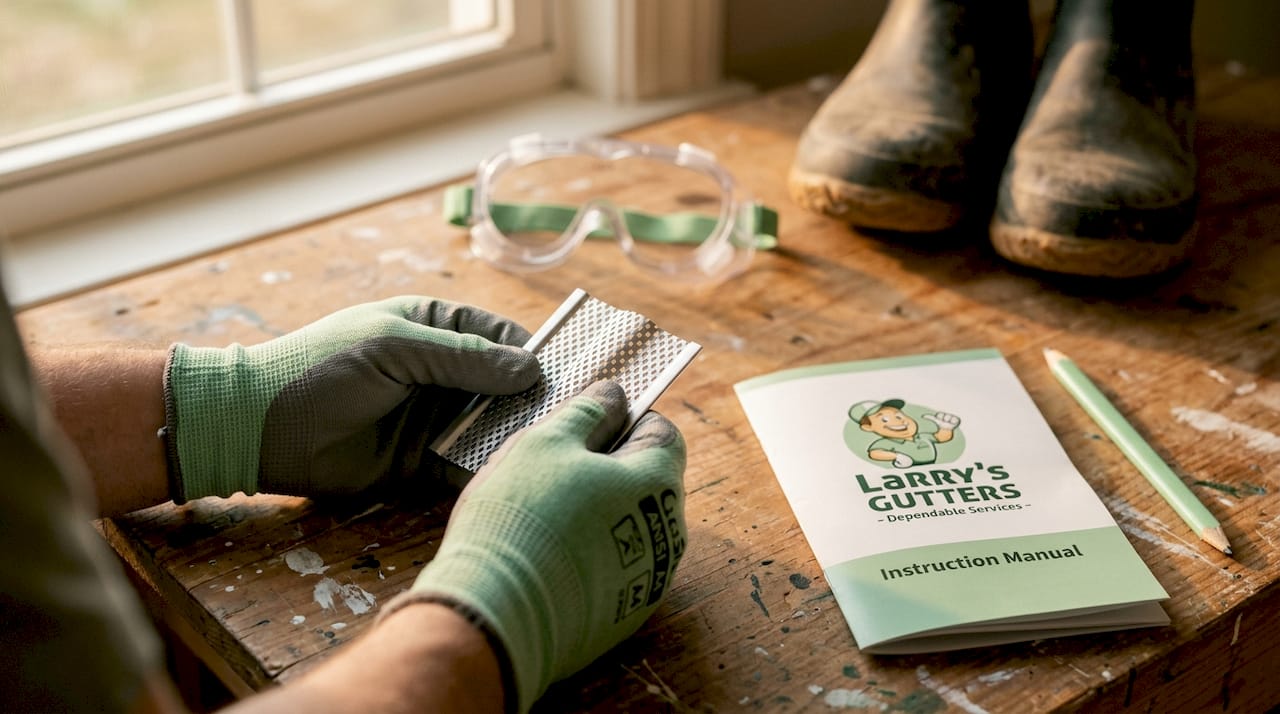
The core of any gutter safety equipment setup starts with PPE that protects your body from the hazards you will actually face: sharp metal edges, debris, bacteria-laden water, and mold spores. Heavy-duty gloves, ANSI-rated goggles, and sturdy boots are the three non-negotiables recommended by every credible homeowner safety guide. Each one addresses a specific, real injury risk rather than a theoretical one.
Here is what belongs on your PPE checklist before you touch a ladder:
- Cut-resistant gloves. Gutter edges, gutter guard trim, and metal screws can slice through standard work gloves. Choose gloves rated ANSI A4 or higher for cut resistance. They also protect against the bacteria found in decomposing leaf debris.
- ANSI-rated safety goggles. Debris, splashback, and blower exhaust all travel at eye level when you are working at gutter height. Standard glasses do not seal the sides. Use goggles rated to ANSI Z87.1.
- Closed-toe boots with deep non-slip tread. Sandals and worn-sole sneakers are the leading footwear mistake on ladders. Your boot sole needs to grip a ladder rung firmly, even when wet.
- Dust or mold mask. Florida gutters accumulate organic debris fast. When cleaning gutters clogged with decomposing leaves or visible mold, an N95 respirator protects your lungs. Goggles and masks are also required when using blower attachments or powered cleaning tools at ground level.
- Long-sleeved shirt and work pants. Skin exposure to gutter debris, rusty screws, and sharp aluminum edges causes more minor injuries than most homeowners expect.
Pro Tip: Choose PPE that fits well enough to wear for an extended session. Gloves that are too stiff or goggles that fog up get removed mid-job, which is exactly when accidents happen. Comfort drives compliance.
Gutter guard installation adds one more layer of risk. Cut-resistant gloves and ANSI-rated eye protection are not optional during that task because trimming tools and sharp guard edges are involved throughout the process.
2. How to select and use ladders safely for gutter tasks
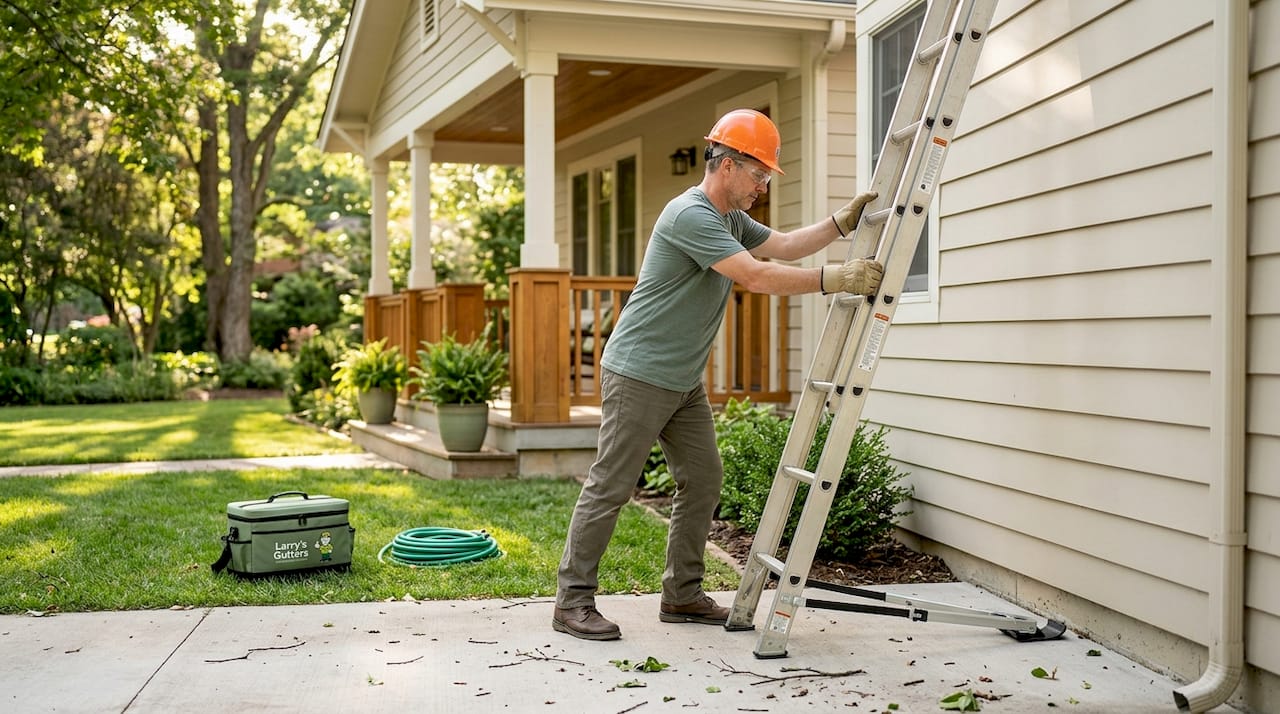
The best ladder safety gear starts with choosing the right ladder. For gutter work, an extension ladder rated Type IA (300 lbs capacity) is the minimum standard. Type IA handles the combined weight of your body, tools, and a bucket of debris without flexing. Type I (250 lbs) is acceptable for lighter homeowners with minimal tool weight, but Type IA gives you a real safety margin.
Proper setup is where most DIYers make their first mistake. OSHA’s 4:1 angle rule requires that for every four feet of ladder height, the base sits one foot away from the wall. The ladder must also extend at least three feet above the gutter line so you have something to hold when stepping on and off. Before you set the ladder, inspect it for cracked rungs, damaged feet, or bent rails. A defective ladder must come out of service immediately.
| Ladder type | Duty rating | Best use for gutter work |
|---|---|---|
| Type IA extension ladder | 300 lbs | Two-story homes, heavier users, tool-heavy jobs |
| Type I extension ladder | 250 lbs | Single-story homes, lighter users |
| Type II stepladder | 225 lbs | Ground-level prep only, not for gutter access |
| Type III stepladder | 200 lbs | Not recommended for gutter work |
Ladder accessories matter as much as the ladder itself. Ladder stabilizers with rubber pads transfer the load away from the gutter channel, preventing deformation and keeping the ladder from shifting sideways. A standoff arm holds the ladder away from the fascia so you can work without the ladder blocking the gutter opening.
Always have a spotter at the base. Their job is to hold the ladder steady and watch for hazards below, not to scroll their phone. Overreaching is the single most common cause of ladder falls, so keep your hips between the side rails at all times. Move the ladder instead of stretching.
Pro Tip: Never work from a ladder in wet conditions or when wind gusts exceed 20 mph. Florida afternoon storms arrive fast. Check the forecast before you climb, not after.
For more on safe ladder practices specific to Florida homes, Larrysgutters has a dedicated guide covering OSHA-aligned setup rules.
3. When and how to use fall protection systems during gutter maintenance
A Personal Fall Arrest System (PFAS) is the standard industry term for what most homeowners call a safety harness setup. For gutter work on two-story or taller homes, a PFAS is the correct tool when no other fall prevention method is available. The system has three required components: a full-body harness, a connecting lanyard or self-retracting lifeline (SRL), and an anchorage point.
OSHA and ANSI standards specify that the anchorage must be rated for at least 5,000 lbs per worker. A roof ridge anchor bolted to structural framing is the most common residential solution. The system must also limit free fall to six feet and keep arrest force below 1,800 lbs to protect your spine and internal organs during a fall event.
Key requirements for a residential PFAS setup:
- Full-body harness rated and fitted to your body weight, not a waist belt
- Shock-absorbing lanyard or SRL to reduce arrest force on impact
- Roof anchor rated 5,000 lbs, attached to structural framing, not sheathing
- Pre-job hazard assessment to identify anchor points and fall zones before climbing
- Rescue plan in place before you clip in, since suspension trauma can occur within minutes of a fall arrest
PFAS systems must be part of a full fall protection plan that includes rescue planning. This is the detail most homeowners skip, and it is the one that turns a survivable fall into a medical emergency.
If a PFAS feels beyond your comfort level, two practical alternatives exist: use a ground-based gutter cleaning system with extension wands, or hire a professional for any work above single-story height.
4. What methods and gear prevent dropped objects while working on gutters?
Dropped-object prevention is the most overlooked category in any gutter safety gear list. A single tool falling from ladder height can cause a serious head injury to a bystander or damage property below. ANSI/ISEA 121-compliant tool tethering systems are the primary engineering control, and they work by attaching tools directly to your wrist, belt, or ladder with a rated lanyard.
Practical dropped-object prevention gear includes:
- Tool tethers and wrist lanyards rated for the weight of each specific tool
- Tool pouches and apron-style bags worn on your body so tools stay within reach without being set on the ladder
- Gutter cleaning buckets with hooks that attach to the ladder rung, keeping debris containers stable
- Hard hat for anyone working or standing below the ladder, including your spotter
- Barricade tape or cones to create an exclusion zone below your work area
Dropped-object prevention requires active worker-level controls like tethering and secured containers. A hard hat on the spotter is the last line of defense, not the first. Engineering controls come first.
Pro Tip: Before climbing, lay out every tool you need and attach a tether to each one. If a tool does not have a tether attachment point, put it in a pouch. Nothing should be loose on a ladder.
5. Choosing the right safety gear based on gutter height and task type
Not every gutter job carries the same risk level. Matching your gutter cleaning protection to the actual task prevents both under-preparation and unnecessary complexity.
| Scenario | Minimum gear required | Additional gear recommended |
|---|---|---|
| Single-story cleaning, ground-based tools | Gloves, goggles, N95 mask, closed-toe boots | Hearing protection if using powered blower |
| Single-story cleaning, ladder access | All PPE above plus Type I or IA ladder, stabilizer, spotter | Tool tethers, tool pouch |
| Two-story cleaning, ladder access | All above plus Type IA ladder, PFAS with roof anchor | Hard hat for spotter, exclusion zone |
| Gutter guard installation, any height | Cut-resistant gloves, ANSI goggles, non-slip boots | PFAS for two-story, tool tethers for all heights |
| High-pitch roof or steep fascia | Full PFAS, Type IA ladder, stabilizer | Professional assistance strongly recommended |
Weather adds a variable that the table above cannot fully capture. Florida’s afternoon rain pattern means a dry morning can turn into a wet ladder by 2 p.m. Roof pitch above 6:12 changes how a ladder sits against the fascia and increases the risk of lateral movement. For steep-pitch roofs or any job above two stories, the right gear choice is a phone call to a professional. You can review your gutter maintenance tools to cross-check what you already own against what each scenario demands.
For Florida-specific guidance on DIY gutter cleaning, Larrysgutters covers the seasonal factors that affect gear selection throughout the year.
Key takeaways
Effective gutter safety gear protection requires layering PPE, proper ladder equipment, fall arrest systems, and dropped-object controls matched to the specific height and task at hand.
| Point | Details |
|---|---|
| PPE is the foundation | Gloves rated ANSI A4, ANSI Z87.1 goggles, and non-slip boots are required for every gutter job. |
| Ladder setup determines fall risk | Use a Type IA ladder at the 4:1 angle with a stabilizer and a spotter for every climb. |
| PFAS is required above single-story | Anchor rated 5,000 lbs, full-body harness, and a rescue plan before clipping in. |
| Dropped objects need active controls | Tool tethers and secured pouches prevent injuries below, not just a hard hat on the spotter. |
| Match gear to the task | Ground-based methods reduce risk for single-story homes; two-story work demands full fall protection. |
What I have learned from watching homeowners skip the basics
The pattern I see most often is not that homeowners refuse to use safety gear. It is that they underestimate how quickly a routine gutter cleaning becomes dangerous. A ladder set at the wrong angle on soft Florida soil, a single overreach to avoid moving the ladder, a screwdriver set on a rung instead of in a pouch. Each one feels minor in the moment. Together, they create the conditions for a serious fall.
The dropped-object category surprises people the most. Most homeowners think about protecting themselves and forget entirely about the person standing below. A metal trowel falling from 15 feet carries enough force to cause a concussion. Tethering your tools takes about three minutes. That math is not complicated.
My honest recommendation for two-story gutter work: if you do not own a PFAS and have not been trained to use one, hire a professional. The gear cost, the setup time, and the learning curve are all real. A fall from 20 feet is not recoverable with better gear after the fact. Larrysgutters handles exactly these jobs across Central Florida, and the cost of professional service is a fraction of an emergency room visit.
For single-story work, the gear list is manageable and the investment is modest. Buy a Type IA ladder, a stabilizer, ANSI-rated gloves and goggles, and a tool pouch. Use them every time, not just when you feel like it. Consistency is what actually prevents accidents.
— Larrysgutters
Let Larrysgutters handle the high-risk gutter work for you
When the job involves two-story gutters, steep roof pitches, or gutter guard installation on older fascia, the safest decision is professional service. Larrysgutters specializes in residential gutter solutions across Central Florida, handling everything from seamless gutter installation to full gutter guard installation with the equipment and training that DIY setups cannot replicate.

Florida’s heavy rainfall season puts real pressure on gutter systems. If your gutters need more than a cleaning, or if the height and pitch of your roofline make DIY work genuinely risky, Larry’s Gutters offers free quotes and serves homeowners across multiple Central Florida counties. Request yours today and skip the ladder entirely.
FAQ
What is the most important piece of gutter safety gear?
A properly rated extension ladder set at the correct angle is the single most critical piece of equipment, because most gutter injuries involve ladder falls rather than PPE failures. Pair it with ANSI-rated goggles and cut-resistant gloves as your baseline PPE.
Do I need a harness to clean gutters on a single-story home?
A full PFAS harness is not required for single-story gutter work, but a Type IA ladder with a stabilizer, a spotter, and tool tethers are still necessary. Fall protection becomes mandatory for two-story or higher work where a fall distance exceeds six feet.
What gloves should I use for gutter cleaning?
Use gloves rated ANSI A4 or higher for cut resistance to protect against sharp metal edges, gutter guard trim, and screws. Standard work gloves or rubber dish gloves do not provide adequate protection against the cutting hazards present in gutter work.
How do I prevent tools from falling off a ladder?
Attach ANSI/ISEA 121-compliant tethers to every tool before climbing, and carry loose items in a tool pouch or bucket hooked to the ladder rung. Never set tools on ladder rungs or gutter edges without a tether.
When should I hire a professional instead of doing gutter work myself?
Hire a professional for any gutter work above single-story height, on roofs with a pitch steeper than 6:12, or when gutter guard installation requires cutting and fitting along the full roofline. The risk-to-reward ratio of DIY work shifts significantly once fall distances exceed 15 feet.
