TL;DR:
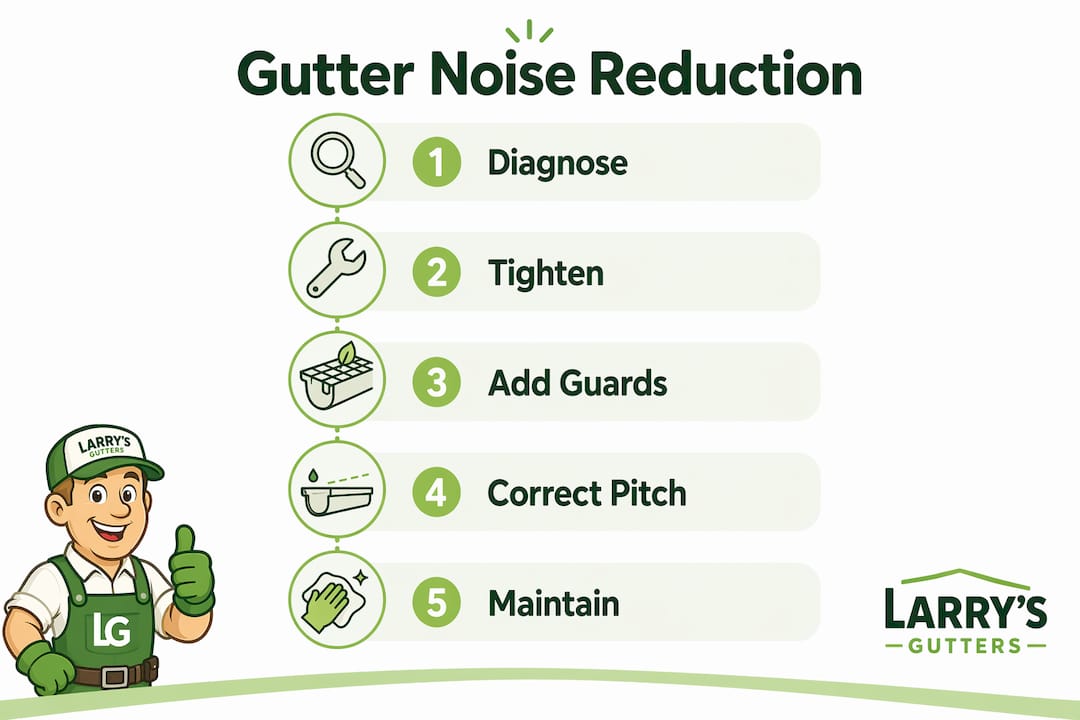
- Gutter noise primarily comes from water impact, loose hangers, and water falling inside downspouts. Fixes like tightening hangers and installing foam inserts are affordable and effective at reducing noise. Longer-term solutions include gutter guards, pitch correction, and regular maintenance to prevent recurrence.
Gutter noise reduction is the process of eliminating or dampening the disruptive sounds that rainwater and mechanical vibrations create in your gutter system. Most homeowners blame heavy rain for the racket, but the real culprits are water impact on flat metal surfaces, loose hangers rattling against fascia boards, and downspouts that send water crashing at full velocity. The good news: you can address most of these problems yourself for under $30 per downspout, and professional upgrades like micro-mesh gutter guards cut rain noise by 40–60% compared to open gutters. This guide covers every level of fix, from a five-minute tightening job to a full system upgrade.
What are the main causes of gutter noise?
Diagnosing the noise source is the first step. Fix the wrong thing and you will waste money without gaining any quiet.
Water impact noise is the most common complaint. Raindrops hit flat metal gutter surfaces and create a drumming sound that travels through the fascia and into your walls. The larger the raindrop and the flatter the surface, the louder the drum. Florida’s heavy downpours make this especially pronounced.
Mechanical vibration is the second major source, and it catches most homeowners off guard. Loose brackets and hangers rattle against the house or fascia boards during rain and wind. Many homeowners mistake this metallic rattling for water noise and spend money on the wrong fix.
Downspout noise comes from water free-falling inside the pipe and hitting elbows or the ground at full speed. The longer the vertical drop, the louder the impact. Elbows that redirect water at sharp angles act like amplifiers.
Improper gutter pitch causes water to pool, surge, and splash during heavy rain. A gutter that slopes too little holds standing water. When new rain hits that pool, it splashes loudly over the edge or against the gutter wall.
Here is a quick breakdown of noise types and their origins:
- Drumming or banging: Raindrops hitting open metal gutter channels
- Rattling or clanging: Loose hangers, brackets, or downspout straps
- Plinking or ticking: Water dripping onto a hard surface inside the downspout elbow
- Splashing or gurgling: Pooled water from incorrect gutter slope or clogs
- Nighttime dripping: Night gutter dripping signals loose joints or failing hangers, not just leftover rain
Nighttime noises deserve special attention. Ambient sound drops after dark, so even a small drip sounds loud. That rhythmic ticking or dripping at 2:00 AM often points to a pinpoint system failure, not general wear.
What immediate, low-cost gutter noise reduction tips can you try yourself?
Most gutter noise problems respond well to simple, inexpensive fixes. You do not need professional help for any of the steps below.
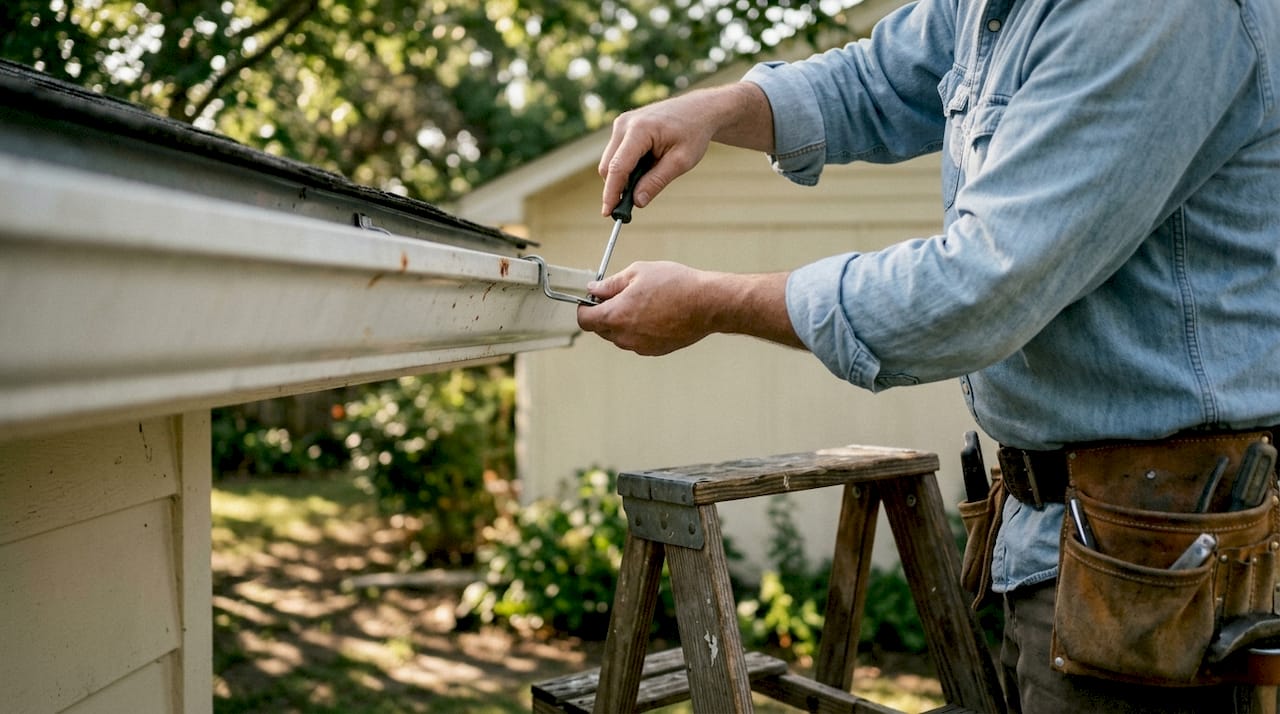
- Tighten or replace loose hangers. Loose gutter hangers are the leading cause of rattling and vibration during rainstorms. Grab a screwdriver or drill and work your way along the gutter line, tightening every hanger and bracket you can reach. Replace any that are cracked or stripped. This fix costs almost nothing and eliminates rattle noise entirely at those points.
- Insert foam or sponge blocks at downspout elbows. Foam inserts placed inside the elbow absorb the impact of falling water before it hits the hard metal surface. Foam inserts cost $5–$15 per elbow and reduce impact noise by 50–70%. Cut the foam to fit snugly so water still flows through but the direct hit is cushioned.
- Drop a nylon rope or chain inside the downspout. This is one of the least-known fixes in residential gutter care. A rope or chain anchored at the top of the downspout gives falling water something to cling to. Water travels down the rope instead of free-falling, which nearly eliminates the plinking sound at the bottom.
- Swap metal elbows for PVC elbows. Metal elbows amplify sound. PVC elbows absorb it. The swap takes about 20 minutes with basic tools and costs under $10 per elbow. Combined with a foam insert, this combination nearly eliminates plinking noises at downspout elbows for a combined cost under $30 per downspout.
- Check and reseal gutter joints. Leaking joints drip water onto surfaces below, creating persistent ticking sounds. Applying gutter caulking at joints stops the drip at its source.
Pro Tip: After any major storm, walk your gutter line and press lightly on each hanger. If it moves, it needs tightening. A loose hanger you catch early costs nothing to fix. One you ignore can pull the gutter away from the fascia.
Here is what each DIY fix targets:
- Foam inserts: downspout impact noise
- Hanger tightening: mechanical rattle and vibration
- Nylon rope or chain: free-fall plinking inside downspouts
- PVC elbow swap: amplified metallic resonance at bends
- Joint resealing: drip noises from leaking seams
How can gutter guards and advanced solutions reduce noise long term?
DIY fixes handle most noise problems. But if your gutters are old, undersized, or poorly positioned, you need a more permanent approach.
Micro-mesh gutter guards
Micro-mesh gutter guards are the most effective single upgrade for reducing rain noise. They work by breaking large raindrops into smaller rivulets before water enters the gutter channel. Instead of a raindrop hitting flat metal at full force, it filters through thousands of tiny openings and flows in quietly. Micro-mesh guards reduce noise impact by 40–60% compared to open gutters. That is a measurable, consistent improvement across all rain intensities. The gutter guard installation process for Florida homes also keeps debris out, which prevents the clogs that cause splashing and pooling noise.
Rubberized sound-dampening sheets
Self-adhesive automotive sound-dampening sheets applied to the underside of gutters cut metallic drumming significantly. This retrofit is rarely used by homeowners, but it works on the same principle as automotive deadening material. Rubberized undercoating absorbs vibration before it transfers to the fascia and into your home’s structure. It is a cost-effective option for metal gutters that are otherwise in good condition.
Downspout repositioning
Moving the downspout outlet just 1–2 inches away from the wall with an offset clip changes the water flow path enough to reduce downspout noise by roughly 40%. The offset prevents water from hitting the elbow base at full velocity. This small geometry change has a disproportionately large effect on noise.
Gutter pitch correction
Correct gutter slope is non-negotiable for a quiet system. Proper gutter pitch and sizing eliminate the pooling and overflow that cause splashing noise during heavy rain. The standard slope is a quarter inch of drop for every 10 feet of gutter run. If your gutters pool water after rain stops, the pitch is wrong.
| Method | Noise type addressed | Approximate cost | Noise reduction |
|---|---|---|---|
| Micro-mesh gutter guards | Rain impact drumming | Moderate to high | 40–60% |
| Rubberized dampening sheets | Metallic vibration and drumming | Low | Significant |
| Downspout repositioning | Elbow impact and clanging | Low | ~40% |
| PVC elbow swap plus foam insert | Plinking at bends | Under $30 per downspout | Very high |
| Gutter pitch correction | Pooling, splashing, overflow | Low to moderate | Varies |
Pro Tip: Do not skip the pitch check before buying guards or dampening materials. A guard on a poorly sloped gutter still pools water and still splashes. Fix the slope first, then add the upgrade.
What maintenance routines prevent gutter noise from coming back?
Noise reduction is not a one-time fix. Gutters that are clean, tight, and properly sloped stay quiet. Neglected gutters get loud again within one season.
- Clean gutters at least twice a year. Debris buildup blocks water flow, causes pooling, and creates splashing noise. In Central Florida, clean before the rainy season starts and again after it ends. A seasonal maintenance checklist keeps this on schedule.
- Inspect after every major storm. Post-storm inspection catches loose hangers, shifted sections, and debris jams before they become noise problems. Walk the full gutter line and check every bracket.
- Verify gutter pitch after heavy rain. Standing water in the gutter after rain stops means the slope has shifted. Rehang the affected section to restore proper drainage.
- Check downspout function at every cleaning. Run a hose through each downspout and confirm water exits freely. A partial clog forces water to back up and splash.
- Reseal joints annually. Gutter sealant degrades over time. Fixing gutter leaks at joints before they worsen stops drip noises and prevents water damage to fascia boards.
Pro Tip: Set a phone reminder for the first week of june and the first week of november. Those two cleanings cover the start and end of Florida’s rainy season and catch most noise problems before they escalate.
The role of gutter maintenance in home safety goes beyond noise. A well-maintained system protects your foundation, siding, and landscaping from water damage that costs far more than a cleaning.
What I have learned after years of watching homeowners fight gutter noise
Most homeowners spend money in the wrong order. They buy gutter guards before they tighten a single hanger. They apply dampening material before they fix the pitch. The result is a quieter-sounding problem that is still getting worse underneath.
Gutter noise is almost always a symptom. Rattling means loose hardware. Splashing means a clog or a slope problem. Nighttime dripping means a failing joint or a crack. Treat the symptom without finding the cause and the noise comes back, usually louder.
The most effective approach combines two or three methods at once. A PVC elbow swap plus a foam insert plus a hanger tightening session costs under $50 and addresses three different noise sources in one afternoon. That combination outperforms any single expensive upgrade applied to a system that has not been properly inspected first.
My honest advice: spend 30 minutes diagnosing before you spend a dollar. Walk the gutter line during rain if you can do it safely, or right after. Listen for where the noise is loudest. Touch hangers and brackets to feel for vibration. That 30 minutes will tell you exactly which fix to apply first, and you will not waste money on solutions that miss the actual problem.
— Larrysgutters
Quieter gutters are one call away with Larrysgutters
Larry’s Gutters specializes in residential gutter solutions across Central Florida, including seamless gutter installation and gutter guard systems designed to handle Florida’s intense rainfall.

Seamless gutters eliminate the joints where leaks and drip noises start. Seamless gutters are worth considering for any homeowner dealing with persistent noise or water damage. Larrysgutters also installs micro-mesh gutter guards that reduce rain noise by 40–60% while keeping debris out of the channel. If you want a professional assessment of your current system, Larrysgutters offers free quotes and covers multiple Florida counties. Contact the team directly to find out which solution fits your home and budget.
FAQ
What is the cheapest way to reduce gutter noise?
Tightening loose hangers and inserting foam blocks at downspout elbows costs under $15 and addresses the two most common noise sources. These fixes take less than an hour and require no special tools.
Do gutter guards actually reduce rain noise?
Yes. Micro-mesh gutter guards reduce rain noise by 40–60% by breaking large raindrops into smaller flows before they hit the gutter channel. They also prevent debris clogs that cause splashing.
Why are my gutters louder at night?
Ambient sound drops at night, making small drips and ticks much more noticeable. Nighttime gutter noise usually signals a loose joint, a failing hanger, or a small leak that needs prompt attention.
Can I fix gutter noise without replacing the whole system?
Most noise problems respond to targeted repairs: tightening hangers, swapping metal elbows for PVC, inserting foam blocks, and correcting gutter pitch. Full replacement is rarely necessary unless the gutters are severely damaged or undersized.
How often should I inspect my gutters to prevent noise?
Inspect after every major storm and perform a full cleaning at least twice a year. In Central Florida, that means once before the rainy season and once after it ends to catch debris and hardware issues before they create noise.
Key takeaways
Effective gutter noise reduction combines diagnosing the correct noise source with applying the right fix at the right cost level.
| Point | Details |
|---|---|
| Diagnose before spending | Identify whether noise is mechanical, impact, or flow-related before buying any fix. |
| DIY fixes work fast | Foam inserts, PVC elbows, and hanger tightening cost under $30 and address most noise sources. |
| Micro-mesh guards deliver long-term results | Gutter guards reduce rain impact noise by 40–60% and prevent debris clogs that cause splashing. |
| Correct pitch is non-negotiable | A gutter that pools water will always splash loudly, regardless of other upgrades applied. |
| Maintenance prevents recurrence | Clean gutters twice a year and inspect after storms to keep noise from returning. |
