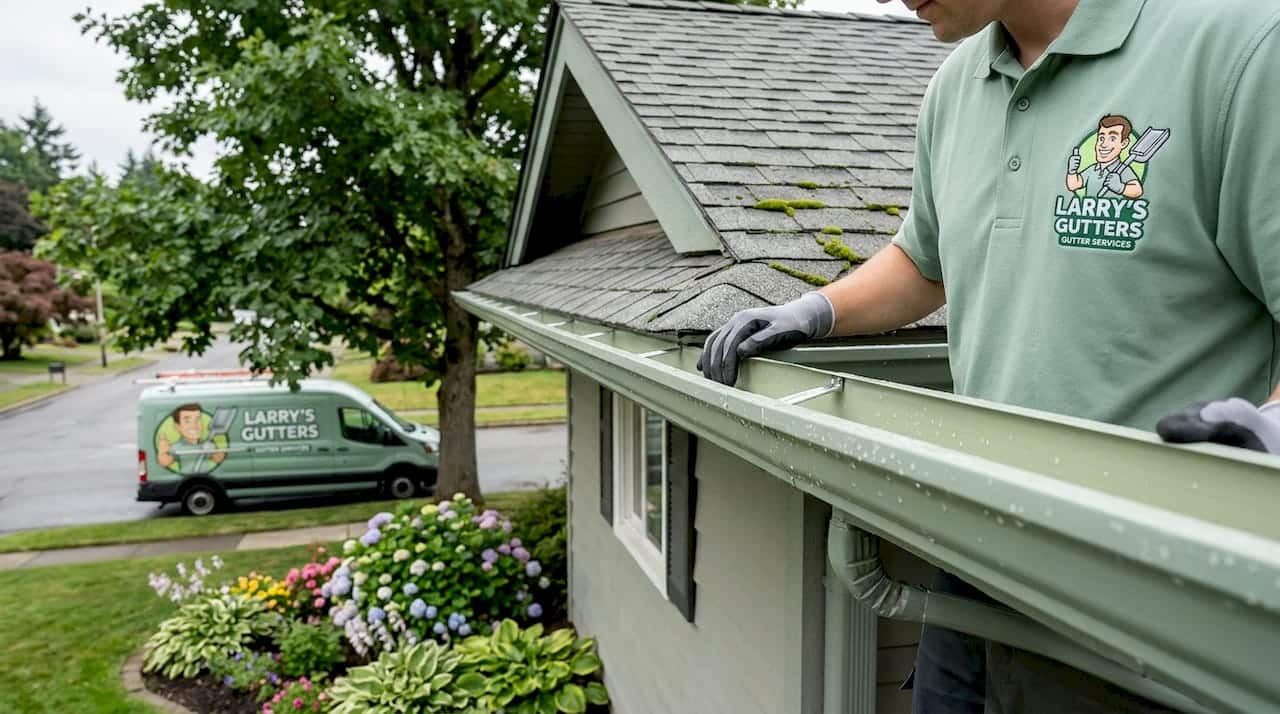
TL;DR:
- Eaves play a vital role in directing rainwater away from a home’s walls and foundation, working alongside gutters for effective drainage. Properly installed drip edges, correct gutter slope, and regular inspections are essential to prevent water damage and wood rot at the eave-gutter interface. Neglecting eave maintenance can lead to costly repairs despite high-quality gutters or roofing systems.
Most homeowners think gutters do all the heavy lifting when it comes to protecting a house from rain. But the role of eaves in gutter systems is just as critical, and overlooking it leads to some of the most expensive water damage repairs you’ll ever face. Eaves, the overhanging edges of your roof, are the structural foundation that makes your entire drainage sequence work. Without properly designed and maintained eaves, even the best gutters will fail to protect your siding, fascia, and foundation. This guide breaks down exactly how eaves and gutters work together, where problems show up, and what you can do about it.
Key Takeaways
| Point | Details |
|---|---|
| Eaves are not decorative | They direct rainwater away from walls and foundation, making them a core part of drainage. |
| Drip edge is critical | It guides water from shingles into gutters and prevents fascia rot, even when gutters look fine. |
| Gutter slope matters | A minimum pitch of 1/16 inch per foot keeps water moving and prevents overflow at the eave line. |
| Debris causes real damage | Clogged gutters at the eave line lead to wood rot and fascia damage, often mistaken for roof leaks. |
| System thinking wins | Gutters, eaves, drip edge, and soffits must work together for effective water management. |
The role of eaves in gutter systems starts here
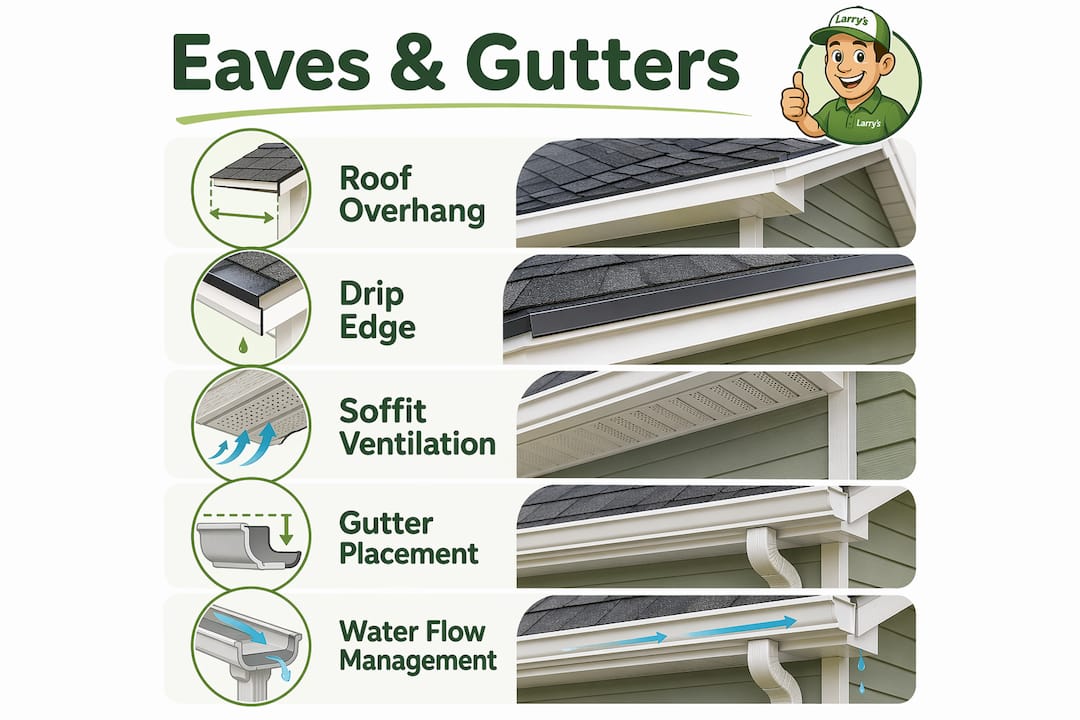
The word “eaves” refers to the part of your roof that extends past the exterior walls. It sounds simple, but this overhang contains several components that each play a specific job in moving water safely away from your home.
Here is what makes up a typical eave:
- Rafter tails: The structural extensions of roof rafters that support the overhang
- Fascia board: The vertical board mounted at the end of rafter tails, where gutters are attached
- Soffit: The horizontal panel underneath the overhang, often vented
- Drip edge: A metal flashing installed at the roof edge that guides water into the gutter
Roof eaves overhang exterior walls and guide rainwater away from siding, windows, and foundation pooling. Without that overhang, rain would run straight down your exterior walls every storm. Over time, that saturation causes paint failure, mold growth, and foundation erosion.
The drip edge deserves special attention because it is often confused with the gutter itself. Under the IRC 2018, drip edge must be installed beneath the underlayment at eaves to prevent water from wicking back under shingles and rotting the fascia. The gutter catches the water after it passes over the drip edge. Remove the drip edge from that equation and you get water damage even if the gutter is sitting right there in perfect condition.
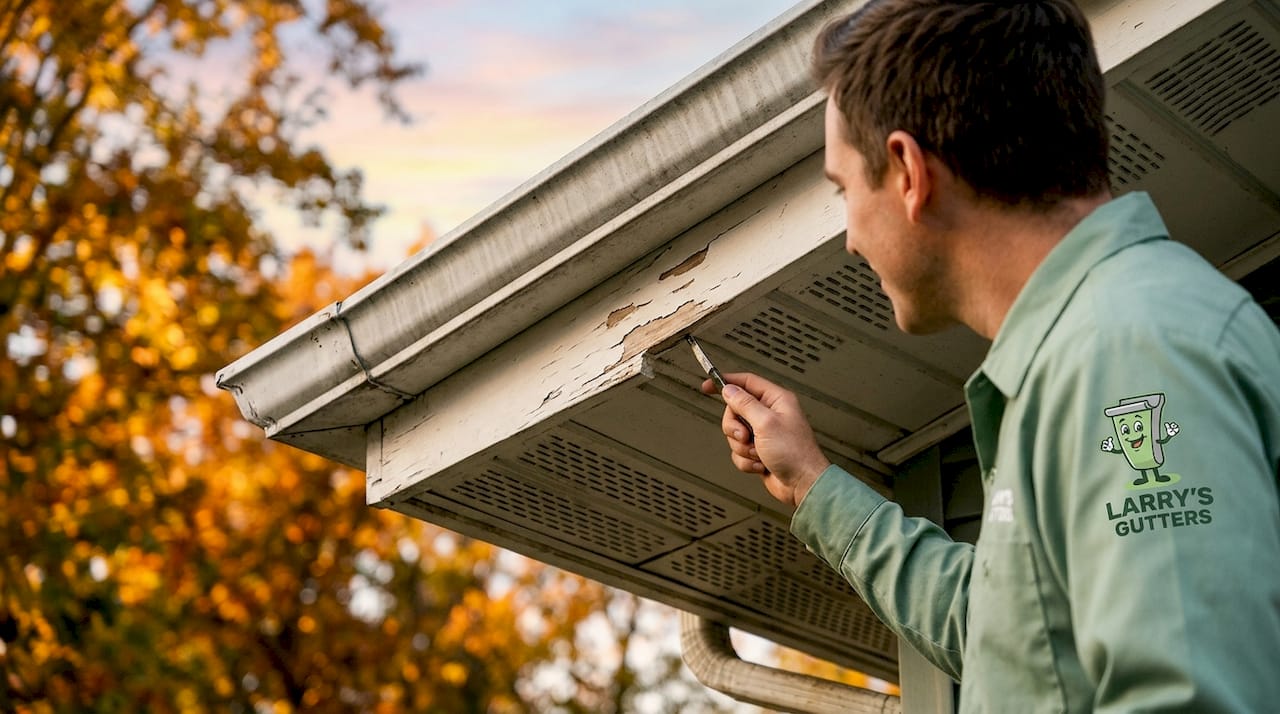
Soffit ventilation also connects directly to eave health. Soffit panels under eaves provide balanced ventilation intake to the attic while sealing out pests. A compromised soffit from moisture or rot disrupts attic airflow, which can lead to heat and moisture buildup that shortens your roof’s life from the inside out.
Pro Tip: When inspecting your eaves, check the soffit for discoloration or soft spots. Either one signals moisture infiltration, and catching it early prevents a much larger repair down the road.
How gutters connect to eaves and manage water flow
Your gutters do not work in isolation. They are the final catch in a drainage sequence that starts at the shingle and ends at the downspout. Runoff flows from roof shingles to drip edge, then drops into the fascia-mounted gutter, then travels through the downspout and away from the home. Every link in that chain depends on the previous one working correctly.
Here is how a properly integrated eave-to-gutter system functions step by step:
- Rain hits the roof surface and flows down the shingles toward the eave
- The drip edge channels water off the shingle edge and into the gutter, preventing it from reaching the fascia
- Water enters the gutter and flows along a slight pitch toward the downspout
- The downspout carries water down and away from the foundation, ideally extending at least 6 feet out
- Splash blocks or underground drainage extensions disperse water safely at ground level
Gutter placement on the fascia is not arbitrary. If the gutter sits too low, water overshoots it during heavy rain. If it sits too high, it interferes with the drip edge. The alignment has to be precise, and that alignment is only possible because the fascia and eave structure give the gutter a fixed, level surface to mount on.
Slope inside the gutter is just as important. A gutter pitch of 1/16 inch per foot is the recognized minimum for keeping water moving toward the downspout. Zero slope means water stagnates, turns into a breeding ground for mosquitoes, and eventually overflows. In Florida, where storms can dump several inches of rain in under an hour, zero slope is not just inefficient. It is a liability.
When the eave-to-gutter connection fails, the damage often starts at the fascia board. Clogged gutters near eaves cause water to seep under shingles, saturate the roof deck, and rot the fascia boards. Homeowners often call this a roof leak. In reality, fixing the gutter and eave connection resolves it. Understanding roof-to-gutter water flow helps you diagnose these problems correctly the first time.
Common problems at the eave and gutter interface
The spot where eaves meet gutters is the most vulnerable point in your home’s drainage system. Most of the water damage that starts at the roofline traces back to a failure right at this junction.
Here are the most common problems you’ll encounter:
- Debris buildup: Leaves, twigs, and especially pine needles settle into the gutter at the eave line. Pine needles compact tightly in gutters, creating standing water near the fascia that accelerates material deterioration.
- Overflow and backflow: When a gutter is clogged or has zero slope, water backs up and sits against the fascia. Prolonged contact causes wood rot that can spread into the soffit and even the roof deck.
- Incorrect gutter pitch: A gutter installed level rather than with a slight slope looks fine from the ground but pools water in the middle. You will notice sagging sections or streaks of algae growth as early warning signs.
- Damaged or missing drip edge: Without it, water follows the path of least resistance under the shingle edge and directly onto the fascia. This damage is slow and invisible until it becomes severe.
- Separated gutter hangers: Over time, gutters can pull away from the fascia, especially if the fascia board has softened from moisture. A gap between the gutter and fascia lets water pour directly onto the wall below.
Water staining or soft decking near eaves after a storm often points to gutter overflow or improper pitch rather than shingle failure. This distinction matters because replacing shingles without fixing the underlying drainage problem will not stop the damage.
Pro Tip: Inspect your gutters from the ground using binoculars right after a heavy rain. Overflowing water at specific points, sagging sections, or visible debris mats are all signs the eave-gutter interface needs attention before the next storm.
For Florida homeowners, check the common gutter problems that show up most often in high-rainfall climates. The combination of heavy storms and organic debris makes this region particularly prone to eave-line failures.
How to keep your eaves and gutters working together
Knowing what can go wrong is only useful if you follow through on prevention. Here is a practical inspection routine that covers all the key components:
- Check gutters for slope and debris twice a year, and after any major storm. Use a garden hose to run water and watch where it flows. It should move steadily toward the downspout.
- Inspect the fascia board for soft spots, paint bubbling, or discoloration. Any of these signals moisture infiltration that needs immediate attention.
- Look at the drip edge from a ladder. It should sit flush with the shingle edge and extend over the gutter lip. Bent or missing sections should be replaced before the next rain event.
- Check soffit panels for cracks, holes, or sagging. Gaps allow moisture and pests in, and blocked soffit vents accelerate attic heat buildup.
- Verify downspout extensions are directing water at least 6 feet from the foundation. Extensions are inexpensive and prevent the most common source of foundation moisture problems.
Gutter guards are worth serious consideration, particularly in tree-heavy yards. They are not just a convenience feature. Gutter guard installation is a proactive component of a healthy eave-to-gutter system, preventing debris accumulation that would otherwise compromise water flow and accelerate structural deterioration.
If your fascia board is already compromised, replacing the gutter without replacing the fascia first is a mistake. The gutter will only be as stable as the surface it mounts on. Complex repairs involving fascia replacement, drip edge work, or full gutter reinstallation are where professional help pays for itself.
Pro Tip: When you replace any section of fascia, upgrade to a primed or pre-painted composite board. It resists moisture far better than bare wood and extends the time between repaints significantly.
How eave style affects gutter performance
Not all eaves are built the same. The two most common types are open eaves and closed (boxed) eaves, and each has real implications for how your gutters perform.
| Feature | Open eaves | Closed (boxed) eaves |
|---|---|---|
| Appearance | Exposed rafter tails visible | Finished soffit enclosing the underside |
| Ventilation | Natural airflow, but less controlled | Soffit vents provide managed airflow |
| Gutter attachment | Direct access to fascia | Fascia still accessible, cleaner look |
| Moisture risk | Rafter tails exposed to weather | Soffit protects structure but can trap moisture if sealed too tightly |
| Maintenance access | Easy inspection of components | Requires opening soffit panels for repairs |
Open eaves are common in older Florida homes and in certain architectural styles. They give you easy visual access to the rafter condition but leave wood components more exposed to the elements. Boxed eaves look more polished and offer slightly better protection for the structural elements, but pest intrusion and moisture can hide undetected longer.
Both styles work well with gutters when the drip edge and fascia are properly installed. The eave design mostly affects how you access the system for maintenance, not whether the system can function. What matters most is that eaves integrate all connected features, including soffit, fascia, and drip edge, into a unified water-shedding assembly.
My perspective on the most overlooked part of your roof
I have seen more expensive home repairs than I can count that traced back to one ignored area: the eave line. Homeowners invest in new gutters, high-end roofing, and fancy landscaping, but nobody thinks to check whether the fascia behind the gutter is solid or whether the drip edge was ever installed correctly.
The real problem is that eaves are not glamorous. You do not see them working. But eaves are a critical part of a home’s water defense system, not decorative edges. When I walk a property and see gutter hangers pulling away from the fascia or a soffit panel that is soft to the touch, I know the homeowner has been paying for rain damage on a monthly basis without realizing it.
The lesson I keep coming back to is this: gutters alone do not solve water damage without properly designed and maintained eaves and drip edges working alongside them. These components are a system. Fix one piece while ignoring the others and you are just moving the failure point, not eliminating it.
The homeowners who avoid the big repair bills are not necessarily the ones who spend the most money. They are the ones who understand what they are looking at when they inspect their roof edge, and they act on what they find.
— Larrysgutters
Protect your home with the right gutter system

Understanding how eaves and gutters work together is the first step. Getting the right system installed and maintained is where it translates into actual protection for your home. At Larry’s Gutters, every installation is designed to work in coordination with your existing eave structure, so water moves where it should from the first shingle to the last downspout. Whether you are weighing seamless gutter value for your Florida home or need a full gutter installation walkthrough, the team at Larry’s Gutters handles it with precision built for Central Florida’s rainfall demands. If debris buildup near your eaves is the recurring issue, explore the gutter guard options designed specifically for Florida homeowners. Request a free quote and get a system that works the way it was designed to.
FAQ
What is the primary role of eaves in a gutter system?
Eaves extend the roof beyond the exterior walls and house the fascia, drip edge, and soffit that direct rainwater into the gutters. Without properly functioning eaves, gutters have no reliable delivery point for roof runoff.
Can gutters work properly without a drip edge?
No. The drip edge channels water from shingles into the gutter and prevents it from wicking back under the roof edge onto the fascia. Gutters alone cannot stop that capillary action.
How often should I inspect the eave-to-gutter connection?
Inspect at least twice a year and after any major storm. Look for overflowing water during rain, soft fascia boards, and debris buildup at the gutter entrance near the eave.
What is the correct gutter slope for effective drainage?
The minimum recommended slope is 1/16 inch per foot toward the downspout. Anything less causes water to stagnate and overflow at the eave line.
Do open and closed eaves affect gutter installation differently?
Both types support gutters effectively when fascia boards are in good condition. The main difference is maintenance access. Open eaves allow easier inspection, while closed boxed eaves require checking inside soffit panels for hidden moisture damage.
