TL;DR:
- Gutter leaf buildup in Central Florida occurs year-round due to trees, storms, and humidity, risking structural damage.
- Regular cleaning, trimming branches, and installing appropriate guards can effectively prevent clogs and related home issues.
- Professional gutter systems like seamless aluminum gutters with micro-mesh guards offer the best protection against debris and water overflow.
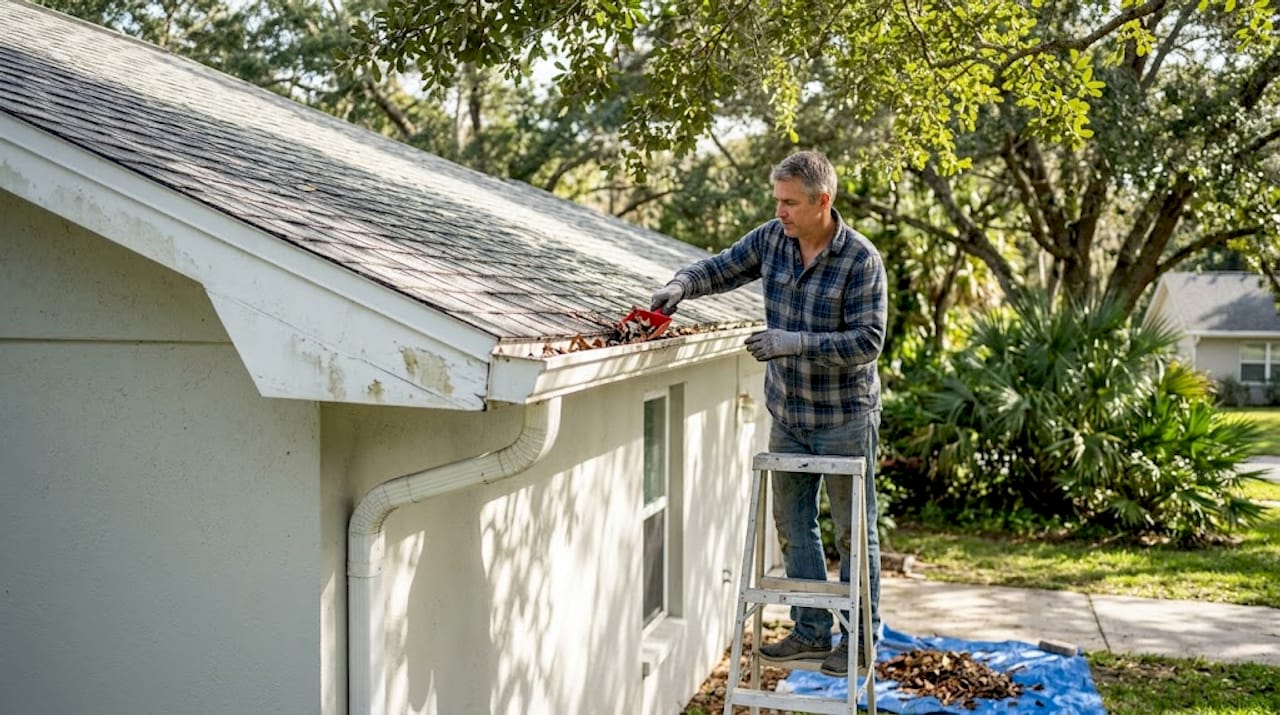
Leaf buildup in your gutters is not just a rainy season problem. In Lake, Marion, and Sumter counties, debris collects year-round, and even during Florida’s dry spells, wind and tree canopy keep gutters filling up. Most homeowners only notice a clogged gutter when water spills over the edge during a downpour. By then, damage may already be happening to your foundation, siding, and landscaping. This article breaks down exactly what causes gutter leaf buildup in Central Florida, what it costs you if ignored, and the most effective ways to stop it before it becomes a repair bill.
Table of Contents
- What is gutter leaf buildup and why does it matter?
- What causes gutter leaf buildup in Central Florida?
- What risks does gutter leaf buildup create for your home?
- How to prevent gutter leaf buildup: Best practices and local solutions
- An expert take: What most Florida homeowners get wrong about leaf buildup
- Protect your home with Central Florida’s top gutter solutions
- Frequently asked questions
Key Takeaways
| Point | Details |
|---|---|
| Gutter leaf buildup risks | Ignoring debris causes overflow, water damage, and foundation problems. |
| Florida-specific challenges | Central Florida’s trees, storms, and humidity make prevention essential year-round. |
| Best prevention steps | Biannual cleaning, trimming trees, and installing micro-mesh guards offer maximum protection. |
| Professional help matters | Local experts provide tailored solutions that go beyond DIY efforts. |
What is gutter leaf buildup and why does it matter?
Gutter leaf buildup is the gradual accumulation of organic debris inside your gutters and downspouts. It is not just leaves. In Central Florida, the mix typically includes:
- Oak and maple leaves, which are large and mat together quickly
- Pine needles, which slip through many guard systems and clump into dense plugs
- Small twigs and seed pods from local trees
- Moss and algae, which thrive in Florida’s humidity and bind debris together
- Sand and pollen, which wash in during storms and fill gaps between larger pieces
This debris does not stay loose. Moisture causes it to compact, and once it does, water cannot flow through. Instead, it pools and spills over the gutter edge.
Central Florida homes face a unique version of this problem. The region’s sandy soil absorbs water quickly under normal conditions, but when gutters overflow repeatedly in the same spot, the soil becomes saturated and then washes away. Gutter water damage risks in this region go beyond cosmetic issues. They reach your foundation.
Leaf buildup leads to overflow, erosion, and foundation damage especially in sandy Florida soils, making routine maintenance a structural priority, not just a cosmetic one.
The visible signs of buildup include water stains on your fascia boards, paint peeling near the roofline, and dark streaks running down your siding. Less visible but more serious: soil erosion around your home’s perimeter, which can cause uneven settling and cracked slabs over time. Ignoring leaf buildup is not a matter of aesthetics. It is a matter of protecting one of your most valuable assets.
What causes gutter leaf buildup in Central Florida?
Florida’s environment is almost perfectly designed to fill gutters fast. The combination of dense tree canopy, intense storms, and high humidity creates conditions that no other region quite matches.
Here are the primary contributors, ranked by how often they cause problems:
- Live oak and water oak trees shed leaves continuously throughout the year, not just in fall. There is no single clean-out season.
- Pine trees drop needles in large volumes, especially during spring pollen season. Needles are thin enough to pass through wide-opening guards.
- Hurricanes and tropical storms deposit enormous amounts of debris in a single event. Post-storm gutters can go from clean to completely blocked overnight.
- High humidity keeps debris wet and heavy, accelerating compaction inside the gutter channel.
- Wind patterns push debris from neighboring properties and wooded areas onto your roof and into your gutters.
The shape of your gutter also matters. K-style gutters, the most common profile in Central Florida homes, have flat backs and angled fronts that look like crown molding. Their inside corners trap debris efficiently, which is great for water capacity but terrible for self-cleaning. Seamed gutters add another problem: debris snags on the joints and builds up from those anchor points.
Local factors like tree canopy density, hurricane debris, and humidity promote leaf buildup at rates far higher than what national maintenance guides suggest. Most guides recommend cleaning gutters twice a year. In Lake, Marion, and Sumter counties, that baseline is often not enough.
Pro Tip: Check how often you need to clean your gutters based on your specific tree coverage. Homes under a heavy oak canopy may need cleaning three or four times per year. Use how often to clean gutters as a reference to set a realistic schedule for your property.
What risks does gutter leaf buildup create for your home?
Most homeowners think a clogged gutter just means water spills over the edge. The actual risk list is much longer.
Structural and exterior damage:
- Fascia board rot from constant moisture contact
- Soffit damage when water backs up under the roofline
- Siding stains and eventual wood or fiber cement deterioration
- Foundation erosion from repeated overflow in the same location
Health and pest risks:
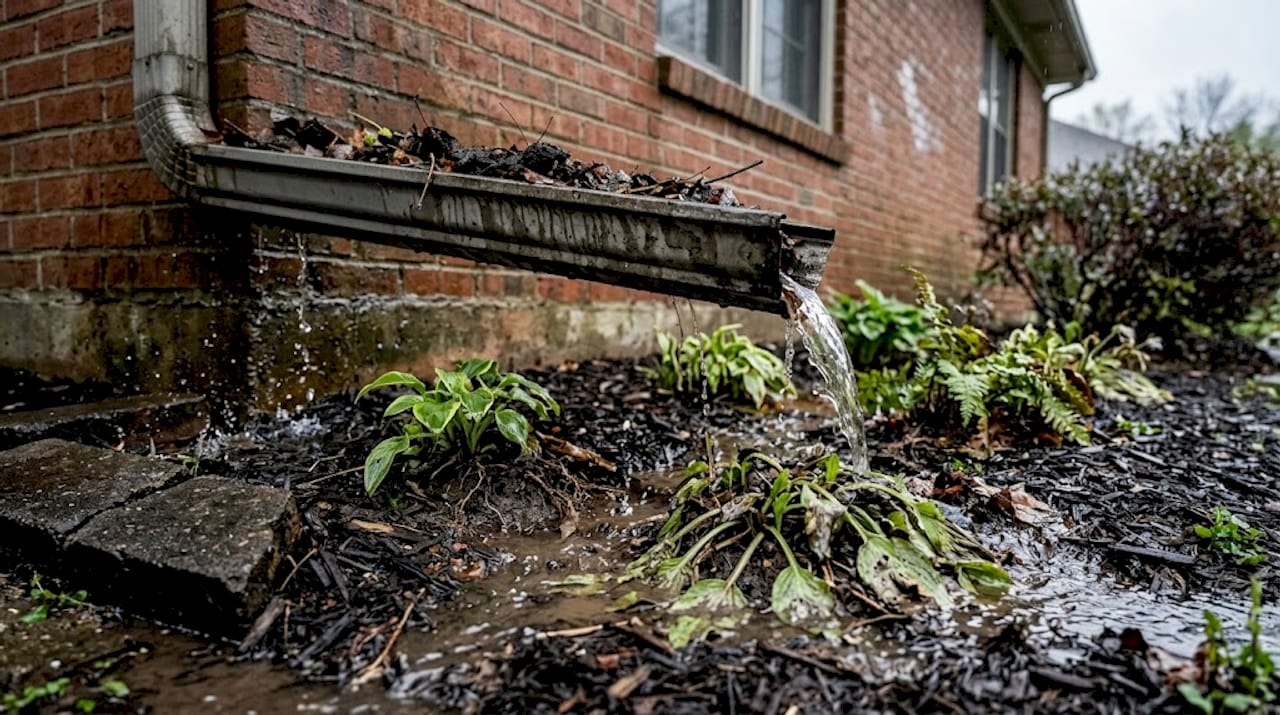
- Stagnant water in blocked gutters is a prime mosquito breeding site, a serious concern in Central Florida where mosquito season runs nearly all year
- Damp organic matter encourages mold growth, which can spread to your attic if water finds a path inside
Gutter blockages cause erosion, foundation shifting, and mold in humid climates, and Central Florida’s average humidity of around 75% makes every one of those outcomes more likely and faster to develop.
| Damage type | Typical repair cost | Timeframe if ignored |
|---|---|---|
| Fascia board replacement | $500 to $1,200 | 1 to 2 seasons |
| Foundation crack repair | $2,000 to $7,000 | 2 to 5 years |
| Mold remediation | $1,500 to $4,000 | 6 to 18 months |
| Siding replacement (section) | $800 to $2,500 | 2 to 4 seasons |
The math is straightforward. A professional gutter cleaning costs a fraction of any single item on that list. Protecting your home from Florida water damage is far cheaper than repairing it after the fact.
One often-overlooked risk: landscape damage. Overflow erodes mulch beds, kills plants near the foundation, and can wash away gravel pathways. For homeowners who invest in curb appeal, a blocked gutter can undo hundreds of dollars of landscaping work in a single heavy rain.
How to prevent gutter leaf buildup: Best practices and local solutions
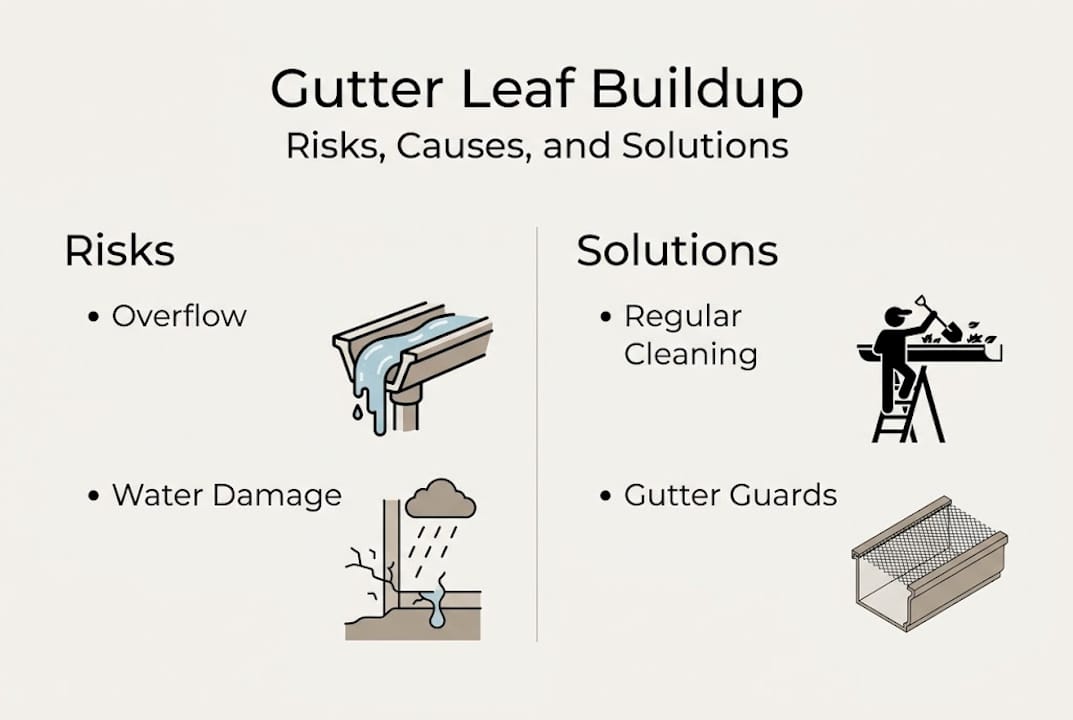
Prevention is not complicated, but it does require consistency. Here is what actually works for Central Florida homes:
- Schedule biannual cleanings at minimum. Spring and fall are the standard windows, but add a post-hurricane inspection after any named storm.
- Trim overhanging branches to at least six feet from your roofline. This single step reduces debris volume dramatically.
- Install a gutter guard system suited to your specific debris type. Not all guards work equally well in Florida.
- Flush downspouts every time you clean gutters. A blockage at the bottom is just as damaging as one at the top.
- Check gutter pitch annually. Gutters that have shifted even slightly will hold standing water, accelerating corrosion and debris compaction.
Tree trimming, biannual cleaning, and micro-mesh guards offer the best results for Central Florida homeowners dealing with high debris loads.
Comparing gutter guard types for Florida conditions:
| Guard type | Best for | Limitation |
|---|---|---|
| Micro-mesh | Pine needles, fine debris | Higher cost, needs occasional rinsing |
| Brush inserts | Light leaf coverage | Debris gets trapped in bristles |
| Foam inserts | Budget installs | Mold risk in humid climates |
| Reverse curve | Large leaves | Pine needles and small debris pass through |
For most homes in Lake, Marion, and Sumter counties, micro-mesh guards paired with aluminum seamless gutters offer the strongest combination. Review the full breakdown of gutter guard types before choosing a system.
Local providers like Larry’s Gutters and LeafFilter offer solutions tailored to the specific debris and weather patterns of the area. LeafFilter’s Ocala location also serves parts of Marion County if you want to compare options.
Pro Tip: Use a gutter cleaning checklist to make sure nothing gets missed during your maintenance visits, especially after storm season.
An expert take: What most Florida homeowners get wrong about leaf buildup
Here is something we see constantly: a homeowner installs gutter guards, feels relieved, and stops thinking about their gutters entirely. Two years later, they call us because water is pouring over the edge again. The guards are still there. But fine debris, shingle grit, and compacted pollen have created a slow-draining layer on top of the mesh.
Gutter guards are genuinely useful. We recommend them. But they are not a permanent fix on their own. Fine debris and shingle grit still require occasional cleaning even with guards installed, and the pitch of the guard system affects how well debris sheds off the surface.
The other mistake: homeowners focus on the gutter channel and ignore the downspouts. A clean gutter with a blocked downspout is still a failed system. Annual inspections that include flushing every downspout are non-negotiable. Read through our gutter cleaning tips for a practical checklist that covers both. The homeowners who avoid expensive repairs are not the ones with the fanciest guard systems. They are the ones who stay consistent.
Protect your home with Central Florida’s top gutter solutions
If this article made one thing clear, it is that leaf buildup is a year-round threat in Lake, Marion, and Sumter counties, and the cost of ignoring it is far higher than the cost of staying ahead of it.

At Larry’s Gutters, we install custom-fit seamless gutters and Florida-rated gutter guards designed for the specific debris and storm conditions of Central Florida. Whether you need a full system upgrade or want to understand the gutter guard installation process, our team is ready to help. Request a free quote today and find out exactly what your home needs to stay protected through every storm season.
Frequently asked questions
How often should I clean gutters to prevent leaf buildup in Central Florida?
Biannual cleaning, plus inspections after major storms, keeps gutters clear in Florida’s climate. Homes under heavy tree canopy may need three to four cleanings per year for best results.
Do gutter guards eliminate the need for cleaning?
No. Fine debris and shingle grit can still accumulate on top of or inside guards, so annual inspections and occasional rinsing remain necessary.
What type of gutter system is best for Central Florida homes?
Seamless aluminum gutters paired with micro-mesh guards offer the best resistance to corrosion and clogging in Florida’s humid conditions.
Can leaf buildup cause foundation problems?
Yes. Overflow and soil erosion from blocked gutters can cause foundation shifting and cracking, especially in Central Florida’s sandy soil.
Are there local experts for gutter maintenance and upgrades?
Yes. Larry’s Gutters and LeafFilter both provide specialized services across Lake, Marion, and Sumter counties, tailored to Florida’s specific gutter challenges.
