TL;DR:
- Hurricane rain can cause severe water damage without proper gutter systems.
- 6-inch seamless aluminum gutters with larger downspouts offer enhanced hurricane resistance.
- Regular professional maintenance significantly reduces the risk of storm-related water damage.
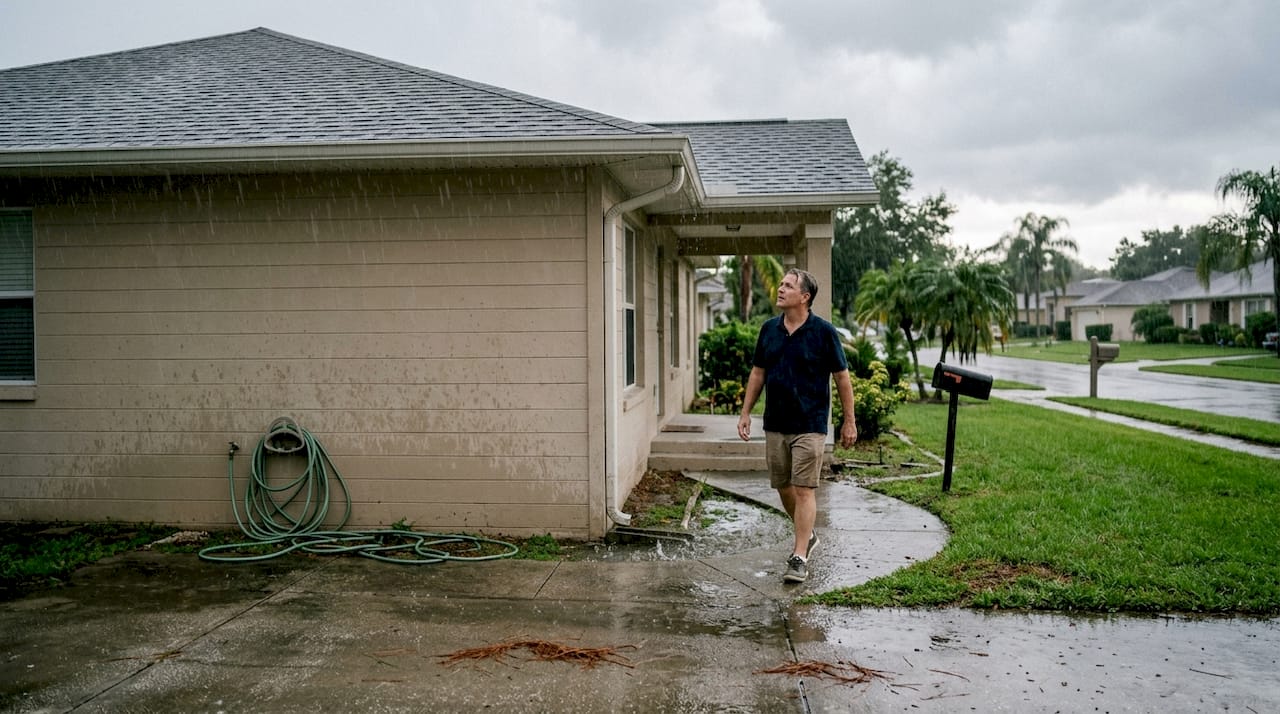
A single inch of rain falling on a 2,000 sq ft roof sends over 1,200 gallons of water rushing off your home. Now picture a Central Florida hurricane dropping 10 to 15 inches in a matter of hours. That is not a weather event your gutters can afford to fail. Yet most homeowners in Lake, Marion, and Sumter counties treat gutters as an afterthought, something to clean once a year if they remember. This guide breaks down exactly how hurricanes overwhelm homes through water, what a truly hurricane-ready gutter system looks like, and why proper installation and maintenance are the difference between a dry home and a costly disaster.
Table of Contents
- How hurricanes overwhelm homes: The water threat explained
- What makes a gutter system hurricane-ready?
- Professional installation and regular maintenance: Your insurance policy
- Lessons from recent hurricanes: What really survives
- Why most homeowners under-invest in gutters—and what experts know
- Get hurricane-ready: Next steps for protecting your Central Florida home
- Frequently asked questions
Key Takeaways
| Point | Details |
|---|---|
| Gutters prevent disaster | Properly designed gutters divert huge hurricane rains, shielding your home’s foundation and interiors from costly damage. |
| Size and materials matter | 6-inch seamless aluminum gutters with large downspouts are ideal for Central Florida hurricane protection. |
| Maintenance is critical | Regular professional cleaning and inspections before and after storm season stop 85-90% of water damage risks. |
| Professional install pays off | Expert-installed, code-compliant gutters outperform DIY solutions during Hurricane-level storms. |
How hurricanes overwhelm homes: The water threat explained
Central Florida is not just wind country. It is water country. Hurricanes and tropical storms routinely drop 10 to 20 inches of rain over 24 to 48 hours, and the damage that water causes often exceeds what wind alone can do. The problem is not just the rain falling from the sky. It is what happens when that rain hits your roof and has nowhere controlled to go.
Consider the math. A 2,000 sq ft roof sheds more than 1,200 gallons for every inch of rain. At a moderate storm rate of 2 inches per hour, that is over 2,400 gallons per hour, or roughly 40 gallons per minute, cascading off your roofline. Without effective gutter systems in place, all of that water dumps directly against your foundation, siding, and landscaping.
| Rainfall (inches) | Gallons shed (2,000 sq ft roof) | Flow rate (gallons/hour) |
|---|---|---|
| 1 inch | 1,200 gallons | 1,200 |
| 5 inches | 6,000 gallons | 6,000+ |
| 10 inches | 12,000 gallons | Variable |
| 15 inches | 18,000 gallons | Variable |
The dangers of uncontrolled roof runoff are serious and expensive:
- Foundation erosion: Water pooling at the base of your home softens and shifts the soil beneath your slab.
- Wall and interior flooding: Overflow saturates exterior walls, seeps through window frames, and can reach interior drywall.
- Mold growth: Moisture trapped in walls creates ideal conditions for mold within 24 to 48 hours.
- Landscaping damage: Concentrated runoff carves channels through yards and washes away mulch and topsoil.
“Gutters channel runoff from roofs, preventing foundation erosion, wall damage, and interior flooding during heavy storms.”
This matters even more in Lake, Marion, and Sumter counties because of the local soil. Florida’s sandy, porous soils drain quickly under normal conditions, but they also erode fast when hit with concentrated water flow. A home without properly functioning gutters is essentially funneling thousands of gallons of hurricane runoff directly into the ground around its foundation. Understanding how gutters prevent water damage in this environment is not optional knowledge. It is essential homeowner education.
What makes a gutter system hurricane-ready?
Not all gutters are created equal, and in hurricane country, the gap between a standard gutter and a hurricane-capable one is significant. Size, material, design, and installation method all determine whether your system holds up when a major storm rolls through.
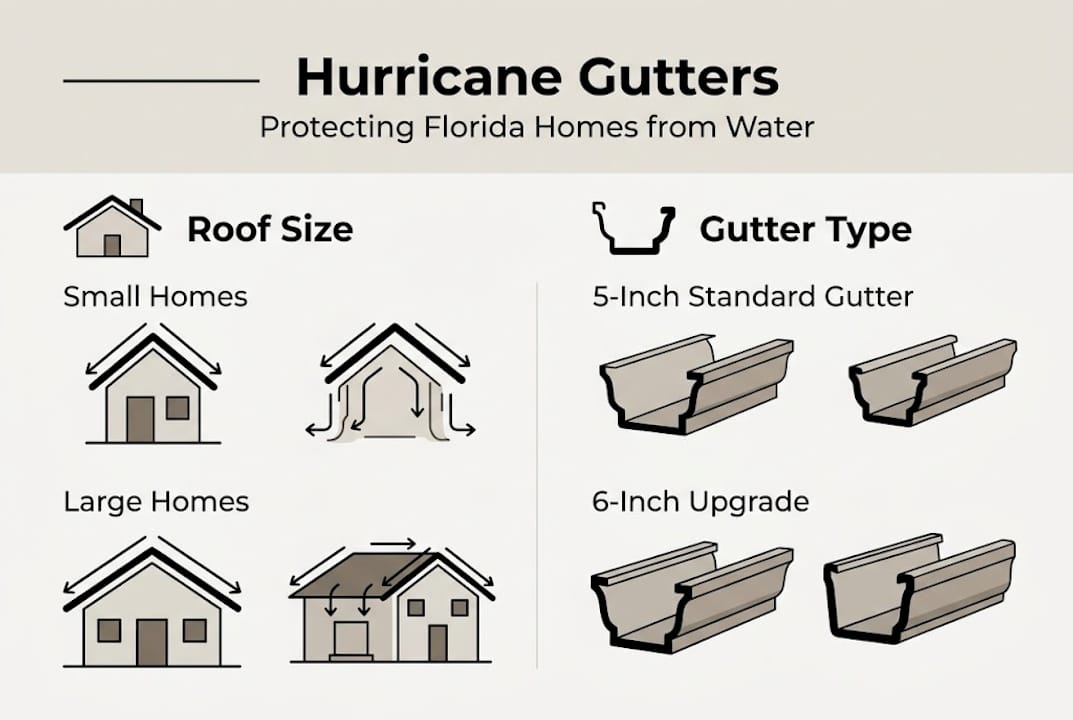
Size matters more than most people realize. Standard 5-inch gutters are common on older Florida homes, but 6-inch gutters handle 40% more water than their smaller counterparts. That difference is enormous during a hurricane. For most Central Florida homes over 1,500 sq ft, 6-inch gutters are the minimum you should consider. Some rooflines with steep pitches or large surface areas may benefit from 7-inch systems.
| Feature | 5-inch gutters | 6-inch gutters |
|---|---|---|
| Water capacity | Standard | 40% more |
| Best for roof size | Under 1,500 sq ft | 1,500 sq ft and above |
| Hurricane performance | Overflow risk | Significantly better |
| Cost difference | Lower upfront | Small premium, big payoff |
Downspouts are equally critical. Standard 2×3-inch downspouts cannot move water fast enough during peak hurricane rainfall. Upgrading to 3×4-inch downspouts dramatically increases flow capacity and reduces the chance of backups that cause gutters to overflow or pull away from the fascia.
For material, prioritize 6 to 7 inch seamless aluminum with 3×4 downspouts for Central Florida conditions. Here is why seamless aluminum wins:
- No joints to leak: Sectional gutters have seams every 10 to 20 feet. Each seam is a potential failure point under hurricane stress.
- Corrosion resistance: Aluminum does not rust, which matters in Florida’s humid, salt-influenced air.
- Custom fit: Seamless gutters are cut on-site to match your exact roofline, reducing gaps and weak spots.
- Weight and flexibility: Aluminum is light enough to avoid pulling on fascia boards but strong enough to handle heavy water loads.
Gutter guards deserve a nuanced take. They reduce debris buildup and are helpful for homes surrounded by trees. However, some fine-mesh guards can actually slow water intake during extreme rainfall events, causing overflow before water even enters the gutter. If you are considering guards, understand why gutters fail in heavy rain before choosing a guard style. The right guard paired with the right gutter size works well. The wrong combination creates a false sense of security.
Pro Tip: Ask your installer about gutter system basics specific to your roof pitch and square footage. A steeper roof sheds water faster, which means your gutters need even more capacity to handle the surge.
Professional installation and regular maintenance: Your insurance policy
Having the right gutters on paper means nothing if they are installed poorly or neglected between storms. This is where many homeowners lose the protection they paid for.
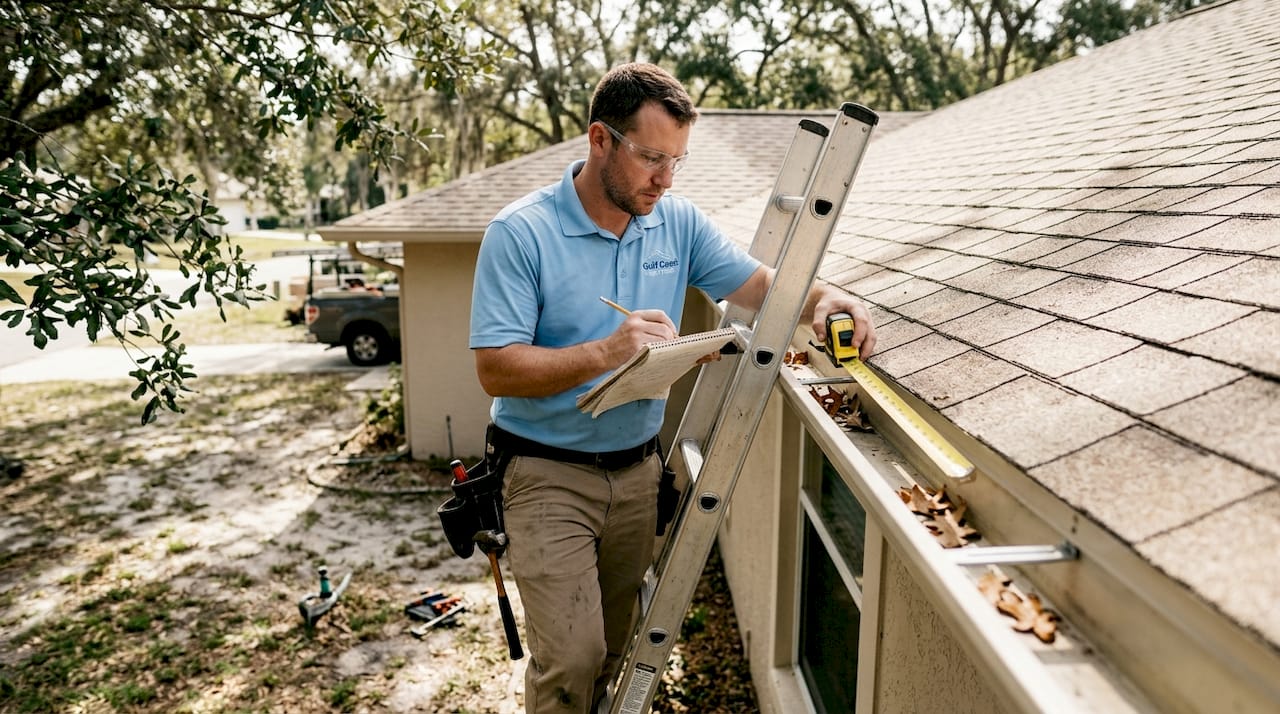
DIY gutter installation carries real risks. The most common mistakes include incorrect pitch, meaning the gutter does not slope enough toward the downspout, which causes standing water and overflow. Improper fasteners are another issue. Screws placed too far apart allow gutters to sag and pull away from the fascia under the weight of storm water. Leaking joints in sectional systems are also a frequent problem, especially after the expansion and contraction of Florida’s heat cycles.
Professional installers who specialize in hurricane-rated systems understand local building codes, proper hanger spacing, and how to position downspouts to direct water away from slab foundations. That last point is critical in Central Florida, where most homes sit on slab foundations with no crawl space buffer.
Maintenance prevents 85 to 90% of weather-related water damage, and the formula is straightforward: clean before hurricane season, inspect after major storms. Here is what a pre-season maintenance visit should cover:
- Clear all debris from gutters and downspouts
- Check and reseal any joints or end caps showing wear
- Tighten or replace loose hangers and fasteners
- Test water flow by running a hose through the system
- Inspect downspout extensions to confirm water is directed at least 6 feet from the foundation
Pro Tip: Schedule your pre-hurricane maintenance in April or early May, before the June 1 season start. Waiting until a storm is in the forecast means every gutter company in Central Florida is booked solid.
After a storm, clean gutters prevent water damage from compounding. Walk your roofline and look for sagging sections, debris jams, and any gutters that have pulled away from the fascia. A quick post-storm check can catch small problems before they become expensive repairs. Gutters and storm protection go hand in hand, but only when the system is actively maintained.
Lessons from recent hurricanes: What really survives
Data from real storms tells us more than any product spec sheet. After Hurricane Ian in 2022, the Insurance Institute for Business and Home Safety (IBHS) conducted detailed assessments of building performance across Southwest Florida. The findings are instructive for any Central Florida homeowner.
“Code-upgraded homes built post-2002 showed significantly less roof damage overall, but soffit failures remained a common and surprising source of water intrusion even in newer construction.”
This is important. Florida’s 2002 building code updates strengthened requirements for roof decking, fasteners, and sheathing. Homes built or significantly renovated after those changes fared much better in Ian. But the data also revealed a weak link that many homeowners overlook: soffits.
Soffits are the panels under your roof overhang. When they fail in high winds, they create an opening for wind-driven rain to enter your attic directly, bypassing your gutters entirely. Here is what the IBHS data and local storm performance point to:
- Older homes (pre-2002) face the highest risk from both roof and soffit failure
- Gutter systems that are improperly attached can actually pull soffits loose during storms
- Properly installed gutters with correct hanger spacing reduce stress on the fascia and soffit connection
- Homes with both code-compliant roofing and well-maintained gutters consistently show lower water intrusion rates
For homeowners in Lake, Marion, and Sumter counties, the priority list is clear. If your home was built before 2002, a roof and gutter inspection is not optional. If your gutters are more than 15 years old, they likely predate both the code upgrades and modern seamless aluminum systems. Upgrading now, before the next major storm, is far cheaper than dealing with the aftermath. Understanding how gutters protect your roof and home in this context means looking at your entire roofline system, not just the gutters in isolation.
Why most homeowners under-invest in gutters—and what experts know
Here is an uncomfortable truth we see play out every storm season: homeowners will spend thousands on impact windows, generator systems, and storm shutters, then balk at upgrading from 5-inch to 6-inch seamless gutters. The reasoning is usually that gutters feel like an upsell, a nice-to-have rather than a necessity.
But why gutters actually matter becomes crystal clear when you compare costs. A full seamless aluminum gutter upgrade with proper downspouts on an average Central Florida home typically runs a fraction of what a single water damage insurance claim costs, and that is before you factor in deductibles, depreciation, and the disruption of repairs.
Professionals who assess hurricane damage regularly describe gutters as the cheapest insurance a homeowner can buy, provided they are sized correctly, installed by someone who knows Florida conditions, and maintained on a real schedule. The homes that survive storm seasons with minimal damage almost always share the same profile: code-compliant roofing, properly sized seamless gutters, and a maintenance routine that does not skip pre-season prep. It is the unglamorous, overlooked upgrades that consistently deliver the most peace of mind when the forecast turns serious.
Get hurricane-ready: Next steps for protecting your Central Florida home
You now understand the scale of the water threat, what a hurricane-capable gutter system requires, and why maintenance is not optional. The next step is making sure your home actually has what it needs before the next storm season.

At Larry’s Gutters, we work with homeowners across Lake, Marion, and Sumter counties to size, install, and maintain gutter systems built specifically for Florida’s conditions. Whether you need a full seamless gutter replacement, want to understand the gutter guard installation workflow that fits your home, or just need a clear gutter maintenance checklist to follow before hurricane season, we have you covered. Not sure if an upgrade is worth it? See exactly why seamless gutters are worth the money for Florida homes and request a free quote today.
Frequently asked questions
How do gutters prevent hurricane-related water damage?
Gutters channel stormwater away from your foundation, walls, and interiors, preventing the flooding and erosion that intense hurricane downpours cause when runoff has no controlled path.
Should Central Florida homes have 5-inch or 6-inch gutters for hurricanes?
6-inch seamless gutters handle 40% more water than 5-inch systems and are recommended for any roof over 1,500 sq ft, significantly reducing overflow risk during major storms.
How often should gutters be maintained before and after hurricane season?
Professional plans recommend at least twice-yearly maintenance, cleaning before hurricane season and a full inspection after any major storm, to prevent 85 to 90% of weather-related water damage.
What are the risks of installing gutters yourself for hurricane protection?
DIY installation commonly results in incorrect pitch, loose fasteners, and leaking joints, all of which cause gutters to underperform or fail entirely when hurricane rain loads hit their peak.
