TL;DR:
- Proper roof and gutter alignment prevent water damage and foundation issues in Florida’s heavy rainfall.
- Regular maintenance and early repairs extend gutter system lifespan and protect your home’s structure.
- Most roof damage starts with gutter failure, making integrated systems essential for long-term protection.
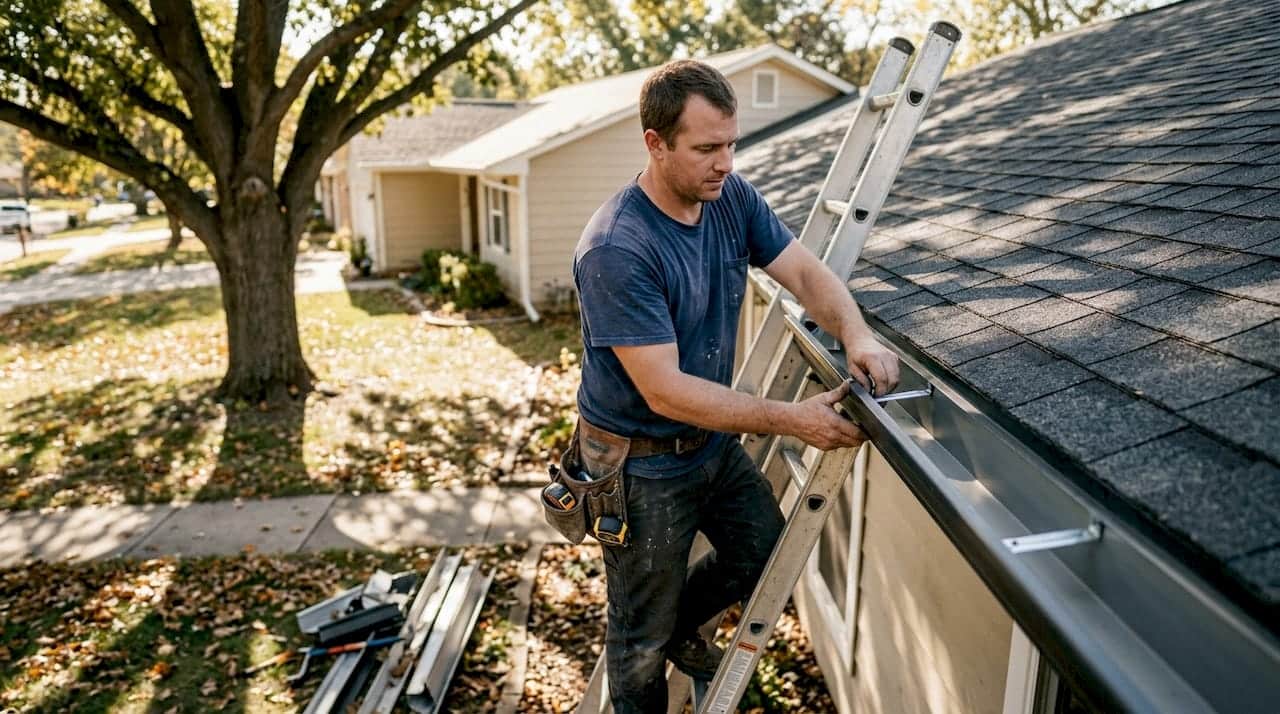
Most homeowners treat gutters as an afterthought, something to clean out once a year and forget about. But in Central Florida, where afternoon thunderstorms can dump several inches of rain in under an hour, that mindset is expensive. The connection between your roof and your gutters is not decorative. It is a precisely engineered system that determines whether rainwater flows safely away from your home or quietly destroys your fascia, foundation, and framing. This guide walks you through how that connection works, what can go wrong, and how to keep it performing at its best year after year.
Table of Contents
- Why your roof and gutters must work together
- How gutters are installed to match your roof design
- Common gutter and roof connection problems in Florida homes
- Maintaining your roof and gutter system for long-term protection
- Our take: What most Florida homeowners get wrong about gutters and roofing
- Protect your Central Florida home with seamless roof and gutter solutions
- Frequently asked questions
Key Takeaways
| Point | Details |
|---|---|
| Roof-gutter synergy | A well-aligned roof and gutter system prevents expensive water damage to your home. |
| Florida-specific risks | Heavy rain and storms in Central Florida make gutter-roof connections even more critical. |
| Regular maintenance | Annual inspections and cleaning maximize the lifespan and effectiveness of your gutter system. |
| Professional installation benefits | Expertly installed and matched gutters offer better protection and reduce long-term repair costs. |
Why your roof and gutters must work together
Your roof and gutters are two halves of the same water management system. The roof sheds water. The gutters catch it. When those two functions align perfectly, rainwater moves in a controlled path from your shingles to the downspouts and away from your home’s foundation. When they don’t align, water finds its own path, and that path almost always leads to damage.
Gutters redirect rainwater off the roof and away from the foundation, protecting your fascia boards, soffits, siding, and the soil around your home. Without that redirection, water pools at the base of your walls and saturates the ground near your footings. Over time, that moisture undermines the structural integrity of your home from the bottom up.
Here in Central Florida, the stakes are higher than most places in the country. We average over 50 inches of rain per year, much of it falling in intense, short bursts during hurricane season. That volume of water hitting a roof with a disconnected or misaligned gutter system creates immediate problems.
Homes without properly functioning gutters experience up to 30% more foundation issues than homes with well-maintained gutter systems. That is not a minor inconvenience. That is a structural risk.
The risks of misdirected roof water include:
- Fascia and soffit rot: Water running behind the gutter soaks into the wood trim along your roofline, causing decay that spreads quickly in Florida’s humidity.
- Mold growth: Trapped moisture in walls and soffits creates ideal conditions for mold, which can affect indoor air quality.
- Soil erosion: Uncontrolled runoff washes away landscaping and exposes your foundation edges.
- Basement and crawlspace flooding: Even homes without basements can experience water intrusion under slabs when drainage fails.
- Gutter overflow: Disconnected or sagging gutters spill water directly against your exterior walls.
Understanding roof to gutter water flow is the first step toward protecting your home. When you see how water moves across your roof during a storm, you start to appreciate why every inch of gutter placement matters.
How gutters are installed to match your roof design
Proper gutter installation is not a one-size-fits-all job. Every roof has its own pitch, edge profile, and material, and each of those factors changes how gutters need to be positioned and secured.
Proper installation angles ensure gutters capture maximum water from the roof without allowing overflow or run-behind. A gutter pitched too steeply drains too fast and can pull away from the fascia. A gutter pitched too flat holds standing water, which adds weight and invites mosquitoes.
Here is the typical sequence professionals follow during a roof-integrated gutter installation:
- Measure the roofline: Installers assess the total length, slope, and number of corners to determine gutter sizing and downspout placement.
- Evaluate the roof edge: The overhang distance and material (shingle, tile, metal) dictates how far under the drip edge the gutter must sit.
- Set the pitch: Gutters slope approximately a quarter inch for every 10 feet toward the downspout to ensure consistent drainage.
- Secure the hangers: Brackets are fastened into the fascia board at intervals close enough to handle Florida’s heavy rain loads without sagging.
- Seal all joints: Every seam and end cap is sealed to prevent leaks at connection points.
- Test with water: A final water test confirms proper flow toward downspouts and no pooling or overflow.
One of the most important factors is the type of roof edge you have. Here is how it affects gutter placement:
| Roof edge type | Gutter placement impact |
|---|---|
| Overhanging roof (with drip edge) | Gutter sits below drip edge, water flows cleanly into channel |
| Flush roof edge (no overhang) | Gutter must be positioned tightly to catch water that runs straight off |
| Tile roof edge | Requires wider gutter and careful sealing to handle tile runoff patterns |
Pro Tip: If your home lacks a drip edge, water can run behind your gutter along the fascia board. Adding a metal drip edge flashing is one of the most cost-effective upgrades you can make. It costs very little but prevents significant rot and leak damage over time.
For a closer look at the full process, the seamless gutter installation steps used by professionals make a big difference in long-term performance. You can also review a detailed gutter installation guide to understand what proper work looks like before hiring anyone.
Common gutter and roof connection problems in Florida homes
Even a perfectly installed system can develop problems over time, especially in a climate as demanding as Central Florida’s. Knowing what to look for helps you catch small issues before they become expensive repairs.
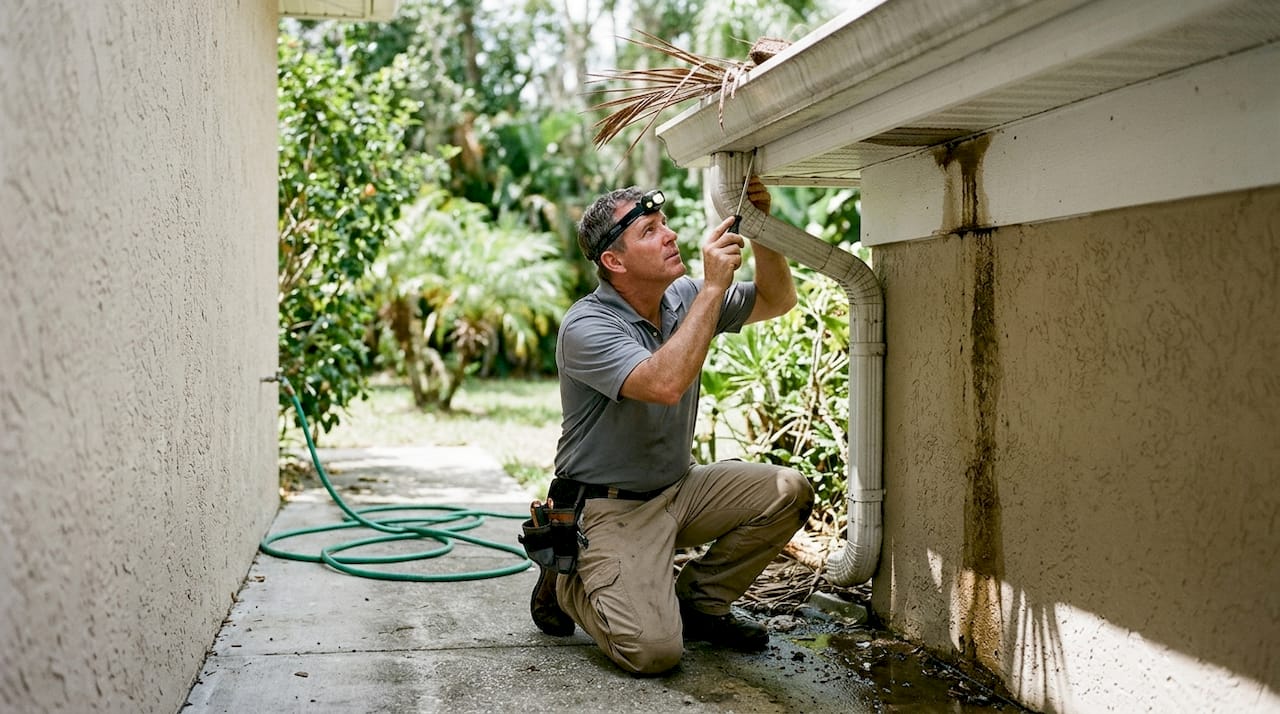
Improperly sealed joints are top causes of water leakage at the roof line. Sealant degrades over time, especially when exposed to Florida’s UV radiation and temperature swings. Once a joint opens up, water escapes at that point instead of flowing to the downspout.
Here are the most common roof-gutter connection problems and what to do about them:
| Problem | Symptoms | Solution |
|---|---|---|
| Clogged gutters | Overflow during rain, standing water in channel | Clean gutters every 3 to 6 months |
| Loose or missing fasteners | Sagging gutter sections, gaps at fascia | Re-secure with new hangers |
| Missing drip edge | Water running behind gutter, fascia rot | Install metal drip edge flashing |
| Failed sealant at joints | Dripping from seams during rain | Reapply waterproof gutter sealant |
| Gutter pitch reversal | Water pooling in middle of gutter | Re-slope gutter toward downspout |
Florida storms accelerate all of these problems. High winds pull gutters away from fascia boards. Debris loads from oak leaves and pine needles clog channels fast. Heavy rain hits with enough force to overflow even clean gutters if the pitch is slightly off.
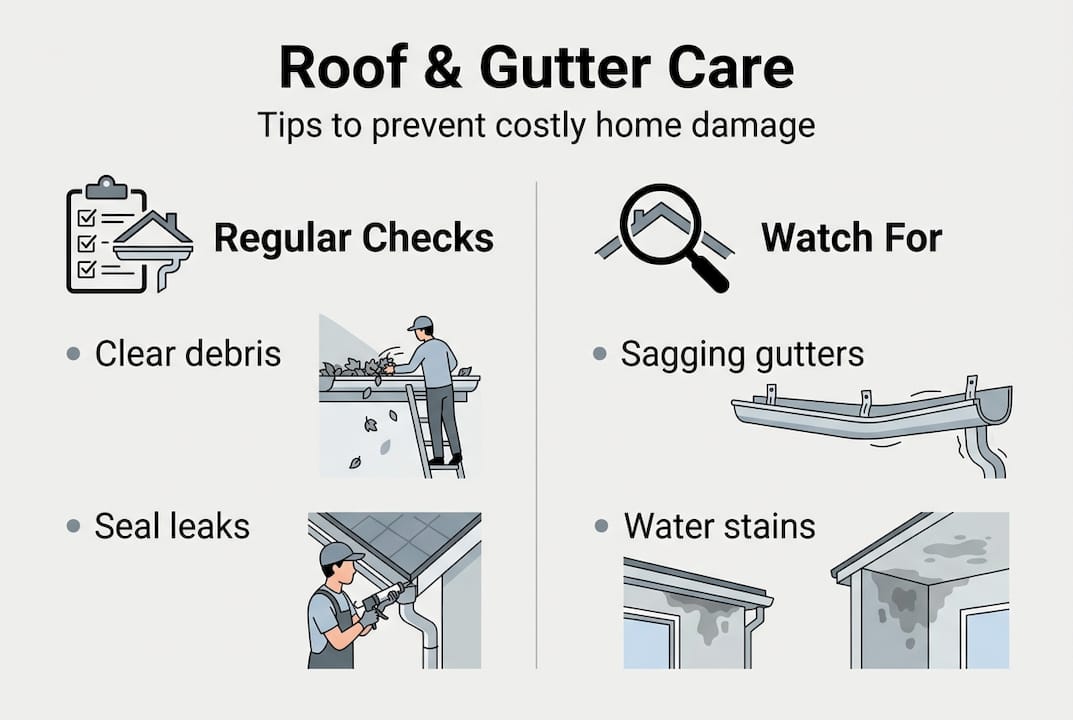
Watch for these warning signs that your gutter-roof system needs attention:
- Water stains on your exterior walls below the roofline
- Peeling paint on fascia or soffit boards
- Gutters visibly pulling away from the house
- Mud splatter on your siding near the foundation
- Mold or mildew smell inside the home near exterior walls
Pro Tip: Schedule a gutter inspection every fall, right after the rainy season ends. That is when you will catch any damage caused by summer storms before it has months to worsen. Reviewing gutter maintenance safety practices before climbing a ladder is also worth your time.
Understanding the full range of Florida gutter problems that affect local homes gives you a clearer picture of what your system faces each year. Staying ahead of gutter maintenance in Florida is far cheaper than repairing the damage that neglect causes.
Maintaining your roof and gutter system for long-term protection
Consistent cleaning and maintenance significantly extend the lifespan of both gutters and roofs. A well-maintained system can last 20 years or more. A neglected one may need full replacement in under a decade.
Here is a step-by-step approach to keeping your roof-gutter connection watertight:
- Clean gutters twice a year: Remove all leaves, debris, and buildup from the channel. In Florida, late spring and late fall are the best times.
- Flush with water: After cleaning, run a garden hose through the gutter to confirm water flows toward the downspout without pooling.
- Inspect all fasteners: Check that every hanger is secure and the gutter sits flush against the fascia with no gaps.
- Check the sealant: Look at every seam, end cap, and downspout connection for cracking or separation. Reapply sealant where needed.
- Examine the drip edge: Confirm the metal flashing is intact and directing water into the gutter rather than behind it.
- Clear downspouts: Use a hose or plumber’s snake to ensure downspouts are free of blockages and water exits at least four feet from your foundation.
For Central Florida homes, keep these tools and products on hand:
- A telescoping gutter cleaning wand for safe, ground-level cleaning
- Waterproof gutter sealant rated for UV exposure
- Stainless steel or aluminum gutter screws (not spikes, which pull out over time)
- Gutter guards designed for high-debris environments
Knowing when to call a professional matters too. If your gutters sag repeatedly, if you find rot in your fascia boards, or if water is entering your home near the roofline, those are jobs for an experienced installer, not a weekend project. Use the gutter maintenance checklist to stay organized and track what you have inspected each season. Consistent gutter maintenance for Florida homes is the single best investment you can make in your home’s long-term health.
Our take: What most Florida homeowners get wrong about gutters and roofing
After working with Central Florida homeowners for years, we keep seeing the same mistake: people treat gutters as a separate system from the roof. They call a roofer for roof problems and a gutter company for gutter problems, never realizing the two issues are almost always connected.
The truth is that most roof damage we see starts with a gutter failure. A clogged gutter backs water up under the shingles. A sagging gutter pulls the drip edge out of position. A missing sealant joint lets water seep into the fascia. None of these look like roof problems at first. But they all become roof problems eventually.
We also hear homeowners say gutters are about curb appeal. They are not. They are functional infrastructure, as important as your HVAC or your plumbing. The importance of gutters in Florida cannot be overstated when you consider how much rain this region receives and how fast moisture damage spreads in a warm, humid climate.
Investing in a quality roof-gutter connection is not a luxury. It is the most cost-effective way to protect everything else.
Protect your Central Florida home with seamless roof and gutter solutions
The right roof-gutter connection is your home’s first line of defense against Florida’s relentless rainfall. When these two systems work together seamlessly, you avoid the water damage, rot, and foundation issues that cost homeowners thousands every year.

At Larry’s Gutters, we specialize in custom-fit solutions designed specifically for Central Florida homes. Whether you need a new installation, a repair, or added protection, we have you covered. Explore the full range of Florida gutter system components to understand what your home needs. When you are ready, our team can walk you through seamless gutter installation options and help you choose the best gutter protection systems for your specific roof type. Contact us today for a free quote.
Frequently asked questions
What happens if my gutters are not connected properly to the roof?
Improper roof-gutter connections result in water damage to your fascia, siding, and foundation, especially during Florida’s heavy rain events. Left uncorrected, these issues escalate into structural repairs that cost far more than a proper installation.
How often should I inspect the gutter and roof connection?
Regular inspection is critical in Florida’s storm-prone environment, so check your gutters and roof edges at least twice a year and always after any major storm passes through.
Can I fix roof and gutter problems myself, or do I need a professional?
Some gutter issues are suitable for DIY, such as basic cleaning and minor sealant touch-ups, but alignment problems, recurring clogs, or fascia damage need a professional to fix correctly and safely.
What are signs that my gutter-roof system is failing?
Warning signs include overflowing and sagging gutters, along with peeling paint on fascia boards, water stains on exterior walls, and soil erosion or pooling near your foundation.
Why are roof-gutter connections extra important in Central Florida?
Central Florida climate increases the risk of water damage without proper gutter systems because heavy rainfall, high humidity, and seasonal storms create constant pressure on every component of your home’s water management system.
