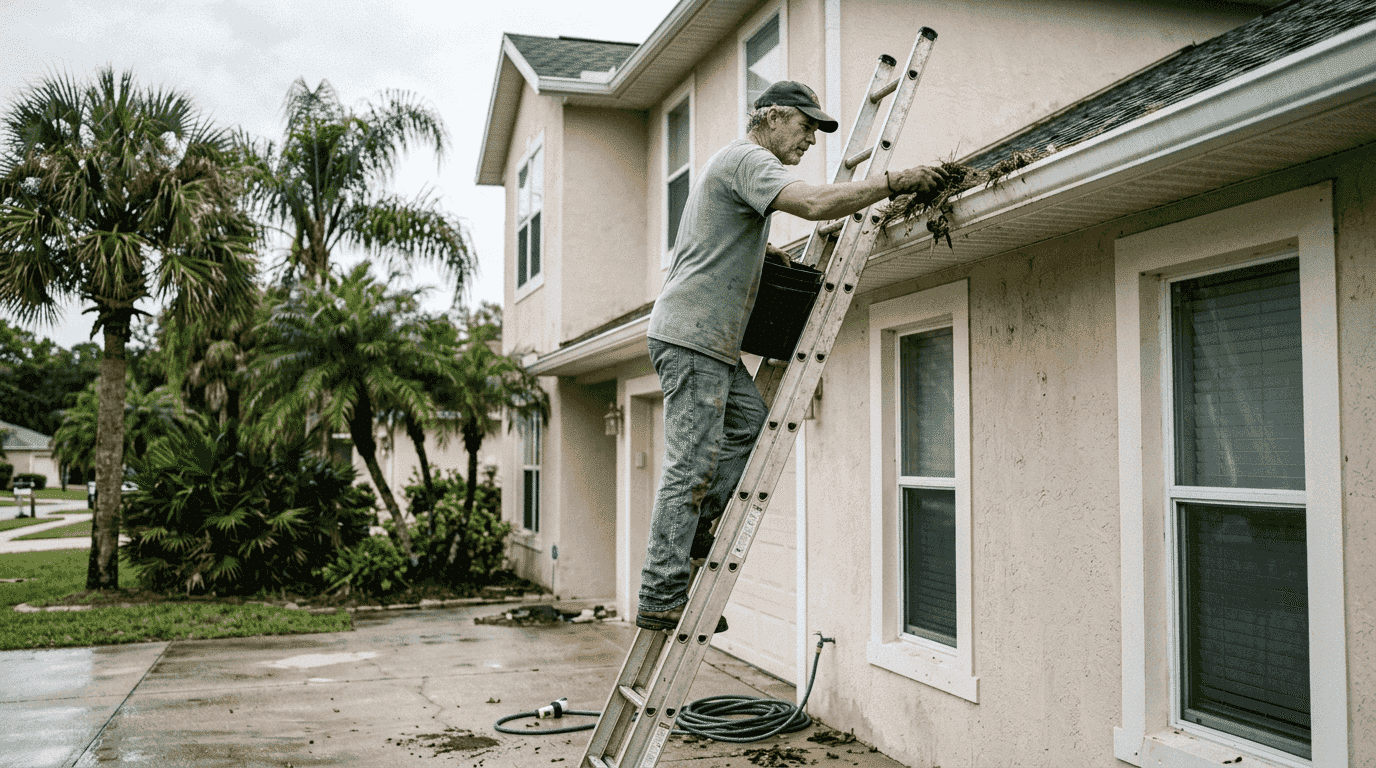
Water damage costs Central Florida homeowners thousands annually, yet many underestimate the role of clean gutters in prevention. A single clogged gutter can redirect hundreds of gallons during summer storms, saturating foundations and creating expensive structural problems. While gutters seem like minor home features, they form your first line of defense against Florida’s intense rainfall and humidity. This article explains how proper gutter maintenance protects your investment, the specific risks facing local homes, and practical strategies to keep water flowing safely away from your property.
Table of Contents
- How Gutters Protect Your Home From Water Damage
- The Risks And Consequences Of Clogged Gutters In Central Florida
- Effective Gutter Maintenance Strategies For Central Florida Homeowners
- Choosing The Right Gutter Systems And Guards For Florida Homes
- Protect Your Home With Expert Gutter Solutions
- FAQ
Key takeaways
| Point | Details |
|---|---|
| Water direction | Clean gutters channel thousands of gallons away from foundations, roofs, and walls during heavy Florida rains. |
| Damage prevention | Clogged systems cause foundation cracks, roof leaks, mold growth, and pest infestations through water overflow. |
| Regional importance | Central Florida’s summer storms and hurricanes demand more frequent maintenance than other climates. |
| Guard benefits | Gutter guards reduce cleaning frequency by blocking debris while deterring mosquitoes and termites. |
| Cost savings | Regular maintenance prevents expensive foundation repairs and extends gutter system lifespan significantly. |
How gutters protect your home from water damage
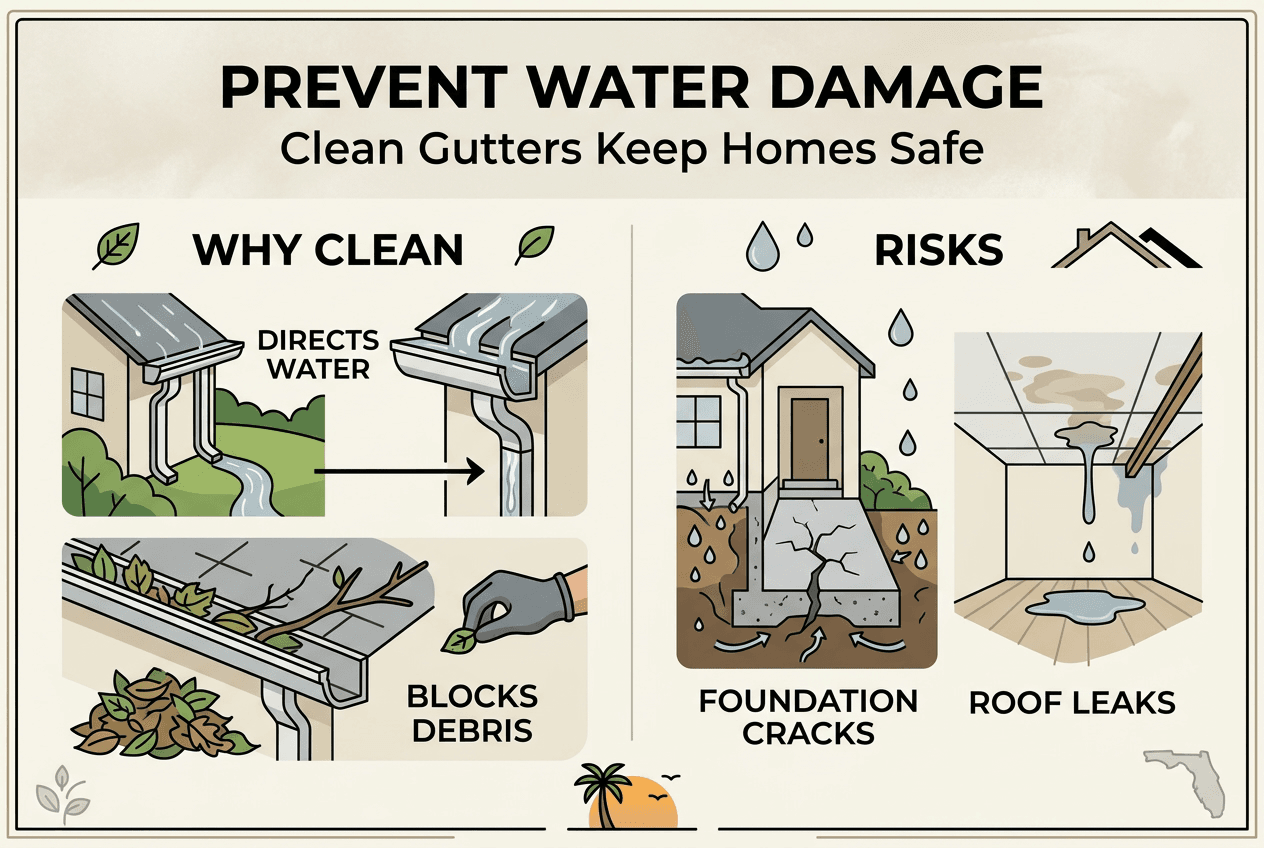
Clean gutters prevent water damage by directing water away from the foundation, walls, and roof, making them essential infrastructure for Central Florida homes. During typical summer thunderstorms, a 2,000-square-foot roof collects roughly 1,250 gallons of water per inch of rainfall. Without functioning gutters, this volume cascades directly beside your foundation, creating hydrostatic pressure and soil saturation.
Properly installed gutter systems capture this runoff and channel it through downspouts positioned at least six feet from your home’s perimeter. The standard five-inch residential gutter handles approximately 1,200 gallons per hour when clean and properly pitched. This capacity matters significantly in Central Florida, where Lake, Marion, and Sumter counties average 50-55 inches of annual rainfall, concentrated heavily during June through September.
When gutters fail or clog, water takes destructive alternate paths:
- Pools against foundation walls, seeping into basements and crawl spaces
- Backs up under roof shingles, rotting fascia boards and roof decking
- Splashes against siding and windows, promoting wood rot and interior leaks
- Creates erosion channels in landscaping near the home
Central Florida’s hurricane season amplifies these risks dramatically. A moderate tropical storm can dump 10-15 inches in 24 hours, overwhelming compromised gutter systems. The resulting foundation damage often appears months later as diagonal cracks in walls or doors that suddenly stick in frames.
Regular gutter maintenance isn’t optional in Florida’s climate. It’s preventive medicine for your home’s structural health.
Understanding your gutter maintenance checklist Florida requirements helps you stay ahead of seasonal challenges. The investment in functional gutters pays dividends by protecting the much larger investment in your home’s foundation and framing.
The risks and consequences of clogged gutters in Central Florida
Clogged gutters can lead to hydrostatic pressure against the foundation, causing cracks and leaks that compromise structural integrity. When debris blocks water flow, gutters overflow and saturate the soil surrounding your foundation. This saturation creates pressure against basement walls and slab foundations, forcing water through microscopic cracks that widen over time.
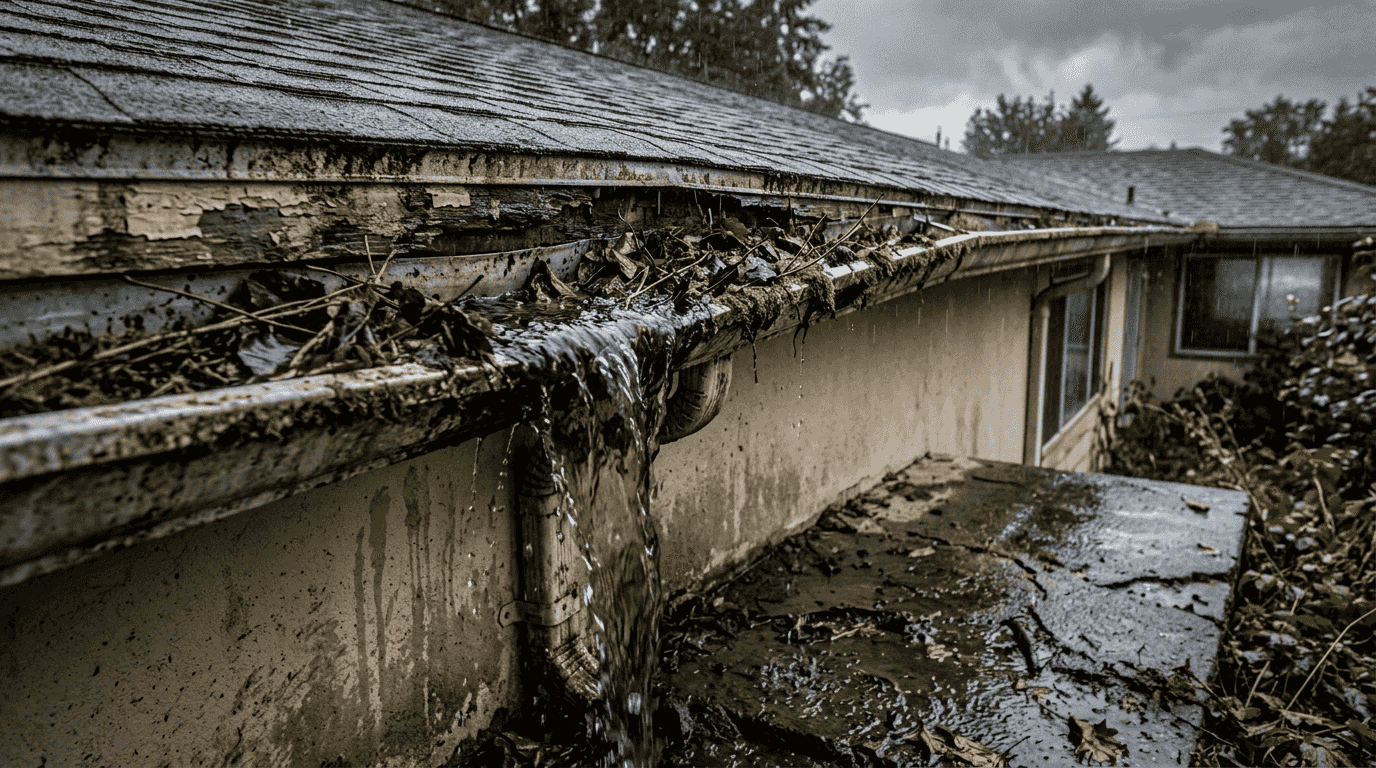
Foundation repairs in Central Florida average $4,000-$12,000 depending on severity, making prevention through gutter maintenance remarkably cost effective. The damage progresses gradually, beginning with hairline cracks and advancing to significant structural movement requiring underpinning or slab jacking.
Roof and fascia damage represents another costly consequence of gutter failure. When gutters overflow backward, water seeps under shingle edges and soaks fascia boards. Humid Florida weather promotes mold and algae growth in dirty gutters, affecting indoor air quality and creating health hazards for residents with respiratory sensitivities. The constant moisture also accelerates wood rot in roof framing and attracts carpenter ants seeking damp wood.
Clogged gutters lead to water overflow, causing foundation damage, roof leaks, and potential structural issues that cascade through multiple home systems. Standing water in blocked gutters becomes a breeding ground for mosquitoes, which can complete their lifecycle in as little as seven days during Florida’s warm months. This creates ongoing pest problems and potential health risks from mosquito-borne illnesses.
| Damage Type | Primary Cause | Typical Repair Cost | Prevention Method |
|---|---|---|---|
| Foundation cracks | Soil saturation from overflow | $4,000-$12,000 | Regular cleaning and proper downspout placement |
| Roof leaks | Water backup under shingles | $800-$3,500 | Maintain gutter pitch and remove debris |
| Fascia rot | Prolonged moisture exposure | $1,500-$4,000 | Install gutter guards and inspect quarterly |
| Mold remediation | Standing water and humidity | $2,000-$6,000 | Clean gutters before rainy season |
| Pest treatment | Mosquito and termite attraction | $300-$2,500 | Eliminate standing water with guards |
Termites pose an additional threat in Florida’s subtropical climate. Subterranean termites thrive in moisture-rich environments, and saturated soil near foundations creates ideal conditions for colony establishment. A single termite colony can consume a pound of wood daily, causing structural damage that often goes undetected until severe.
Pro Tip: Schedule a foundation inspection if you notice doors sticking, cracks appearing in drywall, or gaps forming between walls and ceilings. These symptoms often indicate water damage from failing gutters that requires immediate attention.
The cost of gutter cleaning pales compared to foundation repair. An ounce of prevention truly equals a pound of cure in Florida’s challenging climate.
Addressing gutter problems early through proper gutter troubleshooting Florida homes techniques prevents these cascading failures. For homeowners concerned about persistent issues, exploring dirty gutters impact Florida homes provides additional context about regional challenges.
Effective gutter maintenance strategies for Central Florida homeowners
Gutter maintenance is crucial in Central Florida due to the high volume and intensity of rainfall that tests systems year-round. Timing your maintenance around Florida’s distinct wet and dry seasons maximizes protection while minimizing effort. The ideal cleaning schedule targets late fall before winter rains and late spring before summer storm season begins.
Most Central Florida homes require gutter cleaning every three to four months due to heavy oak, pine, and palm debris. Homes surrounded by mature trees may need monthly attention during peak leaf drop periods. This frequency prevents the gradual accumulation that leads to complete blockages during critical rainfall events.
Soft washing is a safer method for gutter cleaning compared to pressure washing because it removes organic matter without damaging gutter materials or forcing water under roof shingles. Pressure washing can dent aluminum gutters, loosen fasteners, and drive debris deeper into downspouts. Soft washing uses low-pressure water combined with biodegradable cleaning solutions to dissolve buildup gently.
Follow these steps for thorough gutter maintenance:
- Remove large debris by hand or with a gutter scoop, working from downspouts toward gutter ends
- Flush remaining material using a garden hose, checking that water flows freely through downspouts
- Inspect gutter pitch by pouring water at the high point and confirming it drains completely within minutes
- Examine fasteners and hangers for rust or looseness, tightening or replacing as needed
- Check downspout extensions to verify water discharges at least six feet from the foundation
- Document any sagging sections or separated seams requiring professional repair
Gutter guards reduce maintenance frequency significantly by blocking leaves, pine needles, and seed pods while allowing water to flow freely. Quality guards can extend cleaning intervals to twice yearly for most Central Florida properties. They also prevent pest nesting by eliminating the damp debris that attracts insects and small animals.
Pro Tip: Inspect gutters within 48 hours after major storms or hurricanes. High winds often deposit large branches and roofing debris that can block systems when the next rain arrives. Quick removal prevents overflow during subsequent weather events.
Developing a consistent routine through rain gutter maintenance steps Florida homes ensures nothing falls through the cracks. Combining DIY inspections with professional service creates a comprehensive approach. Additional gutter protection tips Florida homeowners can enhance your maintenance strategy based on your specific property characteristics.
Choosing the right gutter systems and guards for Florida homes
Selecting appropriate gutter materials and protection systems determines how well your home withstands Central Florida’s demanding climate. Aluminum gutters dominate the Florida market due to their rust resistance, light weight, and ability to handle thermal expansion during temperature fluctuations. Copper gutters offer superior longevity but cost three to four times more than aluminum, making them practical mainly for premium applications.
Seamless gutters provide significant advantages over sectional systems in Florida’s wet environment. Traditional sectional gutters use connectors every 10 feet, creating potential leak points where water can escape and cause fascia damage. Seamless gutters are custom-fabricated on site in continuous lengths up to the full run of your roofline, eliminating most seams and reducing maintenance requirements.
The benefits of seamless construction include:
- Fewer leak points means less water damage risk
- Smoother interior surfaces that resist debris accumulation
- Custom fitting that ensures proper pitch and drainage
- Cleaner appearance without visible connectors
Gutter guards significantly reduce the frequency of gutter cleaning and maintenance by creating a barrier against debris while allowing water penetration. The Florida market offers several guard types, each with distinct characteristics suited to different situations.
| Guard Type | Pros | Cons | Best For |
|---|---|---|---|
| Mesh screens | Affordable, blocks most debris, easy installation | Requires periodic cleaning, fine debris can clog | Homes with moderate tree coverage |
| Reverse curve | Handles heavy rainfall, sheds large debris | Higher cost, visible from ground, ice issues irrelevant in Florida | Properties with heavy oak or pine trees |
| Foam inserts | Inexpensive, simple DIY installation | Breaks down in UV exposure, traps fine particles | Budget-conscious temporary solutions |
| Micro-mesh | Superior filtration, long warranty periods | Premium pricing, professional installation required | High-end homes seeking minimal maintenance |
| Brush guards | Prevents large debris, allows water flow | Collects pine needles, needs annual removal and cleaning | Pine tree environments |
Gutter guards provide secondary benefits beyond reducing cleaning frequency. They deter wasps, birds, and squirrels from nesting in gutters by eliminating the sheltered debris environment these pests prefer. Guards also prevent mosquito breeding by keeping gutters dry between rains, addressing a significant health concern in Florida’s tropical climate.
Pro Tip: Calculate total cost of ownership when comparing gutter options. A seamless system with quality guards costs more initially but can reduce maintenance expenses by 60-70% over a 20-year lifespan. The reduced labor and repair costs often justify the premium within five to seven years.
Exploring types of gutter guards Florida homeowners use most successfully helps narrow choices based on your specific tree types and roof configuration. Professional installation through a seamless gutter installation process guide ensures proper pitch, secure mounting, and optimal performance from day one.
Protect your home with expert gutter solutions
Central Florida homeowners face unique challenges that demand specialized gutter solutions designed for intense rainfall and year-round humidity. Professional installation ensures your system handles the region’s weather extremes while protecting your foundation, roof, and landscaping investment.

Larry’s Gutters specializes in seamless gutter systems custom-fitted to Central Florida homes across Lake, Marion, and Sumter counties. Our installations include strategic gutter downspout installation steps guide placement that directs water safely away from vulnerable foundation areas. We also offer comprehensive gutter guard installation workflow Florida options that reduce your maintenance burden while preventing pest problems.
Pro Tip: Schedule professional gutter inspections annually even if you maintain your system yourself. Trained technicians spot subtle issues like improper pitch, loose fasteners, and early corrosion that homeowners often miss until problems become expensive.
Whether you need new installation, repairs, or protection upgrades, our how to install gutters step guide approach ensures lasting performance. Contact us for a free assessment of your home’s specific gutter needs and discover how proper installation prevents the water damage that threatens Central Florida properties.
FAQ
How often should I clean gutters in Central Florida?
Most experts recommend cleaning gutters every three to six months due to heavy foliage and rainfall in the region. Homes surrounded by oak, pine, or palm trees may require monthly attention during peak debris seasons. Additional inspections after hurricanes or tropical storms help catch blockages before the next rain event. Following a structured gutter maintenance checklist Florida keeps you on schedule and prevents costly oversights.
What are the signs of gutter-related water damage to watch for?
Cracks in foundation walls, mold growth on exterior surfaces, and water pooling near your home indicate gutter problems. Interior signs include ceiling stains, peeling paint near rooflines, and musty odors in basements or crawl spaces. Sagging gutters, visible overflow during rains, and soil erosion beneath gutter lines are immediate red flags requiring attention. Systematic gutter troubleshooting Florida homes techniques help identify issues before they cause structural damage.
Are gutter guards worth the investment in Florida?
Gutter guards significantly reduce the frequency of gutter cleaning and maintenance in Florida’s debris-heavy environment. They offer long-term cost savings by preventing clogs that lead to foundation damage, roof leaks, and pest infestations. Quality guards pay for themselves within five to seven years through reduced labor costs and avoided repairs. They also eliminate mosquito breeding sites and deter termites by keeping gutters dry. Professional gutter guard installation ensures optimal performance and warranty coverage.
Can I install gutters myself or should I hire professionals?
DIY gutter installation is possible for experienced homeowners with proper tools, but professional installation offers significant advantages in Florida’s challenging climate. Experts ensure correct pitch for drainage, secure mounting that withstands hurricane winds, and proper downspout placement to protect foundations. Seamless gutters require specialized equipment for on-site fabrication that DIY installers cannot access. Professional installation typically includes warranties covering materials and workmanship, providing long-term protection for your investment.
What gutter size do Central Florida homes need?
Most Central Florida homes require five-inch gutters with three-inch downspouts to handle the region’s intense rainfall. Larger roofs exceeding 2,500 square feet or homes with steep roof pitches may need six-inch gutters with four-inch downspouts for adequate capacity. The calculation considers roof square footage, pitch angle, and local rainfall intensity to prevent overflow during summer thunderstorms. Professional installers assess your specific requirements and recommend appropriate sizing based on your roof configuration and regional weather patterns.
