TL;DR:
- Half round gutters feature a smooth, curved profile that reduces debris buildup, promotes faster water flow, and lasts longer due to better drainage and corrosion resistance. They are ideal for historic, Craftsman, Victorian, and Mediterranean homes, especially in high-rainfall regions like Florida, but cost 20 to 80% more than K-style gutters and require professional installation. Proper sizing, brackets, and seamless fabrication are essential for optimal performance and longevity, making expert installation and maintenance a worthwhile investment.
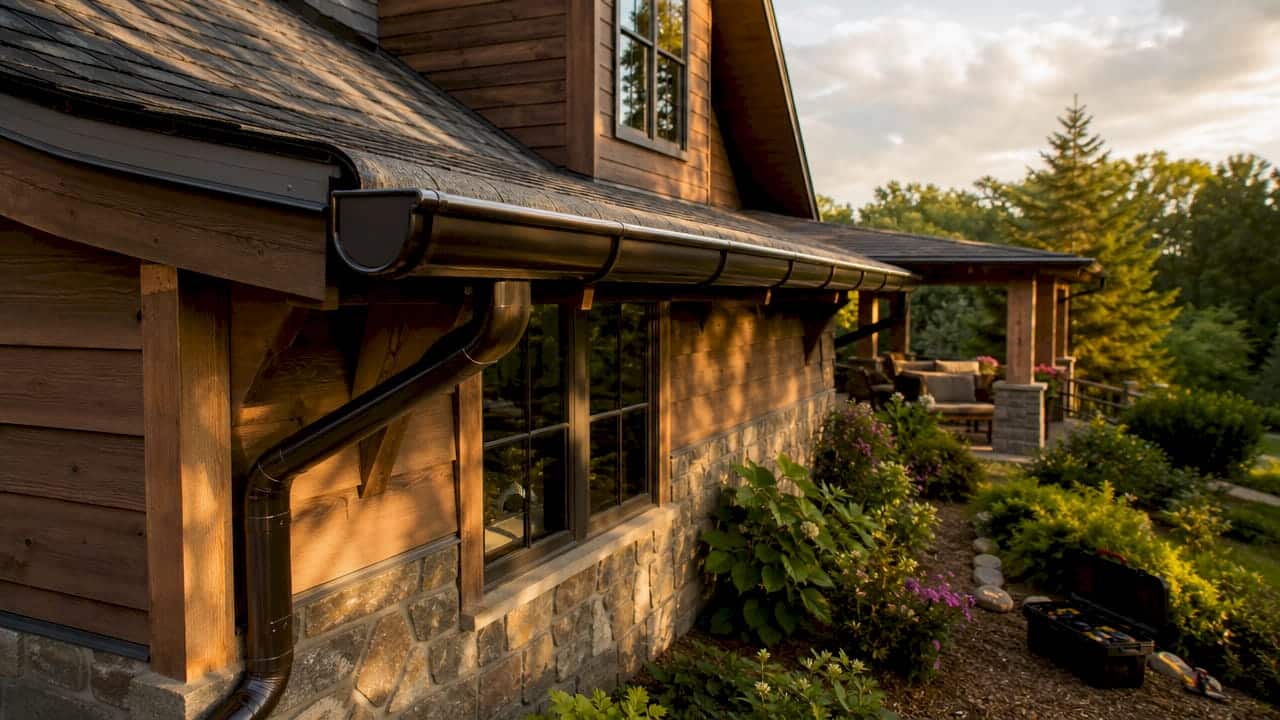
Half round gutters are defined as semicircular gutter channels that direct rainwater away from your home’s foundation, fascia, and landscaping using a smooth, curved interior profile. Most homeowners who ask why install half round gutters are weighing two things at once: how their home looks from the street and how much time they want to spend on a ladder. The good news is that this gutter style delivers on both counts. The curved shape reduces debris buildup, promotes faster water flow, and pairs naturally with historic, Craftsman, Victorian, and Mediterranean architecture. If you are replacing aging gutters or building new, understanding the full picture of half round gutter advantages will help you make a confident decision.
Why install half round gutters: the core functional benefits
Half round gutters reduce leakage, corrosion, and clogging because their smooth, crease-free semicircular profile leaves nowhere for debris to catch and nowhere for standing water to pool. That single design fact separates them from every angular alternative on the market. There are no interior corners, no flat bottom sections, and no sharp seams where rust begins.
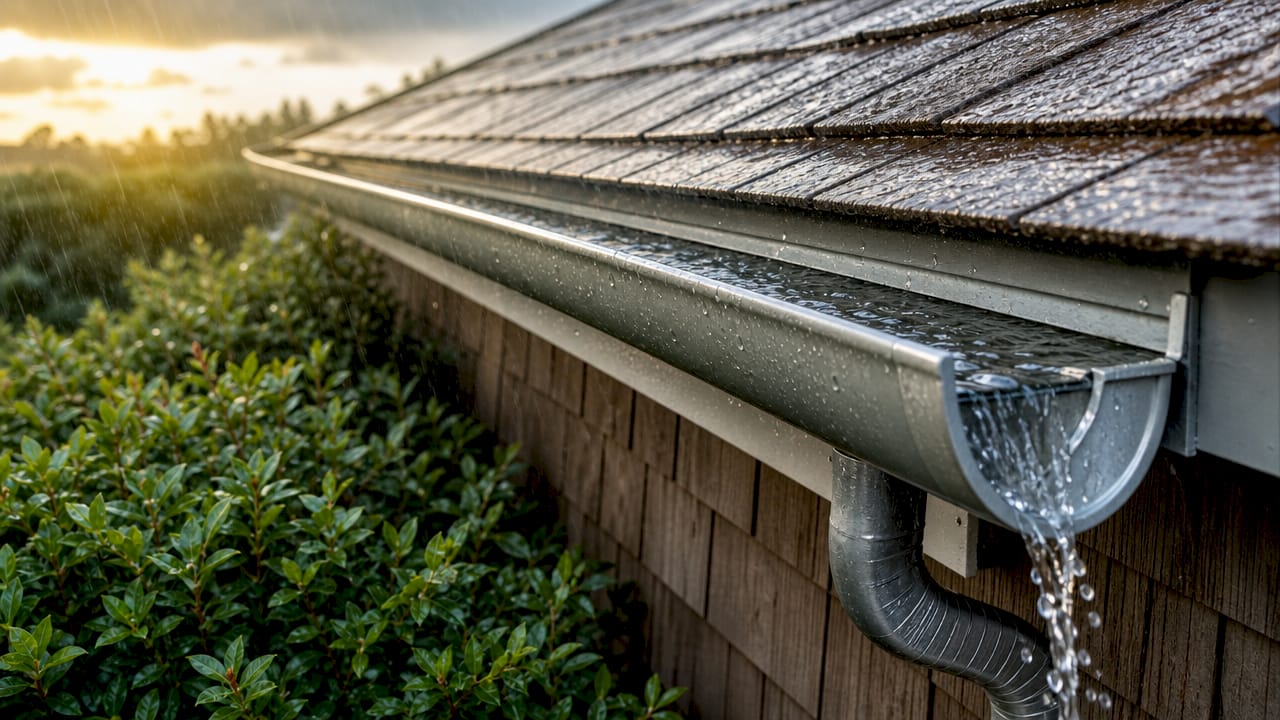
The practical results are measurable. The curved shape promotes self-rinsing water flow and reduces clog frequency by eliminating the corners where leaves and grit collect in angular gutters. When you add gutter guards to a half round system, maintenance frequency can drop by half compared to an unguarded K-style setup. That translates to fewer cleanings per year and a lower risk of overflow damage to your siding and foundation.
Durability is another concrete advantage. Half round gutters have potentially longer lifespans because their shape reduces water pooling and corrosion opportunities compared to K-style gutters. Water that drains completely after every rain event cannot sit and oxidize the metal. For homeowners in Central Florida, where afternoon downpours are a near-daily occurrence from June through September, that drainage efficiency matters more than it does in drier climates.
Here is a summary of the core functional benefits:
- Smooth interior resists debris accumulation and reduces cleaning frequency
- Curved profile encourages complete drainage, limiting corrosion risk
- Fewer interior seams mean fewer points of potential leakage
- Self-rinsing action keeps the channel cleaner between maintenance visits
- Longer expected service life compared to angular gutter profiles
Pro Tip: Pair half round gutters with a mesh-style gutter guard designed specifically for the rounded lip. Guards made for K-style gutters will not seat correctly and can trap more debris than they prevent.
How do half round gutters compare to K-style gutters?
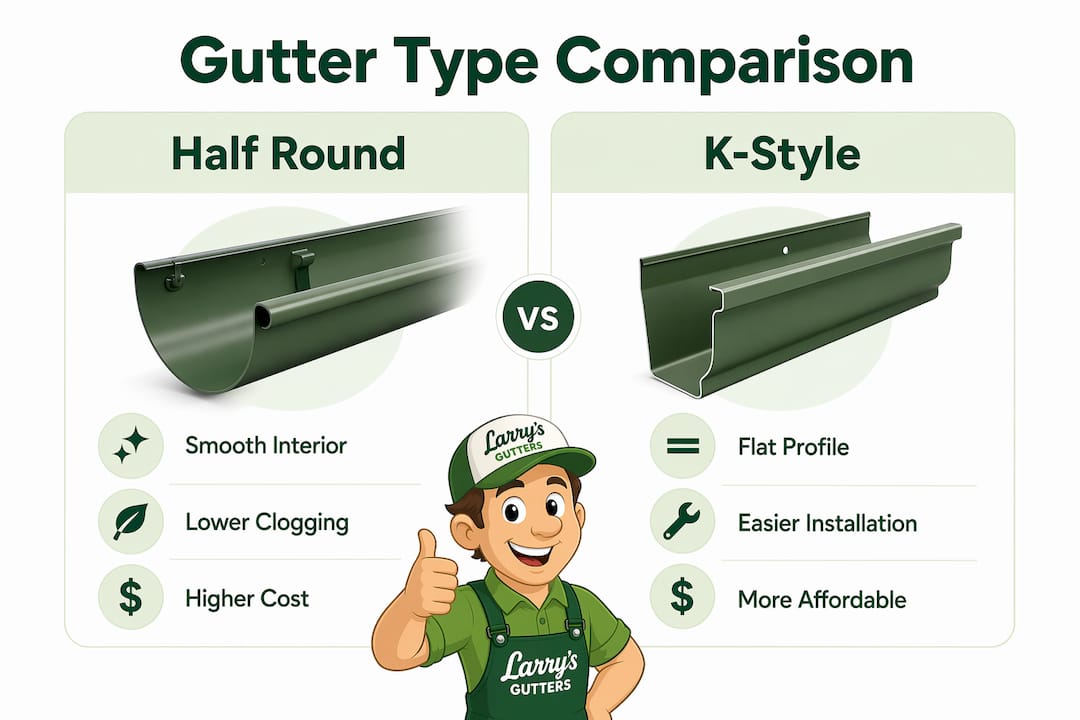
K-style gutters are the most common residential gutter profile in the United States. They have a flat back, a flat bottom, and a decorative ogee front that resembles crown molding. Half round gutters look entirely different: a simple U-shape that sits below the roofline on exposed brackets. Understanding the differences helps you decide which profile fits your home and your priorities.
| Feature | Half round gutters | K-style gutters |
|---|---|---|
| Interior profile | Smooth, curved, no corners | Flat bottom with interior angles |
| Debris buildup | Lower, self-rinsing | Higher, corners trap debris |
| Water capacity | Lower per inch of width | Higher per inch of width |
| Corrosion risk | Lower due to complete drainage | Higher where water pools |
| Aesthetic fit | Historic, Craftsman, Mediterranean | Modern, colonial, contemporary |
| Installation cost | 20 to 80% more than K-style | Standard baseline cost |
| Gutter guard options | Fewer compatible products | Wider product selection |
The cost difference is real and worth planning for. Half round gutters cost 20 to 80% more than K-style gutters depending on material and installation complexity. That premium reflects the specialized mounting hardware, the on-site fabrication process, and the lower production volume of half round profiles compared to K-style. For homeowners in historic districts or those restoring older homes, the aesthetic return justifies the investment. For a builder-grade suburban home, K-style may be the more practical choice. You can read a detailed breakdown of the K-style profile in this Central Florida K-style guide if you want a side-by-side reference before deciding.
One capacity consideration often surprises homeowners. Because the half round profile is open at the top and curved rather than angular, it holds less water volume per inch of width than a K-style gutter of the same nominal size. In high-rainfall regions, installers typically recommend sizing up by one inch to compensate. A home that would normally use 5-inch K-style gutters may need 6-inch half round gutters to handle the same roof drainage load.
What should homeowners know about installing half round gutters?
Installation of half round gutters is more complex than K-style work, and that complexity has direct cost and quality implications. The rounded shape cannot attach flush against a flat fascia board the way K-style gutters do. Instead, specialized mounting brackets are required, and those brackets must be spaced correctly to prevent sagging.
Here is what the installation process involves from start to finish:
- Measure and plan the run. Calculate the total linear footage, identify downspout locations, and determine the correct slope. Half round gutters need a consistent pitch toward each downspout to drain fully.
- Select the right bracket type. Half round gutters use exposed hangers or hidden spike-and-ferrule brackets depending on the material and the installer’s preference. The bracket spacing matters: brackets placed every 24 inches prevent sagging and water pooling, which are the most common failure modes for this profile.
- Fabricate seamless sections on-site. Seamless half round gutters are fabricated on-site using specialized coil-fed machinery. This eliminates the visible seams that older sectional gutters develop over time and reduces the number of potential leak points to just the end caps and downspout connections.
- Install downspouts and test the slope. Run water through the system before the crew leaves to confirm complete drainage and check for any low spots.
- Seal all connection points. End caps, miters, and downspout outlets need a quality gutter sealant rated for your local climate.
Pro Tip: Ask your installer whether they carry a coil-fed seamless machine that handles half round profiles. Not every gutter contractor does. A contractor who only stocks sectional half round gutters is offering you an inferior product at a premium price.
Material choice also affects installation complexity. Copper half round gutters are the most durable and the most expensive option, often used on historic restorations. Aluminum is the most common material for residential installs because it resists rust, accepts paint, and is lightweight enough for standard bracket hardware. Galvanized steel is heavier and requires more bracket support but offers excellent strength in high-wind areas.
Which home styles and climates benefit most from half round gutters?
Choosing half round gutters prioritizes architectural authenticity and ease of debris flow over maximum stormwater capacity. That trade-off makes them the right choice for specific homes and specific conditions, not a universal upgrade.
The homes that benefit most include:
- Historic and pre-1950 construction. Half round gutters align with homes built before 1950 and those with Craftsman, Victorian, or Mediterranean architectural details. Many historic preservation districts actually require period-appropriate gutter profiles, making half round the only compliant option.
- Homes with heavy tree cover. The self-rinsing curved interior handles leaf debris better than angular profiles. Homeowners with oak, pine, or palm trees overhanging the roofline will notice fewer blockages between cleanings.
- Properties focused on curb appeal and resale value. The exposed bracket and curved profile add a finished, intentional look that K-style gutters cannot replicate. On a well-maintained historic home, the right gutter profile can be a genuine selling point.
- Homes in moderate to heavy rainfall regions. When sized correctly at 6 inches rather than 5, half round gutters handle Florida-level rainfall without overflow. The key is accurate sizing during the planning phase, not after installation.
- Homeowners who want lower long-term maintenance. The reduced clogging and corrosion resistance mean fewer service calls over the life of the system. Pair them with a quality guard and you can extend the interval between professional cleanings significantly.
For Florida homeowners specifically, the combination of frequent heavy rain and abundant tree canopy makes the self-rinsing and corrosion-resistant properties especially valuable. Larrysgutters works with homeowners across Central Florida who are replacing corroded K-style systems with properly sized half round aluminum gutters, and the maintenance feedback after the first rainy season is consistently positive. For ongoing care after installation, the Florida gutter maintenance tips from Larrysgutters cover the seasonal inspection schedule that keeps any gutter system performing at its best.
Key takeaways
Half round gutters are the better long-term choice for homeowners who prioritize architectural authenticity, lower maintenance frequency, and corrosion resistance over maximum water capacity at the lowest upfront cost.
| Point | Details |
|---|---|
| Functional design advantage | Smooth curved interior reduces clogging, corrosion, and leakage compared to K-style gutters. |
| Cost premium is real | Half round gutters cost 20 to 80% more than K-style, driven by specialized hardware and installation. |
| Size up for heavy rain | Homes in high-rainfall areas should use 6-inch half round gutters where 5-inch K-style would normally suffice. |
| Professional installation required | Proper bracket spacing at 24-inch intervals and on-site seamless fabrication are critical for performance. |
| Best fit for specific homes | Historic, Craftsman, Victorian, and Mediterranean homes gain the most aesthetic and functional value from this profile. |
What I’ve learned after years of watching homeowners choose gutters
Most homeowners make the gutter decision based on price alone, and most of them regret it within three years. The K-style system they chose because it cost less ends up clogged twice a year, develops rust at the interior corners, and starts leaking at the seams before the decade is out. Half round gutters are not immune to neglect, but they are far more forgiving of it.
The insight that most articles skip is this: the real cost of a gutter system is not the installation invoice. It is the installation invoice plus every cleaning, repair, and early replacement over the next 20 years. When you run that math, the 20 to 80% premium on half round gutters looks a lot smaller. A system that needs cleaning once a year instead of twice, and that resists corrosion for 30 years instead of 15, pays for its own premium.
The other thing I would tell any homeowner considering this upgrade is to be honest about your home’s architecture. Half round gutters look extraordinary on a 1920s Craftsman bungalow. They look slightly out of place on a 2005 stucco subdivision home. The gutter profile should match the roofline, the trim detail, and the overall character of the house. When it does, the result is a home that looks intentional and well-maintained from the street. When it does not, you have paid more for something that reads as an afterthought.
Professional installation is not optional with half round gutters. The bracket spacing, the slope calculation, and the seamless fabrication all require equipment and experience that most DIY projects cannot replicate. Get it done right once, and you will not think about your gutters again for a long time.
— Larrysgutters
How Larrysgutters helps you get half round gutters right
Larrysgutters specializes in seamless gutter installation across Central Florida, including half round profiles fabricated on-site for a clean, leak-resistant finish. The team assesses your roof drainage load, recommends the correct gutter size for Florida’s rainfall patterns, and installs with properly spaced brackets to prevent sagging.

Beyond installation, Larry’s Gutters offers gutter guard installation and cleaning services that extend the life of your half round system. If you are weighing whether the investment makes sense for your specific home, the seamless gutter value breakdown on the Larrysgutters site walks through the long-term cost comparison in detail. Request a free quote and get a professional assessment of what your home actually needs.
FAQ
What makes half round gutters different from K-style?
Half round gutters use a smooth, semicircular profile with no interior corners, while K-style gutters have a flat bottom and angular interior. The curved shape reduces debris buildup and corrosion, while K-style offers slightly higher water capacity per inch of width.
Are half round gutters harder to maintain?
Half round gutters are generally easier to maintain because the curved interior reduces clog frequency by eliminating corners where debris collects. Adding a compatible gutter guard reduces cleaning needs further.
Do half round gutters work in heavy rain areas like Florida?
Yes, when sized correctly. Homes in high-rainfall regions should install 6-inch half round gutters rather than the standard 5-inch to match the drainage capacity of a K-style system and handle Florida’s intense storm events.
Why do half round gutters cost more to install?
The higher cost reflects specialized mounting brackets, on-site seamless fabrication equipment, and the more complex installation process compared to K-style gutters, which attach directly to a flat fascia board.
Which homes are best suited for half round gutters?
Half round gutters are ideal for historic and pre-1950 homes with Craftsman, Victorian, or Mediterranean architectural details, as well as any property where curb appeal and long-term durability outweigh the upfront cost premium.
