
TL;DR:
- A hidden gutter, also known as a box or integral gutter, is built into a home’s roof or fascia to manage water discreetly. Proper installation, slope, sizing, and regular inspections are essential for preventing silent water damage inside the roof structure. Neglecting maintenance can turn these high-capacity, architecturally integrated systems into costly sources of structural deterioration.
A hidden gutter is a rainwater drainage system built directly into a home’s roof or fascia structure, channeling water away from the building without any visible external trough. The industry terms for this system are box gutter, integral gutter, or concealed gutter. These systems appear most often in modern architecture, high-end residential builds, and flat or low-slope roof designs where traditional K-style or half-round gutters would interrupt clean architectural lines. If you own or manage a property with this type of drainage, understanding how it works and how to maintain it is the difference between a dry home and a costly structural repair.
What is a hidden gutter and how does it differ from traditional gutters?
A hidden gutter, also called a box gutter or integral gutter, is a drainage channel built within the roof structure itself rather than attached to the exterior fascia board. Traditional gutters hang visibly along the roofline and are accessible for cleaning and inspection from a ladder. A concealed gutter system is embedded behind parapets, within roof decking, or tucked beneath roofing materials, making it invisible from street level.
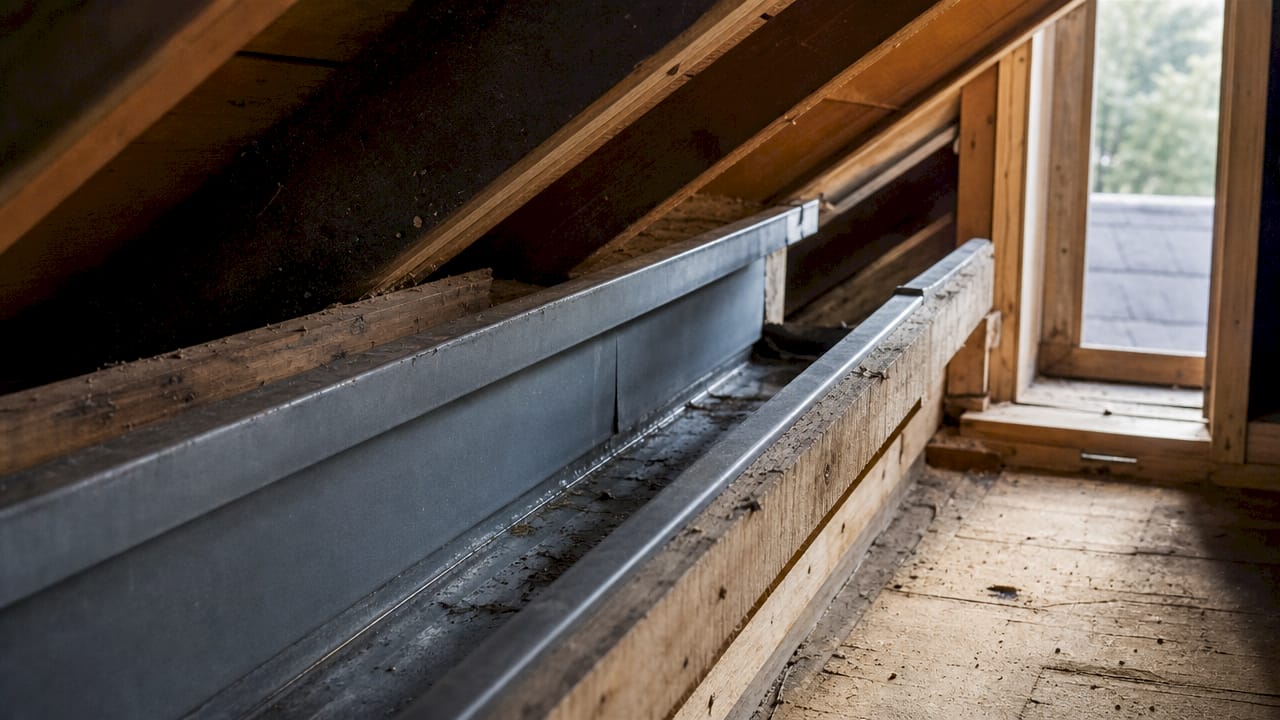
Box gutters are concealed troughs built within the roof structure to handle heavy runoff volumes, which makes them particularly effective for flat or low-pitched roofs where water moves slowly and needs a larger channel to drain properly. This design advantage comes with a trade-off: the system is harder to inspect, harder to repair, and more expensive to install than a standard external gutter.
The term “hidden gutter” is an informal, descriptive phrase used widely in homeowner searches. Roofing professionals and architects use “integral gutter” or “box gutter” on project specifications and building permits. Knowing both terms helps you communicate clearly with contractors and understand technical documentation.
Hidden hangers in gutters refer to a different but related concept. Hidden hanger systems are the internal brackets used to secure gutters to the fascia without visible spikes or straps on the outside. They are common in seamless gutter installations and contribute to the clean look many homeowners associate with concealed drainage systems.
How do hidden gutters work?
The engineering behind a concealed gutter system depends on three factors: slope, sizing, and waterproofing. Get any one of these wrong, and the system fails silently inside your roof structure.
Here is how a properly designed hidden gutter system functions:
- Slope toward the outlet. Proper slope minimum is 1/16 inch per linear foot toward the downspout. This gradient prevents standing water, which accelerates liner deterioration and creates mosquito breeding conditions in warm climates like Central Florida.
- Hydraulic sizing. The width and depth of the gutter channel are calculated based on the roof’s surface area, the roof pitch, and local rainfall intensity. A channel that is too narrow overflows during heavy rain events. Gutter width and depth depend on hydraulic load and roof parameters, not on aesthetic preference.
- Waterproof membrane lining. The interior of the gutter channel is lined with a waterproof membrane, typically EPDM rubber, TPO, or lead-coated copper. This membrane is the system’s primary defense against leaks into the roof structure below.
- Concealed downspouts. Water exits through downspouts routed inside walls, through parapets, or down interior columns. These outlets are sized to match the gutter’s drainage capacity.
- Thermal movement allowance. Metal liners expand and contract with temperature changes. Properly designed systems include expansion joints or flexible membrane sections to absorb this movement without cracking seams.
Pro Tip: If you are buying a home with a flat or low-slope roof, ask the seller for the original gutter design specifications. Knowing the hydraulic capacity tells you whether the system can handle your region’s peak rainfall rates before you close on the property.
Integral gutters also improve building envelope performance when designed with continuous insulation, reducing thermal bridging at the roof edge. This is a meaningful energy efficiency benefit in Florida homes where cooling costs dominate annual utility bills.
Hidden gutter vs. traditional gutter: benefits and drawbacks
Choosing between a concealed system and a standard external gutter is not purely an aesthetic decision. The structural context of your roof, your maintenance capacity, and your budget all factor in.
Benefits of hidden gutters:
- Clean architectural appearance with no visible hardware along the roofline
- Higher drainage capacity, making them well-suited for flat roofs and high-rainfall regions
- Less exposure to physical damage from ladders, falling branches, or wind-blown debris
- Integration with the roof structure can improve overall building envelope performance
Drawbacks of hidden gutters:
- Installation complexity and materials contribute to higher upfront costs compared to standard fascia gutters
- Inspection and cleaning require planned access points or professional equipment
- Leaks develop inside the roof structure and may go undetected for months
- Repairs are more disruptive because the system is embedded in the building fabric
| Feature | Hidden gutter | Traditional gutter |
|---|---|---|
| Visibility | Fully concealed | Visible along roofline |
| Drainage capacity | High, suited for flat roofs | Moderate, suited for pitched roofs |
| Installation cost | Higher, requires skilled labor | Lower, widely available |
| Maintenance access | Difficult, requires planning | Easy, accessible from ladder |
| Leak detection | Delayed, often internal | Immediate, visible overflow |
| Lifespan with proper care | Long, if waterproofing holds | Long, if hangers and seams maintained |
The comparison makes one thing clear: a hidden gutter system rewards careful installation and regular professional inspection. Skipping maintenance does not just mean dirty gutters. It means water silently saturating your roof deck, insulation, and wall framing.

How to detect hidden gutter damage
Hidden gutter damage is defined as deterioration or failure within a concealed drainage system that allows water to infiltrate the roof structure without producing obvious external overflow. Because the water does not spill visibly over the gutter edge, homeowners often discover the problem only after significant structural damage has already occurred.
Dry inspections only reveal certain defects. A visual check of the gutter channel without water running through it can identify debris blockages, visible membrane tears, and obvious joint separations. It cannot confirm whether the slope is correct, whether low points exist where water pools, or whether small pinhole leaks are present at seams.
The diagnostic workflow professionals use follows two phases:
- Dry inspection: Check for debris accumulation, visible membrane damage, joint separation, and outlet blockages. Look for moss growth, staining on interior walls or ceilings below the gutter line, and warped or rotted fascia boards.
- Water testing: Run a controlled hose test through the gutter channel while a second person monitors the interior ceiling and walls for moisture. Water testing reveals hidden leaks and pitch failures that no visual check can find.
Exterior warning signs that point to hidden gutter issues include:
- Dark staining or streaking on exterior walls below the roofline
- Moss or algae growth on the roof surface near the gutter channel
- Warped, soft, or discolored fascia boards
- Peeling paint on interior walls adjacent to the roofline
- Musty odors in attic spaces near the roof perimeter
Hidden gutter leaks cause delayed damage that is often disguised by exterior surfaces. A patch of moss on the roof is not a cosmetic issue. It is a signal that moisture is sitting where it should not be, and the source is frequently a failed joint or outlet seal inside the concealed channel.
Pro Tip: Run a hose test twice per year, once before Florida’s rainy season in June and once in October after the heaviest storms have passed. This schedule catches failures before they compound into structural repairs.
Hidden gutters fail most at system interfaces like seams and downspout outlets due to stress and thermal movement. These are the first places to inspect and the last places a homeowner should attempt to repair without professional guidance.
Installation and maintenance best practices
Proper hidden gutter installation is not a DIY project. The system integrates with the roof structure, the waterproofing layer, and in many cases the wall framing. Errors in any of these connections create failure points that are expensive to correct after the fact.
Follow these steps to get installation and ongoing maintenance right:
- Hire a contractor with integral gutter experience. General roofing contractors may not have the specific skills for concealed gutter design. Ask for completed project references and verify they understand hydraulic sizing requirements.
- Confirm drainage calculations before construction begins. Sizing hidden gutters requires collaboration with roofing product manufacturers to comply with local codes and achieve correct hydraulic capacity. In Florida, local rainfall intensity data from the National Weather Service should inform these calculations.
- Verify slope during installation. The Sheet Metal and Air Conditioning Contractors’ National Association (SMACNA) specifies a minimum fall of 1/16 inch per linear foot as the standard for gutter pitch. Have this confirmed with a level before the membrane is installed.
- Install planned access points. Concealed gutters without access hatches or removable covers make future inspection nearly impossible. Build access into the design from the start.
- Schedule annual professional inspections. Due to the concealed nature of the system, a professional with a moisture meter and water testing equipment should inspect the gutter at least once per year. Pair this with a Florida gutter maintenance checklist to track condition over time.
- Clear debris after every major storm. Leaves, seed pods, and organic debris accumulate in the channel and block outlets. In Central Florida, this is especially relevant after tropical weather events between June and November.
- Reapply or replace membrane liners on schedule. EPDM and TPO membranes have finite service lives. Follow manufacturer guidance on inspection intervals and replacement timelines to prevent liner failures from becoming structural repairs.
Staying ahead of gutter leak repairs on a concealed system costs a fraction of what structural remediation costs after a liner failure goes undetected for a full rainy season.
Key takeaways
Hidden gutters protect homes effectively when designed, installed, and maintained correctly. Neglecting inspection or skipping water testing turns a high-performance drainage system into a hidden source of structural damage.
| Point | Details |
|---|---|
| Definition and terminology | A hidden gutter is also called a box gutter or integral gutter; know both terms when working with contractors. |
| Slope is non-negotiable | A minimum of 1/16 inch per linear foot toward the downspout prevents standing water and liner deterioration. |
| Water testing finds what eyes miss | Dry visual inspections cannot confirm slope failures or pinhole leaks; controlled hose tests are required. |
| Failure concentrates at joints | Seams, downspout outlets, and membrane transitions are the highest-risk points in any concealed gutter system. |
| Higher cost, higher stakes | Concealed gutters cost more to install and repair, making proactive maintenance the most cost-effective strategy. |
Why I think most homeowners underestimate hidden gutters
After working with homeowners across Central Florida on gutter systems of every type, the pattern I see most often is this: people buy a home with a concealed gutter system, assume it is maintenance-free because they cannot see it, and call us two or three years later with water damage inside the wall cavity.
The invisibility of a hidden gutter is its greatest aesthetic asset and its biggest practical liability. Traditional gutters overflow visibly. You see the problem from the driveway and call someone. A concealed system fails quietly, and by the time you notice the stain on the ceiling or the soft spot in the fascia, the water has been moving through your roof structure for months.
The homeowners who get the most out of these systems treat them like mechanical equipment, not passive infrastructure. They schedule water tests. They keep records of membrane age. They build access hatches into the design before the roof goes on. That level of attention sounds like a lot, but it is far less work than replacing a rotted roof deck.
My honest recommendation: if your home has a concealed gutter system, find out when the waterproof membrane was last inspected or replaced. That single piece of information tells you more about your water damage risk than any visual inspection ever will.
— Larrysgutters
Get professional help with your hidden gutter system
Hidden gutter systems protect your home from water damage, but only when they are installed and maintained by professionals who understand integral drainage design. Larrysgutters specializes in residential gutter solutions across Central Florida, including installation, inspection, and repair of concealed and seamless gutter systems built to handle Florida’s intense rainfall.

Whether you need to understand how to install gutters for a new build or need to address a suspected leak in an existing concealed system, Larry’s Gutters has the experience to diagnose and fix the problem correctly. You can also review the downspout installation steps to understand how concealed outlets are properly integrated into your drainage system. Contact Larrysgutters today for a free quote and a professional assessment of your home’s gutter system.
FAQ
What is a hidden gutter in simple terms?
A hidden gutter, also called a box gutter or integral gutter, is a rainwater drainage channel built into the roof or fascia structure rather than attached visibly to the exterior. It manages water flow without any visible trough along the roofline.
How do I know if my hidden gutter is leaking?
Look for exterior staining on walls below the roofline, moss growth on the roof surface, warped fascia boards, or peeling interior paint near the ceiling. A controlled hose test is the most reliable method to confirm a leak, since dry inspections miss pitch failures and small seam leaks.
Why are hidden hangers used in gutters?
Hidden hangers are internal brackets that secure gutters to the fascia without visible spikes or straps on the exterior. They provide stronger support than traditional spike-and-ferrule systems and contribute to the clean appearance associated with modern seamless gutter installations.
How often should a hidden gutter be inspected?
A concealed gutter system should be inspected professionally at least once per year, with a water test included. In Florida, inspecting before the June rainy season and after the October storm season gives you the best chance of catching failures before they cause structural damage.
Are hidden gutters more expensive than traditional gutters?
Yes. Installation complexity and custom materials make concealed gutters significantly more expensive than standard fascia gutters upfront. The long-term value depends entirely on consistent maintenance and early leak detection.
