TL;DR:
- Central Florida homeowners must install storm-resistant gutters made of corrosion-resistant materials, properly sloped, securely fastened, and oversized to handle intense rainfall. Gutter capacity, downspout size, and debris management significantly influence storm protection and require tailored planning based on roof size and tree coverage. Regular maintenance and expert installation ensure gutters perform effectively during Florida’s frequent thunderstorms and hurricanes.
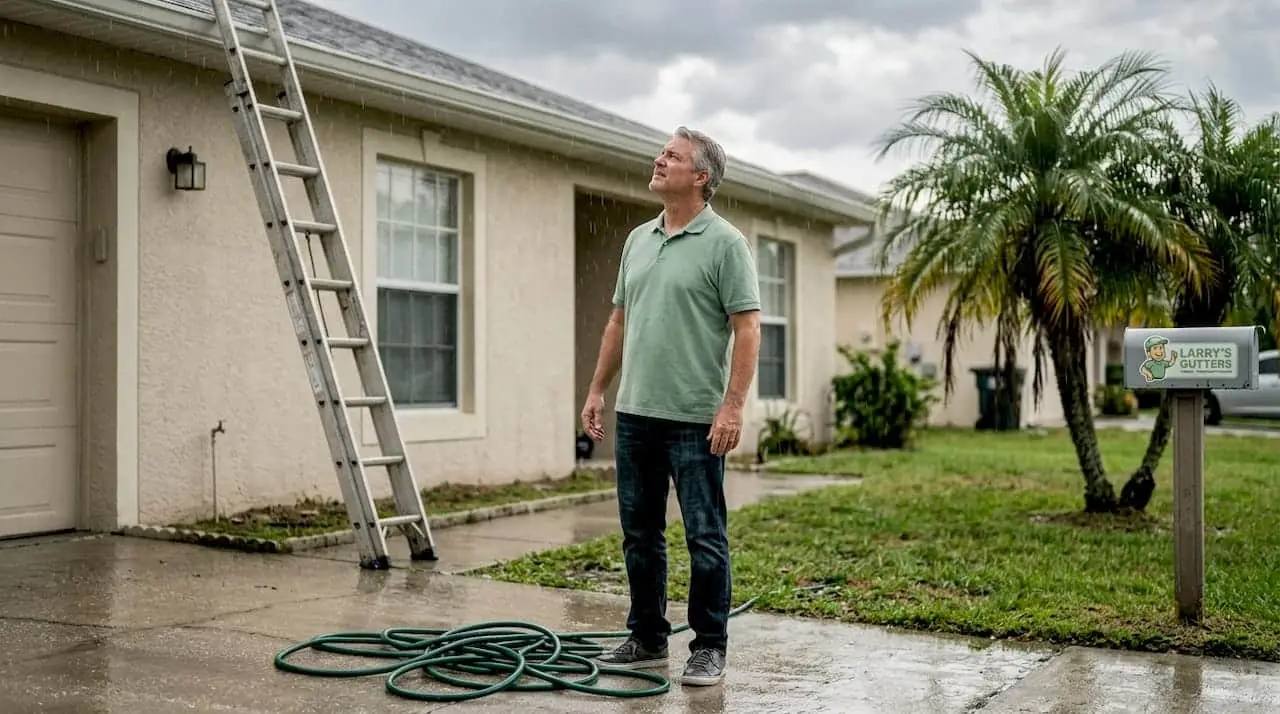
Central Florida’s storm season doesn’t give you a warning before the sky opens up and drops four inches of rain in under an hour. When that happens, your gutters are either doing their job or they’re letting water pool against your foundation, flood your landscaping, and seep into your home. Choosing the right gutter features isn’t a luxury for Florida homeowners. It’s a front-line defense against the kind of water damage that costs thousands of dollars to repair. This article walks you through the most important storm-ready gutter features, how to size your system correctly, and what to prioritize when upgrading your home’s protection.
Table of Contents
- What makes a gutter storm-ready?
- Oversized gutters and downspouts: Top capacities for storm season
- Gutter guards and screens: Protection against clogging
- Comparing storm-ready gutter upgrades
- Choosing the right storm-ready gutter solution for your home
- Why most homeowners underestimate storm-ready gutter upgrades
- Protect your Central Florida home with expert gutter solutions
- Frequently asked questions
Key Takeaways
| Point | Details |
|---|---|
| Code-compliant materials | Corrosion-resistant gutters are required in hurricane-prone Central Florida. |
| Oversized gutter capacity | Choose 6- or 7-inch gutters for reliable stormwater management. |
| Guard and screen benefits | Gutter guards simplify maintenance but may reduce storm capacity. |
| Decision framework | Compare features based on storm risk, roof size, and code requirements. |
| Pro help recommended | Professional installation ensures maximum protection and longevity. |
What makes a gutter storm-ready?
Not every gutter is built for Florida weather. The difference between a basic gutter and a true storm-ready system comes down to material quality, proper installation, and design features that hold up when rainfall gets intense.
Central Florida sits in a climate zone where afternoon thunderstorms are routine from June through September, and hurricane-force conditions can arrive with little notice. That means your gutters need to resist corrosion from constant moisture exposure, handle high volumes of water without pulling away from the roofline, and stay functional even when debris is blowing through the air.
Here’s what defines a storm-ready gutter system in Florida:
- Corrosion-resistant materials like aluminum or galvanized steel that won’t rust or degrade after repeated exposure to heavy rain
- Correct slope to push water toward downspouts without pooling inside the channel
- Secure fastening with hidden hangers or screws rather than spikes that loosen over time
- Oversized capacity that handles sudden, intense rainfall without overflowing
- Downspout placement that directs water at least six feet away from your foundation
The Florida gutter standards that apply in your county are shaped directly by hurricane risk. Per Florida Building Code requirements, gutters are not mandated in all cases, but when installed, they must use corrosion-resistant materials, maintain a slope of 1/8 to 1/4 inch per foot, and be securely fastened in high-velocity hurricane zones.
Understanding these requirements gives you the foundation for every upgrade decision that follows. A gutter that meets code minimums in a low-risk region may still fall short for what Central Florida actually throws at homes every summer.
Oversized gutters and downspouts: Top capacities for storm season
Standard 5-inch gutters might be fine in a climate with light, predictable rainfall. Central Florida is not that climate. During peak storm season, rainfall intensity can reach four inches per hour or more, which overwhelms undersized gutters quickly and sends water cascading over the edge.
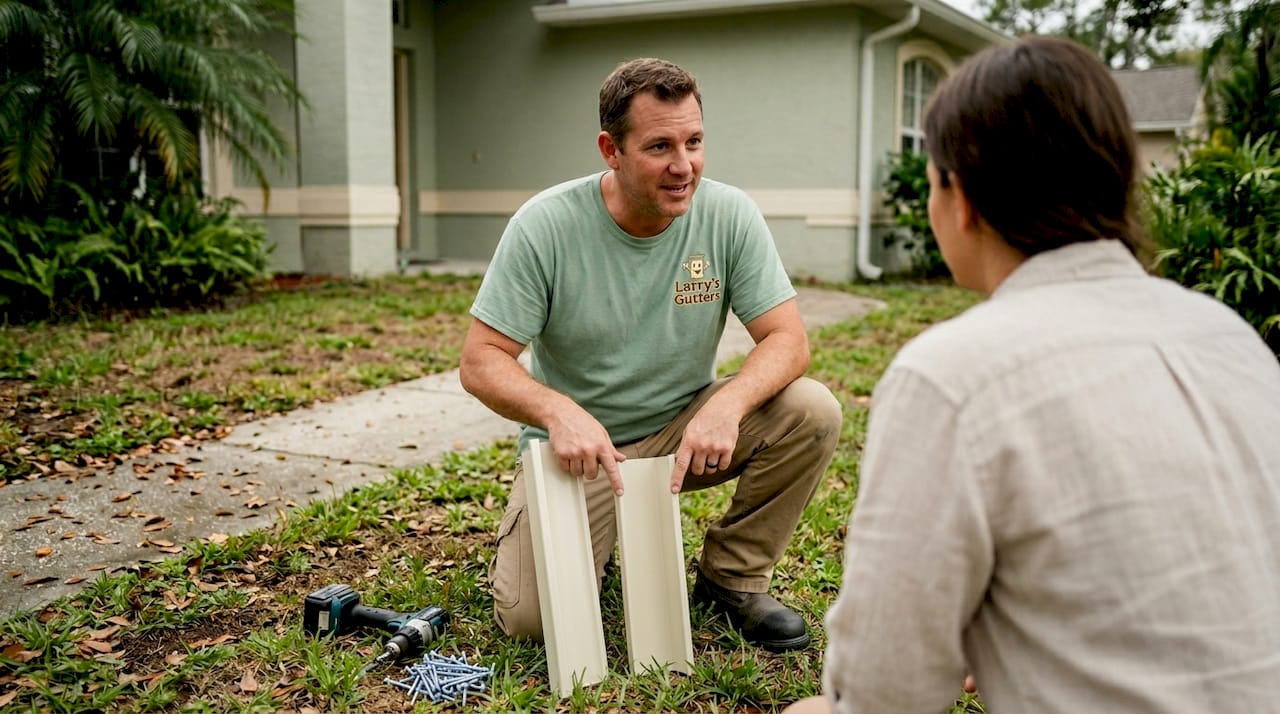
The solution is to size up. Most Florida homes benefit from 6-inch or 7-inch gutters paired with larger downspouts. Here’s why the numbers matter: 6-inch gutters handle roughly 2 gallons per foot, making them well-suited for roofs up to 2,000 square feet, while 7-inch gutters handle approximately 3.5 gallons per foot for larger or steeper roofs. Keep in mind that understanding gutter capacity in storms is critical when choosing the right setup for your specific property.
| Gutter size | Approximate capacity | Best for |
|---|---|---|
| 5-inch | ~1.2 gal/ft | Small roofs, mild climates |
| 6-inch | ~2 gal/ft | Roofs up to 2,000 sq ft |
| 7-inch | ~3.5 gal/ft | Large or steep roofs |
Your roof size and slope both affect which gutter size you need. A steeply pitched roof sheds water faster than a low-slope roof, which means the water arrives at the gutter in a shorter burst. That peak surge requires more capacity, even if your total roof area is moderate. A flat-ish roof over a large footprint also generates serious volume during a one-inch-per-hour rain event.
Key factors for sizing your gutters correctly:
- Total roof square footage
- Roof pitch (steeper equals faster runoff and higher peak flow)
- Number and placement of downspouts
- Whether you plan to add gutter guards (which affect flow rates)
Pro Tip: Pair your 6-inch or 7-inch gutters with 3×4-inch rectangular downspouts instead of standard 2×3-inch models. The larger downspout handles roughly 40% more volume and reduces the risk of overflow at the outlet during peak storm surges.
Gutter guards and screens: Protection against clogging
Florida’s trees drop pine needles, oak leaves, seed pods, and Spanish moss year-round. During a storm, all of that debris moves with the wind and water, and a lot of it ends up in your gutters. Clogged gutters overflow. Overflowing gutters damage fascia boards, soffit, foundation plantings, and eventually your foundation itself.
Gutter guards and screens are designed to keep debris out while allowing water to flow through. They come in several types, each with different performance profiles:
- Micro-mesh guards use a fine stainless steel mesh that blocks even small debris like pine needles while allowing water to pass through freely. These are the gold standard for Florida conditions.
- Reverse curve guards rely on surface tension to direct water down into the gutter while debris falls off the edge. They work well in moderate conditions but can struggle with heavy sheet-flow rain.
- Foam inserts sit inside the gutter channel and block debris from settling. They’re affordable but can trap moisture and encourage mold growth in Florida’s humidity.
- Snap-in screens are a budget option that keeps out large leaves but lets smaller debris through. They require more frequent maintenance than micro-mesh systems.
The biggest trade-off with any guard system is capacity. Guards can reduce gutter capacity by 10 to 40% during rainfall exceeding four inches per hour, per IPC and NOAA data. That’s a significant hit during a Florida thunderstorm.
Statistic callout: During Florida’s peak storm months, rainfall can exceed 4 inches per hour. At that intensity, even a well-maintained gutter guard can reduce effective flow capacity by up to 40%.
The practical solution is to combine oversized gutters with high-quality micro-mesh guards. The larger channel compensates for the reduced flow rate, and the guard keeps debris from accumulating and making the problem worse over time. It’s also worth reviewing a detailed Florida gutter guard guide before committing to a product, since not all guards perform equally in subtropical conditions.
Pro Tip: Schedule a gutter inspection before June and again in October, which brackets Florida’s primary storm season. Clean any accumulated debris off the top of your guards and check that downspouts are clear. A solid Florida gutter maintenance routine takes less than two hours twice a year and prevents the most common failure points.
Comparing storm-ready gutter upgrades
At this point, you’ve seen the individual features that matter most. Now it helps to see them side by side so you can understand which upgrades deliver the biggest return for your specific situation.
| Feature | Best for | Trade-off |
|---|---|---|
| 6-inch gutters | Roofs up to 2,000 sq ft with standard pitch | Costs more than 5-inch; minimal downside in Florida |
| 7-inch gutters | Large, steep, or complex rooflines | Higher material and install cost |
| Micro-mesh guards | Homes with heavy tree cover | Reduces capacity 10-40% in extreme rain |
| Snap-in screens | Budget-conscious, low tree cover | Less effective against fine debris |
| Hidden hanger fasteners | All Florida homes | Slightly higher install cost than spikes |
| Seamless aluminum construction | Corrosion resistance and custom fit | Requires professional installation |
A few things stand out from this comparison. First, the jump from 5-inch to 6-inch gutters is almost always worth it in Central Florida, regardless of roof size. The cost difference is modest, but the capacity difference is significant. Second, the choice between guard types matters more than most homeowners realize. Micro-mesh is more expensive upfront but pays off in reduced cleaning frequency and better long-term performance.
When weighing your gutter upgrade ideas, also consider the fastening system. Hidden hangers installed every 18 to 24 inches along the gutter channel hold far better than traditional spike-and-ferrule systems, especially when gutters fill with heavy water and pull on the mounting points. You can find upgrade examples Florida homeowners have used to see real-world combinations that work well together.
The gutter capacity data confirms that sizing and guard selection work together as a system, not as independent choices. Plan them together, and you avoid the mistake of adding guards to an already undersized gutter.
Choosing the right storm-ready gutter solution for your home
With all the options on the table, the last step is turning information into a decision. Every home has different drainage needs based on roof size, tree cover, local drainage patterns, and budget. Here’s how to work through it.
- Measure your roof area. Use your home’s square footage as a starting point. Add 10-15% for pitched roofs, since the actual roof surface is larger than the footprint.
- Evaluate your tree coverage. Heavy shade from oaks, pines, or palm trees means debris is a constant issue. Prioritize guards if your yard has significant tree cover near the roofline.
- Check your current downspout placement. You want one downspout for every 30 to 40 feet of gutter run, positioned at corners and low points where water naturally collects.
- Confirm code compliance. In high-velocity hurricane zones, your installation must use corrosion-resistant materials and be secured per Florida Building Code requirements.
- Prioritize upgrades by impact. If your gutters are undersized, fix that first. Then add guards. Then upgrade downspouts.
Your hurricane-ready gutters guide can help you go deeper on wind and storm resilience beyond just water capacity. The goal is a gutter system that functions before, during, and after a storm without requiring emergency attention. Smart rainy season gutter prep each spring makes a measurable difference in how well your system performs when you need it most.
Pro Tip: Always consult a local professional before making final sizing decisions. A contractor who installs gutters in Central Florida every day understands local rainfall patterns, code requirements, and the specific debris challenges that come with Florida’s tree canopy.
Why most homeowners underestimate storm-ready gutter upgrades
Here’s something we see often: a homeowner installs decent gutters, ticks the box, and assumes they’re protected. Then a summer storm drops three inches in forty-five minutes and water pours over the edge like the gutters aren’t even there. The gutters might be perfectly installed but completely wrong for that home’s drainage demands.
The real gap isn’t in product quality. It’s in the assumption that any gutter is the right gutter. Most homeowners choose 5-inch gutters because that’s what the previous house had. They skip guards because they seem like an add-on. They never think about downspout sizing until a basement floods or a foundation crack appears.
What surprises most people is how much the combination of features matters. Oversized gutters without the right fastening system pull away from the fascia under full load. Guards without the right mesh size let in pine needles and build up a soggy mat that blocks flow just as effectively as no guard at all.
Maintenance is the other piece most people underestimate. A clean, well-sized gutter system outperforms an expensive but neglected one every single time. Check your Florida gutter care checklist twice a year, before and after storm season, and you’ll catch the problems that cause failures before they cost you real money. Storm readiness isn’t a one-time installation decision. It’s an ongoing practice.
Protect your Central Florida home with expert gutter solutions
If you’ve made it through this article, you already know more about storm-ready gutters than most Florida homeowners. Turning that knowledge into actual protection for your home means working with professionals who understand Central Florida’s specific demands.

At Larry’s Gutters, we specialize in seamless gutter installation, sizing, and upgrades built for Florida’s storm season. Whether you’re adding guards, upsizing to 6-inch or 7-inch gutters, or starting from scratch, our team designs systems that meet Florida Building Code requirements and handle what the weather actually delivers. Learn more about our gutter guard install workflow and request a free quote today. Protecting your home starts with the right gutters, and we’re here to make that process straightforward.
Frequently asked questions
Are gutters required by Florida building code for all homes?
No, Florida code does not require gutters on every home, but when installed in hurricane zones, specific material and installation standards apply, including corrosion resistance and secure fastening requirements.
What size gutter is best for Central Florida storms?
A 6-inch gutter suits most roofs up to 2,000 square feet, while 7-inch gutters are the better choice for larger footprints or steeper pitches that generate higher peak water flow.
Do gutter guards decrease water capacity during storms?
Yes, guards can reduce capacity by 10 to 40% when rainfall exceeds four inches per hour, which is why oversized gutters and high-quality micro-mesh guards work best together in Florida.
What storm-ready upgrades should homeowners prioritize?
Start with corrosion-resistant materials and properly sized gutters, then add micro-mesh guards and confirm your installation meets Florida Building Code fastening standards for high-velocity hurricane zones.
How does roof size and slope affect gutter sizing?
Steeper or larger roofs shed water faster and in greater volume, which is why 7-inch gutters at 3.5 gal/ft are recommended for those conditions over the standard 5-inch or 6-inch options.
