TL;DR:
- Gutter overflow occurs when water spills over the edges instead of flowing through the system, often caused by debris, improper slope, or blocked downspouts. Regular cleaning, verifying slope, and upgrading capacity help prevent overflow, especially in Florida’s heavy rain and tree debris conditions. Professional assessment and targeted system upgrades are essential for maintaining effective gutters and protecting homes from water damage.
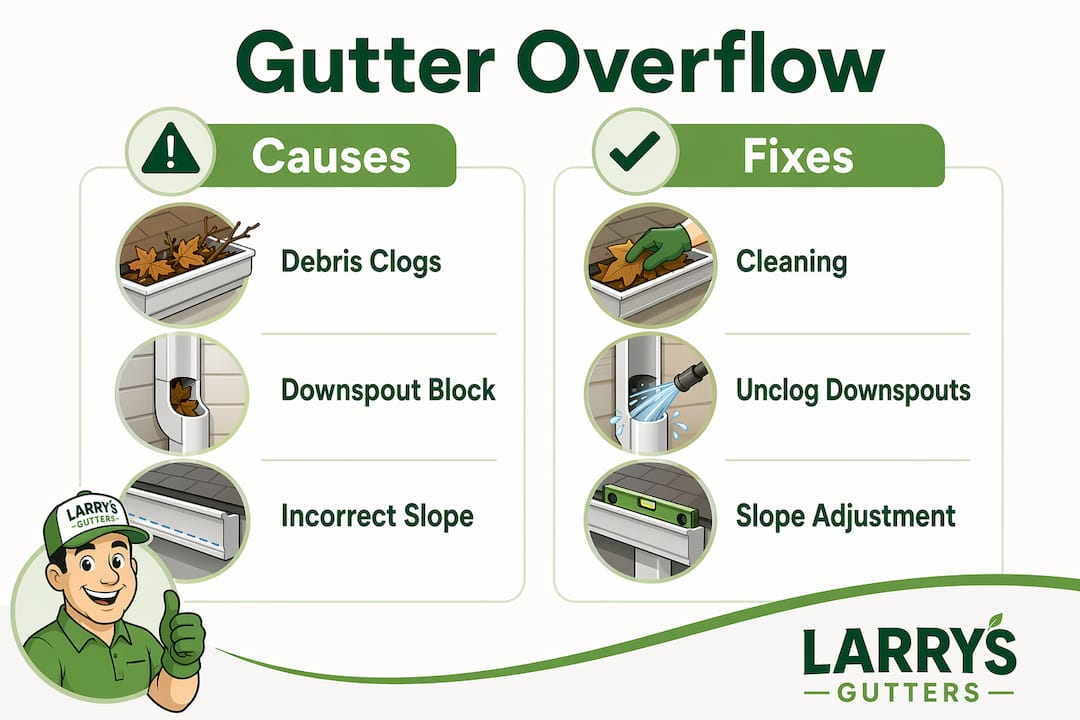
Gutter overflow is defined as the condition where water spills over the edges of a gutter trough instead of flowing through the system and exiting at the downspout. Knowing how to prevent gutter overflow protects your foundation, siding, and landscaping from serious water damage. The three main causes are debris clogs, improper gutter slope, and blocked or undersized downspouts. Each cause has a specific fix, and Central Florida homeowners face all three year-round thanks to heavy summer rain, pine trees, and oak canopy. This guide covers every practical step, from cleaning schedules to system upgrades, so you can stop overflow before it starts.
What are the primary causes of gutter overflow?
Debris clogging is the number one cause of gutter overflow, accounting for roughly 80% of overflow calls in Central Florida. Leaves, pine needles, twigs, shingle granules, and bird nests block water flow to the downspout, causing backup and spillage over the front edge. Central Florida’s live oaks and longleaf pines shed constantly, which means clogs build faster here than in most other regions.
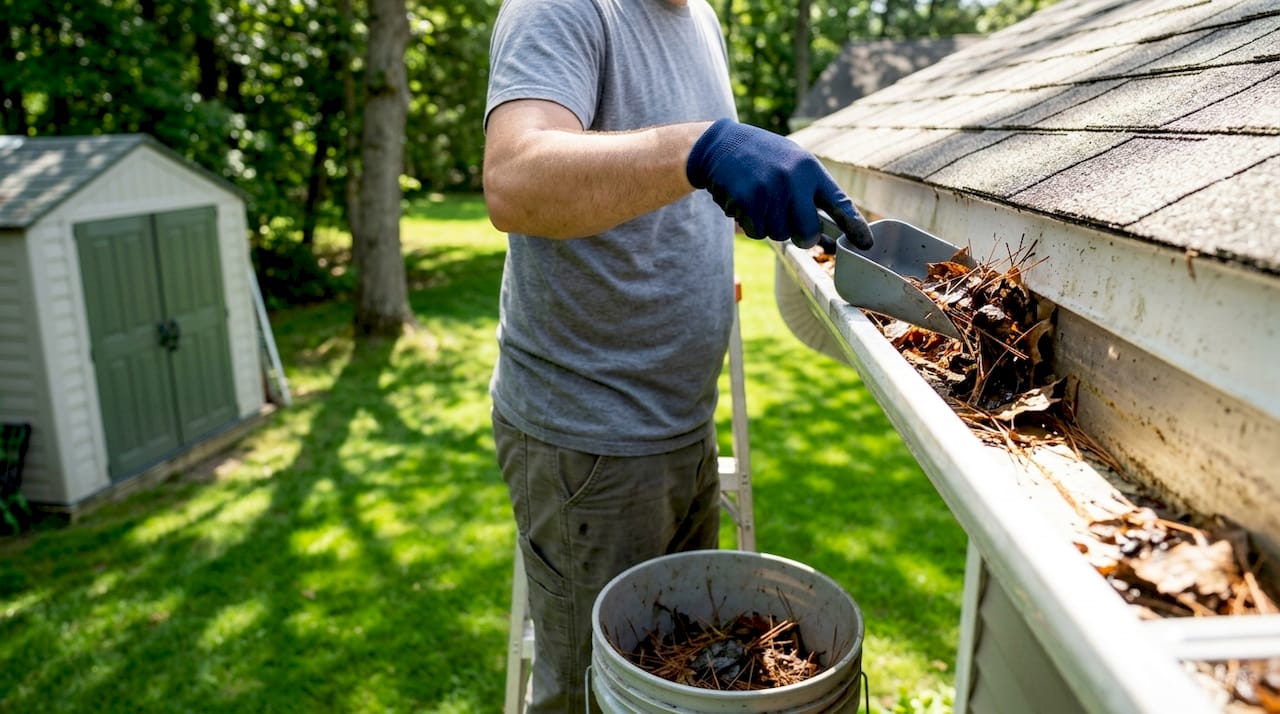
Overflow location tells you which problem you are dealing with. Water spilling over the front of the gutter usually signals a clog in the trough. Water spilling at the end of a run, near a corner, or right above a downspout points to a slope or downspout problem. Diagnosing by location saves you from fixing the wrong thing.
The table below maps each cause to its visible symptom and the correct fix:
| Cause | Visible symptom | Fix |
|---|---|---|
| Debris clog in trough | Overflow along full gutter length | Clean trough and flush with hose |
| Improper slope or sag | Pooling water, overflow at low spot | Re-hang or re-pitch gutter section |
| Blocked downspout | Overflow near downspout inlet | Clear downspout, check outlet and elbows |
| Undersized downspout | Slow drip at base during heavy rain | Add downspout or upsize existing one |
| Sagging gutter section | Fill-and-spill cycle at sag point | Repair hangers, re-hang section |
Sagging gutters reduce effective depth, creating a fill-and-spill cycle where water pools at the low point and spills before reaching the downspout. Standing water accelerates the sag, making the problem worse over time. Catching a sag early costs far less than replacing a section that has pulled away from the fascia.
Key causes to watch for in Central Florida:
- Debris buildup: Leaves, pine needles, and nests block flow to the downspout.
- Poor slope: Gutters pitched too flat allow water to pool and spill.
- Blocked downspouts: Clogs at the outlet hole or first elbow restrict exit flow.
- Undersized capacity: One downspout serving too long a run cannot drain fast enough.
- Sagging sections: Low spots trap water and trigger overflow before the downspout is reached.
How to maintain gutters to prevent overflow
Homeowners should clean gutters at least twice per year, ideally in spring and fall. In Central Florida, where oak pollen drops in march and pine needles fall year-round, cleaning 3–4 times annually is the more realistic standard. Skipping a cleaning cycle in a heavy-canopy yard is the fastest way to create a clog that causes overflow during the next afternoon thunderstorm.
Follow these steps for a thorough cleaning:
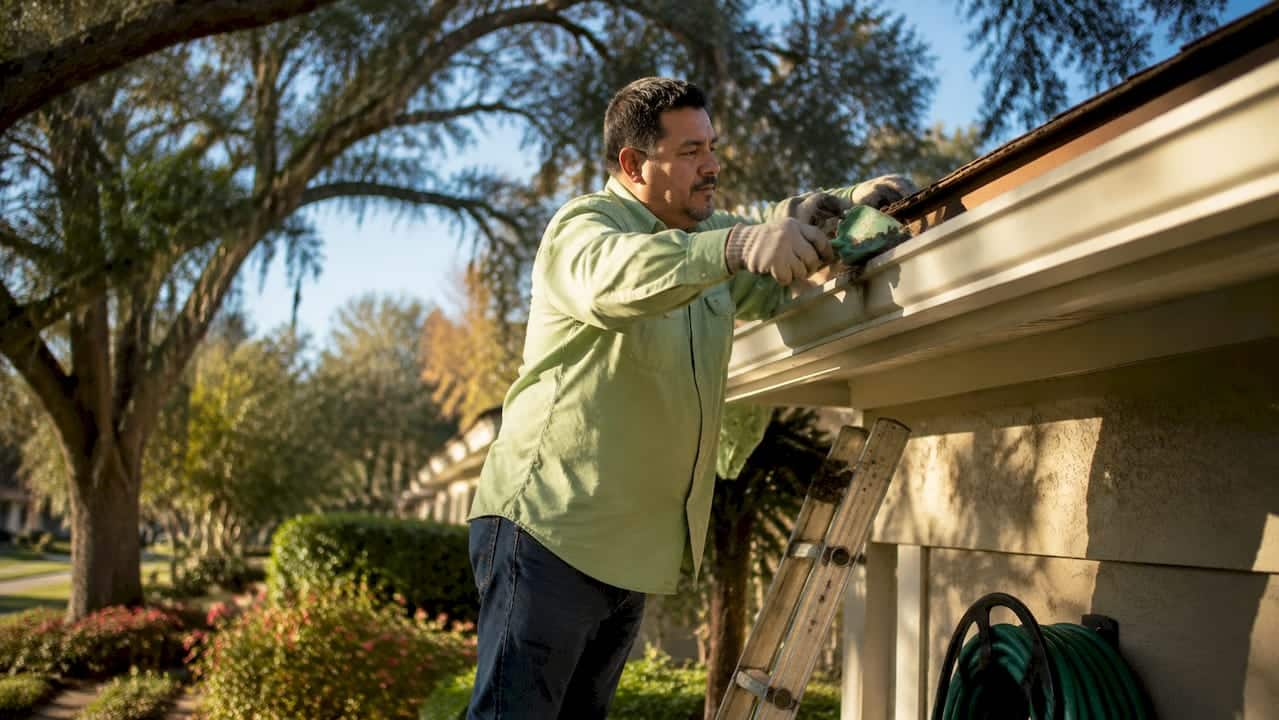
- Set up your ladder safely. Use a fiberglass ladder with standoff arms to keep weight off the gutter. Never lean a ladder directly against the gutter trough.
- Remove loose debris by hand. Wear rubber-coated gloves and use a gutter scoop or small plastic trowel to pull out leaves and compacted material. Work from the closed end toward the downspout.
- Bag the debris. Drop material into a bucket hung from the ladder, not onto the roof or ground below where it can wash back in.
- Flush the trough with a garden hose. Start at the far end and push water toward the downspout. Watch for pooling, which signals a slope problem, and watch for slow drainage, which signals a downspout clog.
- Test the downspout. Run the hose directly into the downspout inlet. Water should exit the bottom within a few seconds. A slow trickle means a clog inside the pipe.
- Clear downspout clogs. Feed a plumber’s snake or a downspout cleaning attachment for a garden hose into the pipe from the top. Flush again to confirm flow is restored.
- Inspect hangers and end caps. Look for loose screws, pulled hangers, and cracked end caps while you are on the ladder. Fix small issues now before they become overflow problems later.
Pro Tip: Flush the downspout before you clean the trough. If the downspout is blocked, flushing the trough first just pushes debris into an already-clogged pipe and makes clearing it harder.
Gutter guards reduce debris entry but still require periodic rinsing and do not fully eliminate overflow risk. Micro-mesh guards perform best in Florida conditions because they block pine needles, which slip through most screen and reverse-curve designs. Even with guards installed, plan on rinsing them at least once per year and inspecting for shingle grit buildup at the mesh surface. You can review a full Florida maintenance checklist to stay on schedule.
How to check gutter slope and downspout flow
Gutters should be pitched approximately 1/16 inch per foot toward the downspout. That works out to roughly 1/4 inch of drop for every 10 feet of gutter run. A gutter that runs 40 feet should drop about 1 inch from the high end to the downspout. Too little slope causes pooling. Too much slope causes water to rush past the downspout opening before it can drain.
Checking slope is straightforward:
- Use a 4-foot level. Hold it against the bottom of the gutter and measure the gap at the downspout end. You want to see a slight downward angle, not a perfectly level reading.
- Look for standing water after rain. Any water sitting in the trough 30 minutes after rain stops signals a flat or reversed section.
- Check for visible sags. Walk the roofline and look for sections that bow downward. These are guaranteed overflow points during heavy rain.
- Re-hang sagging sections. Replace bent or pulled hangers with new spikes or hidden-bracket hangers. Space them no more than 24 inches apart in Florida, where heavy rain loads are frequent.
Blocked or undersized downspouts cause overflow even when the trough is clean. The telltale sign is a gutter that overflows during rain while the downspout produces only a trickle at the bottom. Flush the downspout with a hose during dry weather to confirm unobstructed flow before the next storm season.
Hidden choke points at the outlet hole and first elbow are the most common unseen restrictions. Pine needles and shingle grit pack tightly at these points and cut flow dramatically. Remove the elbow at the base of the downspout and flush from the bottom up to clear these spots. Reinstall the elbow and test again.
Pro Tip: Add a downspout extension that directs water at least 4 feet away from your foundation. Florida’s sandy soil drains quickly, but concentrated discharge right at the wall still saturates the soil and can cause foundation settling over time.
An ideal system includes one downspout per 20–30 feet of gutter run. If your home has a 60-foot gutter section with only one downspout at one end, adding a second in the middle cuts the water volume each downspout must handle in half. That single addition often eliminates overflow on long runs without any other changes. For a step-by-step breakdown, the downspout installation guide at Larrysgutters covers sizing and placement in detail.
What additional upgrades reduce gutter overflow risk?
Beyond cleaning and slope correction, several upgrades give your system more capacity and resilience. The comparison below covers the most common options Central Florida homeowners use:
| Upgrade | Best for | Limitation |
|---|---|---|
| Micro-mesh gutter guards | Homes with heavy pine needle drop | Still need annual rinsing; higher upfront cost |
| Extra downspouts | Long gutter runs over 30 feet | Requires cutting trough and adding outlet |
| Larger 6-inch gutters | High-pitch roofs with large drainage area | More expensive than standard 5-inch gutters |
| Splash guards at corners | Inside corners that collect debris | Does not fix underlying slope or clog issues |
| Downspout extensions | Foundation protection | Must be kept clear of lawn equipment |
Upgrading from 5-inch to 6-inch gutters makes a measurable difference on steep-pitch roofs. A steeper roof sheds water faster and concentrates more volume into the gutter in a shorter time. Standard 5-inch gutters cannot always keep up during Florida’s intense afternoon storms, which can drop several inches of rain in under an hour.
Landscaping choices also affect overflow risk. Trimming tree branches that hang directly over the roofline reduces the volume of debris entering the gutter. Replacing mulch beds near the foundation with gravel or river rock slows water runoff and reduces splash-back erosion at the base of the downspout. These are low-cost changes with real long-term impact. For homeowners weighing guard options, Larrysgutters has a detailed breakdown of gutter guard types for Florida that covers performance differences by material and design.
A professional inspection is worth scheduling when you notice recurring overflow after cleaning, visible fascia rot, or gutters pulling away from the roofline. These signs point to structural issues that DIY cleaning cannot fix. A trained eye can also spot undersized capacity problems that are not obvious from the ground.
Key Takeaways
Preventing gutter overflow requires combining regular cleaning, correct slope, adequate downspout capacity, and targeted upgrades suited to Central Florida’s rainfall and tree coverage.
| Point | Details |
|---|---|
| Debris is the top cause | Clean gutters 3–4 times per year in Central Florida to prevent clog-driven overflow. |
| Slope drives drainage | Maintain 1/4 inch of drop per 10 feet of gutter run to keep water moving toward the downspout. |
| Downspouts need verification | Flush downspouts separately to confirm flow at the outlet hole and first elbow. |
| Capacity must match roof area | Add a downspout for every 20–30 feet of gutter run on long sections. |
| Guards help but do not replace maintenance | Micro-mesh guards reduce debris entry but still require annual rinsing to stay effective. |
What I have learned after years of watching Florida gutters fail
The most common mistake I see Central Florida homeowners make is treating gutter overflow as a single problem with a single fix. They clean the trough, declare victory, and then call back two months later because the overflow is back. The real issue is almost always layered: a partial clog in the trough, a choke point at the first elbow, and a gutter that has sagged half an inch at the midpoint. Fix only one of those and the other two keep the problem alive.
The second mistake is waiting for visible damage before acting. By the time you see staining on your siding or soft spots in your fascia board, water has been sitting where it should not for months. A proactive maintenance routine costs a fraction of what fascia replacement or foundation repair runs.
My honest recommendation for Central Florida homeowners is to treat gutter maintenance like an oil change. Set a calendar reminder for march, june, september, and december. Each check takes less than an hour if you stay on schedule. Skip two cycles and you are looking at a half-day job and a potential repair bill. The layered approach of guards plus scheduled cleaning plus flow verification is the most reliable defense against overflow in a high-rainfall zone. Know your limits, too. If you are not comfortable on a ladder or if your roofline is steep, call a professional. The cost of a cleaning visit is always less than the cost of a fall.
— Results
Larrysgutters can protect your home from overflow damage
Central Florida homeowners deal with some of the most demanding gutter conditions in the country. Heavy summer storms, year-round debris, and high humidity accelerate every gutter problem from clogs to sagging to fascia rot.

Larry’s Gutters specializes in residential gutter solutions across Central Florida, including seamless gutter installation, gutter guard installation for Florida homes, and professional cleaning and repair. Whether your system needs a downspout added, a slope correction, or a full replacement, the team at Larrysgutters can assess your home and recommend the right fix. Request a free quote today and get a system built to handle whatever Florida’s weather delivers.
FAQ
What is the most common cause of gutter overflow?
Debris clogging causes roughly 80% of gutter overflow calls in Central Florida. Leaves, pine needles, and shingle granules block water flow to the downspout, causing backup and spillage.
How often should I clean my gutters in Florida?
Clean gutters at least 3–4 times per year in Central Florida due to year-round tree debris and heavy seasonal rainfall. Spring and fall are the minimum; add summer and winter checks for homes under heavy tree canopy.
How do I know if my downspout is blocked?
A blocked downspout produces only a trickle at the base while the gutter overflows during rain. Flush the downspout with a garden hose during dry weather to confirm whether the outlet and elbows are clear.
Do gutter guards prevent overflow?
Gutter guards reduce debris entry but do not fully eliminate overflow risk. They still require periodic rinsing and work best when combined with a regular maintenance schedule.
What is the correct slope for gutters?
The industry standard is approximately 1/4 inch of drop per 10 feet of gutter run toward the downspout. A gutter that is too flat allows water to pool and spill before reaching the downspout outlet.
