
TL;DR:
- Homeowners often underestimate gutter project costs, which include materials, labor, removal, and maintenance. Budgeting 10 to 15% extra and obtaining multiple quotes helps prevent unexpected expenses and ensures proper planning. Properly sized, high-quality systems with added guards provide long-term durability and reduce ongoing maintenance costs.
Most homeowners have no idea what a gutter project actually costs until they’re already committed to one. Whether you’re replacing aging gutters or adding them to a new home, the price varies more than most people expect. This gutter project budgeting guide breaks down every cost you need to account for — materials, labor, removal, maintenance accessories, and the financial strategies that can save you hundreds. You’ll leave with a realistic number in your head and a clear process for getting there without overpaying.
Table of Contents
- Key takeaways
- Gutter project budgeting guide: the full cost breakdown
- How to plan gutter expenses step by step
- Budgeting for gutter maintenance and add-ons
- Financial strategies and options for gutter projects
- What I’ve learned after years of watching homeowners budget gutter projects
- Let Larrysgutters help you budget and build the right system
- FAQ
Key takeaways
| Point | Details |
|---|---|
| Total project costs vary widely | New gutter installation typically runs $2,000 to $6,000 for an average home, depending on size and materials. |
| Removal adds to replacement budgets | Replacing gutters costs more than new installs because removal and debris disposal add labor and fees. |
| Build in a contingency fund | Adding 10 to 15% on top of your estimate protects against unexpected costs and scope changes. |
| Maintenance has its own budget line | Gutter cleaning costs $119 to $234 per visit, so factor ongoing upkeep into your long-term budget. |
| Guards can lower lifetime costs | Micro-mesh gutter guards cost more upfront but reduce cleaning frequency and long-term expenses significantly. |
Gutter project budgeting guide: the full cost breakdown
The single biggest mistake homeowners make is budgeting only for materials. The real cost of a gutter project has three main components: materials, labor, and removal or disposal. Getting all three right is the foundation of any solid step by step gutter budgeting process.
Materials: what you’ll pay per linear foot
Gutter material is the most variable cost in your budget. Here’s a general range to anchor your expectations:
- Vinyl: $3 to $5 per linear foot. Budget-friendly but less durable in extreme heat or cold, which matters in Florida.
- Aluminum: $6 to $12 per linear foot. The most popular choice for residential projects. Handles humidity and rain well.
- Steel: $9 to $20 per linear foot. More durable than aluminum but prone to rust over time without proper coating.
- Copper: $25 to $40 or more per linear foot. Premium material with a long lifespan and distinct curb appeal.
For a gutter installation cost guide that actually works, use your home’s linear footage as the starting number. A typical single-story home might need 150 to 200 linear feet of guttering. Multiply that by your chosen material’s cost per foot to get a rough materials estimate before adding anything else.
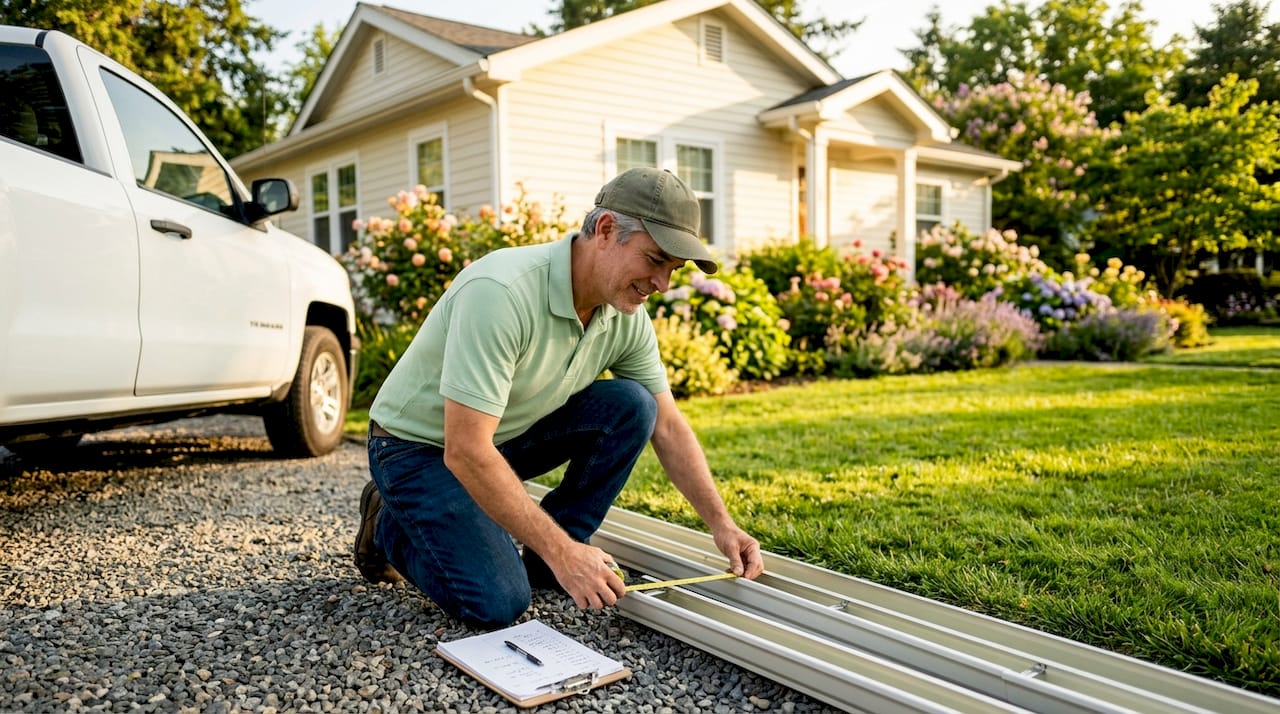
Labor: the cost most homeowners underestimate
Labor charges average $2 to $4 per linear foot, which translates to $600 to $1,200 for labor alone on a standard home. However, that range shifts quickly based on your home’s height, roof pitch, and the number of corners or downspouts involved. Multi-story homes or properties with complex rooflines push labor costs toward the top of that range or beyond it.
Pro Tip: Ask each contractor to break their quote into materials and labor separately. This makes comparison shopping much easier and reveals which contractors are padding one line or the other.
Removal and disposal: the hidden budget item
If you’re replacing existing gutters rather than installing on a new build, removal adds $1 to $2 per square foot plus $150 to $350 for debris disposal. That’s a real number that changes your total. A replacement project on a 1,500-square-foot home could carry $1,500 to $3,000 or more in removal costs alone before a single new piece of gutter is hung. Understanding construction debris removal pricing helps you verify whether a contractor’s disposal fee is reasonable or inflated.
| Cost category | Low estimate | High estimate |
|---|---|---|
| Materials (aluminum, 175 linear ft) | $1,050 | $2,100 |
| Labor (175 linear ft) | $350 | $700 |
| Removal and disposal | $150 | $700 |
| Contingency (10-15%) | $155 | $525 |
| Total estimate | $1,705 | $4,025 |
Replacing gutters costs more than installing on a new home specifically because of these added removal and disposal fees. Budget accordingly from the start.
How to plan gutter expenses step by step
Once you understand the cost categories, the next step is building your actual budget. Follow this process to avoid surprises.
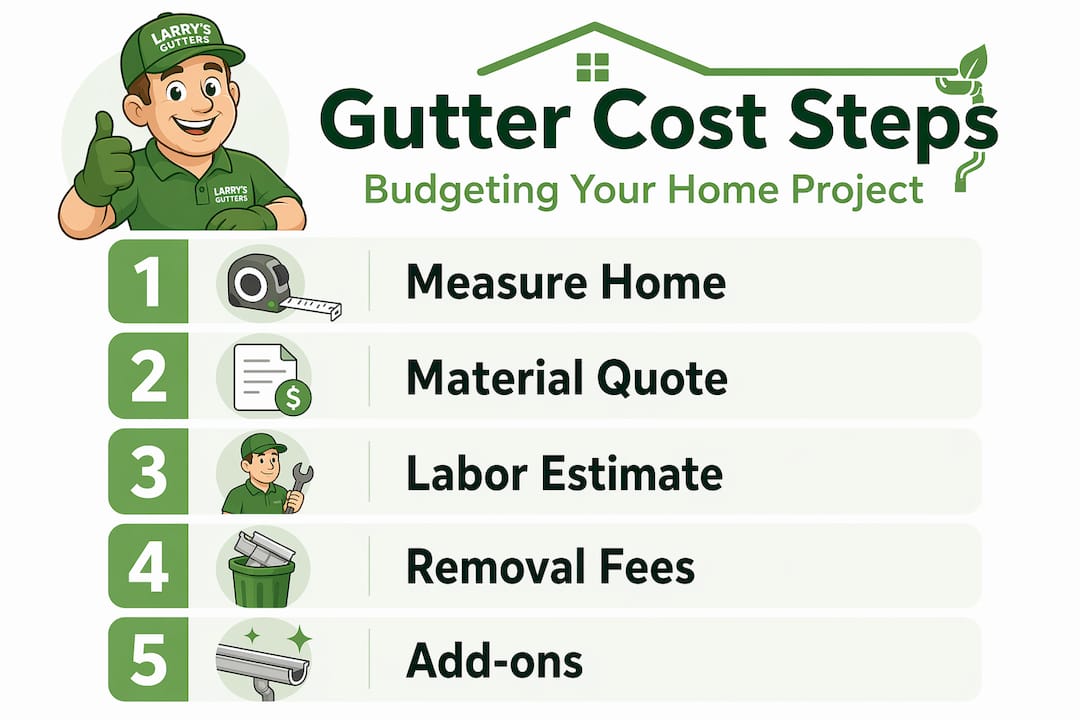
- Measure your home’s linear footage. Walk the perimeter and measure every roofline that will drain into a gutter. Count corners and mark downspout locations, since each downspout adds $50 to $100 to the total.
- Choose your material and get a cost per foot. Use the ranges above as a starting point, then ask for local quotes to get current pricing in your market. Florida’s humidity and heavy rainfall make aluminum and seamless gutters particularly worth considering for durability and leak resistance.
- Factor in labor based on your home’s characteristics. Single-story, straightforward homes land on the lower end of labor costs. Add square footage and height and you climb quickly.
- Include removal and disposal if replacing. Don’t skip this line. It’s one of the most common reasons gutter project budgets go over.
- Add a 10 to 15% contingency. A contingency buffer protects your budget against material price fluctuations, scope adjustments, or unexpected structural issues discovered during installation.
- Get at least three quotes. Never commit to the first number you receive. Quotes for identical gutter projects can vary by 20 to 40% depending on the contractor, so comparison shopping directly lowers your cost.
Pro Tip: Get all quotes within the same one to two week window so you’re comparing prices under similar material cost conditions. Prices shift, and a quote from two months ago may no longer reflect current labor or material rates.
Budgeting for gutter maintenance and add-ons
A gutter project doesn’t end the day installation finishes. Your guide to gutter maintenance budgeting starts with cleaning costs because they’re the most frequent ongoing expense.
Gutter cleaning costs $119 to $234 per visit, with professionals charging roughly $0.95 to $2.25 per linear foot. Most homes need cleaning twice a year, though properties near heavy tree coverage in Florida may need three or four visits annually. That’s a recurring line item of $240 to $940 per year depending on your home and location.
Gutter guards: worth the upfront cost?
Gutter guards are the most common add-on homeowners consider, and they directly affect your long-term maintenance budget. Here’s what you need to know:
- Professional gutter guard installation costs $3 to $30 per linear foot, with full home installations ranging from $1,500 to $5,000 professionally installed.
- Micro-mesh guards cost the most upfront but last 20 to 30 years. They’re worth comparing against foam guards, which last only 3 to 5 years before needing replacement.
- Foam guards seem cheap until you factor in replacement cycles. Over a 15-year period, you may replace them three times at a higher total cost than a single micro-mesh installation.
- Longer-lasting gutter guards reduce lifetime costs despite higher upfront prices. The math almost always favors quality over budget options.
If you’re already planning a gutter installation, this is the time to add guards. Installing guards with new gutters saves up to 15% because the crew and equipment are already on-site. Scheduling a standalone guard installation later means paying for a full mobilization again.
For budgeting for gutter repair over your gutter system’s lifetime, set aside $100 to $300 per year as a repair reserve. Joints can separate, downspouts can clog or pull away from fascia, and brackets loosen. Having a repair budget means you address these things immediately rather than letting them cause water damage to your foundation or siding.
Financial strategies and options for gutter projects
Knowing the costs is only half the equation. How you pay for the project and how you approach contractor selection will significantly affect what you spend.
DIY vs. professional installation
DIY installation can save 60 to 70% of labor costs, which sounds compelling. But the calculus includes renting or buying safety equipment, the time investment, and the risk of installation errors that can void material warranties. A poorly hung gutter that pulls away from the fascia after one rainy season costs more to repair than it saved in labor. Most homeowners without direct construction experience will find that professional installation pays for itself in durability and warranty coverage.
Professional gutter guard installation significantly reduces risks and often maintains warranty coverage, which DIY approaches might void. [roofquotes.com]
Money-saving strategies that actually work
- Time your project in the off-season. Late fall and winter are slower periods for gutter contractors in most markets. Contractors are more likely to negotiate or offer discounts to keep crews working.
- Bundle projects when possible. Coordinating gutter guard installation with roof work saves 10 to 15% by eliminating duplicate mobilization costs. If a roofer is already on your home, that’s the right moment to add gutters.
- Prioritize quality on high-impact materials. You can save money by choosing standard aluminum over copper, but don’t cut corners on hangers, brackets, or downspout sizing. These are the components that fail first.
Financing options worth considering
If your project cost exceeds what you can comfortably pay out of pocket, you have a few practical options. A home equity loan or home equity line of credit typically offers lower interest rates than personal loans because your home secures the debt. Personal loans are faster to access and don’t require equity, but interest rates are higher. Some gutter contractors offer financing directly, so ask when getting quotes. Comparing the total cost of financing against the cost of delaying the project is important. A leaking or missing gutter causes foundation damage, erosion, and basement flooding that costs far more than the gutter project itself.
For a deeper look at how Florida homeowners can plan smarter gutter upgrades and budget them effectively, that resource walks through several scenarios specific to the region’s rainfall patterns and home styles.
What I’ve learned after years of watching homeowners budget gutter projects
I’ve seen hundreds of homeowners go through this process, and the ones who end up frustrated share one common trait. They got a single quote, ignored removal costs, and built their budget on the assumption that nothing unexpected would happen.
The removal cost surprise alone derails more gutter project budgets than any other single factor. Most homeowners genuinely don’t know that replacing gutters costs significantly more than installing them on a new structure, and no one tells them until the estimate arrives.
My honest recommendation is this: start your budget higher than you think is necessary. If your material estimate comes to $1,800, your working budget should be $2,200 to $2,500 before you get your first quote. You’ll feel a lot better negotiating from a position of financial cushion than scrambling when the real number shows up.
The other thing I’d push back on is the impulse to pick the lowest quote automatically. I’ve watched homeowners save $300 on installation and then spend $600 fixing problems the following year. The middle quote from a licensed, insured contractor with reviews you can verify is almost always the better spend. And if you’re in Central Florida where afternoon downpours are a daily reality in summer, a gutter system that handles serious water volume isn’t optional. It’s what protects the rest of your home.
— Larrysgutters
Let Larrysgutters help you budget and build the right system
Planning a gutter project in Central Florida is different from planning one anywhere else. The rainfall volume, humidity, and home styles here demand systems that are properly sized, properly hung, and built from materials that hold up year after year.

Larry’s Gutters specializes in seamless gutter installation custom-fit to your home, which means fewer joints, fewer leaks, and lower long-term maintenance costs. Seamless gutters are one of the most cost-effective choices for Florida homeowners who want durability without overspending. The team also handles professional gutter guard installation using high-quality materials that match your home’s specific debris and rainfall conditions. And every project starts with a free estimate so you know exactly what you’re working with before committing to a single dollar. Reach out to Larrysgutters today for a no-obligation quote and a clear picture of what your project will actually cost.
FAQ
How much does a gutter project cost on average?
Installing or replacing gutters costs $2,000 to $6,000 for an average home, including materials and labor. Replacement projects cost more due to removal and debris disposal fees.
What is the cost per linear foot for gutter installation?
Material costs range from $3 to $40 per linear foot depending on the material, while labor adds $2 to $4 per linear foot on top of that. Total installed cost for standard aluminum typically falls between $8 and $16 per linear foot.
How often should I budget for gutter cleaning?
Most homes need gutter cleaning twice per year, at a cost of $119 to $234 per visit. Homes near heavy tree coverage may need three to four cleanings annually.
Are gutter guards worth the extra cost?
Yes, particularly micro-mesh guards that last 20 to 30 years. Although they cost more upfront, they reduce cleaning frequency and long-term maintenance expenses compared to cheaper foam alternatives that wear out in 3 to 5 years.
How much should I add for contingency in my gutter budget?
Budget an extra 10 to 15% above your total estimate to cover unexpected costs like material price increases, added complexity, or structural repairs discovered during installation.
