
TL;DR:
- Regular annual gutter inspections prevent costly water damage, foundation issues, and roof leaks that often go unnoticed.
- Professionals assess gutter pitch, condition, and drainage systems systematically, documenting findings for maintenance and insurance purposes.
Annual gutter inspection is a routine assessment of your gutter system’s condition, pitch, and drainage to prevent water damage before it starts. Homeowners who skip this check risk rotting fascia boards, foundation instability, and roof leaks that cost far more to fix than a simple yearly inspection. Industry standards recommend at least twice a year, with extra checks after major storms. Understanding why inspect gutters annually comes down to one fact: water damage is silent, progressive, and expensive. Catching problems early is always cheaper than repairing the consequences.
Why inspect gutters annually to prevent serious damage
Neglecting gutter maintenance causes structural damage including rotting fascia boards, soffit deterioration, and foundation instability from water that pools where it should not. These are not cosmetic issues. They are expensive structural failures that start with a clogged or misaligned gutter.
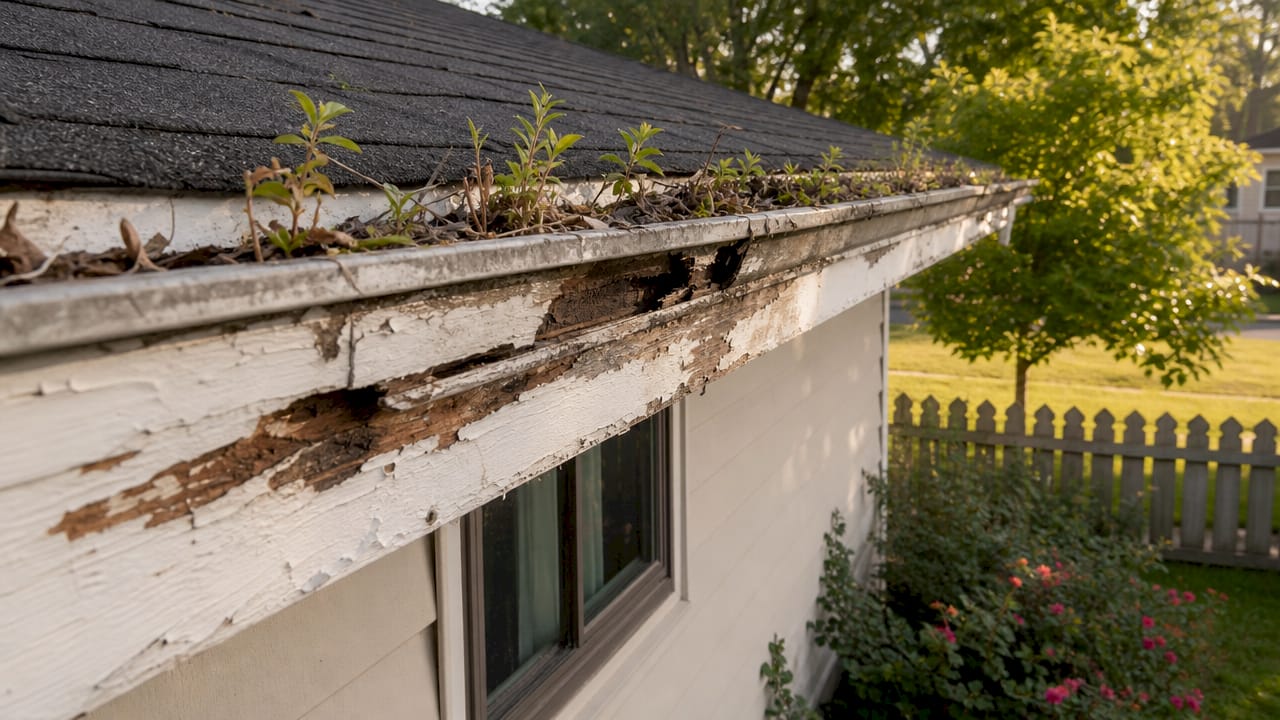
The cost gap between prevention and repair is significant. Regular maintenance costs far less than roof, fascia, or foundation repairs. A professional inspection typically costs a fraction of what a homeowner pays to replace rotted wood or stabilize a shifting foundation.
Water overflow from blocked gutters also creates interior damage. When gutters back up, water finds its way under roofing materials, into attic spaces, and down interior walls. By the time a homeowner notices a stain on the ceiling, the damage behind the wall has usually been building for months.
Here are the most common problems that routine inspections catch before they escalate:
- Fascia and soffit rot from water spilling over clogged gutters
- Foundation cracks caused by water pooling at the base of the home
- Roof leaks from water backing up under shingles
- Basement flooding from downspouts that discharge too close to the foundation
- Mold and mildew growth inside walls from prolonged moisture exposure
Pro Tip: Check the ground directly below your gutters after a heavy rain. Erosion channels or muddy streaks in the soil are a clear sign your gutters are overflowing and need immediate attention.
Ignoring visible symptoms like staining, peeling paint, or vegetation growing in gutters often results in costly structural repairs. These signs are final warnings, not minor cosmetic flaws.
How are professional gutter inspections conducted?
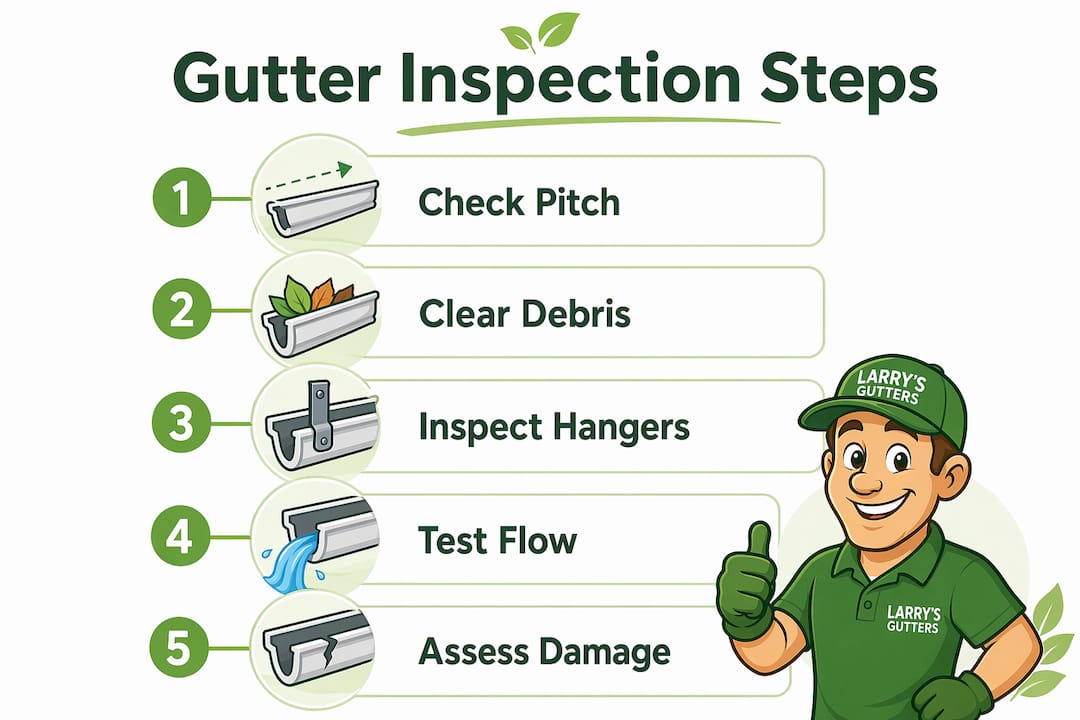
A professional gutter inspection goes well beyond removing leaves. It is a systematic evaluation of every component in your drainage system. Professional inspections assess gutter pitch, structural integrity, and downspout function, often with photo or drone documentation to create a maintenance record.
The inspection process typically follows these steps:
- Check gutter pitch and slope. Gutters must slope toward downspouts at the correct angle. A clean gutter with incorrect pitch still causes water damage because water pools instead of draining. Incorrect pitch is one of the most common silent failures inspectors find.
- Inspect for rust, cracks, and sagging. Inspectors look for physical damage along the gutter channel, including separated seams, rust spots, and sections pulling away from the fascia.
- Examine hangers and fasteners. Routine inspections include checking hangers and seams to confirm the system is securely attached and not at risk of collapse under a heavy rain load.
- Clear and test downspouts. Inspectors flush downspouts to confirm water flows freely and discharges at a safe distance from the foundation.
- Document findings with photos. Photographic records create a maintenance history that supports insurance claims and provides evidence of upkeep during a home sale.
| Inspection Component | What It Checks | Why It Matters |
|---|---|---|
| Gutter pitch and slope | Angle toward downspouts | Prevents water pooling and overflow |
| Physical condition | Rust, cracks, sagging sections | Identifies structural failure points |
| Hangers and fasteners | Attachment to fascia board | Prevents gutter collapse under load |
| Downspout flow | Blockages and discharge distance | Protects foundation from water intrusion |
| Photo documentation | Visual record of condition | Supports insurance claims and resale value |
Documented inspections help homeowners avoid denied insurance claims and maintain property value. Insurers and home buyers both respond better to a clear maintenance history than to a homeowner’s verbal assurance that “everything was fine.”
How often should gutters be inspected throughout the year?
The standard recommendation is at least twice a year, in late spring and late fall. Spring checks catch debris from winter and prepare the system for summer storms. Fall checks clear leaves before winter rains arrive.
Homes with dense tree cover or exposure to harsh weather need more frequent attention. Properties in those conditions benefit from 3–4 inspections per year. Florida homeowners face a specific challenge: the state’s heavy summer rainfall and hurricane season create conditions that can overwhelm a gutter system that looked fine in april.
Post-storm inspections are non-negotiable. A single major storm can shift gutters off their pitch, crack seams, or pack downspouts with debris. Waiting until the next scheduled inspection after a significant weather event is a common and costly mistake.
Cleaning and inspection are related but not the same task. Cleaning removes debris. Inspection evaluates whether the system is functioning correctly. You can have clean gutters that still fail because of a pitch problem, a loose hanger, or a downspout that discharges too close to the foundation. Both tasks are necessary, and neither replaces the other.
Here is a quick reference for inspection frequency based on your home’s situation:
- Twice a year (minimum): All homes, regardless of tree cover or climate
- 3–4 times a year: Homes surrounded by pine trees, oaks, or other heavy-shedding trees
- After every major storm: Homes in hurricane zones, high-wind areas, or regions with heavy seasonal rainfall
- At least once a year for guarded systems: Gutter guards still require inspection because fine debris like pine needles and pollen accumulates beneath guards and creates hidden blockages
Pro Tip: Schedule your fall inspection for late november, after most leaves have dropped but before the first hard freeze or heavy winter rain. This timing gives you the clearest picture of what your gutters are carrying into the wet season.
What practical tips help homeowners get the most from gutter inspections?
The gutter maintenance checklist for Florida homeowners starts with one principle: do not wait for visible damage to act. By the time gutters show obvious signs of failure, the underlying damage has usually already begun.
Homeowners can take several steps between professional inspections to catch problems early:
- Watch for overflow during rain. Stand outside during a moderate rainstorm and watch where water goes. Overflow at any point along the gutter line signals a blockage or pitch problem.
- Look for stains on the fascia or siding. Dark streaks running down the exterior of your home below the gutter line indicate water is escaping where it should not be.
- Check for sagging sections. Gutters that visibly sag between hangers are carrying standing water or have lost their fasteners. Both conditions require immediate attention.
- Monitor the soil around your foundation. Erosion or persistent wet spots near the base of your home after rain suggest downspout discharge is too close or a gutter is overflowing.
- Keep records of every inspection. Home inspectors treat gutter failure signs as indicators for broader roof and foundation inspections. A documented maintenance history protects your home’s resale value and reduces friction during real estate transactions.
Safety matters when homeowners perform their own visual checks. Use a stable ladder on level ground, never lean a ladder against the gutter itself, and avoid inspecting gutters during or immediately after rain when surfaces are slippery. For anything beyond a ground-level visual check, hire a professional. The cost of ignoring a leaky roof and related gutter failures far exceeds the cost of a professional visit.
Gutter guards reduce the volume of debris entering your system, but they do not eliminate the need for annual inspection. Fine particles accumulate beneath guards and create flow-blocking mats that are invisible from the ground. Even a guarded system needs a professional eye at least once a year.
Key Takeaways
Annual gutter inspections protect your home’s foundation, roof, and fascia by catching drainage failures before water damage becomes a structural repair.
| Point | Details |
|---|---|
| Inspect at least twice a year | Schedule checks in late spring and late fall, plus after every major storm. |
| Inspection differs from cleaning | Cleaning removes debris; inspection verifies pitch, hangers, and downspout function. |
| Gutter guards still need inspection | Fine debris accumulates beneath guards and creates hidden blockages annually. |
| Document every inspection | Maintenance records support insurance claims and protect home resale value. |
| Act on early warning signs | Stains, sagging, and overflow are final warnings before costly structural damage. |
The silent damage most homeowners miss
The biggest risk with gutters is silence. A malfunctioning gutter system often goes completely unnoticed until the damage is already expensive. I have seen homeowners who kept their gutters visibly clean for years, only to discover rotted fascia boards and a cracked foundation because the pitch was wrong the entire time. Clean gutters are not the same as functional gutters.
The conventional wisdom is to clean gutters twice a year and call it done. That misses the point. Cleaning is maintenance. Inspection is diagnosis. You need both, and most homeowners only do one. The annual gutter inspection steps that professionals follow are designed to catch what cleaning alone never reveals: pitch problems, failing hangers, and downspout discharge that directs water straight toward your foundation.
Gutters are your home’s first line of defense against water intrusion. They are also the most neglected system in the average house. Homeowners spend thousands on interior renovations and ignore the one system that keeps water out of the structure entirely. A documented, professional inspection once or twice a year is one of the highest-return maintenance decisions a homeowner can make. The cost is low. The protection is real.
— Larrysgutters
Professional gutter care from Larrysgutters
Larry’s Gutters specializes in residential gutter solutions across Central Florida, where heavy summer rainfall and hurricane season put real pressure on every home’s drainage system. A professional inspection from Larrysgutters covers pitch assessment, hanger and seam integrity, downspout function, and photo documentation you can keep for insurance and resale purposes.

If your gutters are aging, showing signs of sagging, or have never been professionally assessed, this is the right time to act. Larry’s Gutters also installs seamless gutter systems that reduce leak points and require less maintenance over time. For homeowners who want to reduce debris buildup between inspections, the team handles gutter guard installation as well. Contact Larrysgutters directly for a free quote and find out what a thorough inspection can protect.
FAQ
How often should I inspect my gutters?
Inspect gutters at least twice a year, in late spring and late fall, plus after any major storm. Homes with heavy tree cover benefit from 3–4 inspections per year.
What does a professional gutter inspection include?
A professional inspection checks gutter pitch, physical condition, hanger integrity, downspout flow, and discharge distance from the foundation. Many inspectors also provide photo documentation for your maintenance records.
Do gutter guards eliminate the need for annual inspections?
No. Gutter guards still require at least one annual inspection because fine debris like pollen and pine needles accumulates beneath the guards and creates hidden blockages over time.
What are the signs that gutters need immediate attention?
Sagging sections, dark stains on the fascia or siding, water overflowing during rain, and soil erosion near the foundation all indicate your gutters need professional assessment right away.
Can gutter problems affect my home’s resale value?
Yes. Home inspectors flag gutter failure signs as indicators for broader roof and foundation inspections, which can complicate or delay real estate transactions. A documented maintenance history helps protect your home’s value.
