TL;DR:
- Proper downspout maintenance prevents costly damage from Florida’s heavy rainfall.
- Use the right tools and follow a step-by-step process for effective cleaning.
- Regular inspections and professional help when needed ensure drainage remains unobstructed.
Central Florida homeowners know the feeling: a summer storm rolls in fast, drops three inches of rain in an hour, and suddenly water is sheeting off your roof and pooling right against your foundation. Nine times out of ten, a clogged downspout is the culprit. When downspouts back up, your entire gutter system fails, and the damage that follows, including foundation cracks, rotted siding, and mold growth inside your walls, can cost thousands to fix. This guide walks you through exactly how to clean your downspouts safely and effectively, so you stay ahead of Florida’s relentless rain before it becomes an expensive problem.
Table of Contents
- Why downspout maintenance matters for Florida homes
- Gather your downspout cleaning tools and supplies
- Step-by-step process: How to clean your downspouts
- How to ensure your downspout is truly clear
- A professional perspective on maintaining downspouts
- Get expert help or upgrade your gutter system
- Frequently asked questions
Key Takeaways
| Point | Details |
|---|---|
| Routine cleaning is vital | Regular downspout clearing protects your home from water damage and costly repairs. |
| Use the right tools | Having proper cleaning equipment and safety gear makes the job easier and safer. |
| Prevent underground clogs | Install drain guards to keep debris from entering underground pipes and causing backups. |
| Test after cleaning | Always flush your downspout to confirm water flows freely after every cleaning. |
Why downspout maintenance matters for Florida homes
Florida’s rainy season runs roughly from June through September, and Central Florida regularly sees more than 50 inches of rainfall per year. That volume of water moving through your gutters and downspouts is no small thing. When debris builds up inside a downspout, water has nowhere to go except back over the top of your gutters or straight down your exterior walls.
The most common culprits behind downspout clogs in Central Florida include:
- Oak leaves and pine needles that accumulate in gutters and wash down into the spout
- Roof grit from aging asphalt shingles, which compacts into a dense, muddy plug
- Seed pods and Spanish moss, both extremely common in Central Florida landscapes
- Dirt and pollen buildup, especially heavy during spring and fall seasons
Ignoring these clogs creates a chain reaction of damage. Water that cannot drain properly saturates the soil around your foundation, which leads to settling and cracking over time. It also soaks behind your siding and fascia boards, creating the perfect environment for mold and wood rot. Mosquitoes breed in standing water near your home’s base, adding yet another headache to the list.
Underground drainage systems add another layer of risk. Many Central Florida homes route downspouts directly into underground pipes that carry water away from the property. Clogs that reach underground drains can back up further, amplifying home water damage risks significantly.
Remember: Your downspout is the final exit point for all the water your roof collects. If that exit is blocked, every inch of rain becomes a direct threat to your home’s structure.
Following solid maintenance tips for your gutter system is the single best way to protect your investment. Pairing that with broader system maintenance advice ensures no part of your drainage setup gets overlooked.
Now that you understand why downspout cleaning is a must, let’s look at what you’ll need to get started.
Gather your downspout cleaning tools and supplies
Showing up to clean a downspout without the right tools is like trying to unclog a kitchen drain with a spoon. You need the right equipment to do the job safely and completely. The good news is that most of these items are affordable and easy to find at any hardware store.
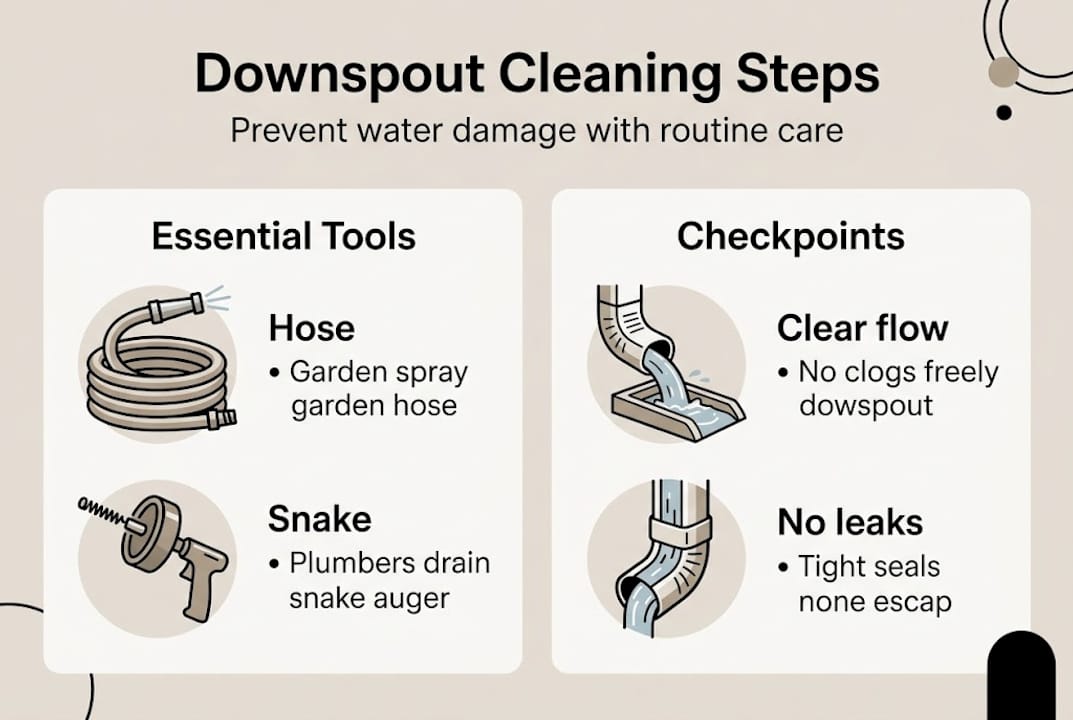
Essential tools for downspout cleaning:
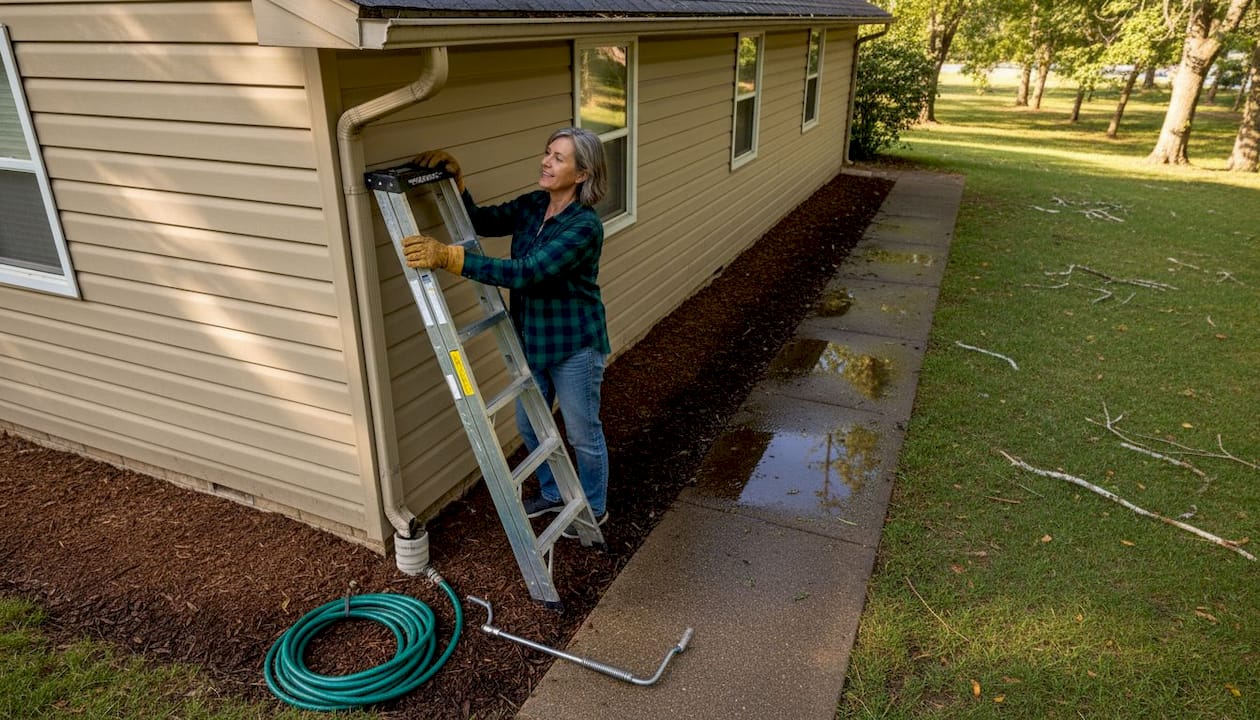
- Extension ladder rated for your roof height, with non-slip feet
- Heavy-duty rubber gloves to protect against sharp debris and bacteria
- Safety goggles to shield your eyes from debris flushed out under pressure
- Garden hose with a spray nozzle for flushing the downspout from the top
- Plumber’s snake (drain auger) for breaking up compacted clogs deep inside the spout
- Bucket or tarp to collect debris removed from the gutter before it enters the downspout
- Gutter scoop for clearing leaves and sediment from the gutter channel itself
Here’s a quick comparison of tool options based on your situation:
| Tool | Best for | Difficulty level |
|---|---|---|
| Garden hose with nozzle | Light to moderate clogs | Easy |
| Plumber’s snake | Stubborn or deep clogs | Moderate |
| Pressure washer | Heavy debris and roof grit | Moderate |
| Wet/dry vacuum | Dry leaf debris near top | Easy |
Tool quality matters more than most homeowners realize. A cheap ladder that wobbles or gloves that tear mid-job can turn a simple cleaning task into a safety incident. Invest in gear that holds up, especially if you plan to clean your gutters yourself every season.
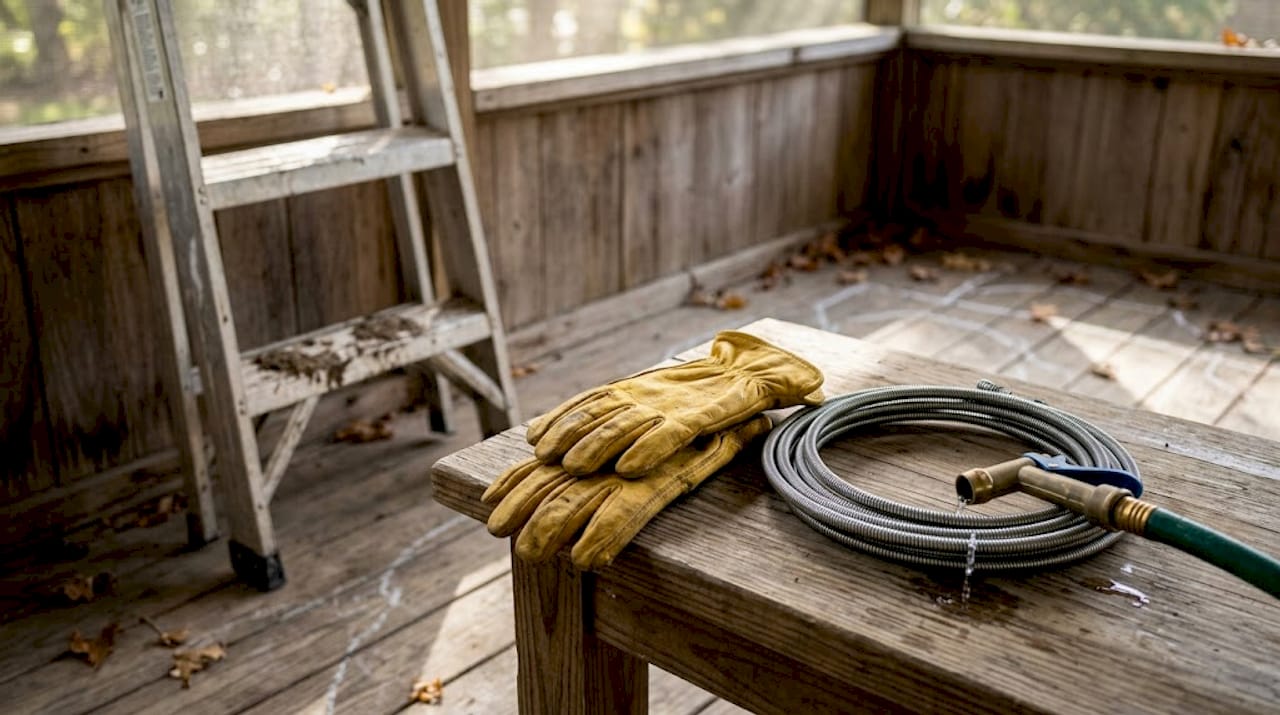
Pro Tip: Place a drain guard or strainer basket at the base of your downspout where it connects to any underground pipe. This one small addition dramatically reduces how often debris enters your underground drainage system.
For a full rundown of what to keep in your maintenance kit, check out this list of gutter cleaning tools recommended for homeowners. You can also review these cleaning safety tips before you climb that ladder.
With tools ready, you’re set to start. Next, we’ll cover the exact cleaning steps to tackle even stubborn downspout clogs.
Step-by-step process: How to clean your downspouts
This is where the work happens. Follow these steps in order and you’ll clear most downspout clogs in under an hour.
- Clear the gutter channel first. Before touching the downspout, scoop out all leaves, debris, and sediment from the gutter above it. Flushing a downspout while the gutter is still full of debris just pushes more material into the spout.
- Inspect the downspout opening at the top. Look inside the opening where the gutter meets the downspout. If you can see a visible clog, remove it by hand using your gloves.
- Check the bottom outlet. Look at the bottom of the downspout where water exits. A clog near the base is often easier to remove from the bottom up using your gloved hand or a tool.
- Flush with a garden hose from the top. Insert the hose into the top of the downspout and turn the water on full. Watch the bottom for steady flow. If water backs up out of the top, you have a clog that needs more attention.
- Use a plumber’s snake for stubborn clogs. Feed the snake down from the top, rotating it as you push to break up compacted debris. Pull it back slowly and remove the loosened material.
- Flush again to confirm clearance. Run the hose through the downspout one more time. Water should flow freely and exit at the bottom without backing up.
- Install a drain guard at the base. Drain guards below downspouts help prevent debris from entering underground piping, minimizing the frequency of major cleaning sessions.
Pro Tip: If your downspout connects to an underground drain, flush slowly at first. Rushing water into a partially blocked underground pipe can force debris deeper, making the clog harder to clear.
For more detailed DIY cleaning advice tailored to Florida conditions, including tips for two-story homes and corner downspouts, that resource is worth bookmarking.
| Downspout type | Extra steps needed | Risk level |
|---|---|---|
| Standard surface outlet | Basic flush and snake | Low |
| Underground-connected | Slow flush, drain guard required | Moderate to high |
Once you’ve completed the cleaning, it’s important to check your work and avoid errors that could undo your efforts.
How to ensure your downspout is truly clear
Cleaning a downspout is only half the job. Verifying that it actually drains properly is what separates a quick fix from a lasting solution.
Here’s how to confirm your downspout is fully clear:
- Run a full hose test. Use your garden hose at maximum flow for at least 60 seconds. Watch both the top opening and the bottom outlet. Water should exit cleanly at the bottom without any backup at the top.
- Check the ground around the outlet. Water should flow away from your foundation, not pool near it. If it pools, your downspout extension or underground drain may still be partially blocked.
- Look for drips or seepage along the spout. Joints that leak under pressure may indicate a crack or loose connection that needs repair, not just cleaning.
- Observe during the next rain. The real test is always a live storm. Watch your gutters during the next rainfall to confirm water moves through without overflow.
If your downspout still drains slowly after all these steps, the blockage may be deeper in an underground pipe. Clogs that reach underground drains increase the risk of costly home repairs, and that’s when a professional inspection makes the most sense.
Common mistakes homeowners make after cleaning:
Forgetting to reinstall gutter guards or drain strainers, ignoring minor slow-flow issues that signal a partial clog, and skipping the post-rain observation check.
Two of the most expensive repairs homeowners face start as small, unnoticed drainage blockages that were never fully resolved. Catching them early costs almost nothing. Ignoring them can mean foundation work, mold remediation, or full fascia replacement.
Review this year-round maintenance guide to build a cleaning schedule that accounts for Florida’s specific storm patterns and seasonal debris cycles.
By following these post-cleaning checks, you’ll avoid repeat clogs. But is DIY cleaning always enough? Here’s our expert perspective.
A professional perspective on maintaining downspouts
Most homeowners treat downspout cleaning like a chore they do when things look bad. That’s the wrong approach, and it’s one we see lead to avoidable damage every season.
The hidden dangers in Central Florida go beyond leaves. Tree roots are a serious issue. Mature oak and ficus roots actively seek out underground drain pipes, and once they get inside, no amount of flushing will solve the problem. Heavy seasonal pollen, especially in spring, combines with roof grit to form a paste-like buildup that a garden hose simply cannot dislodge.
When should you call a professional instead of handling it yourself? If you’ve snaked the downspout and it still drains slowly, if you notice water stains on your foundation or interior walls, or if your downspout connects to an underground system you’ve never had inspected, those are all signs that a professional should take a look.
Pro Tip: Match your cleaning schedule to storm seasons, not just visible clutter. Clean before rainy season starts in June and again after the heaviest fall pollen drop. That timing catches buildup before it becomes a problem.
For homes with aging systems, reviewing your downspout installation advice can reveal whether your current setup is even adequate for your roof’s drainage demands.
Get expert help or upgrade your gutter system
If cleaning your downspouts has revealed bigger issues, or if you’re simply tired of repeating this task every few months, it may be time to look at longer-term solutions.

At Larry’s Gutters, we help Central Florida homeowners stop fighting their gutter systems and start trusting them. A seamless gutter upgrade eliminates the seams where debris collects and leaks begin. Pairing that with the right gutter guard options dramatically reduces how often debris reaches your downspouts in the first place. And if your downspout placement or underground connections need attention, our downspout installation guide walks through what a proper setup looks like. Request a free quote and let us take the guesswork out of protecting your home.
Frequently asked questions
How often should I clean my downspouts in Central Florida?
Clean your downspouts at least twice a year, ideally before rainy season in June and again after peak fall pollen. After major storms, a quick inspection is always a smart move.
What are signs my downspout is clogged?
Overflowing gutters, slow drainage, or water pooling near your foundation are clear signs of a problem. Clogged downspouts cause pooling water and potential structural damage if left unaddressed.
Is there an easy way to clear a stubborn downspout clog?
Use a garden hose at full pressure or a plumber’s snake to break up tough blockages from the top down. Working from the top prevents pushing debris further into underground pipes.
Can I prevent underground drain clogs from my downspouts?
Yes. Drain guards and strainers reduce debris entering underground drains and are one of the simplest, most cost-effective preventive steps you can take.
When should I hire a professional for downspout cleaning?
Hire a pro if you face repeated clogs, notice poor water flow after a thorough cleaning, or your downspout connects to an underground drain system that hasn’t been inspected recently.
