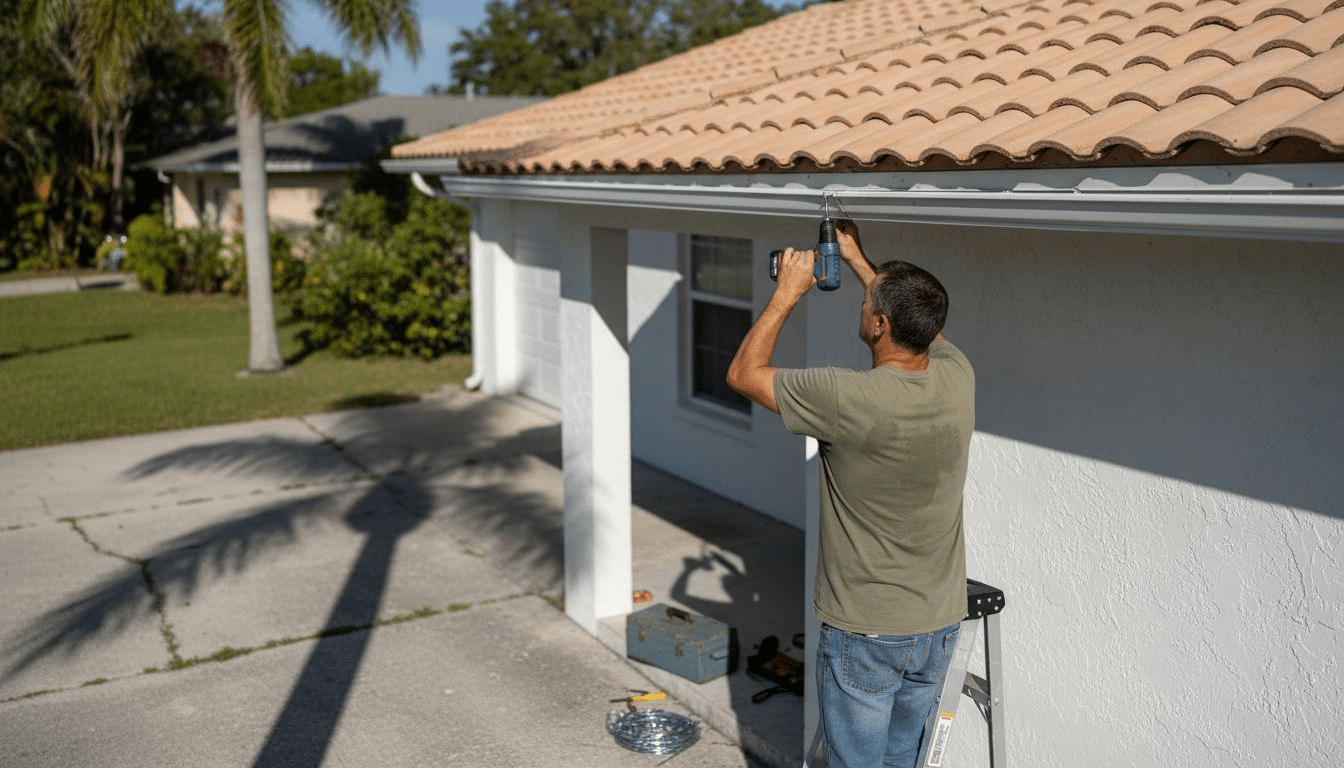
Florida’s seasonal storms dump heavy rain that overwhelms poorly maintained gutters, leaving homeowners facing water damage, foundation issues, and costly repairs. This guide walks you through selecting, installing, and maintaining the right gutter system to protect your home year-round, from choosing seamless aluminum gutters to installing micro-mesh guards that block debris and ensure proper drainage through Florida’s wettest months.
Table of Contents
- Understanding Florida’s Rain Gutter Challenges
- What You Need Before Starting: Tools, Materials, And Knowledge
- Step-By-Step Seamless Gutter Installation
- Regular Maintenance And Cleaning For Longevity
- Installing And Choosing Gutter Guards
- Common Mistakes And Troubleshooting
- Expected Costs, Timelines, And Outcomes
- Safety Tips And Warnings For DIY And Hiring Professionals
- Explore Professional Florida Gutter Solutions
- Frequently Asked Questions
Key takeaways
| Point | Details |
|---|---|
| Florida’s heavy rainfall demands durable, well-installed gutters | Seamless aluminum gutters with proper slope resist leaks and storm damage better than sectional alternatives. |
| Micro-mesh gutter guards block 90%+ debris | These guards significantly cut cleaning needs while handling Florida’s heavy rain and leaf loads. |
| Regular maintenance twice yearly prevents clogging | Cleaning before and after rainy season stops costly repairs and protects your home’s foundation. |
| Proper slope is critical for drainage | Installing gutters at 1/4 inch per 10 feet ensures water flows correctly and prevents overflow. |
| Safety gear and professional help minimize risks | Ladder stabilizers and harnesses reduce fall risk by 70% during installation work. |
Understanding Florida’s rain gutter challenges
Florida receives about 54 inches of annual rainfall with frequent tropical storms that create unique gutter challenges. Heavy downpours test even the best systems, and homeowners who ignore proper installation and maintenance face serious consequences.
Central Florida’s climate brings specific problems you won’t find in drier regions. Common issues include:
- Debris clogging from oak leaves, pine needles, and tropical vegetation
- Gutter detachment during high winds and severe storms
- Water overflow that damages siding, foundations, and landscaping
- Rapid algae and mildew growth in standing water
- Fastener corrosion from humidity and salt air exposure
Seamless gutters offer superior protection compared to sectional types. Traditional gutters have joints every 10 feet where water can leak through, especially when sealant degrades. Seamless systems eliminate most connection points, dramatically reducing leak risk and creating a cleaner appearance.
Gutter guards become essential in Florida’s leafy environment. Without protection, gutters fill with debris after every storm, requiring constant cleaning. Micro-mesh gutter guard performance in Florida exceeds other types by blocking small particles while allowing heavy water flow. Installing these guards transforms maintenance from a monthly chore to a twice-yearly inspection.
Pro Tip: Schedule gutter inspections in March before summer storms and November after fall leaf drop to catch problems before they escalate.
Understanding these challenges helps you make informed decisions about materials and installation methods. The right approach prevents water from undermining your foundation, rotting fascia boards, or creating mosquito breeding grounds in your yard. Florida gutter solutions guide home protection by addressing climate-specific needs rather than applying generic approaches that fail in tropical conditions.
What you need before starting: tools, materials, and knowledge
Successful gutter work starts with gathering the right equipment and understanding Florida-specific requirements. Cutting corners on preparation leads to costly mistakes and safety hazards.
| Tool/Material | Purpose | Florida-Specific Note |
|---|---|---|
| Seamless aluminum gutters | Primary water channel | Resists salt air corrosion better than steel |
| Micro-mesh gutter guards | Debris blocking | Handles heavy rain while blocking small particles |
| Ladder stabilizer | Safety and roof protection | Essential for steep Florida tile roofs |
| Safety harness | Fall prevention | Required for any roof work above 10 feet |
| Silicone sealant | Waterproofing connections | Choose UV-resistant formula for sun exposure |
| Measuring tape and level | Accurate slope setting | Digital levels simplify pitch calculations |
Seamless aluminum gutters remain the best choice for Florida homes. They resist rust in humid conditions and handle expansion from temperature changes without cracking. Order custom-cut sections from suppliers to eliminate unnecessary joints.
Micro-mesh gutter guards filter out debris while managing Florida’s intense rainfall. These guards feature tiny perforations that block pine needles and oak leaves but allow water to flow freely. Foam and nylon alternatives trap moisture and degrade quickly in Florida’s UV exposure.
Essential installation knowledge includes proper slope calculation. Gutters need 1/4 inch drop per 10 feet to drain effectively. Too little slope causes standing water and mosquito problems. Excessive slope looks unprofessional and may cause water to overshoot downspouts during heavy rain.
Safety equipment saves lives. Falls from ladders cause thousands of injuries yearly, many during gutter work. Invest in:
- Ladder stabilizers that distribute weight and prevent roof damage
- Full-body safety harnesses with roof anchors for steep pitches
- Non-slip work boots with ankle support
- Work gloves to protect against sharp aluminum edges
Gather gutter maintenance tools list including fasteners rated for coastal environments. Stainless steel or coated screws resist corrosion better than standard hardware. Buy 20% more fasteners than calculated to account for repositioning and errors.
Step-by-step seamless gutter installation
Proper installation requires methodical execution and attention to detail. Rushing through steps creates problems that appear months later when storms test your work.
Follow this workflow for reliable results:
- Measure your roof perimeter accurately, noting every corner and angle. Add 10% to your measurements to account for waste and adjustments.
- Mark gutter placement on fascia boards using a chalk line. Start at the highest point and slope toward downspout locations at 1/4 inch per 10 feet.
- Install fascia brackets every 24 inches, closer spacing in areas prone to high winds. Use a level to verify each bracket maintains proper slope.
- Cut seamless gutter sections to length using a miter saw with a fine-tooth blade. Deburr cut edges to prevent sharp points that could cause injury.
- Hang gutter sections in brackets, starting at the high end. Snap sections into place and verify they follow your slope markings.
- Seal end caps and corner joints with UV-resistant silicone. Apply sealant generously but smooth excess to prevent debris accumulation.
- Attach downspouts at low points, ensuring water directs at least 6 feet from your foundation. Use downspout extensions if needed.
- Install seamless gutter installation process verified micro-mesh guards over the entire gutter length to minimize future maintenance.
Pro Tip: Test your installation before finishing by running water through gutters with a garden hose. Watch for leaks, improper drainage, or areas where water pools instead of flowing smoothly.
Fastener placement matters more than most homeowners realize. Space screws too far apart and gutters sag under water weight. Place them too close and you risk splitting the gutter material. The 24-inch standard works for most Florida homes, but reduce spacing to 18 inches in hurricane-prone coastal areas.
Corner installation requires extra care. Inside and outside corners create stress points where gutters pull away during storms. Reinforce these areas with additional brackets and generous sealant application. Some installers add a third bracket directly at the corner for maximum support.
Downspout positioning protects your foundation from water damage. Place outlets at building low points where water naturally accumulates. Direct discharge away from the house using extensions or underground drainage systems. How to install gutters step guide emphasizes proper water management to prevent erosion and foundation settling.
Regular maintenance and cleaning for longevity
Even the best gutter system fails without consistent maintenance. Florida’s climate accelerates wear and creates conditions where small problems become major repairs.
Clean your gutters twice yearly at minimum. Schedule cleanings in:
- March, before summer storm season begins
- November, after fall leaves drop but before winter rains
Micro-mesh guards reduce cleaning frequency but don’t eliminate it entirely. Pollen, roof grit, and small debris still accumulate over time. Guards let you extend cleaning intervals from monthly to twice yearly, saving significant time and effort.
During each cleaning session, inspect critical components:
- Fastener tightness and any signs of pulling away from fascia
- Sealant condition at joints, corners, and end caps
- Gutter slope to verify proper drainage continues
- Downspout flow to confirm no blockages exist
- Guard attachment and any debris buildup on top
Pro Tip: Take photos during each inspection to track changes over time. Comparing images helps you spot gradual problems like sagging or fastener corrosion before they cause failures.
Rain gutter maintenance steps include removing accumulated debris by hand or with a gutter scoop. Avoid metal tools that scratch protective coatings and accelerate corrosion. Flush remaining material with a garden hose, working from the high end toward downspouts.
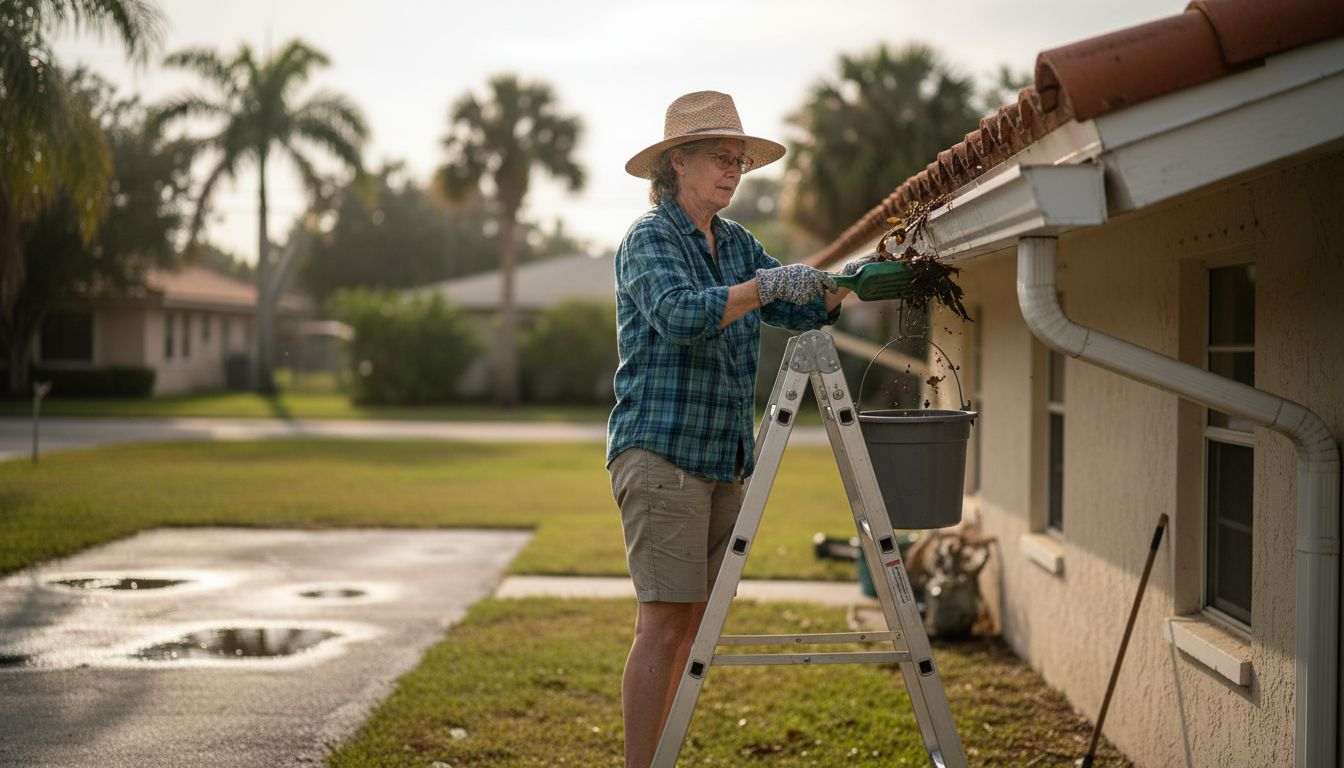
Repair loose hangers immediately when discovered. A single loose bracket allows that gutter section to sag, creating a low point where water pools. This standing water attracts mosquitoes and stresses adjacent fasteners, creating a cascade of failures.
Re-seal any joints showing signs of separation or moisture intrusion. Clean the area thoroughly, let it dry completely, and apply fresh UV-resistant silicone. Proper sealing prevents the small leaks that rot fascia boards and create interior water damage.
DIY gutter cleaning tips Florida emphasizes safety during maintenance work. Never lean ladders directly against gutters, which can bend or detach the system. Use standoff stabilizers that rest against walls or roof edges instead.
Installing and choosing gutter guards
Gutter guards transform maintenance requirements and protect your system from Florida’s heavy debris loads. Choosing the right type makes the difference between minimal upkeep and constant frustration.
| Guard Type | Debris Blocking | Rain Handling | Florida Suitability | Typical Cost per Foot |
|---|---|---|---|---|
| Micro-mesh | 95%+ | Excellent | Highly recommended | $3-$8 |
| Perforated aluminum | 80-85% | Good | Acceptable | $2-$5 |
| Foam inserts | 60-70% | Poor | Not recommended | $1-$3 |
| Nylon mesh | 70-75% | Fair | Poor in UV | $1-$4 |
Micro-mesh gutter guards block over 90% of debris while handling Florida’s intense rainfall better than alternatives. The fine mesh stops pine needles, oak leaves, and roof grit that pass through larger perforations. During heavy storms, water surface tension pulls moisture through the mesh while debris slides off.
Foam guards fail quickly in Florida’s climate. They trap moisture, creating perfect conditions for mold and mosquito breeding. UV exposure degrades foam within two years, requiring complete replacement. The initial cost savings disappear when you factor in frequent replacements and continued cleaning needs.
Nylon mesh guards sag and tear in Florida’s heat and sun exposure. While they block larger debris initially, UV radiation weakens the material. After one summer, most nylon guards show signs of deterioration. Strong winds can rip compromised mesh completely off gutters.
Installing guards over seamless gutters follows a straightforward process. Most micro-mesh systems slide under the first row of shingles and snap onto the gutter’s front edge. This design creates a smooth surface that sheds leaves while capturing water. Secure guards every 12 inches with clips to prevent wind from lifting edges.
Pro Tip: Install guards in sections, testing water flow before moving to the next area. This approach lets you adjust positioning if water overshoots gutters during simulated heavy rain.
Gutter guard installation process requires attention to roof pitch and overhang. Steep roofs send water faster, requiring guards with larger water-handling capacity. Homes with minimal overhang need guards that extend further to catch water flowing from roof edges.
Maintenance after guard installation drops dramatically. Instead of cleaning gutters every month during growing season, you’ll inspect twice yearly and remove any debris accumulating on top of guards. This time savings alone justifies the investment for most homeowners.
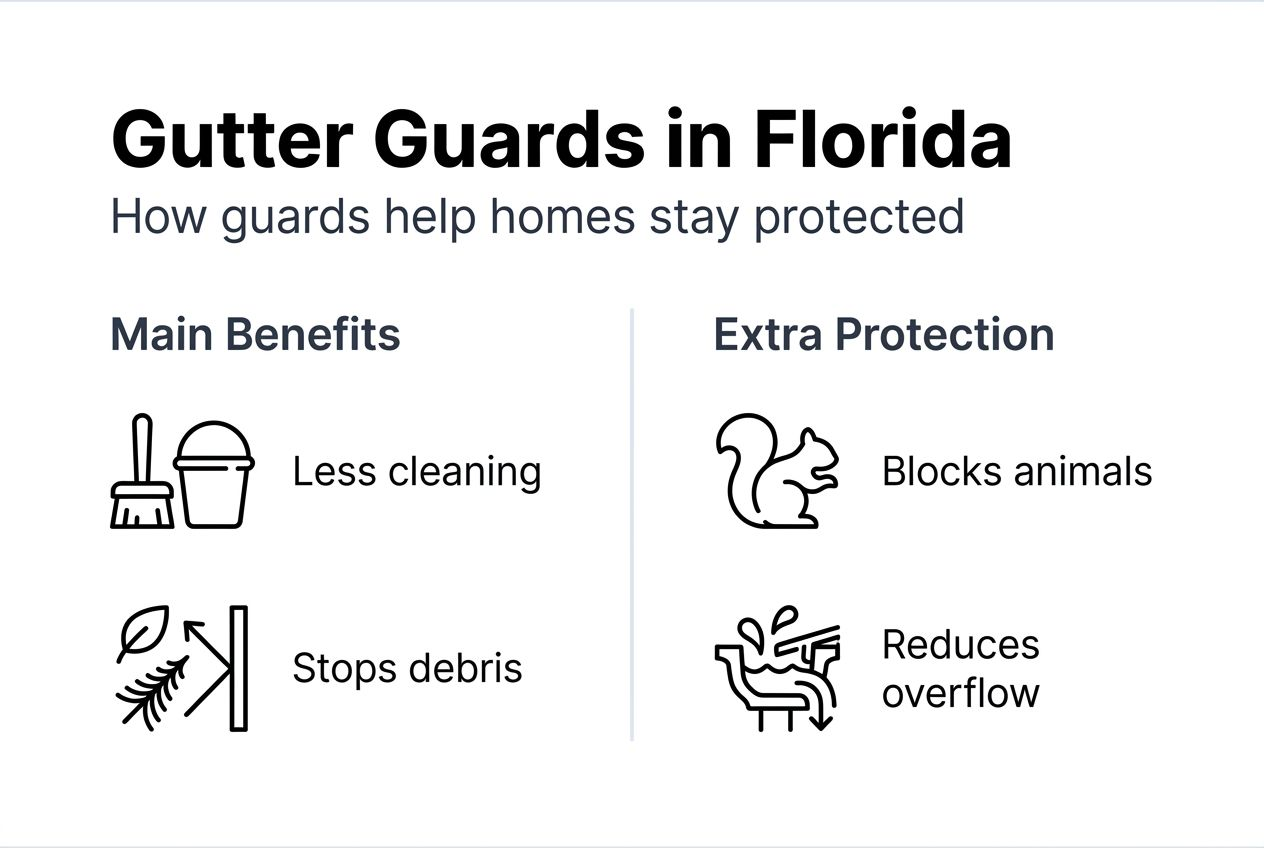
Micro-mesh gutter guard benefits extend beyond convenience. Guards prevent animals from nesting in gutters and reduce ice dam formation in the rare Florida freeze. They also keep gutters cleaner, extending system lifespan by preventing the corrosive buildup that deteriorates aluminum over time.
Common mistakes and troubleshooting
Even experienced DIYers make errors that compromise gutter performance. Recognizing these mistakes helps you avoid expensive repairs and water damage.
About 60% of gutter failures stem from improper slope, inadequate fastening, and poor sealing. Each error creates specific problems you can identify and correct.
Incorrect slope causes immediate drainage issues. Too flat and water pools in sections, creating mosquito habitat and stressing seams. Too steep and water rushes past downspouts during heavy rain, overshooting and flooding foundation areas. Use a digital level to verify 1/4 inch drop per 10 feet throughout the system.
Loose or inadequate fasteners lead to catastrophic failures during storms. Gutters filled with water weigh substantially more than empty systems. Insufficient support causes sagging that worsens with each rain. In severe cases, entire sections tear away from fascia boards during hurricanes. Add extra brackets in vulnerable areas like corners and near downspouts where stress concentrates.
Unsealed seams leak from day one, though damage may not appear immediately. Water escaping through joints runs down fascia boards, rotting wood and creating interior moisture problems. Every connection point needs UV-resistant silicone applied generously and smoothed to prevent debris accumulation in excess sealant.
Neglecting regular cleaning accelerates every other problem. Debris-filled gutters weigh more, stressing fasteners and creating conditions for standing water. Material trapped against aluminum promotes corrosion. Seeds germinate in accumulated soil, and roots penetrate seals. Set calendar reminders for twice-yearly maintenance to prevent these cascading failures.
Safety lapses during DIY work cause preventable injuries. Falls from ladders send thousands of homeowners to emergency rooms yearly. Working alone on roofs or extending too far from stable ladder positions creates dangerous situations. Always:
- Use proper safety equipment including harnesses for roof work
- Position ladders on stable, level ground with someone nearby
- Never overreach, move the ladder instead
- Work during dry conditions when surfaces aren’t slippery
Gutter troubleshooting Florida homes includes identifying problems early through regular inspections. Look for water stains on siding below gutters, indicating overflow or leaks. Check for soil erosion near downspout outlets, suggesting improper water direction. Notice any separation between gutters and fascia boards, signaling fastener failure.
Common gutter mistakes and fixes emphasizes correcting errors quickly. Small leaks become major repairs when ignored. A loose bracket today means a detached gutter section during the next tropical storm. Address problems immediately to minimize damage and repair costs.
Expected costs, timelines, and outcomes
Understanding financial and time investments helps homeowners plan effectively and recognize when professional help offers better value than DIY approaches.
| Project Component | Typical Cost Range | Installation Time | Expected Lifespan |
|---|---|---|---|
| Seamless gutters (materials only) | $2,000-$3,500 | 2-3 days DIY | 20-25 years |
| Professional installation | $3,500-$5,500 total | 1 day | 20-25 years |
| Micro-mesh guards | $800-$2,000 | 1 day DIY | 15-20 years |
| Annual maintenance (DIY) | $50-$150 supplies | 4-8 hours yearly | N/A |
| Professional cleaning | $150-$300 per visit | 2-3 hours | N/A |
Typical seamless gutter installation costs $3,500 to $5,500 for professional work on an average Florida home. This includes materials, labor, proper slope setting, secure fastening, and thorough sealing. Professional crews complete most residential jobs in one day, minimizing disruption.
DIY installation saves $1,000 to $2,000 in labor costs but requires specialized tools and knowledge. Plan for two to three full days of work if you’re experienced with home projects. First-time installers should budget a full week, accounting for learning curves and correcting mistakes.
Proper installation cuts water damage and maintenance needs by approximately 70%. Homes with well-maintained gutters avoid foundation repairs, siding replacement, and landscape erosion that cost thousands to fix. The gutter investment protects much larger assets.
Gutter guards reduce annual cleaning frequency from four to six times yearly down to twice yearly. At $150 to $300 per professional cleaning, guards pay for themselves within three to five years through reduced service calls. DIY cleaners save time rather than money, reclaiming 10 to 15 hours annually for other activities.
Pro Tip: Request itemized quotes from multiple contractors to compare material quality and warranty coverage, not just total price. Cheaper quotes often use thinner aluminum or provide shorter warranties.
Seamless gutter value guide shows how proper systems protect foundations, siding, and landscaping from costly water damage. A $4,000 gutter investment prevents $10,000 to $20,000 in potential foundation repairs and interior water damage restoration.
Timeline expectations matter for planning. Schedule installation during Florida’s dry season from November through April. Summer storms interrupt work and create unsafe conditions. Professional installers book weeks or months in advance during peak season, so contact contractors early.
Seamless gutter pricing guide helps homeowners understand cost factors including linear footage, gutter size, guard type, and regional labor rates. Coastal homes near salt air may require upgraded materials that increase initial costs but extend system lifespan.
Safety tips and warnings for DIY and hiring professionals
Gutter work involves significant fall risks and physical demands that cause injuries when safety practices are ignored. Protecting yourself requires proper equipment and realistic assessment of your capabilities.
Falls from ladders and roofs represent the most serious danger. Statistics show ladder-related injuries send over 160,000 people to emergency rooms yearly. Many occur during gutter work when homeowners overreach or use unstable positioning.
Essential safety practices include:
- Using ladder stabilizers that distribute weight and prevent roof damage
- Wearing full-body safety harnesses with roof anchors for any work above 10 feet
- Positioning ladders on firm, level ground at proper angles
- Having a second person steady ladders and assist with materials
- Working only in dry conditions when surfaces provide good traction
Pro Tip: Ladder stabilizers reduce fall risk by 70% while protecting tile roofs from the point loads that crack individual tiles. The $50 investment prevents injuries and roof damage.
Never climb directly on gutters or use them for support. Aluminum gutters aren’t designed to bear body weight and will bend or detach from fascia boards. This mistake causes both falls and gutter damage requiring complete section replacement.
Avoid working alone on complex installations. Seamless gutter sections can exceed 30 feet in length and require coordinated handling. Solo installation attempts lead to dropped materials, improper positioning, and increased injury risk when accidents occur without anyone nearby to help.
Consider hiring professionals for situations involving:
- Roofs steeper than 6/12 pitch where footing becomes dangerous
- Heights above 15 feet requiring extended ladder work
- Complex roof lines with multiple valleys and dormers
- Homes near power lines where contact creates electrocution risk
- Any situation where you feel uncomfortable or uncertain
“The small savings from DIY work disappear instantly if you fall and face medical bills or permanent injury. Know your limits and hire experts when projects exceed your safe capabilities.”
Professional installers carry liability insurance and workers’ compensation coverage protecting homeowners from injury-related lawsuits. This protection has real value that DIY approaches can’t match. Verify contractor insurance before hiring to ensure you’re protected if accidents occur on your property.
Electrical hazards exist near service masts and overhead power lines. Aluminum gutters conduct electricity and can cause electrocution if they contact live wires. Maintain at least 10 feet of clearance from power lines. Contact your utility company to temporarily relocate lines if necessary for safe installation.
Physical demands of gutter work strain backs, shoulders, and knees. Repetitive overhead reaching while balancing on ladders exhausts even fit individuals. Take frequent breaks and stop immediately if you feel fatigued, dizzy, or unsteady.
Explore professional Florida gutter solutions
While this guide empowers you to handle many gutter tasks yourself, professional expertise ensures optimal results, especially for complete system installations. Larry’s Gutters brings specialized knowledge of Central Florida’s unique challenges to every project.

Professional seamless gutter installation eliminates the trial and error of DIY approaches. Expert installers measure precisely, set perfect slopes, and use commercial-grade materials that outlast consumer products. Their work comes with warranties protecting your investment.
Gutter guard installation workflow requires understanding how Florida’s rainfall intensity and debris loads affect different guard types. Professionals match guard specifications to your specific roof pitch, overhang, and vegetation, ensuring maximum performance.
The seamless gutter value extends beyond initial installation through long-term protection of your home’s structure. Professional systems prevent the foundation damage, siding deterioration, and landscape erosion that turn small water management issues into major repair projects.
Frequently asked questions
How often should gutters be cleaned in Central Florida?
Clean gutters twice yearly at minimum, in March before summer storms and November after fall leaves drop. Homes with heavy tree coverage or no gutter guards may need quarterly cleaning. Inspect after major storms for debris accumulation that blocks water flow.
What are signs that gutters need repair or replacement?
Watch for water overflowing during rain, visible separation from fascia boards, rust spots or holes, sagging sections, and water stains on siding below gutters. Peeling paint on gutters or fascia indicates moisture problems from leaks. These signs require immediate attention to prevent structural damage.
Can I install gutter guards myself safely?
Yes, if you’re comfortable working on ladders and following safety protocols. Use ladder stabilizers, work with a helper, and install guards in sections to test performance. However, homes with steep roofs or heights above 15 feet are safer left to professionals with proper equipment and insurance.
What types of gutters work best for heavy Florida rains?
Seamless aluminum gutters in 6-inch width handle Florida’s rainfall intensity better than 5-inch or sectional alternatives. The seamless design eliminates leak-prone joints, while aluminum resists rust in humid conditions. Pair with micro-mesh guards for optimal debris management during storms.
How much does professional gutter installation typically cost?
Expect $3,500 to $5,500 for complete professional installation on an average Florida home, including seamless gutters, proper slope setting, secure fastening, and quality sealant. Adding micro-mesh guards increases total cost by $800 to $2,000 but reduces long-term maintenance expenses significantly.
Why do my gutters overflow during heavy rain?
Overflow typically results from debris clogs blocking water flow, incorrect slope preventing drainage, or undersized gutters unable to handle rainfall volume. Check for leaves or debris in gutters and downspouts first. If clear, verify gutters slope 1/4 inch per 10 feet toward outlets and consider upgrading to 6-inch gutters for better capacity.
