TL;DR:
- Proper gutter systems protect homeowners from expensive foundation, basement, roof, and landscaping repairs.
- Maintaining clean, well-installed gutters prevents water intrusion, mold growth, and enhances energy efficiency.
Most homeowners think of gutters as a basic home feature. They are not. They are one of the most cost-effective investments you can make on a house. The ways gutters save money go far beyond preventing a wet basement. Without a functioning gutter system, water attacks your foundation, soaks your insulation, rots your fascia, and turns your landscaping into a drainage problem. Foundation repairs alone can run $2,000 to $40,000, depending on severity. Gutters, by comparison, cost a fraction of that to install and maintain.
Table of Contents
- Key takeaways
- 1. How gutters protect your foundation from costly structural repairs
- 2. Reduction of basement flooding and mold remediation costs
- 3. Protecting your roof and siding to avoid replacement costs
- 4. Energy saving benefits of gutters through insulation protection
- 5. Landscaping protection and soil erosion savings
- 6. Gutter guards cut long-term maintenance and repair expenses
- 7. Property value preservation and insurance risk reduction
- My honest take on gutters as a financial decision
- Protect your home and your budget with the right gutter system
- FAQ
Key takeaways
| Point | Details |
|---|---|
| Foundation damage is expensive | Gutters channel water away from your home’s base, preventing repairs that can reach tens of thousands of dollars. |
| Mold and flooding hit hard | Without gutters, basement water intrusion leads to restoration costs that average $12,000 or more. |
| Energy bills go up without gutters | Water-saturated insulation from roof leaks reduces HVAC efficiency and quietly raises monthly utility costs. |
| Gutter guards cut maintenance costs | Installing guards reduces cleaning frequency and prevents clogs that cause leaks and structural damage. |
| Gutters protect multiple systems | From roofing and siding to landscaping and pest control, a working gutter system reduces costs across your whole property. |
1. How gutters protect your foundation from costly structural repairs
Your home’s foundation is its most structurally critical component. When gutters are missing or clogged, rainwater falls directly off your roof and pools around the base of your house. Over time, that water saturates the soil, creates hydrostatic pressure against your foundation walls, and starts a slow process that ends in cracks, shifts, and expensive structural failures.
The numbers are sobering. Foundation and drainage repairs routinely range from $3,800 to $12,700 and can climb well past that for severe cases. A properly installed gutter system that channels water away from your foundation prevents all of that.
Here is what a functioning gutter system does to protect your foundation:
- Directs roof runoff through downspouts and away from the home’s perimeter
- Prevents soil erosion directly against the footer and base of your walls
- Reduces the risk of water pressure cracking concrete block or poured foundations
- Keeps crawl spaces dry, which protects floor joists and subfloor systems
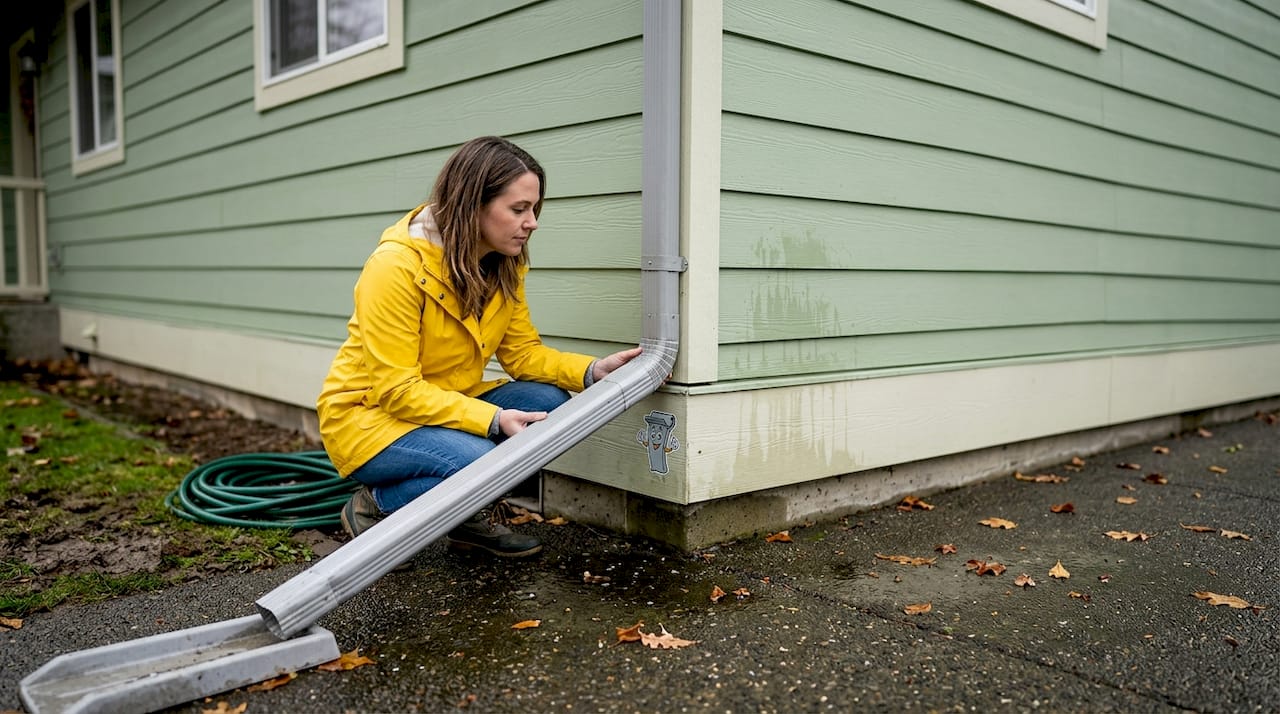
Pro Tip: Position downspout extensions so they discharge water at least four to six feet away from your foundation. For Florida homes on flat lots, this step alone can prevent a significant amount of saturation damage during heavy rain seasons.
For a deeper look at this connection, Larrysgutters covers exactly how gutters affect foundations in a dedicated guide worth reviewing before your next inspection.
2. Reduction of basement flooding and mold remediation costs
Basement flooding is not just an inconvenience. It is a financial emergency. The average basement flood restoration costs around $12,000 when you factor in water extraction, drying equipment, flooring replacement, and contents damage. That figure does not include mold remediation, which adds thousands more if the moisture is not addressed quickly.
Gutters break this chain before it starts. When they are clear and properly pitched, they pull water off the roof and move it away from the home. When they are clogged or absent, that same water saturates the ground around your basement walls and finds a way in through cracks, window wells, and floor-wall joints.
Mold remediation for a single affected room typically runs between $1,500 and $4,000. Whole-basement remediation can exceed $10,000. A gutter cleaning that costs $150 to $250 twice a year is the most cost-effective prevention available.
What makes this worse is that mold does not always announce itself. By the time you smell it or see visible growth, the problem has usually been developing for weeks or months. Gutter guards are particularly valuable here because they keep debris out of the system year-round, not just right after you clean them.
Key maintenance habits that protect your basement:
- Clean gutters at least twice per year, more often if you have tree coverage
- Inspect downspouts after major storms to confirm they are not blocked
- Add gutter guards to reduce the cleaning burden and prevent between-service clogs
- Check that downspouts discharge well away from your basement walls
3. Protecting your roof and siding to avoid replacement costs
Your gutters and your roofline are more connected than most homeowners realize. When gutters overflow or pull away from the fascia board, standing water backs up under your shingles, saturates your roof deck, and starts rotting the wood structure that holds your roof in place. Replacing a section of fascia and soffit runs $600 to $2,000. Replacing a damaged roof deck section costs more. A full roof replacement can run $10,000 to $25,000 for a mid-size Florida home.
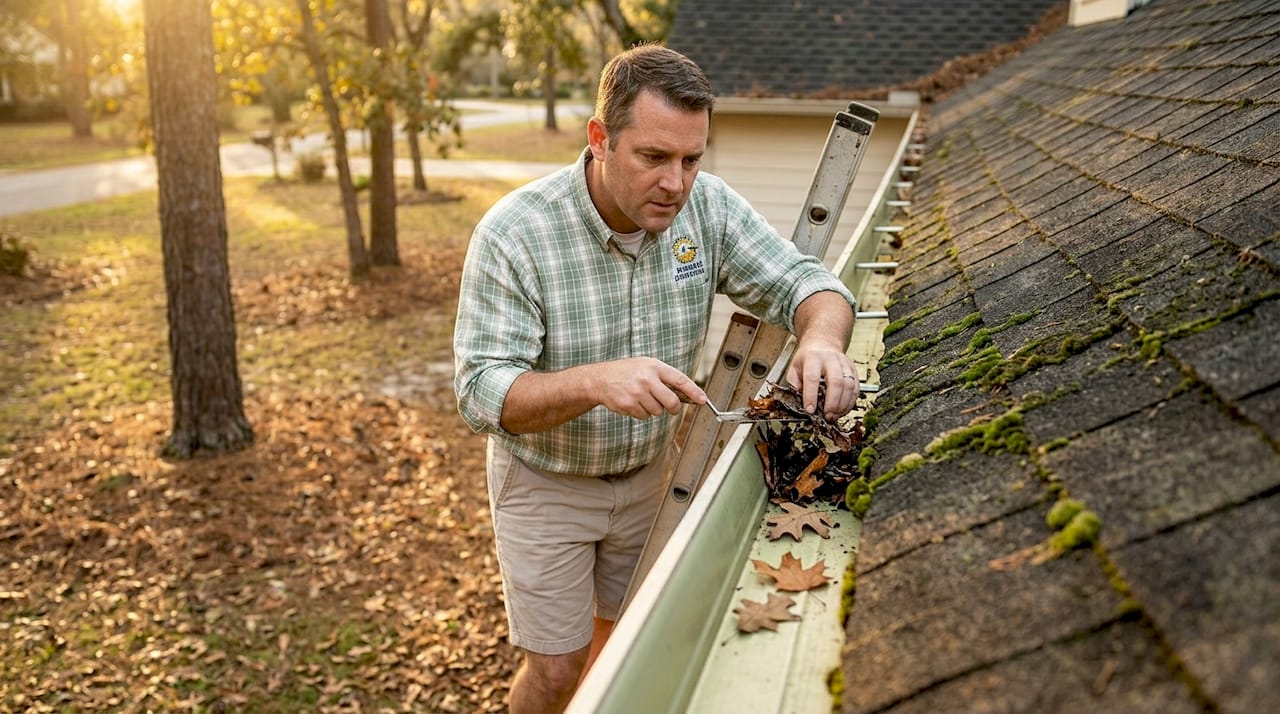
Professional installation prevents the hidden failure points that DIY projects miss, including improper pitch angle, loose hangers, and poor roof edge contact. These small installation errors concentrate water exactly where you do not want it.
One area that gets overlooked is the roof valley. Valleys channel enormous volumes of water during heavy rain and can overwhelm a standard gutter section during Florida’s afternoon storms. Specialized solutions like the Valley Kicker™ were developed specifically to address this overflow problem and reduce the damage it causes to fascia and siding.
Siding damage is equally preventable. When gutters overflow, water runs down your exterior walls instead of through the system. That repeated wetting and drying cycles paint off siding, causes wood rot, and creates entry points for moisture inside your wall cavities.
Pro Tip: Have a professional check your gutter pitch during installation. Gutters should slope approximately one quarter inch for every ten feet toward the downspout. Too flat and water sits and causes rot. Too steep and it overshoots the system in a heavy rain.
4. Energy saving benefits of gutters through insulation protection
This is one of the most overlooked ways gutters reduce costs. Most homeowners never connect their rising utility bill to their gutters. Here is how it works. When gutters fail and water gets under your roof, it saturates the attic insulation. Wet insulation loses most of its thermal value. Your HVAC system then works harder to maintain indoor temperatures, and your energy bill climbs.
Cleaning gutters at least twice per year prevents this cycle by keeping water moving off the roof and away from the home, which protects insulation performance and reduces the pressure on your cooling and heating system.
In Florida, where air conditioning runs most of the year, even a small reduction in insulation effectiveness translates directly into money. A well-sealed attic with dry, intact insulation can cut cooling costs significantly compared to a home where moisture has degraded the thermal barrier.
The energy saving benefits of gutters are not dramatic in any single month. They accumulate quietly over years. A home with a functioning gutter system, clean and properly maintained, simply costs less to operate than one where water damage has compromised the building envelope.
Key points on the energy side:
- Wet attic insulation can reduce R-value by 40% or more in severe cases
- Roof leaks caused by gutter overflow add moisture to the attic and wall cavities
- A gutter maintenance checklist followed twice a year is enough to protect insulation in most Florida homes
- Repairing damaged insulation costs $1,500 to $3,000 for an average attic. Prevention is far cheaper.
5. Landscaping protection and soil erosion savings
The area directly around your home is more financially important than it looks. Landscaping adds real value to your property, and uncontrolled roof runoff destroys it. Without gutters, a heavy Florida rain drops water off your entire roofline at once. That concentrated flow strips topsoil, washes out mulch, kills plants, and erodes the grading you depend on to drain water away from your house.
Replacing damaged landscaping and regrading a yard that has eroded toward the foundation can cost $1,000 to $5,000 depending on scope. Gutters prevent this by collecting and directing that water rather than letting it fall wherever physics takes it.
- Prevent erosion near the foundation. Sloping soil away from your house is your first line of defense. Gutters preserve that slope by keeping roof runoff off the ground immediately next to your home.
- Protect established plants and trees. Concentrated roof runoff drowns shallow-rooted plants and strips the soil around tree bases.
- Use rain barrels to capture the savings. Directing runoff into rain gardens and rain barrels offsets municipal water use for landscaping and reduces ground saturation near your foundation.
- Reduce pest pressure. Standing water near your home from poor drainage creates breeding grounds for mosquitoes and attracts other insects. Florida homeowners spend real money on pest control. Reducing standing water cuts that cost.
Pro Tip: Pair your gutter system with a rain barrel at one or two downspouts. You capture water for garden irrigation and reduce the volume saturating the soil around your foundation. Integrating rainwater harvesting with your gutter system delivers measurable savings on irrigation bills.
6. Gutter guards cut long-term maintenance and repair expenses
The upfront cost of gutter guards is real. An average gutter guard system runs about $3,232 installed. That number makes some homeowners hesitate. The math, however, supports the investment when you look at what guards actually prevent.
Clogged gutters do not just sit there harmlessly. They overflow, they hold moisture against your fascia, they create the conditions for mold in your soffits, and they can add weight that pulls the gutter away from the roofline. Each of those outcomes costs money to fix. Gutter guards reduce cleaning frequency by blocking the debris that causes clogs in the first place.
For a property manager running multiple units, the savings calculation shifts even more in favor of guards. Fewer emergency cleanings after storms, fewer calls about overflowing gutters, and fewer repair invoices from water intrusion events all add up across a portfolio of properties.
For individual homeowners, the benefit is simpler. You spend less time on ladders, less money on cleaning services, and less on repairs that follow from preventable clogs.
7. Property value preservation and insurance risk reduction
Gutters rarely show up in real estate listings as a selling point. They influence property value quietly but consistently. A home with a documented history of water damage, mold remediation, or foundation issues sells for less and takes longer to sell. Buyers’ inspectors find these problems, and sellers pay for them through price reductions.
Maintaining an effective gutter system keeps your property record clean. It also signals to home inspectors and appraisers that the home has been managed carefully. That perception has real value at resale.
The insurance angle is equally worth understanding. Some insurers will not cover water intrusion damage if the cause is clearly deferred maintenance, such as gutters that were visibly blocked or missing. A working, maintained gutter system supports any claim that roof or foundation damage was caused by a weather event rather than neglect.
The benefits of effective gutters extend to how your property is perceived, valued, and insured. That is a long-term financial benefit that does not show up on any single repair invoice but matters every time you need coverage or plan to sell.
My honest take on gutters as a financial decision
I have seen homeowners spend $18,000 fixing a foundation because they put off a $300 gutter repair for two rainy seasons. I have also seen property managers treat gutter maintenance as optional until a tenant’s basement floods and the remediation bill arrives. Both situations share the same root cause. People underestimate what gutters actually protect.
Experts consistently frame gutters not as a maintenance item but as a form of home insurance, and I think that framing is exactly right. You do not skip your insurance premium because the house has not burned down yet. You should not skip gutter maintenance because it has not flooded yet.
The contrarian truth here is that cutting corners on gutters, whether by delaying cleaning, skipping professional installation, or buying the cheapest materials, almost always costs more in the end. The average gutter installation runs $1,050 to $2,400. That is the cost of a few months of a foundation repair payment. Investing in quality installation and consistent maintenance is not the expensive choice. It is the affordable one.
— Larrysgutters
Protect your home and your budget with the right gutter system
If this article makes one thing clear, it is that gutters and home maintenance savings are directly connected. The repair bills that gutters prevent are not theoretical. They are the real, documented costs that homeowners and property managers face every year in Florida, where heavy seasonal rain puts constant pressure on every component of a home’s water management system.

Larry’s Gutters specializes in seamless gutter installation built specifically for Central Florida’s rainfall patterns. Seamless systems have fewer joints and fewer failure points, which means fewer leaks and lower maintenance costs over time. If you want to understand exactly what the seamless gutter installation process looks like for your home, that resource walks through every step. For homeowners who want to reduce cleaning frequency and prevent clogs between service visits, the gutter guard installation workflow page explains how guards work and what to expect from professional installation. Both options are worth a look before Florida’s next storm season arrives.
FAQ
How much money can gutters save a homeowner?
Gutters prevent repairs that commonly run $3,800 to over $40,000 depending on whether the damage involves the foundation, basement, roof, or siding. The average gutter installation costs $1,050 to $2,400, making the return on investment substantial.
Can gutters lower utility bills?
Yes. Gutters prevent water intrusion that saturates attic insulation, which reduces thermal performance and forces your HVAC system to work harder. Keeping gutters clean and functional preserves insulation effectiveness and supports lower monthly energy costs.
How often should gutters be cleaned to maximize savings?
Cleaning gutters at least twice per year is the standard recommendation, though Florida homeowners with heavy tree coverage may need three or four cleanings annually. Regular cleaning prevents the clogs that lead to overflow, water damage, and costly repairs.
Are gutter guards worth the cost?
Gutter guards cost around $3,232 on average but reduce cleaning frequency, prevent clogs, and eliminate many of the water damage events that follow from blocked gutters. For most homeowners, the long-term savings in maintenance and repairs outweigh the upfront investment.
Do gutters affect home resale value?
Yes. A home with a documented history of water damage or foundation issues sells for less and faces greater scrutiny during inspection. Functioning gutters help preserve your home’s condition and protect its value at resale.
