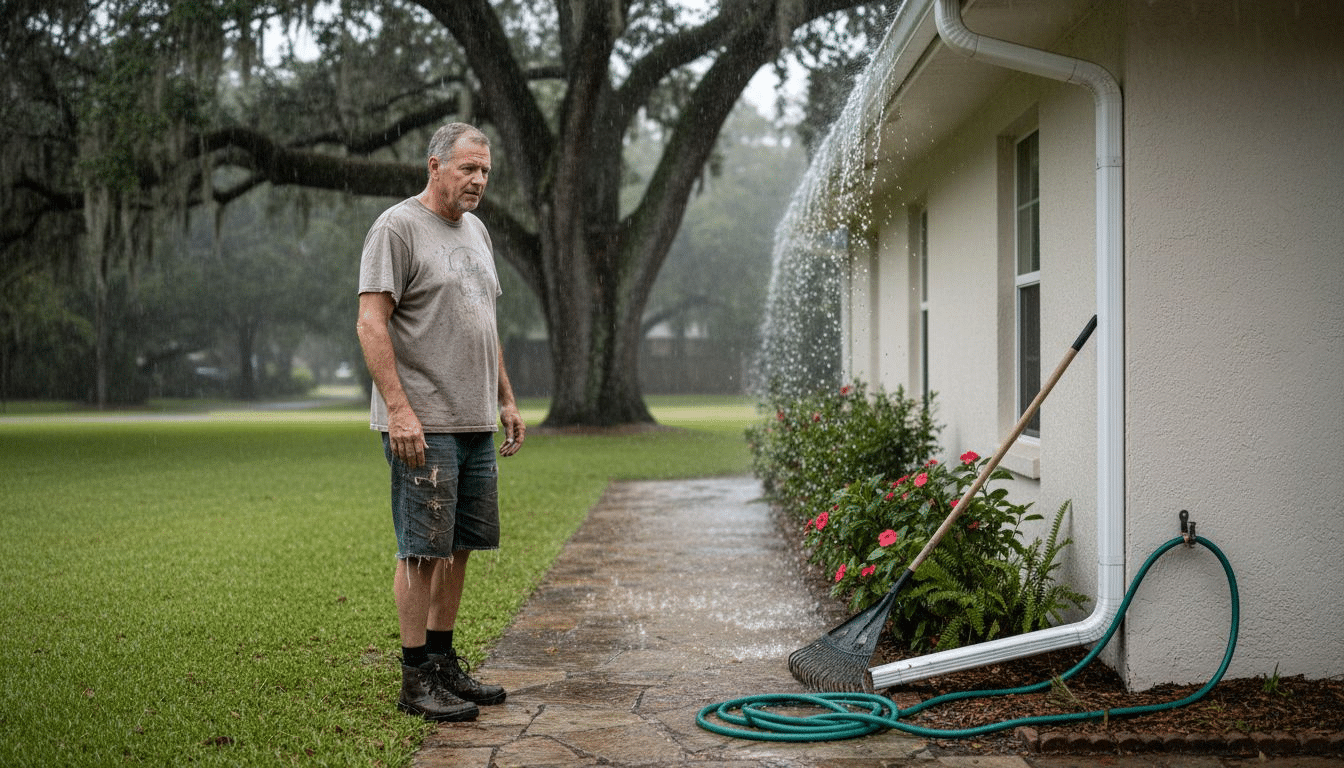
Heavy rain can quickly turn from a welcome relief to a stubborn enemy for homeowners in Lake, Marion, and Sumter counties. Without a balanced roof-to-gutter water flow, uncontrolled water can damage walls, foundations, and landscaping. Understanding the importance of proper gutter sizing and system design helps protect your Central Florida home from costly moisture problems and ensures your investment stands strong through the relentless storm seasons.
Table of Contents
- Roof To Gutter Water Flow Explained
- Key Components Of A Drainage System
- How Roof Design Impacts Water Flow
- Choosing Gutters For Florida’s Rainfall
- Preventing Damage With Proper Maintenance
Key Takeaways
| Point | Details |
|---|---|
| Effective Water Flow Is Essential | Properly designed and maintained roof-to-gutter systems prevent water damage, especially during heavy rains in Florida. |
| Gutter Size and Material Matter | Choose gutters specifically designed for Florida’s climate to withstand high rainfall and resist corrosion. |
| Regular Maintenance Prevents Damage | Schedule consistent gutter inspections and cleanings to avoid clogs and costly repairs. |
| Understand Your Roof Design | Roof pitch and surface area directly impact water flow; ensure your gutter system is sized accordingly. |
Roof to Gutter Water Flow Explained
Water flows from your roof to gutters through a carefully orchestrated system. Gravity pulls rainwater downward, and your roof’s slope guides it toward the gutter system. Without gutters, water cascades off your roof edges unpredictably, which is exactly what you want to avoid.
Understanding how this water moves helps you protect your home. When water isn’t managed correctly, it damages walls, foundations, and landscaping. Central Florida’s heavy rainfall during hurricane season makes this especially critical for homeowners in Lake, Marion, and Sumter counties.
The Slope Effect
Your roof slope is the foundation of effective water flow. A steeper slope moves water faster toward gutters. A shallow slope moves water slower, risking pooling and leaks.
Here’s what happens with proper slope:
- Water accelerates down the roof surface
- Momentum carries it into the gutter system
- Velocity helps water move through downspouts efficiently
- Less standing water means fewer leaks
When slope is insufficient, water sits on the roof longer. This increases the risk of penetration through shingles and underlayment.
Gutter Position and Design
Your gutter’s position relative to your roof edge determines how much water it captures. If gutters sit too low, water overshoots and falls to the ground. If they sit too high, water pools on the roof.
Rain gutters collect water from roof surfaces and channel it to downspouts, preventing uncontrolled water flow that can damage building walls and foundations. Proper positioning ensures most rainfall enters the system rather than splashing away.
Gutter width and depth also matter significantly. A narrow gutter might look fine during light rain but overflow during intense downpours—common in Florida. This is why gutter sizing explained for Florida homes becomes important for your specific climate.
Volume and Velocity Balance
Roof-to-gutter water flow success depends on balancing two factors: the amount of water (volume) and how fast it moves (velocity).
Shallow or improperly sized gutters can cause overflow and stress on sealant joints, leading to potential leaks and structural damage. Your gutter system must accommodate both the rainfall rate and the speed at which water leaves your roof.
Here’s the critical factor:
Gutters designed to handle volume and velocity prevent overflow and reduce stress on joints, protecting your building structure from water damage.
Florida’s intense afternoon thunderstorms deliver rainfall rates of 2-3 inches per hour. A gutter system sized for gentle spring rain will fail spectacularly during hurricane season.
Common Flow Problems
Watch for these water flow issues:
- Water overshooting gutters (roof slope too steep or gutters too low)
- Water pooling on roof (insufficient slope or clogged gutters)
- Overflow at gutter joints (undersized gutters for rainfall volume)
- Water running down fascia boards (gutter misalignment)
- Foundation saturation (downspouts discharging too close to home)
Each problem signals a mismatch between your roof’s water output and your gutter system’s capacity.
Here’s a quick reference to common gutter system issues and their direct consequences for your home:
| Gutter Issue | Immediate Effect | Long-Term Damage |
|---|---|---|
| Water overshoots gutters | Splashing near foundation | Soil erosion, foundation cracks |
| Pooling on roof | Water sits on roofing materials | Shingle leaks, wood rot |
| Overflow at gutter joints | Water drips at seams | Fascia/soffit deterioration |
| Water runs down fascia | Streaks and stains | Mold, paint failure |
| Foundation saturation | Wet soil near home | Basement leaks, settling |
Why This Matters for Your Home
Central Florida homes face moisture challenges year-round. Proper roof-to-gutter water flow prevents foundation erosion, wall damage, and mold growth. It keeps water where it belongs: flowing safely away from your home.
Pro tip: Schedule a gutter inspection before hurricane season starts—ideally in May or June—to ensure your system handles Florida’s heavy rainfall without overflow or leaks.
Key Components of a Drainage System
Your gutter system isn’t just one piece—it’s an interconnected network of parts working together. Each component plays a specific role in moving water away from your roof and protecting your home. Understanding these parts helps you identify problems and maintain your system effectively.
A complete drainage system works like a well-designed downhill path for water. Without all the pieces functioning correctly, water finds alternative routes straight into your walls and foundation.
The Main Players
A typical roof drainage system includes several key components working in harmony. Here’s what makes up a functional system:
- Gutters collect water flowing off your roof
- Downspouts direct water from gutters toward the ground
- Downspout elbows angle water away from your home’s foundation
- End caps seal gutter ends and prevent water escape
- Gutter straps or brackets secure everything in place
- Gutter hangers support the weight of water and gutters
Each component serves a critical purpose. Skip one, and your system loses effectiveness.
Gutters: The Foundation
Gutters are the horizontal channels attached along your roof edges. They catch water before it falls to the ground and direct it toward downspouts. In Central Florida, gutters must handle intense rainfall during hurricane season.
Gutter size matters enormously. Undersized gutters overflow during heavy rain, defeating their purpose entirely. Florida homes need gutters sized for 2-3 inch-per-hour rainfall rates, not gentle spring showers.
Downspouts and Elbows
Downspouts are the vertical pipes transporting water from gutters to the ground level. They’re typically 2×3 inches or 3×4 inches in diameter, sized to match your gutter capacity.
Downspout elbows are angled sections that change water direction. They’re essential because water falling straight down would pool against your foundation. Elbows redirect it away, protecting your home’s structural integrity.
Here’s why this matters:
Quality materials and secure fastening are essential for system durability and effectiveness in managing rainfall loads.
Rusty downspouts or loose elbows compromise your entire system’s performance.
Support and Security
Gutter hangers and straps keep your gutters attached to your fascia boards. Without proper support, gutters sag under the weight of water, creating pools that leak into your home.
These brackets need spacing of 16-24 inches apart to maintain proper support. Lake, Marion, and Sumter county homes face heavy rainfall—your brackets must be strong enough to handle that load.
Why Every Component Matters
A weak link breaks the entire chain. A single loose bracket or damaged elbow compromises water flow throughout your system. This is why professional installation and regular maintenance are non-negotiable.
When you’re evaluating gutter solutions, ensure your gutter drainage system includes quality components rated for Florida weather.
Pro tip: Inspect all gutter components twice yearly—spring and fall—checking for rust, loose brackets, bent elbows, and debris buildup that could obstruct water flow.
How Roof Design Impacts Water Flow
Your roof isn’t just a weather shield—it’s the starting point for your entire drainage system. The way it’s designed determines how water moves, how fast it travels, and where it goes. Small design differences create massive impacts on gutter performance.
Central Florida’s intense afternoon storms put serious stress on roofs. Understanding how your roof design affects water flow helps you anticipate problems before they damage your home.
Roof Pitch and Slope Matter
Roof pitch is the angle or steepness of your roof. Steeper roofs shed water faster than shallow ones. This creates both advantages and challenges for your gutter system.
Here’s how pitch affects water behavior:
- Steeper roofs increase water velocity and momentum
- Water reaches gutters faster and with more force
- Gutters must be sized appropriately to handle that speed
- Shallow roofs move water slowly, risking ponding
- Ponding water penetrates shingles and leaks into your home
Florida homes typically use 4:12 to 6:12 pitch roofs. This moderate slope balances water velocity with structural stability.
Roof Area and Design Type
Roof surface area determines how much water your system must handle. A 3,000 square foot roof collects dramatically more water than a 1,500 square foot roof during the same storm.
Roof design influences water flow via factors like roof area and drainage layout. Your gutters and downspouts must be sized to match your roof’s total square footage.
Roof type also matters significantly. Pitched roofs channel water to valley gutters or eaves gutters where it flows into downspouts. Flat roofs require internal drains or scuppers to prevent water pooling on the surface.
Material and Minimum Slope
Your roofing material influences the minimum slope needed for effective drainage. Asphalt shingles require steeper slopes than metal or slate roofing to ensure water doesn’t pool between shingles.
Pitched roofs channel water differently than flat roofs, and the roofing material also influences the minimum slope needed for effective drainage. Understanding your specific roof type helps you design appropriate gutters.
Design for Overflow Protection
Your roof drainage system must account for overflow during heavy storms or blockages. This is where secondary overflow drains and scuppers come into play.
Think about this scenario:
Roof drainage systems are sized based on rainfall intensity and roof surface area to prevent ponding and overflow during heavy storms and blockages.
Central Florida sees 2-3 inch-per-hour rainfall rates during summer storms. Your primary gutters and downspouts must handle that volume, with backup overflow systems preventing water from pooling on your roof.
Getting Your Roof Design Right
Your roof’s design is fixed—you can’t change the pitch or square footage. But you can install gutters appropriately sized for your specific roof design. This is where professional assessment becomes essential.
When installing new gutters, ensure your contractor accounts for your roof’s unique characteristics.
Pro tip: Document your roof’s pitch, square footage, and any existing water pooling issues before consulting with a gutter installer—this information helps ensure perfect sizing for your home.
Choosing Gutters for Florida’s Rainfall
Florida’s rainfall isn’t like the gentle showers elsewhere—it’s intense, sudden, and relentless. Your gutter choice determines whether water flows safely away from your home or damages your foundation. Choosing the right gutters for Central Florida conditions is one of the smartest investments you can make.
Here’s the reality: standard gutters designed for other climates fail in Florida. You need systems engineered specifically for tropical rainfall rates and coastal humidity.
Material Matters in Florida’s Climate
Florida’s salty, humid air corrodes inferior materials quickly. Copper resists corrosion naturally and lasts decades in coastal environments. Aluminum requires proper coating to survive Florida’s salt air without degrading.
Why material choice is critical:
- Uncoated aluminum rusts within 2-3 years in coastal areas
- Copper develops a protective patina and improves with age
- Steel rusts aggressively unless heavily galvanized
- Vinyl cracks under intense Florida sun and thermal stress
- Stainless steel costs more but offers lifetime durability
In Florida, gutters must handle intense rainfall and resist corrosion due to the humid, coastal environment. Materials like copper and properly coated aluminum offer durability against salt air and frequent heavy rains.
See how different gutter materials perform in Florida’s climate:
| Material | Durability in Humid Conditions | Corrosion Resistance | Upfront Cost |
|---|---|---|---|
| Copper | Lasts decades | Excellent | High |
| Aluminum (coated) | 20-30 years | Good (when coated) | Moderate |
| Steel (galvanized) | 7-15 years | Poor without galvanizing | Low |
| Vinyl | 5-10 years | No corrosion, cracks in heat | Low |
| Stainless Steel | 30+ years | Outstanding | Very High |
Sizing for Florida’s Storm Intensity
Standard 5-inch gutters work in many states but fail during Florida thunderstorms. Central Florida experiences rainfall rates of 2-3 inches per hour during summer downpours—sometimes higher.
Your gutter size must match your roof area and local rainfall intensity. A 3,000 square foot home with a 6:12 pitch roof typically needs 6-inch gutters or larger. Anything smaller risks overflow.
Drainage System Design
Selecting gutters in Florida requires considering high rainfall rates and tropical storm resilience. Drainage systems should be sized according to local rainfall intensity data and designed to handle sudden, heavy downpours.
Think about downspout placement carefully:
- Position downspouts at corners for maximum efficiency
- Space them 30-40 feet apart maximum along gutter runs
- Ensure downspout elbows direct water away from foundations
- Use extensions to move water at least 4-6 feet from your home
- Avoid directing water toward neighboring properties
Corrosion Resistance Is Non-Negotiable
Florida’s environment attacks gutters constantly. Salt spray, humidity, and intense UV rays break down inferior materials.
Here’s what matters most:
Corrosion resistance and system sturdiness are key due to Florida’s humid and salty coastal air, which can degrade standard materials and fasteners over time.
Fasteners corrode too. Stainless steel screws and brackets outlast galvanized hardware by years. If your contractor uses standard steel fasteners, water eventually penetrates and spreads rust throughout your system.
Seamless Versus Sectional
Seamless gutters have fewer joints where water leaks. Sectional gutters join multiple pieces together with sealant. In Florida’s humid climate, seamless gutters resist leaks far better because fewer seams mean fewer failure points.
When comparing types of rain gutters for Florida homeowners, seamless options consistently outperform sectional alternatives in high-rainfall regions.
Pro tip: Request gutters manufactured specifically for Florida’s climate—not generic products designed for dry regions—and verify that fasteners are stainless steel, not galvanized.
Preventing Damage With Proper Maintenance
Your gutters work hard during Florida’s rainy season, but they only protect your home if you maintain them properly. Neglected gutters fail silently, and by the time you notice water damage inside your walls, it’s already expensive. Prevention through regular maintenance is the cheapest insurance policy you can buy.
Think of gutter maintenance like brushing your teeth—small consistent effort prevents catastrophic problems later.
The Cost of Neglect
Gutters that fail due to neglect cause severe water damage to building materials and interiors. Foundation cracks, rotting fascia boards, and moldy attics start with ignored gutters. These repairs can cost thousands of dollars.
Proper maintenance extends gutter life significantly. A well-maintained gutter system lasts 20-30 years. A neglected one fails in 5-7 years.
Cleaning Out Debris
Debris accumulation is the primary gutter killer in Florida. Leaves, pine needles, seeds, and dirt clog gutters and create blockages. When gutters clog, water backs up and overflows, defeating their entire purpose.
Regular gutter maintenance is essential to prevent water damage, including cleaning debris to avoid clogs that cause overflow and water pooling. You should clean your gutters at least twice yearly—spring and fall.
During Florida’s hurricane season, clean gutters every month if possible. Tropical storms drop massive leaf loads that clog systems overnight.
Inspection for Damage
While cleaning, inspect for these critical issues:
- Rust spots or corrosion on metal gutters
- Cracks or holes allowing water escape
- Sagging sections indicating loose brackets
- Separated joints or seams leaking water
- Damaged downspout elbows or extensions
- Fasteners pulling loose from fascia boards
Catch these problems early. A small crack becomes a major leak within weeks in Florida’s humid climate.
Water Flow Direction
Downspout extensions are non-negotiable. Water must travel at least 4-6 feet away from your foundation. Without extensions, water pools against your home’s base, causing foundation cracks and basement seepage.
Inspect downspout elbows regularly:
- Ensure elbows direct water away from the house
- Check that extensions aren’t clogged with debris
- Verify water flows freely without backing up
- Clear standing water near foundation areas
- Redirect downspouts that discharge toward neighbors
The Real Consequence of Failure
Water damage from failed gutters spreads beyond what you can see. Moisture penetrates walls and creates mold colonies in hidden spaces. Indoor air quality suffers. Structural rot weakens your home’s frame.
Here’s what happens:
Gutters that fail due to neglect cause severe water damage to building materials and interiors. Proper maintenance extends gutter life and protects the home’s exterior and foundation from costly moisture-related problems.
Mold remediation costs $2,000-$6,000. Foundation repair costs $10,000-$25,000. Two hours of gutter maintenance costs nothing.
Creating a Maintenance Schedule
Mark your calendar now. When you’re evaluating gutter maintenance needs for Florida homes, consistency matters more than perfection. Quarterly inspections catch problems before they worsen.
Spring cleaning prevents summer overflow. Fall cleaning clears leaves before winter rains arrive. Winter and early spring inspections catch freeze-thaw damage.
Pro tip: Set phone reminders for gutter cleaning on the spring equinox and fall equinox—this ensures you clean at optimal seasonal times without forgetting.
Protect Your Central Florida Home with Expert Gutter Solutions
Understanding how water flows from your roof to gutters is crucial to preventing costly water damage and foundation issues. The article highlights key challenges like improper roof slope, undersized gutters, and corrosion caused by Florida’s intense rainfall and salty air. These problems can lead to overflowing gutters, foundation saturation, and costly repairs. If you want to ensure your gutter system handles heavy storms and protects your home all year, you need a system tailored to your roof design and local climate.
Larry’s Gutters specializes in custom seamless gutter installation, repairs, and maintenance designed specifically for Central Florida homes experiencing intense rainfall and hurricane conditions. Our durable materials and corrosion-resistant products, including effective gutter guards, work together to provide the volume and velocity balance your roof drainage needs. We serve Lake, Marion, Sumter counties, and surrounding areas with quality service you can trust.

Don’t wait until water damage takes hold. Visit Larry’s Gutters now to request your free quote and learn more about our seamless gutter installation and gutter guard solutions. Protect your home today with a professionally engineered gutter system built to withstand Florida’s toughest weather.
Frequently Asked Questions
How does the roof slope affect water flow into gutters?
The roof slope plays a critical role in directing water flow. A steeper roof slope allows water to flow faster toward the gutters, reducing the risk of pooling and leaks. Conversely, a shallow slope can cause water to sit longer on the roof, increasing the likelihood of penetration through shingles and underlayment.
What are the consequences of improperly sized gutters?
Improperly sized gutters can lead to overflow during heavy rain, which stresses sealant joints and may cause leaks and structural damage. Gutters must be sized appropriately to handle local rainfall intensity to prevent these issues.
How can I maintain my gutters to ensure effective water flow?
Regular maintenance is essential for gutters. Clean them at least twice a year, ideally in spring and fall, to remove debris that can cause clogs. Additionally, inspect for rust, cracks, and any signs of sagging or misalignment during your cleanings.
What materials are best for gutters in humid climates?
For humid climates, materials like copper and properly coated aluminum are ideal due to their corrosion resistance. Copper naturally resists corrosion and can last decades, while aluminum requires a protective coating to survive in wet conditions.
