
What is thermal expansion in gutters, and why does it matter?
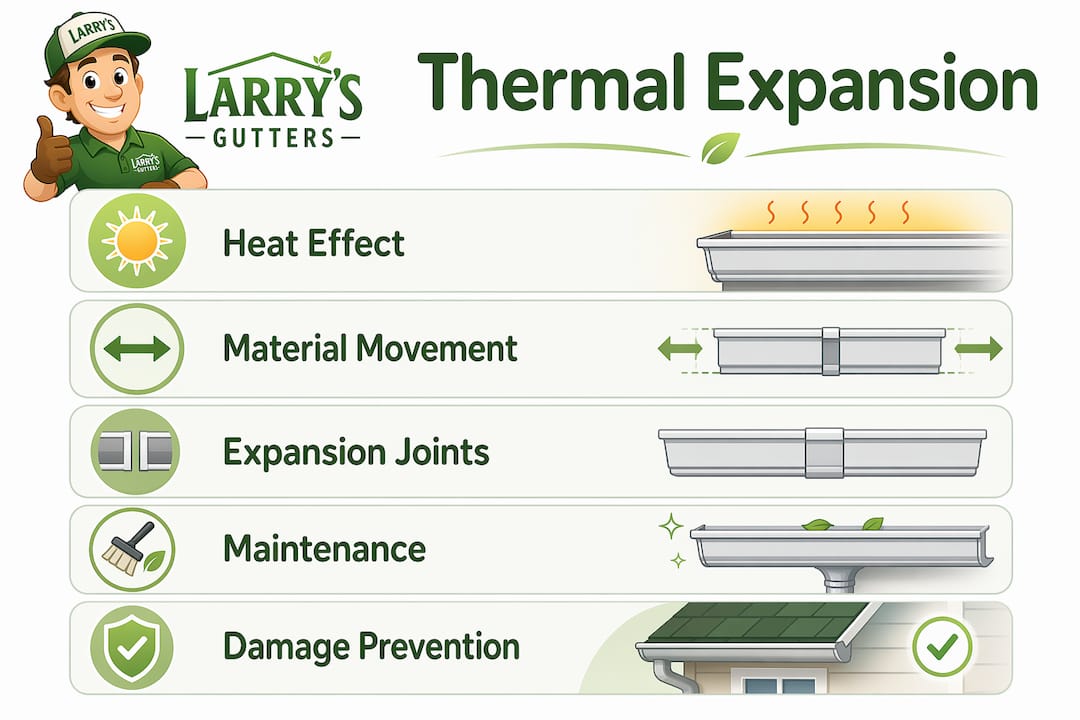
Thermal expansion in gutters is the physical process where aluminum lengthens as temperatures rise and shortens as they fall. This isn’t a defect or a sign of poor installation. It’s basic physics, and every aluminum gutter on every house does it. The problem starts when a gutter system isn’t designed to accommodate that movement, because the metal has to go somewhere when it expands, and it will find the weakest point to do it.
Left unmanaged, thermal expansion causes real, visible damage: leaks at seams, gutters pulling away from the fascia, warped sections that trap standing water, and joint failures that let rain pour behind your siding. In Florida’s climate, where summer temperatures regularly push metal surfaces well past air temperature, the stress cycles are relentless.
Here’s what homeowners need to watch for:
- Gutter sagging or bowing along the front edge, especially on long runs
- Visible gaps at seams where sealant has cracked or pulled apart
- Gutters pulling away from the fascia board, sometimes with fastener heads visibly protruding
- Water stains on siding directly below gutter joints after rain
- Audible popping or creaking from the roofline on hot afternoons as metal expands against hangers
- Warped or buckled sections that disrupt proper drainage slope
Managing thermal expansion isn’t complicated, but it requires the right installation approach from day one, plus periodic maintenance to catch problems before they become expensive.
How does thermal expansion affect aluminum gutters specifically?
Aluminum expands or contracts about 13.1 micro-inches per linear foot for every 1°F change in temperature. That sounds tiny, but scale it up to a 50-foot gutter run across a 100°F temperature swing, and expansion can reach nearly one inch, pressing hard against every connection point in the system.
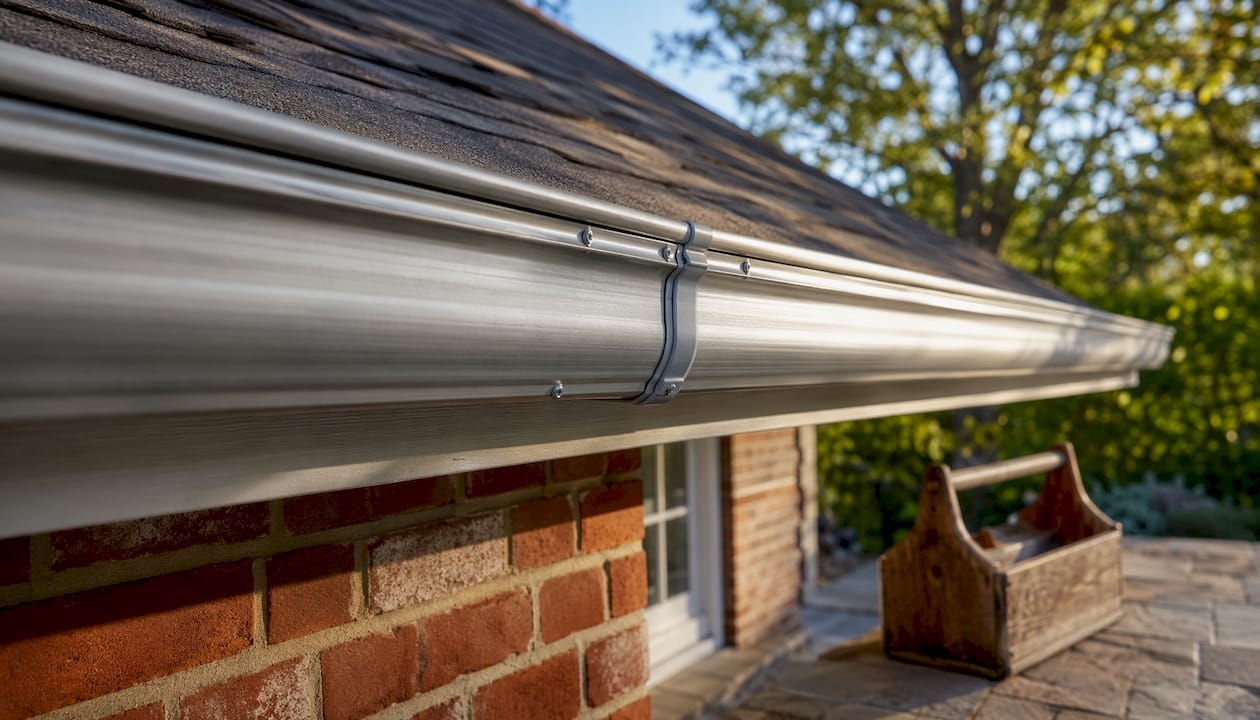
Aluminum also expands nearly twice as much as steel under the same temperature range. That gap matters when you’re choosing materials or deciding how aggressively to plan for movement. Steel gutters still need attention at seams, but aluminum demands a more deliberate approach to expansion accommodation from the start.
What “oil-canning” means and why it’s permanent
When a gutter run is fastened too rigidly and has no room to move, the metal buckles under compressive stress. Installers and contractors call this “oil-canning,” the visible creasing or wavy deformation along the face of the trough. This damage is permanent because the aluminum has reached metal fatigue. You can’t bend it back. The only fix is cutting out and replacing the affected section.
Thicker aluminum (0.032") resists oil-canning better than standard 0.027" material because it’s stiffer, but both gauges expand at exactly the same rate per foot since the coefficient of thermal expansion is a fixed property of the alloy, not the thickness.
The color factor most homeowners overlook
Gutter color directly affects how hot the metal gets, and hotter metal expands more. Dark-colored gutters absorb more solar energy, raising metal temperature 30–40°F above ambient air temperature. On a 95°F Florida afternoon, a dark bronze gutter could be sitting at 130–135°F while a white gutter on the same house stays much closer to air temperature.
Pro Tip: If you’re choosing a gutter color in a hot climate, lighter shades like white or cream keep metal temperatures lower, reducing the intensity of expansion cycles and extending the life of sealants and joints.
Key factors that determine how much your gutters move:
- Run length: longer runs accumulate more total movement
- Gutter color: darker colors drive higher metal temperatures
- Fastener type: rigid spikes prevent movement; hidden hangers allow it
- Installation temperature: gutters installed in cold weather start at their shortest and have more room to expand before stressing connections
How do expansion joints protect your gutter system?
Expansion joints are the most direct solution to thermal movement in long gutter runs. They physically separate a continuous run into independent segments, each free to expand and contract without pushing stress into the next section. Without them, gutters installed without proper allowance for thermal expansion will leak at their joints.
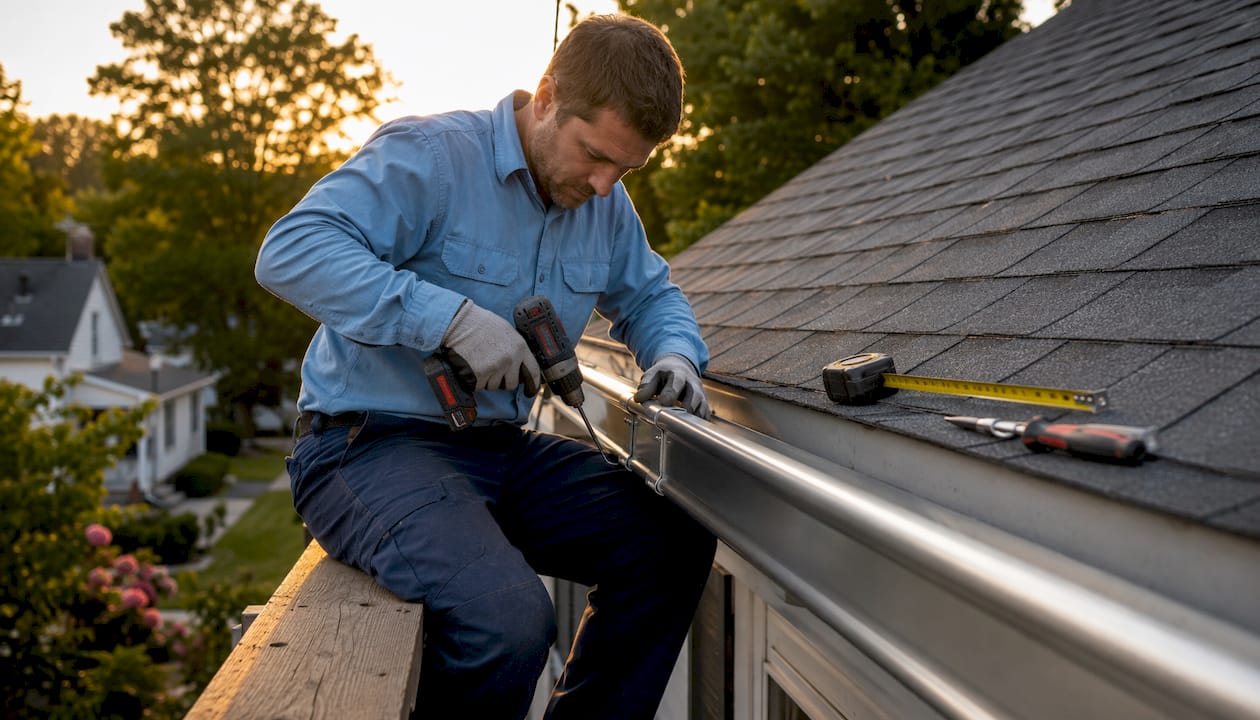
Industry standard calls for expansion joints on runs longer than 50 feet, with many installation guides recommending placement every 40 feet for more consistent protection. Each joint creates a small, intentional gap between sections, covered by a flexible sleeve or cover plate that bridges the gap while allowing movement in both directions.
Where to place expansion joints
Placement location matters as much as spacing. Expansion joints act as dams that stop water flow at their location, so placing them at a low point in the run creates a pooling problem. The correct approach is to position joints at high points on the gutter run, so water flows away from the joint toward the downspouts rather than sitting against it.
For a deeper look at how these components work in practice, gutter expansion joints explained covers the mechanics in homeowner-friendly detail.
Types of expansion joints and their components
| Joint type | Material | Best use case |
|---|---|---|
| Rigid cover plate with rubber liner | Aluminum cover + EPDM strip | Standard residential runs in moderate climates |
| Flexible rubber/EPDM insert | Full rubber or EPDM body | Extreme climates with large temperature swings |
| Slip connector | Overlapping aluminum sleeves | Shorter runs needing minimal movement allowance |
Key components in a properly installed expansion joint:
- A 1-inch gap between adjoining gutter sections to allow movement
- A self-adhesive rubber or EPDM membrane covering the gap on the interior
- An exterior cover plate centered over the joint (not caulked, so it can float)
- No sealant on the cover plate itself, since caulking it defeats the purpose
How can you prevent thermal expansion damage in your gutters?
Prevention starts at installation and continues through regular seasonal checks. Getting both right keeps a gutter system performing for decades instead of failing within a few years.
Installation best practices
- Install at moderate temperatures. Ideal installation occurs between 60–90°F to set the gutter at a neutral length. Gutters installed on a cold morning start fully contracted; when summer heat arrives, the metal expands with nowhere to go.
- Choose seamless gutters. Seamless aluminum gutters eliminate the mid-run seams that are the most vulnerable points under thermal stress. Fewer joints mean fewer places for sealant to crack and water to escape.
- Use hidden hangers, not spikes. Hidden hangers screw into the fascia and clip over the gutter lip, allowing the metal to slide slightly as it expands. Spikes driven through the front face lock the gutter in place and force it to warp instead of move.
- Space hangers correctly. Hangers spaced too far apart let long unsupported sections flex and buckle. Closer spacing distributes movement more evenly.
- Install expansion joints on runs over 40–50 feet. Place them at high points in the run, not low points.
- Use flexible, UV-resistant sealant. Standard caulk hardens and cracks under heat cycling. A polyurethane or EPDM-compatible sealant stretches with the metal.
Seasonal maintenance routine
- Spring: Inspect all seams and joints after winter contraction cycles. Look for cracked sealant or gaps that opened up.
- Early summer: Walk the roofline on a hot afternoon and listen for popping or creaking. Check for visible bowing on long runs.
- Mid-summer: Mid-summer inspections help detect warped sections or failed seams before late-summer rains arrive and expose the damage.
- Fall: Reseal any joints that show movement gaps before winter contraction pulls them wider.
A full seasonal gutter maintenance checklist walks through each inspection point in detail, including what to look for on Florida homes specifically.
Pro Tip: Gutter color is a maintenance decision, not just an aesthetic one. Choosing a lighter color in a hot climate reduces peak metal temperature by 30–40°F, which directly lowers the stress on sealants, joints, and hangers over the life of the system.
What the Larrysgutters team sees in the field
The professionals at Larrysgutters have installed and maintained seamless gutter systems across Central Florida for years, and thermal expansion damage is one of the most consistent patterns they encounter. Florida’s combination of intense sun, high humidity, and sudden afternoon rainstorms creates some of the most demanding thermal cycling conditions in the country.
The most common call Larrysgutters receives after a hot summer involves gutters that were installed without expansion joints on long runs, or with spike fasteners that locked the metal in place. Both situations produce the same result: bowing, seam failure, and water running behind the fascia instead of through the downspouts.
Pro Tip: Don’t wait for a leak to schedule an inspection. A visual check from the ground on a hot afternoon, looking for waviness along the gutter face or fastener heads sticking out from the fascia, takes five minutes and can catch a problem before it becomes a $500 repair.
Larrysgutters specializes in seamless gutter installation designed specifically to handle Florida’s thermal demands, using hidden hangers, properly spaced expansion joints, and flexible sealants rated for UV exposure.
Real-world examples of thermal expansion damage in gutter systems
A 60-foot aluminum run without expansion joints
A common scenario: a homeowner has a 60-foot continuous aluminum gutter run installed in january when temperatures are mild. The gutter sits at its shortest contracted length at installation. By july, with metal surface temperatures climbing well above air temperature due to direct sun exposure, that run has expanded by more than an inch. With no expansion joint and rigid spike fasteners, the metal has nowhere to go. The front face bows outward, the seam at the far end tears open, and water pours down the siding during the first heavy rain.
The fix requires removing the damaged section, replacing the spike fasteners with hidden hangers, cutting the run into two segments, and installing an expansion joint at the midpoint. The repair costs significantly more than the joint would have at installation.
Dark-colored gutters on a south-facing roofline
A property manager on a south-facing building selects dark bronze gutters for aesthetic reasons. The south exposure means the gutters receive direct sun from mid-morning through late afternoon. Metal temperatures regularly reach 30–40°F above ambient, accelerating every expansion cycle. Within two seasons, the sealant at every sectional joint has cracked, and the hangers have begun pulling away from the fascia on the longest run.
Switching to lighter-colored gutters at replacement, adding expansion joints, and using UV-resistant polyurethane sealant resolves the recurring failure pattern.
Seamless gutters with proper joint placement
A homeowner installs seamless aluminum gutters with hidden hangers and expansion joints placed every 40 feet, positioned at the high points of each run. Installation happens in october at around 70°F. Over the following years, the gutters expand and contract freely through Florida’s seasonal swings. Seasonal inspections catch minor sealant wear at one joint after three years, which gets resealed before any water intrusion occurs. The system performs without structural failure.
The difference between these three scenarios isn’t the material or the climate. It’s the installation approach and whether the system was designed to move.
Key Takeaways
Thermal expansion in aluminum gutters is manageable with the right installation design and consistent seasonal maintenance, but ignoring it leads to permanent metal fatigue and costly replacement.
| Point | Details |
|---|---|
| Aluminum expands significantly | Aluminum moves about 13.1 micro-inches per linear foot per 1°F change, reaching nearly one inch on a 50-foot run across a 100°F swing. |
| Expansion joints are required | Install expansion joints every 40–50 feet on long runs, positioned at high points to prevent water pooling at the joint. |
| Color affects expansion intensity | Dark gutters run 30–40°F hotter than ambient, increasing stress on sealants and hangers; lighter colors reduce peak metal temperature. |
| Oil-canning damage is permanent | Buckling from thermal fatigue cannot be reversed; affected sections must be replaced, making prevention the only cost-effective strategy. |
| Installation temperature matters | Installing gutters at 60–90°F sets a neutral length that reduces the risk of future buckling or seam failure. |
