TL;DR:
- Proper roof and gutter coordination ensures water is directed correctly while enhancing curb appeal. Installing drip edges accurately, setting appropriate pitch, and selecting materials like aluminum are essential for system longevity. Coordinating roof and gutter replacements prevents water damage and creates a seamless, durable exterior system.
Roof and gutter coordination is defined as the precise alignment of roofing components, drip edge flashing, and gutter systems to control water flow and unify your home’s exterior appearance. The best roof and gutter coordination ideas start at the drip edge, where roofing and gutters physically meet, and extend outward to color, material, and downspout placement decisions. Get this interface wrong and you risk fascia rot, foundation erosion, and a home that looks like it was assembled from leftover parts. Get it right and you have a system that handles Florida’s heaviest downpours while adding real curb appeal.
1. Nail the drip edge alignment first
The drip edge is the single most critical element in any roof and gutter coordination plan. Drip edge flashing at eaves must be installed under the underlayment, and at rakes over the underlayment, per IRC R905.2.8.5, using corrosion-resistant metal that extends properly to direct water into gutters. That sequencing is not optional. It determines whether water travels into your gutter trough or behind it.
Proper drip edge alignment extending into the gutter prevents water bypass behind the gutter, which is one of the most common and expensive integration failures. Gutter hang height must be set so the drip edge lip sits directly over the gutter trough. Miss that by even half an inch and you create a water path straight to your fascia board.
Pro Tip: In retrofit installs where the existing drip edge is too short, use a gutter-apron drip-edge profile that extends further into the gutter channel. This specialized profile is the professional fix for older homes where standard drip edges fall short of the gutter lip.
2. Set the right gutter pitch and downspout spacing
Pitch and spacing are the two most misunderstood variables in gutter installation. Recommended gutter pitch is 1/4 inch drop per 10 feet, with downspout spacing no more than 40 feet apart to prevent overflow and promote efficient drainage. That slope keeps water moving without creating a visible tilt that looks awkward from the street.
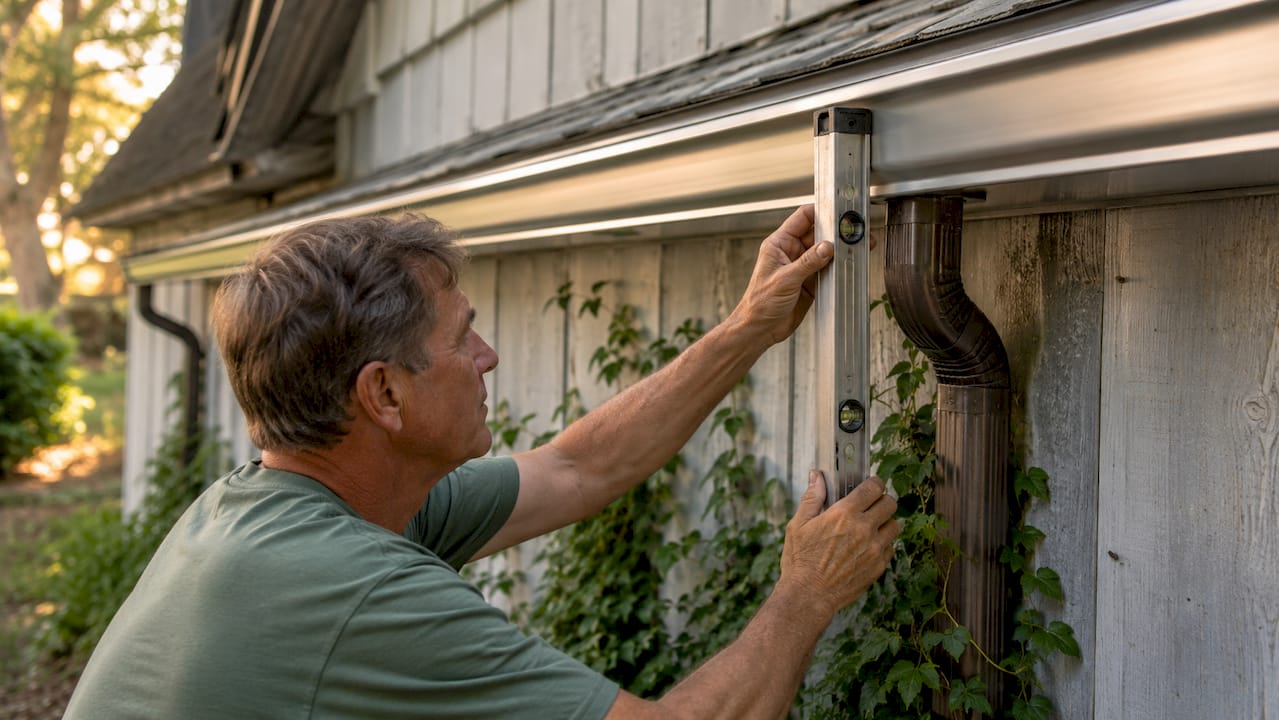
Long gutter runs over 40 feet require multiple downspouts with a split pitch, meaning the gutter slopes toward a downspout at each end rather than one end only. Roof valleys concentrate water flow significantly, so oversized downspouts are often required at those points. Use the downspout placement guide from Larrysgutters to calculate spacing based on your roof’s square footage and local rainfall intensity.
DIYers often miss that gutter pitch alone is insufficient without properly sized and spaced downspouts to prevent overflow during heavy rain. Florida’s rainfall events are intense and short, which means your system needs to move a large volume of water in a short window. Undersizing downspouts is the most common reason gutters overflow even when pitch is correct.
3. Replace roof and gutters at the same time when possible
Coordinating roof replacement with gutter installation creates a tighter, more watertight integration by aligning gutters with newly installed drip edge. This approach prevents fascia rot and improves long-term water management. The practical reason is simple: new drip edge is installed as part of the roofing job, and hanging new gutters immediately after guarantees the two systems are matched precisely.
Replacing gutters on an old roof means working around existing drip edge that may be corroded, bent, or improperly positioned. You end up compensating for someone else’s mistakes. Doing both at once eliminates that variable and often saves money on labor since both crews are already mobilized. Check the gutter replacement workflow Larrysgutters recommends for Florida homeowners to understand how to sequence both projects efficiently.
4. Match or contrast gutter colors intentionally
Color is where most homeowners either win big on curb appeal or quietly undermine it. Matching gutter colors to fascia or using contrasting colors can either unify or highlight rooflines, adding to curb appeal and style coherence. Neither approach is wrong. The mistake is choosing without intention.
Here are the two main strategies and when each works best:
- Match gutters to fascia or trim: Creates a clean, unified look where gutters visually disappear into the roofline. Works well on traditional and colonial-style homes where you want the architecture to read as one cohesive unit.
- Contrast gutters against the siding: Makes the roofline a design feature. White gutters on a dark gray home, or black gutters on a cream exterior, draw the eye upward and add definition to the structure.
- Match gutters to the roof: Less common but effective on homes with strong horizontal lines. Charcoal gutters on a charcoal shingle roof create a bold, modern look.
Pro Tip: GAF’s exterior mood board tool lets you test gutter and trim color combinations against your actual roof color before committing to a purchase. Use it before ordering aluminum stock to avoid a costly color mismatch.
5. Choose the right gutter material for your climate and style
Material choice affects both how your gutters look and how long they last. Here is a direct comparison of the four most common options:
| Material | Appearance | Lifespan | Best for |
|---|---|---|---|
| Aluminum | Clean, paintable, modern | 20 to 30 years | Most residential homes, Florida climate |
| Galvanized steel | Industrial, heavier look | 20 years with maintenance | High-wind areas, budget installs |
| Copper | Warm, distinctive patina | 50 or more years | Historic homes, premium aesthetics |
| Vinyl | Bright white, lightweight | 10 to 20 years | Low-budget, mild climates |
Aluminum is the dominant choice in Central Florida because it resists corrosion in humid conditions and accepts paint well, making color coordination straightforward. Copper is the premium option for homeowners who want gutters that become a visual feature over time as the metal develops its characteristic green patina. Vinyl degrades faster under UV exposure, which makes it a poor long-term choice in Florida’s sun.
6. Use rain chains as a creative downspout alternative
Rain chains replace traditional downspouts with a series of linked cups or rings that guide water visually from gutter to ground. Originally a Japanese design element called kusari-doi, rain chains turn a functional drainage component into a decorative feature. They work best in areas with moderate rainfall and where the water can discharge into a decorative basin, gravel bed, or rain garden.
“Rain chains are not just a design choice. They are a conversation starter that signals intentional, thoughtful design to anyone who visits your home.”
The practical limitation is capacity. Rain chains handle light to moderate rain well but can be overwhelmed by the intense, high-volume storms common in Florida. The best application is on a covered porch or secondary roof section where water volume is lower. Pair them with a decorative gutter end cap at the gutter terminus for a finished, polished look.
7. Extend roof overhangs to reduce gutter load
Larger roof overhangs reduce the volume of water that reaches your gutters by directing runoff further from the foundation before it hits the ground. A 24-inch overhang on a single-story home can significantly reduce splash-back erosion and lower the demand on your gutter system during heavy rain. This is a structural decision that requires planning during a roof replacement or new construction, not a retrofit option.
For existing homes, the practical benefit of understanding overhang depth is in sizing your gutters correctly. A shallow overhang concentrates water flow at the eave and demands a wider gutter profile, typically 6-inch K-style rather than the standard 5-inch. Matching gutter width to overhang depth and roof pitch is a coordination detail most DIY guides skip entirely.
8. Add gutter guards to complete the system
Gutter guards are the final layer of a well-coordinated system. They prevent debris buildup that causes overflow, which undermines even a perfectly pitched and sized gutter installation. For Florida homeowners dealing with pine needles, oak leaves, and Spanish moss, guards are not optional. They are maintenance insurance. Larrysgutters covers the gutter guard options that perform best in Florida’s specific debris and rainfall conditions.
From a coordination standpoint, choose guards that sit flush with the gutter lip and do not create a visible gap or overhang. Micro-mesh guards are the cleanest looking option and the most effective at blocking fine debris. Avoid foam inserts, which degrade quickly in UV-heavy climates and create a maintenance problem of their own.
9. Avoid the most common coordination mistakes
Most roof and gutter failures trace back to a short list of avoidable errors. Common failures include misaligned drip edge, incorrect gutter pitch, or insufficient downspouts resulting in overflow and water damage. Here is how to avoid each one:
- Measure pitch before cutting hangers. Snap a chalk line from the high end to the low end of the gutter run before installing a single hanger. Adjust until you have consistent 1/4-inch drop per 10 feet.
- Check drip edge position before hanging gutters. The drip edge must extend over the gutter lip. If it does not, install a gutter apron before proceeding.
- Count downspouts based on run length, not habit. One downspout per 40 feet of gutter is the maximum. Add one at every valley.
- Test color samples in natural light. Paint chips and catalog swatches look different in Florida’s bright sun than they do indoors. Always test before ordering full stock.
- Clean gutters before evaluating pitch. A gutter full of debris looks like it has poor pitch when it actually drains fine once cleared. Diagnose after cleaning, not before.
Pro Tip: Use a step-by-step installation guide to sequence your work correctly from drip edge to downspout. Skipping steps is the primary cause of leaks at joints and end caps.
Key takeaways
Effective roof and gutter coordination requires aligning drip edge, pitch, downspout spacing, material, and color as a single integrated system rather than treating each element as a separate decision.
| Point | Details |
|---|---|
| Drip edge is the foundation | Install per IRC R905.2.8.5 so water flows into the gutter trough, not behind it. |
| Pitch and spacing prevent overflow | Use 1/4-inch drop per 10 feet and place downspouts no more than 40 feet apart. |
| Color coordination adds real value | Match gutters to fascia for unity or contrast them to highlight rooflines intentionally. |
| Material choice affects longevity | Aluminum is the best all-around choice for Florida’s humidity and UV exposure. |
| Replace together when possible | Coordinating roof and gutter replacement produces a tighter, longer-lasting water seal. |
What I have learned from watching these systems succeed and fail
Most homeowners treat gutters as an afterthought. They spend months choosing shingles, fascia color, and trim details, then order whatever gutters are cheapest and hang them the day the roofers leave. That sequence produces the majority of the water damage claims I see on Florida homes.
The homes that hold up best over time are the ones where the gutter system was planned alongside the roof, not after it. That means the drip edge profile was chosen with the gutter width in mind. The downspout locations were mapped before the first hanger went up. The color was tested against the actual shingle color in outdoor light.
Small coordination decisions compound over time. A gutter that is hung 3/4 of an inch too low looks fine for two years, then causes fascia rot that costs more to repair than the original gutter installation. A color that was chosen from a catalog chip looks slightly off every single day for the next 20 years. These are not dramatic failures. They are slow, quiet ones that erode both your home’s structure and your satisfaction with it.
My honest recommendation: treat the roof-to-gutter interface as one system with one plan. If you are replacing your roof, get gutter quotes at the same time. If you are only replacing gutters, have a roofer inspect the drip edge before the gutter crew arrives. The coordination cost is minimal. The cost of skipping it is not.
— Larrysgutters
See how seamless gutters make coordination easier

Seamless gutters eliminate the joints where leaks start, which makes color matching, pitch control, and drip edge alignment significantly more precise. Larry’s Gutters fabricates seamless gutters on-site to fit your exact roofline, so there is no cutting, piecing, or sealing required at joints. If you are planning a roof replacement or gutter upgrade in Central Florida, find out whether seamless gutters are worth it for your specific home and budget. You can also explore the full seamless gutter installation process to understand what professional coordination looks like from start to finish.
FAQ
What is roof and gutter coordination?
Roof and gutter coordination is the process of aligning drip edge flashing, gutter sizing, pitch, and color with your roofing system to control water flow and unify your home’s exterior appearance. The industry term for the technical side of this process is roof-to-gutter integration.
How far should drip edge extend into the gutter?
The drip edge must extend over the gutter lip so water flows directly into the trough. In retrofit situations where the existing drip edge falls short, a gutter-apron drip-edge profile extends the metal further into the gutter channel to prevent water bypass.
What gutter pitch is correct for my home?
The standard pitch is 1/4 inch of drop per 10 feet of gutter run. For runs longer than 40 feet, use a split pitch that slopes toward a downspout at each end rather than draining to one side only.
Should I replace gutters when I replace my roof?
Coordinating roof replacement with gutter installation produces a tighter, more watertight system and prevents fascia rot. If your gutters are more than 15 years old or show signs of sagging or corrosion, replacing both at the same time is the more cost-effective choice.
What gutter material works best in Florida?
Aluminum is the best choice for Florida homes because it resists corrosion in humid conditions, accepts paint for color coordination, and lasts 20 to 30 years under Florida’s UV and rainfall conditions. Vinyl degrades faster under intense sun and is not recommended for long-term installs in the region.
