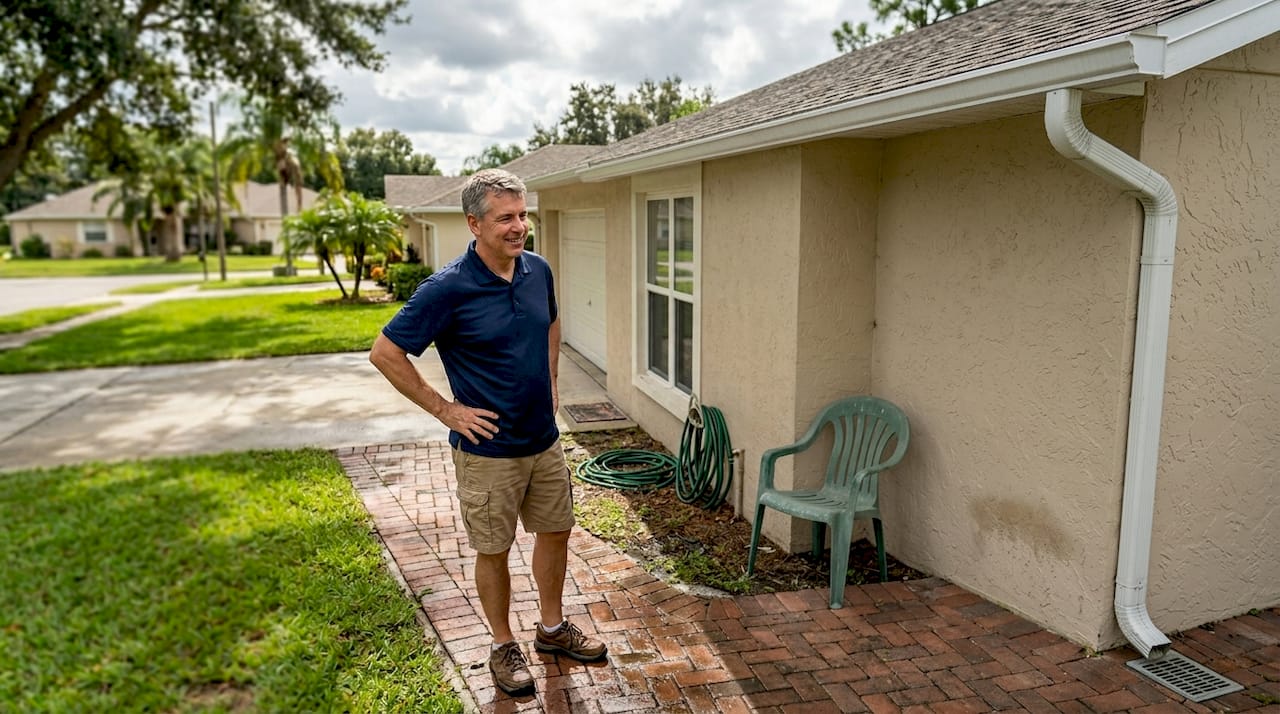
Most homeowners think gutters are just decorative trim that catches leaves. That’s a costly misconception. Your gutters are a frontline defense system protecting your roof, walls, and foundation from Florida’s relentless rainfall. Without properly functioning gutters, water cascades off your roof edge, saturating wooden components and pooling around your foundation. In Central Florida’s climate, where afternoon storms dump inches of rain in minutes, this oversight leads to thousands in preventable damage. This guide reveals exactly how gutters safeguard your home’s structural integrity and what Lake, Marion, and Sumter county residents must know to avoid expensive repairs.
Table of Contents
- How Gutters Protect Your Roof And Home Structure
- Common Gutter Problems In Central Florida And Impact On Roof Health
- Gutter Guard Options And Maintenance For Lasting Roof Protection
- How Proper Gutter Care Extends Roof Life And Saves Homeowners Money
- Reliable Gutter Solutions For Central Florida Homeowners
Key takeaways
| Point | Details |
|---|---|
| Water channeling prevents damage | Gutters direct rainwater away from roof edges and foundations, stopping saturation that weakens structures |
| Clogs accelerate roof deterioration | Blocked gutters cause water backup onto shingles, leading to rot, leaks, and premature material failure |
| Guards reduce but don’t eliminate maintenance | Gutter guards cut debris by 87-94% yet still require annual cleaning to remove biofilm and ensure flow |
| Regular inspections extend system life | Post-storm checks and seasonal maintenance prevent minor issues from becoming costly roof or foundation repairs |
| Professional installation maximizes protection | Proper slope, fastening, and material selection ensure gutters perform optimally during Florida’s heavy rainfall events |
How gutters protect your roof and home structure
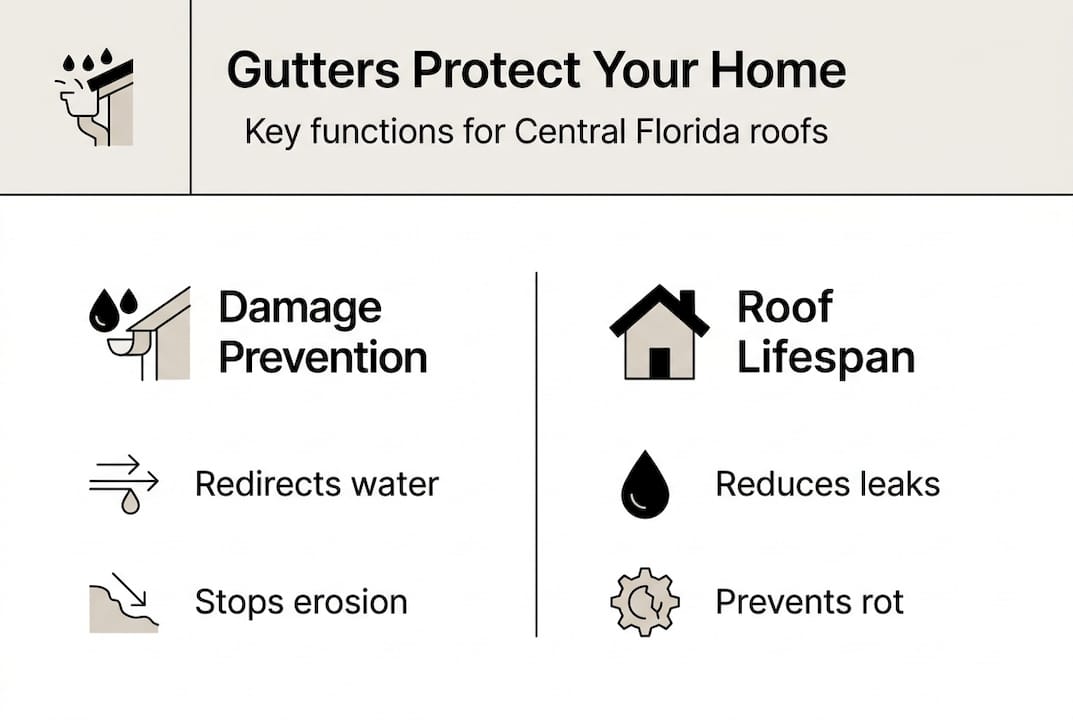
Your gutter system does far more than catch leaves. Gutters collect rainwater from the roof edge and channel it away, preventing saturation and structural weakening. When rain hits your roof, it flows to the edges where gutters capture and direct it through downspouts to safe discharge points away from your foundation. Without this controlled drainage, water pours directly onto fascia boards, soaks into roof decking, and pools against your home’s base.
Central Florida’s weather patterns make this protection critical. The region experiences intense afternoon thunderstorms that deliver 2 to 4 inches of rain in under an hour. Your roof sheds thousands of gallons during these events. If gutters fail, that volume hammers vulnerable areas. Fascia boards absorb moisture and rot within months. Roof decking stays damp, creating ideal conditions for mold and wood decay. Foundation soils become oversaturated, causing settling and cracks.
Understanding why Florida homes need gutters starts with recognizing regional challenges. Pine trees, live oaks, and palm fronds generate constant debris. High humidity accelerates organic breakdown in gutters. Hurricane season brings wind-driven rain that tests every component. Your gutters must handle both routine storms and extreme weather events.
Pro Tip: Walk your property after every major storm to check for gutter overflow, sagging sections, or standing water near your foundation. Early detection prevents minor problems from escalating into structural damage.
Here’s what properly functioning gutters protect:
- Roof shingles from constant water exposure that degrades adhesive and granules
- Fascia and soffit boards from moisture penetration and wood rot
- Roof decking from dampness that compromises structural integrity
- Foundation walls from hydrostatic pressure and soil erosion
- Basement or crawl space from water intrusion and flooding
- Landscaping from erosion and plant damage caused by roof runoff
Expert roofing contractors confirm that functional gutters prevent fascia rot and roof leaks by managing water flow away from vulnerable roof edges and structural components.
Common gutter problems in Central Florida and impact on roof health
Central Florida’s environment creates unique challenges for gutter systems. Pine needles from longleaf and slash pines accumulate rapidly, forming dense mats that block water flow. Live oak leaves and Spanish moss add organic material that decomposes into sludge. Palm fronds and seed pods create bulky obstructions. These debris types combine with Florida’s humidity to form stubborn clogs that standard cleaning struggles to remove.
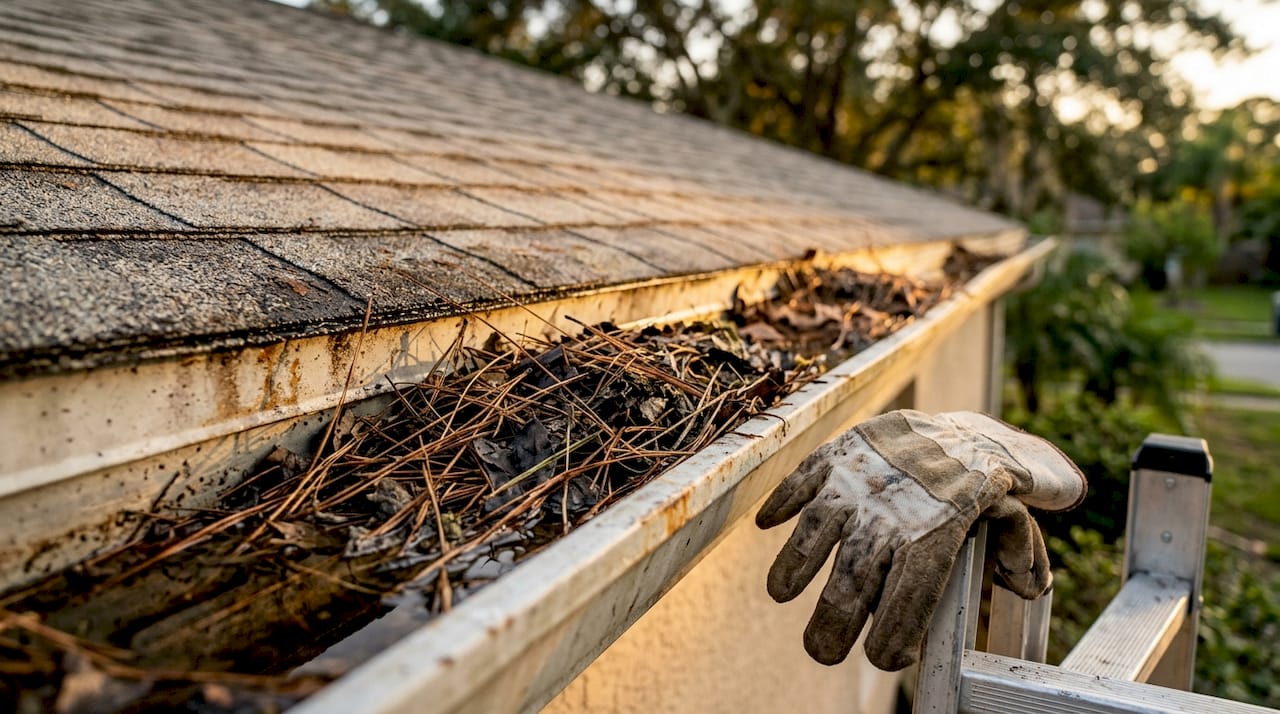
Clogged gutters back up water onto roofs, causing shingle deterioration and decking rot. When gutters overflow, water has nowhere to go except backward under shingle edges. This reverse flow saturates the roof’s wooden substrate. Asphalt shingles lose granules when constantly wet. Their adhesive strips fail prematurely. Wooden decking absorbs moisture, swells, and develops soft spots. Within one season of neglect, you’re facing repair bills that dwarf maintenance costs.
Storm season amplifies these risks. Lake, Marion, and Sumter counties experience tropical systems that dump 6 to 10 inches of rain in 24 hours. Your gutters must handle peak flows that exceed their design capacity if debris restricts channels. Post-hurricane inspections often reveal damage that went unnoticed during the event. Loose fasteners allow sections to pull away. Seams separate under stress. Downspouts disconnect or clog with storm debris.
Recognizing problems early saves your roof. Watch for these warning signs:
- Water spilling over gutter edges during moderate rainfall
- Staining or mildew on fascia boards and exterior walls
- Sagging gutter sections indicating weight from trapped debris or water
- Separation between gutters and fascia from failed mounting brackets
- Rust spots or holes in metal gutters from standing water corrosion
- Plant growth inside gutters showing long-term moisture and soil accumulation
Pro Tip: Schedule gutter cleaning twice yearly at minimum, ideally before and after hurricane season (May and November). Add extra cleanings if you have overhanging trees or notice reduced flow during rain.
Homeowners who ignore these symptoms face escalating damage. What starts as a small leak becomes widespread rot. A loose section tears away during the next storm. Understanding gutter troubleshooting for Florida homes helps you identify issues before they compromise your roof. Learning how to handle Florida rain gutters for lasting protection ensures your system performs when weather tests it most.
Gutter guard options and maintenance for lasting roof protection
Gutter guards offer a practical solution for reducing debris accumulation, but they’re not magic shields. Gutter guards reduce debris entry by 87 to 94%, cutting cleaning frequency drastically but requiring annual maintenance. The most effective systems use micro-mesh screens that block pine needles and small particles while allowing water to flow freely. Cheaper alternatives like vinyl inserts or foam blocks fail quickly in Florida’s heat and humidity.
Understanding your options helps you choose the right protection level. Different guard types offer varying performance based on your property’s debris load and budget.
| Guard Type | Debris Reduction | Lifespan | Cost per Foot | Maintenance Needs |
|---|---|---|---|---|
| Micro-mesh aluminum | 92-94% | 20-25 years | $8-12 | Annual inspection, biofilm removal |
| Perforated aluminum | 85-90% | 15-20 years | $5-8 | Twice yearly cleaning, debris brushing |
| Vinyl snap-on | 70-80% | 10-15 years | $2-4 | Frequent cleaning, replacement in heat |
| Foam inserts | 60-75% | 5-8 years | $3-5 | Heavy maintenance, mold issues |
Even premium guards require attention. Biofilm, a slimy bacterial layer, develops on mesh surfaces in humid climates. This organic coating repels water, reducing guard effectiveness. Pollen creates a fine dust that accumulates over time. Small debris particles wedge into perforations. You’ll still need annual cleanings, but the job takes 30 minutes instead of three hours.
Installation quality matters as much as guard type. Guards are not maintenance free; vinyl fails in heat; professional installation is critical in Florida. Improper mounting creates gaps where debris enters. Incorrect slope prevents water from reaching downspouts. DIY installations often void manufacturer warranties and create more problems than they solve. During Florida’s intense thunderstorms, poorly installed guards can cause water to overshoot gutters entirely.
Maintenance tasks remain necessary even with guards:
- Annual professional inspection to check fasteners and screen integrity
- Biofilm removal using appropriate cleaners that don’t damage guards
- Downspout flushing to clear accumulated fine particles
- Seal checks at guard edges where debris can infiltrate
- Storm damage assessment after hurricanes or severe weather
Pro Tip: Hire professionals for guard installation to ensure proper slope, secure mounting, and warranty coverage. The upfront cost pays for itself through optimal performance and avoided overflow damage during heavy rains.
Realistic expectations help you budget appropriately. Quality gutter guards cost $800 to $2,000 for an average home but reduce cleaning expenses and extend gutter life. They prevent the worst clogs that cause roof damage, making them worthwhile investments for properties with significant tree coverage. Exploring gutter protection tips for Florida homeowners and gutter upgrade ideas reveals options that match your specific needs and budget.
How proper gutter care extends roof life and saves homeowners money
The financial case for gutter maintenance is straightforward: small investments prevent massive expenses. Florida homes see surge in costly gutter leaks causing rot and mold; maintenance is cheaper than repairs. Gutters extend roof life by preventing moisture damage that forces premature replacement. A $200 annual cleaning service protects against $5,000 to $15,000 in water damage repairs.
The numbers tell a compelling story about prevention versus reaction:
| Expense Category | Regular Maintenance Cost | Damage Repair Cost | Savings with Prevention |
|---|---|---|---|
| Annual gutter cleaning | $150-250 | – | – |
| Gutter guard installation | $800-2,000 | – | – |
| Fascia board replacement | – | $1,500-3,500 | $1,500-3,500 |
| Roof decking repair | – | $2,000-5,000 | $2,000-5,000 |
| Foundation crack repair | – | $3,000-10,000 | $3,000-10,000 |
| Mold remediation | – | $2,000-6,000 | $2,000-6,000 |
Your roof’s lifespan depends heavily on moisture control. Asphalt shingles rated for 25 years fail in 15 when constantly exposed to water from gutter overflow. Wooden decking that should last 30 years rots in a decade. Metal flashing corrodes prematurely. Every component degrades faster when your drainage system fails. Proper gutter care isn’t optional maintenance, it’s roof life insurance.
Mold presents a hidden cost that many homeowners underestimate. When water backs up under shingles or saturates attic spaces, mold colonies establish within 48 hours. These infestations compromise indoor air quality and require professional remediation. Insurance often excludes mold damage from neglected maintenance, leaving you with the full bill. Preventing moisture intrusion through functional gutters eliminates this risk entirely.
Follow these proactive steps to maximize your gutter system’s protective value:
- Schedule professional inspections twice yearly, ideally in April and October
- Clean gutters and downspouts after major storms or when you notice reduced flow
- Check mounting brackets and fasteners for looseness or corrosion
- Verify proper slope by watching water flow during rain events
- Seal any leaks or separations at seams and corners immediately
- Trim overhanging branches to reduce debris load on your system
- Document maintenance with photos and receipts for insurance and resale value
Roofing experts consistently recommend regular gutter maintenance as the most economical strategy for preventing water damage, extending roof lifespan, and avoiding foundation problems that cost thousands to repair.
Homeowners who view gutter care as a discretionary expense learn painful lessons. The first major rainstorm after neglect reveals consequences. Water pours over edges, staining walls and flooding flower beds. Inside, ceiling stains appear. Attic inspections reveal wet insulation and decking. What seemed like a money-saving decision becomes an expensive emergency. Discovering top gutter repair options and understanding how gutters impact roof health helps you avoid this scenario through informed, proactive maintenance.
Reliable gutter solutions for Central Florida homeowners
Protecting your Central Florida home requires more than knowledge, it demands professional execution. Larry’s Gutters specializes in seamless gutter and guard installations designed specifically for the heavy rainfall and debris challenges common in Lake, Marion, and Sumter counties. Our custom-fit systems handle Florida’s intense storms while minimizing maintenance demands. We’ve helped hundreds of local homeowners eliminate water damage risks through properly engineered drainage solutions.

Our professional installation ensures optimal gutter performance and longevity that DIY approaches can’t match. We assess your roof’s unique characteristics, calculate proper sizing for peak flow, and mount systems with hurricane-rated fasteners. Whether you need seamless gutters that eliminate leak-prone seams, professional gutter guard installation that actually works, or expert seamless gutter installation in Gainesville, we deliver solutions that protect your roof and foundation for decades. Contact us today for a free consultation and discover how the right gutter system transforms your home’s water management.
FAQ
How often should I clean my gutters in Central Florida?
Clean your gutters at least twice per year, ideally in May before hurricane season and again in November after fall debris accumulation. Properties with overhanging pine trees or live oaks may need quarterly cleanings due to constant needle and leaf drop. Always inspect and clean after major storms, as hurricanes and severe thunderstorms deposit large amounts of debris that can block your system. Neglecting this schedule leads to clogs that cause roof damage during the next heavy rain.
Are gutter guards maintenance free in Florida?
No, gutter guards significantly reduce maintenance but aren’t completely maintenance free. Quality micro-mesh guards block 87 to 94% of debris, cutting cleaning frequency from four times yearly to once annually. However, biofilm still develops on mesh surfaces in Florida’s humid climate, requiring periodic cleaning to maintain water flow. Cheap vinyl guards perform poorly in Florida’s heat, warping and failing within 5 to 10 years, so invest in aluminum or stainless steel systems with professional installation for reliable long-term performance.
Can clogged gutters cause roof leaks?
Yes, clogged gutters are a leading cause of roof leaks in Florida homes. When gutters overflow, water backs up under shingle edges and saturates roof decking. This constant moisture exposure degrades shingle adhesive, accelerates granule loss, and causes wooden decking to rot. Within one season of neglect, you can develop soft spots in your roof that require expensive repairs. Regular cleaning and post-storm inspections prevent this damage by ensuring water flows away from your roof rather than pooling against vulnerable edges.
What type of gutters last longest in Central Florida?
Seamless aluminum gutters professionally installed offer the best longevity in Central Florida’s climate, typically lasting 20 to 30 years with proper maintenance. The seamless design eliminates leak-prone joints that fail under stress from heavy rainfall and debris weight. Aluminum resists rust and handles heat better than vinyl, which warps and cracks after 10 to 15 years in Florida sun. Choose 0.032-inch thickness or heavier for durability, and ensure professional installation with proper slope and hurricane-rated fasteners for optimal storm resistance and lifespan.
