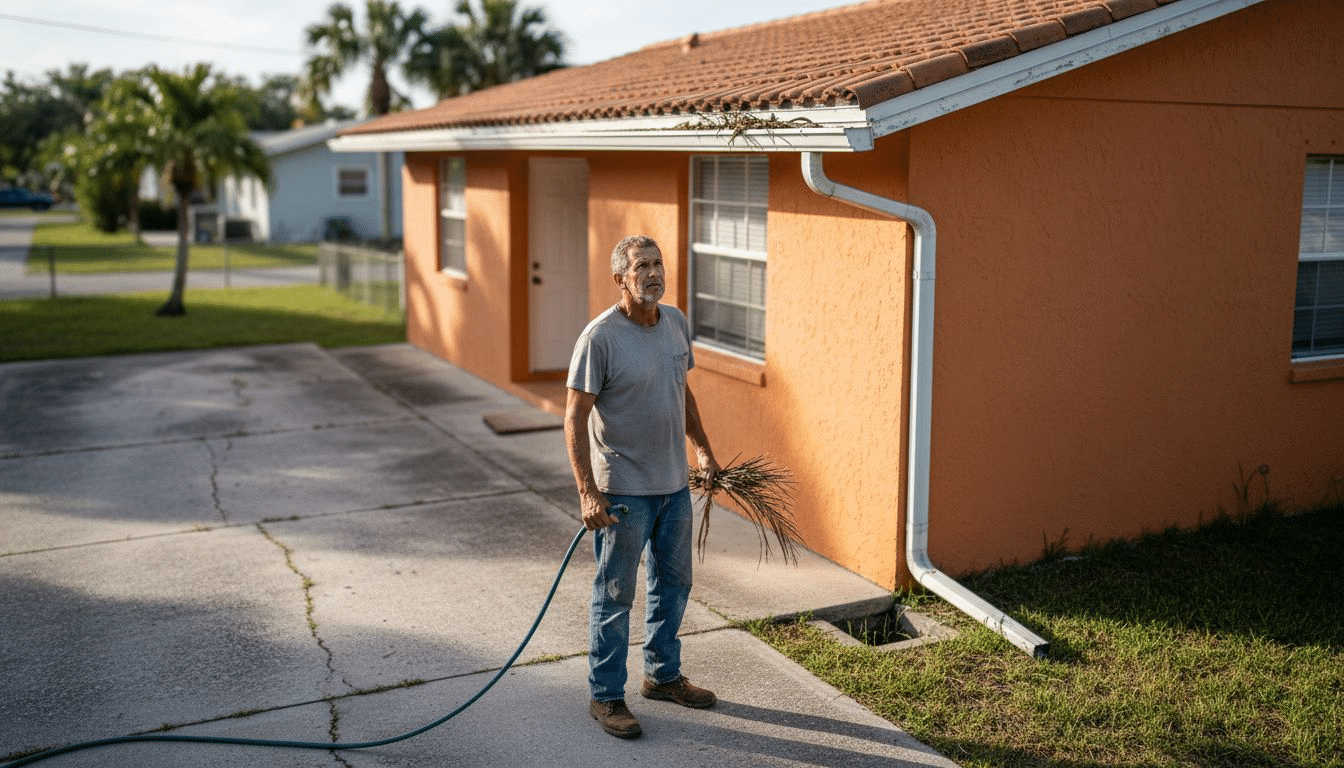
Rainwater can quickly become a costly threat for homes in Lake, Marion, and Sumter Counties, Florida. When storms hit, gutters serve as the frontline defense, channeling water away from walls and foundations and preventing the kind of moisture damage that leads to mold and wood decay. In Florida’s climate, neglected gutter systems put your entire home at risk. This guide clarifies how gutters and roof health work together, helps you avoid hidden dangers, and shows solutions that truly protect your property.
Table of Contents
- Gutters And Roof Health Defined Clearly
- Types Of Gutter Systems For Florida Homes
- How Gutters Protect Roofs And Foundations
- Warning Signs Of Gutter And Roof Problems
- Costly Mistakes In Gutter Maintenance
Key Takeaways
| Point | Details |
|---|---|
| Gutters and Roofs Work Together | Gutters are essential for directing water away from roofs and foundations, preventing structural damage. Regular maintenance is crucial for their effectiveness. |
| Proper Gutter Design is Critical | Selecting the right gutter material and size is vital for handling Florida’s heavy rainfall and salt air, with 6-inch seamless aluminum gutters being highly recommended. |
| Regular Inspections can Prevent Damage | Homeowners should check gutters twice yearly and watch for warning signs such as sagging or standing water to address issues before they lead to costly repairs. |
| Professional Maintenance Saves Money | Scheduling professional gutter cleaning and inspections biannually can reduce the risk of expensive emergency repairs caused by water damage. |
Gutters and Roof Health Defined Clearly
Understanding gutters and roof health starts with knowing what each actually does. They work together as a system, not separately. Your roof sheds water—gutters catch it and move it away from your home.
What gutters do:
Rain gutters are channels installed along roof edges to prevent uncontrolled water flow that damages walls and foundations. They collect rainwater and direct it through downspouts, away from your home’s structure. Without gutters, water cascades directly down your walls, soaking the soil around your foundation.
In Central Florida’s humid climate, this matters more than you might think. Rain doesn’t fall gently here—it comes in heavy bursts, especially during summer storms and hurricane season. Your gutters handle the volume that would otherwise pool against your home.
How gutters protect your roof:
- Direct water away from fascia boards and soffit (the wooden trim connecting roof to walls)
- Prevent standing water from rotting roof decking
- Keep moisture from creeping under shingles
- Stop mold and wood decay before they start
Your roof is only as healthy as the system draining water from it. Even a pristine roof fails quickly when gutters can’t do their job.
Roof health means:
A roof in good condition sheds water efficiently toward gutters. Both components must slope correctly—your roof typically slopes 4 to 12 inches per 12 feet of horizontal distance. This slope funnels water toward gutters rather than letting it pool.
When gutters fail or become clogged, water backs up under shingles. You won’t see it happening inside your attic until the damage is severe. By then, you’re looking at wood rot, mold remediation, and expensive repairs.
Your gutters and roof work as one system—a failure in either one affects the health of your entire home.
Florida homeowners often underestimate how critical this relationship is. Proper roof design with appropriate slope and gutter drainage is crucial to avoid water ingress and structural damage. Metal gutters specifically handle Florida’s intense rainfall and salt air better than plastic alternatives, especially in coastal areas.
The key takeaway: gutters aren’t optional add-ons. They’re essential infrastructure protecting your roof investment and your home’s structural integrity.
Pro tip: Check your gutters twice yearly—once in spring after pollen season settles and again in fall after leaves drop—to catch clogs before they cause roof damage.
Types of Gutter Systems for Florida Homes
Florida homes need gutters that can handle intense rainfall, salt spray, and debris from oak trees. Not all gutter systems are created equal. Your choice impacts how well your home stays protected year-round.
The two main gutter shapes:
K-style and U-style gutters represent the primary categories available for residential installation. K-style gutters have a decorative profile resembling crown molding and fit flush against fascia boards. U-style gutters, also called half-round, have a simple curved shape and work well for traditional or older homes.
K-style gutters hold more water and look cleaner on modern houses. U-style gutters shed water faster but require slightly more space from your roof edge.
Material matters in Florida’s climate:
Your gutter material determines durability and maintenance needs. Rain gutters come in aluminum, galvanized steel, copper, and PVC, with each offering different benefits and drawbacks.
- Aluminum: Lightweight, affordable, rust-resistant, but can dent in storms
- Galvanized steel: Heavy-duty and strong, handles rough weather, requires occasional maintenance
- Copper: Premium option, beautiful patina, extremely durable (50+ years), expensive
- PVC: Budget-friendly, but brittle in Florida heat and sun exposure
For Central Florida homes, aluminum and galvanized steel perform best. They resist salt air near coastal areas and handle heavy downpours without warping.
Here’s a comparison of popular gutter materials for Florida homes:
| Material | Durability | Storm Resistance | Best For Coastal Areas |
|---|---|---|---|
| Aluminum | 20+ years | Good, may dent | Excellent |
| Galvanized Steel | 15-20 years | Very strong, rusts | Good |
| Copper | 50+ years | Excellent, heavy | Excellent |
| PVC | 10-15 years | Weakens in sunlight | Not recommended |
Seamless versus sectional:
Seamless gutters run continuously along your roofline with no joints or seams. Sectional gutters arrive in pieces that installers connect with brackets and fasteners. Seamless systems reduce leak points and look better, while sectional gutters cost less upfront but require more maintenance.
Gutter sizing and slope:
Proper sizing matters for Florida’s intense rainfall. Standard gutters come in 5-inch or 6-inch widths. A 6-inch gutter handles heavier volume and is recommended for most Florida homes, especially those with large roof areas.
Your gutter must slope toward downspouts at roughly 0.5 inches per 10 feet of length so water flows efficiently and doesn’t pool.
Downspouts should connect to drainage systems that carry water at least 4 to 6 feet from your foundation. Standing water around your home’s perimeter invites foundation problems.
Pro tip: Choose 6-inch seamless aluminum gutters for Central Florida climates—they balance durability, weather performance, and long-term value without excessive cost.
How Gutters Protect Roofs and Foundations
Your home sits on a foundation and under a roof. Both face constant threats from water. Gutters stand between your home and serious structural damage.
The roof protection system:
Water running off your roof without gutters doesn’t simply disappear. It cascades down your walls, soaks your fascia boards, and pools against your foundation. Gutters manage water runoff efficiently by channeling rainfall away from vulnerable areas rather than letting it drip in uncontrolled patterns.
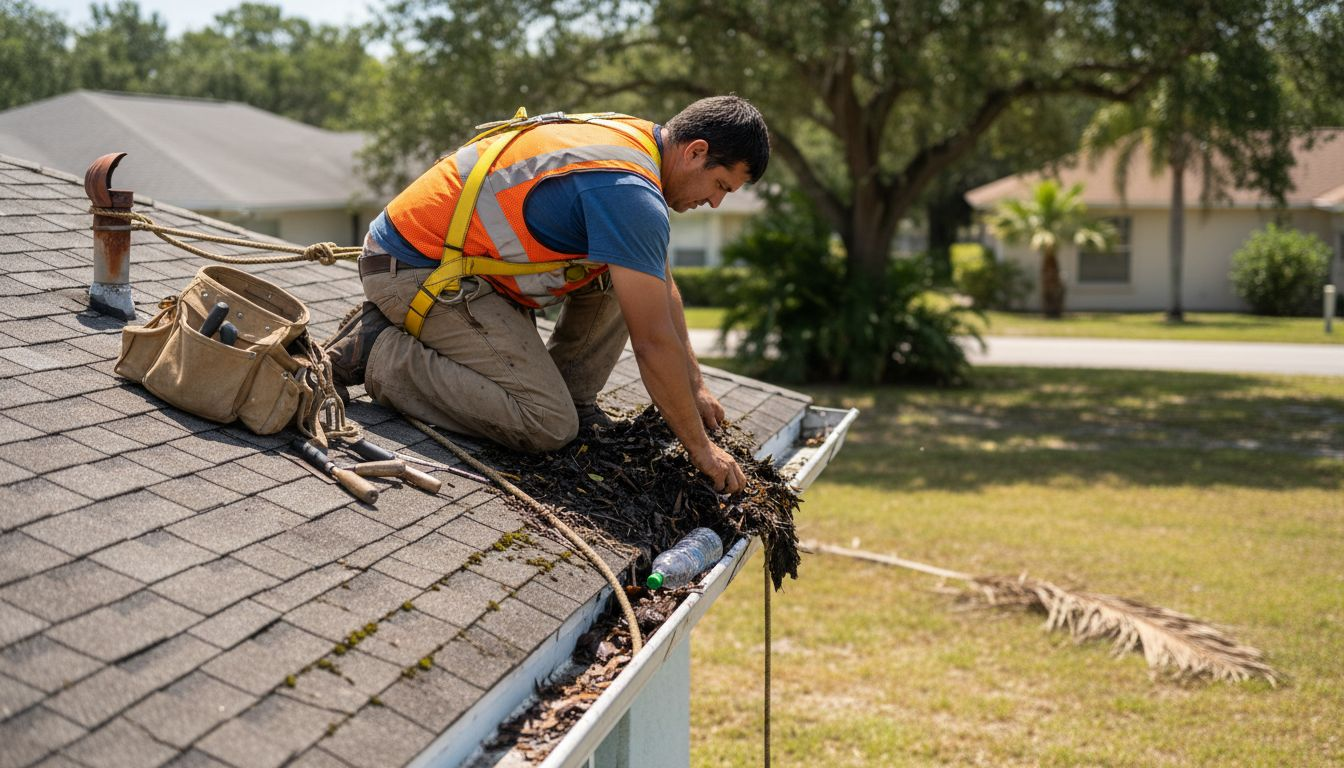
When gutters fail or clog, water backs up under shingles and into your attic. Roof decking rots from underneath. You won’t notice until the damage costs thousands to repair.
Foundation protection matters more than you think:
Your foundation sits in soil. When water pools around it constantly, the soil becomes oversaturated. This causes the foundation to shift, crack, and settle unevenly.
Gutters reduce moisture accumulation around foundations and crawlspaces by channeling rainwater safely away from your home’s base. In Florida’s rainy climate, proper water management prevents foundation erosion that leads to expensive repairs.
How water damage develops without gutters:
- Water drips directly onto fascia boards, causing wood rot
- Soil around foundations becomes waterlogged and unstable
- Moisture creeps into crawlspaces, encouraging mold growth
- Standing water invites termites and other pests
- Foundation cracks widen as soil shifts beneath your home
The mold and decay connection:
Moisture creates mold. Mold spreads through crawlspaces, attics, and living areas. Gutters prevent moisture-related damage like mold growth and structural deterioration by directing water away from wood framing, insulation, and foundation components.
In Florida’s humid climate, one missed gutter cleaning can trigger mold problems that take months to remediate.
A working gutter system extends your roof and foundation lifespan by decades while preventing costly water damage that compounds over time.
Downspout placement is critical:
Gutters alone don’t solve the problem. Downspouts must carry water 4 to 6 feet away from your foundation. Water discharged too close to your home simply relocates the damage problem.
Consider installing gutter extensions or splash blocks that direct water further from your foundation perimeter.
Pro tip: After heavy rain, inspect your foundation perimeter for standing water or soggy soil—if you find either, your downspouts need extension or your gutters need cleaning.
Warning Signs of Gutter and Roof Problems
Problems don’t announce themselves loudly. They whisper first, then shout. Catching gutter and roof issues early saves thousands in repairs.
Gutter warning signs to watch:
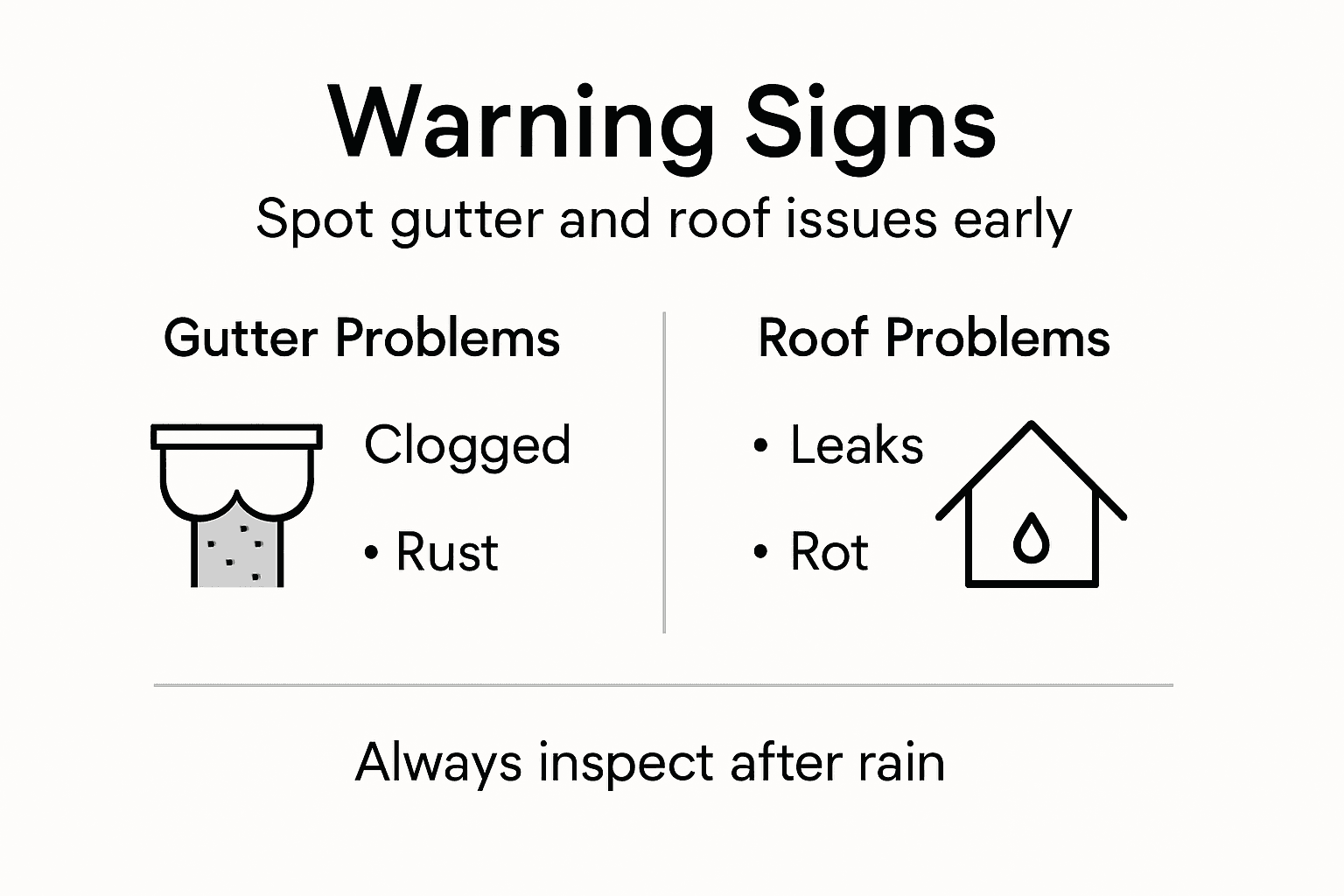
Gutters clogged with debris, rust, cracks, and holes represent the most common problems homeowners encounter. After heavy rain or storms, walk around your home’s perimeter and look for these telltale signs.
Standing water in gutters means water isn’t flowing toward downspouts. This happens when gutters lose their slope or become blocked. You might see algae growth, leaves, or visible standing water.
Common gutter problems in Florida:
- Debris accumulation: Leaves, pine needles, and seed pods clog gutters within weeks
- Rust and corrosion: Metal gutters develop orange or brown spots, especially near downspouts
- Sagging sections: Gutters pull away from fascia or dip in the middle, causing pooling
- Leaking seams: Water drips from joint connections between gutter sections
- Improper slope: Water pools instead of flowing, creating ice dams in rare freezes
Roof problems often show up first in gutters:
Look at what’s in your gutters. Excessive shingle granules (looks like coarse sand) indicate your roof is failing. Dark spots or streaks suggest mold or algae growing on roof surfaces.
Water penetration and mold growth often start at roof vents and flashings where water can seep in. If your attic smells musty or you notice stains on ceiling drywall, water is already infiltrating.
Downspout failures to notice:
Downspouts must carry water 4 to 6 feet from your foundation. If downspouts empty water close to your home, soil erosion and foundation damage result. Check if downspouts are disconnected, crushed, or clogged.
A gutter problem left unaddressed becomes a roof problem, which becomes a foundation problem—catching it early stops the cascade.
Interior warning signs mean trouble:
If you notice these inside your home, exterior problems have been ongoing for weeks. Yellowing drywall stains, peeling paint, or mold spots indicate water is penetrating from roof or gutters. Basement dampness after rain signals foundation water issues.
These interior signs mean you need immediate professional inspection and repair.
Use this quick reference to identify gutter and roof warning signs:
| Warning Sign | Indicates | Urgency |
|---|---|---|
| Sagging Gutters | Structural issue | High |
| Shingle Granules in Gutters | Roof aging or wear | High |
| Yellow Spots on Drywall | Water infiltration | Critical |
| Standing Water in Gutters | Blockage or poor slope | Moderate |
| Mold Smell in Attic | Moisture and potential mold | Critical |
Pro tip: During the next heavy rain, grab binoculars and watch water flow through your gutters and downspouts from a safe distance—you’ll quickly spot blockages, improper slope, or leaks you’d miss otherwise.
Costly Mistakes in Gutter Maintenance
Gutter mistakes don’t cost money today. They cost it months later. By then, water damage compounds into thousands of dollars worth of repairs.
Mistake #1: Skipping regular cleaning:
This is the biggest one. Failing to keep gutters clean and clear leads to debris buildup that blocks water flow. In Florida, pine needles, oak leaves, and seed pods accumulate rapidly.
When gutters clog, water backs up under shingles and seeps into your attic. By the time you notice water stains on your ceiling, rot has already started in the framing.
Mistake #2: DIY ladder accidents:
Cleaning gutters yourself saves money until you fall. Improper ladder safety during cleaning causes preventable injuries. Wet gutters are slippery. Reaching at odd angles throws off balance.
A fall from even an 8-foot ladder causes serious injury or death. The hospital bill dwarfs professional cleaning costs.
Common Florida gutter mistakes:
- Ignoring gutter slope: Water pools instead of flowing, creating weight that sags gutters
- Poor downspout placement: Water empties 2 feet from your foundation instead of 4 to 6 feet
- Using splash blocks instead of extensions: These redirect water sideways, not away from your home
- Delaying repairs: Small leaks grow into gutter failures within weeks
- Undersized gutters: 5-inch gutters can’t handle Florida’s intense rainfall patterns
Mistake #3: Improper installation or repair:
Hiring the cheapest contractor often costs more long-term. Improperly secured gutters pull away from fascia boards. Gutters installed without correct slope fail within months.
Gutters installed too high or too low miss the water stream entirely. You’re paying for gutters that don’t actually protect your home.
Skipping gutter maintenance costs you 167% more in emergency repairs than scheduled cleaning and inspection would cost.
Mistake #4: Inadequate downspout management:
Gutters work, but if downspouts dump water against your foundation, you’ve solved nothing. Poor gutter sizing and mismanaged downspouts cause foundation erosion and basement flooding.
Downspouts need extensions or buried drain pipes that carry water far from your home’s perimeter.
Pro tip: Schedule professional gutter cleaning twice yearly—spring and fall—rather than waiting for problems to surface; this preventive approach costs 60% less than emergency repairs from water damage.
Protect Your Florida Home with Expert Gutter Solutions
The article highlights the critical relationship between gutters and roof health in protecting your home from water damage, mold, and costly foundation repairs. If you are concerned about clogged gutters, improper slope, or the heavy rainfall unique to Central Florida, it is essential to act before small problems turn into expensive emergencies. Proper gutter installation, maintenance, and repair are the first line of defense against water intrusion that threatens your roof and foundation.
At Larry’s Gutters, we specialize in seamless gutter installation, gutter guard solutions, and expert cleaning to keep your system flowing efficiently year-round. Our customized gutters are designed to handle heavy rains and prevent common issues such as sagging, leaks, and downspout mishandling. With our professional service, you gain peace of mind that your gutters and roof work as one system to protect your home.

Don’t wait for signs of damage or costly repairs. Visit Larry’s Gutters today to request your free quote and take the first step toward securing your home against Florida’s unpredictable weather. Trust the experts to maintain your gutter slope, prevent water pooling, and extend the life of your roof and foundation.
Learn more about our comprehensive gutter cleaning and repair services that keep your home safe and dry year after year.
Frequently Asked Questions
What is the main function of gutters?
Gutters are channels installed along the roof edges that collect rainwater and direct it through downspouts, preventing uncontrolled water flow that can damage walls and foundations.
How can clogged gutters affect my roof health?
Clogged gutters can lead to water backing up under shingles, causing wood rot, mold growth, and significant damage to the roof structure that is often not visible until it’s too late.
What types of gutter materials are best for Florida’s climate?
Aluminum and galvanized steel are ideal for Florida homes due to their rust resistance and ability to handle heavy rainfall and salt air, making them more durable than plastic alternatives.
How often should I clean my gutters?
It’s recommended to clean your gutters at least twice a year—once in spring after pollen season and once in fall after leaves drop—to prevent clogs and ensure proper water drainage.
Recommended
- Why Florida Homes Need Gutters for Protection
- Why Gutters Need Maintenance in Florida Homes
- Role of Gutter Maintenance in Home Safety
- Gutter Drainage Systems: Safeguarding Florida Homes
- 10 Best Tent For Florida Camping: Top Picks For Sun And Rain Protection – Tent Explorer
- How to Assess Water Quality for Safer Homes – Coway Water Purifier
- Gutter Services Gainesville FL
- Gutter Services The Villages FL
