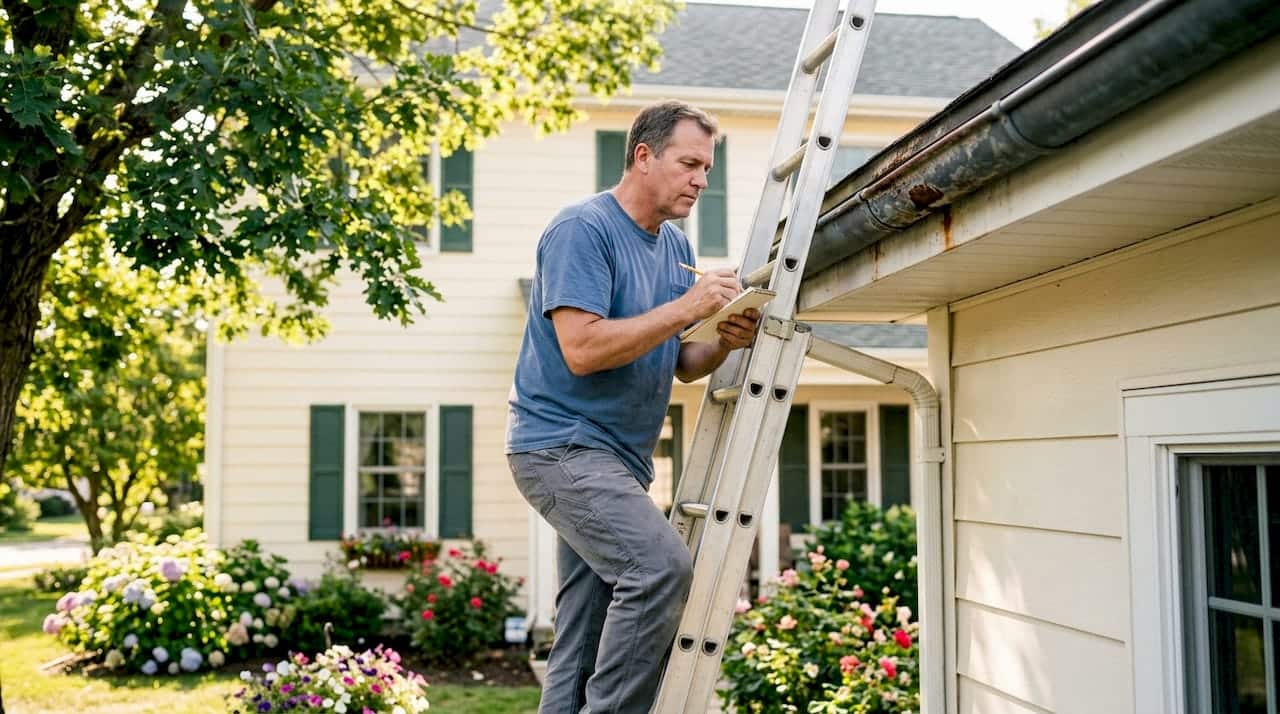
TL;DR:
- Replacing gutters prevents structural damage, mold, and costly foundation repairs caused by poor drainage.
- Regular inspections, timely replacement, and seamless gutter systems ensure long-lasting performance and protect your home value.
Gutter replacement is the process of removing a failing drainage system and installing new gutters that properly direct water away from your home’s foundation, siding, and roof line. The most compelling reasons to replace gutters fall into three categories: age, structural damage, and performance failure. Vinyl gutters last 10–15 years, aluminum 20–30 years, and copper 50 or more years. Ignoring a failing system leads to foundation damage, wood rot, and mold remediation bills that dwarf the cost of new gutters. Catching the warning signs early is the single most effective way to protect your home investment.
1. What are the top signs your gutters need replacement?
Physical symptoms are the clearest signal that repair is no longer enough. Cracks, holes, rust, and visible corrosion all compromise water flow and weaken the gutter’s structure. A single crack can release gallons of water directly against your fascia board during a heavy rain.
- Sagging sections or gutters pulling away from the fascia. This usually means the hangers have failed or the fascia board behind them has rotted. New hangers will not hold in rotted wood.
- Standing water after 48 hours of dry weather. Water sitting in the channel signals a slope problem or a blockage so severe the system can no longer drain. Both conditions accelerate corrosion.
- Overflow during moderate rain. If water spills over the front edge during a normal shower, the gutter is either clogged, undersized, or both.
- Peeling paint or water stains on siding. These marks show that water is running behind or over the gutter consistently, not just during storms.
- Pooling water or soil erosion near the foundation. This is the most urgent sign. Water collecting at the base of your home creates hydrostatic pressure that cracks concrete and shifts footings.
Pro Tip: Walk around your home during a rainstorm and watch where water exits the gutter system. Overflow points and drips reveal exactly where the system is failing, faster than any dry-weather inspection.
2. How does gutter age affect the replacement decision?
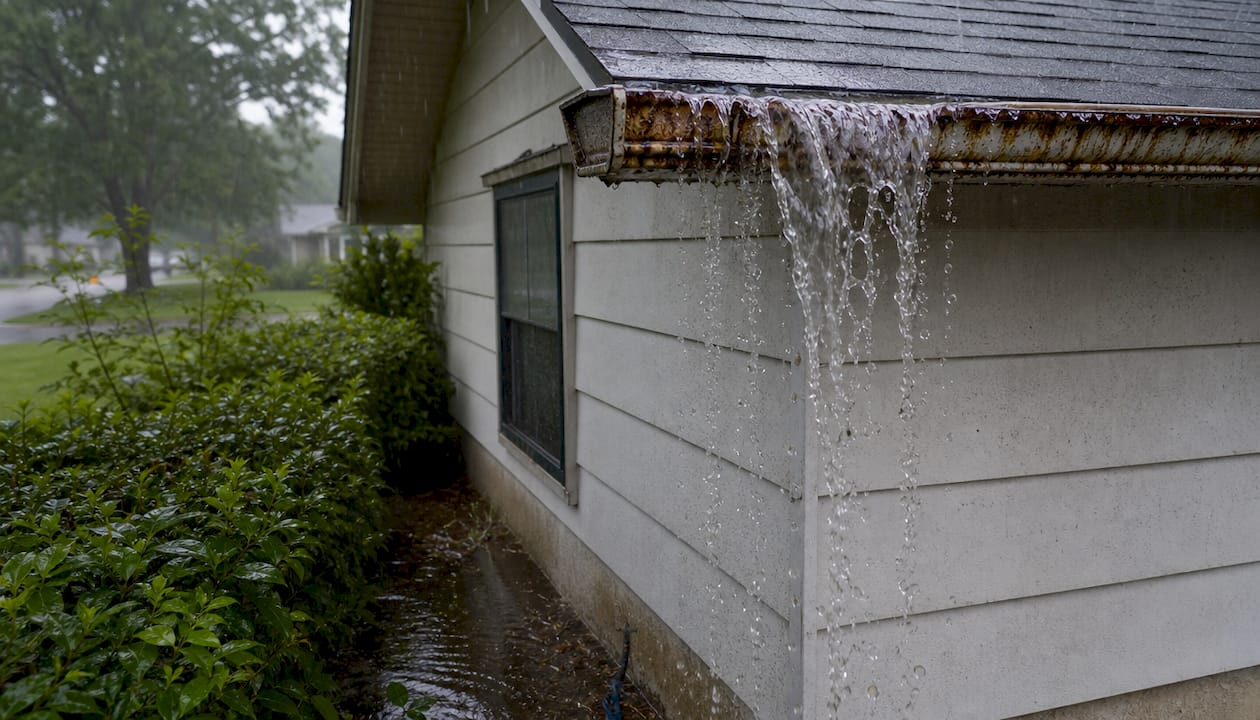
Age alone is a legitimate reason to replace old gutters, even when visible damage is minimal. Older gutters develop micro-cracks and joint failures that are invisible from the ground but actively leak during rain. The material lifespan standards below show when age alone justifies a full assessment.
| Material | Expected Lifespan | Replacement Trigger |
|---|---|---|
| Vinyl | 10–15 years | Brittleness, cracking, fading |
| Aluminum | 20–30 years | Corrosion, dents, joint failure |
| Copper | 50+ years | Rare; usually outlasts the roof |
Seasonal weather stress accelerates aging faster than the calendar suggests. In Florida, intense UV exposure and heavy summer rainfall degrade vinyl and aluminum faster than in milder climates. When a gutter approaches the upper end of its lifespan and requires frequent repairs, replacement becomes the more cost-effective path.
Pro Tip: Write the installation year on a piece of tape inside a downspout bracket. You will always know the system’s age without guessing.
3. Frequent repairs are costing you more than replacement
Repair costs compound quickly when multiple sections fail at once. Cumulative repair costs across several gutter sections routinely exceed the price of a full replacement, yet homeowners keep patching because each individual repair seems minor. The math only becomes obvious when you add up a full season’s worth of service calls.
A single patch fixes one leak point. It does nothing for the corroded section two feet away or the failing joint at the corner. Replacing the entire system eliminates all failure points at once and resets the lifespan clock. Homeowners who delay full replacement benefits in favor of incremental repairs consistently pay more over a five-year period.
4. Foundation damage from poor drainage
Delayed gutter replacement puts your foundation at direct risk. When gutters fail to carry water away from the house, it pools at the base and creates hydrostatic pressure on foundations, which can push against concrete walls and footings. Foundation repairs routinely run into tens of thousands of dollars. That figure makes even a premium gutter replacement look inexpensive by comparison.
The connection between gutters and foundation health is direct and well-documented. Larrysgutters covers this relationship in detail in their foundation damage guide. Addressing gutter failure before water reaches the foundation is always the cheaper option.
Ignoring small signs like peeling paint or minor sagging can escalate to foundation damage and high repair costs. The damage does not stop at the gutter. It moves down to the fascia, the siding, the soil, and eventually the concrete.
5. Fascia board rot behind the gutters
Sagging gutters are often a symptom of a deeper problem. Rotted fascia boards sit behind the gutter and provide the anchor points for every hanger. When those boards rot, no amount of re-hanging will keep the gutter in place. The rot spreads silently and is usually worse than it looks from the outside.
Replacing gutters without replacing rotted fascia is a waste of money. The new gutters will pull away from the house within a season. Effective gutter replacement requires inspecting and repairing the fascia at the same time. This is a detail many homeowners miss until the second replacement.
6. Interior water stains and mold risk
Water stains on interior walls or ceilings near the roofline are a late-stage warning. By the time stains appear inside, prolonged gutter failure has already allowed water to penetrate the wall assembly. Mold can begin growing within 24–48 hours of moisture intrusion, and remediation is expensive and disruptive.
The gutter is rarely the only repair needed at this stage. Insulation, drywall, and framing may all require attention. Replacing the gutters stops the water source, but the interior damage still needs to be addressed separately. Catching gutter failure before it reaches this stage saves thousands in secondary repairs.
7. Your gutters are the wrong size for your roof
An undersized gutter system overflows even when it is perfectly clean and properly sloped. Proper drainage requires at least one downspout per 33 feet of gutter run to handle normal rainfall volumes. Homes with large roof surfaces or steep pitches need even more capacity.
If your gutters require cleaning 3–4 times per year and still overflow during rain, the system is likely undersized, not just dirty. Cleaning a too-small gutter more often does not solve the overflow problem. Replacement with a properly sized system is the only fix.
8. Benefits of switching to seamless gutters
Seamless gutters are custom-fabricated on-site to fit your home’s exact dimensions. Because they have no joints along the run, they eliminate the most common leak points found in sectional systems. The shift to seamless systems dramatically reduces both leak frequency and maintenance demands.
Aluminum is the most popular material for seamless gutters because it balances durability, weight, and cost. It resists corrosion, holds paint well, and performs reliably in Florida’s climate. Seamless systems also offer a cleaner visual profile, which preserves your home’s curb appeal. For homeowners weighing the investment, Larrysgutters breaks down whether seamless gutters are worth it in detail.
9. Proactive replacement protects your home’s long-term value
Waiting for a catastrophic failure is the most expensive approach to gutter maintenance. Biannual gutter inspections allow homeowners to plan replacement on their own schedule rather than reacting to storm damage or a flooded basement. Planned replacement is cheaper, less stressful, and allows time to choose the right material and contractor.
A functioning gutter system also protects your home’s resale value. Buyers and home inspectors flag failing gutters immediately. A new seamless system signals that the home has been maintained, which supports your asking price. Review the full gutter lifespan breakdown to understand exactly where your current system stands.
Key Takeaways
Replacing gutters at the right time prevents foundation damage, wood rot, and mold that cost far more to fix than a new gutter system.
| Point | Details |
|---|---|
| Age drives replacement timing | Vinyl lasts 10–15 years, aluminum 20–30 years, copper 50+ years. |
| Repairs compound into higher costs | Patching multiple sections costs more over time than one full replacement. |
| Foundation damage is the biggest risk | Poor drainage creates hydrostatic pressure that cracks footings and walls. |
| Fascia must be repaired simultaneously | New gutters will fail quickly if anchored to rotted fascia boards. |
| Seamless gutters reduce future problems | Fewer joints mean fewer leak points and lower long-term maintenance costs. |
What I’ve learned from watching homeowners delay replacement
The pattern I see most often is this: a homeowner patches one section, then another, then calls for a third repair after a bad storm. By the time they commit to full replacement, the fascia is rotted, the foundation shows hairline cracks, and the total bill is two to three times what replacement would have cost two years earlier.
The gutters themselves are almost never the expensive part. The damage they cause when they fail is what costs real money. Foundation work, mold remediation, and interior drywall repairs are not line items most homeowners budget for. Gutters are.
My honest recommendation is to inspect twice a year, in spring and fall, and treat any system older than 15 years as a candidate for replacement rather than repair. If you find yourself scheduling the same repair more than once, the system is telling you something. Listen to it before the next heavy rain makes the decision for you. Coupling replacement with a fascia inspection is not optional. It is the step that determines whether the new gutters last 25 years or 5.
— Results
Larrysgutters can handle your seamless gutter replacement
Replacing your gutters is a straightforward decision when you have the right team behind it. Larry’s Gutters specializes in seamless gutter installation across Central Florida, using materials selected for the region’s heavy rainfall and intense UV exposure. Every installation includes a fascia assessment so your new gutters have solid, lasting anchor points.

The process starts with a free estimate and ends with a custom-fit system built on-site for your home’s exact dimensions. Whether your current gutters are aging out or already showing damage, Larrysgutters provides the expertise to replace them correctly the first time. Request your free quote today and stop the damage before it reaches your foundation.
FAQ
How often should gutters be replaced?
Vinyl gutters last 10–15 years, aluminum 20–30 years, and copper 50 or more years. Replace sooner if you see sagging, leaks, or recurring overflow.
Is it better to repair or replace gutters?
When repairs are needed on multiple sections or the system is near the end of its lifespan, full replacement is more cost-effective. Cumulative repair costs across several sections routinely exceed replacement cost.
What happens if I never replace my failing gutters?
Failing gutters allow water to pool at the foundation, creating hydrostatic pressure that cracks concrete and causes foundation shifts costing tens of thousands of dollars.
Do seamless gutters last longer than sectional gutters?
Yes. Seamless gutters have no joints along the run, which eliminates the most common failure points. They require less maintenance and typically outlast sectional systems by several years.
Should I replace fascia boards when replacing gutters?
Yes, if the fascia shows any rot or soft spots. Rotted fascia boards cannot hold gutter hangers securely, and new gutters will pull away from the house within one season.
