TL;DR:
- Central Florida homes require oversized gutters capable of handling intense storms and frequent heavy rains. Proper installation, sizing, and drainage routing are essential to prevent overflow, soil erosion, and foundation damage. Focus on local weather patterns and high-capacity components to ensure long-term gutter system performance.
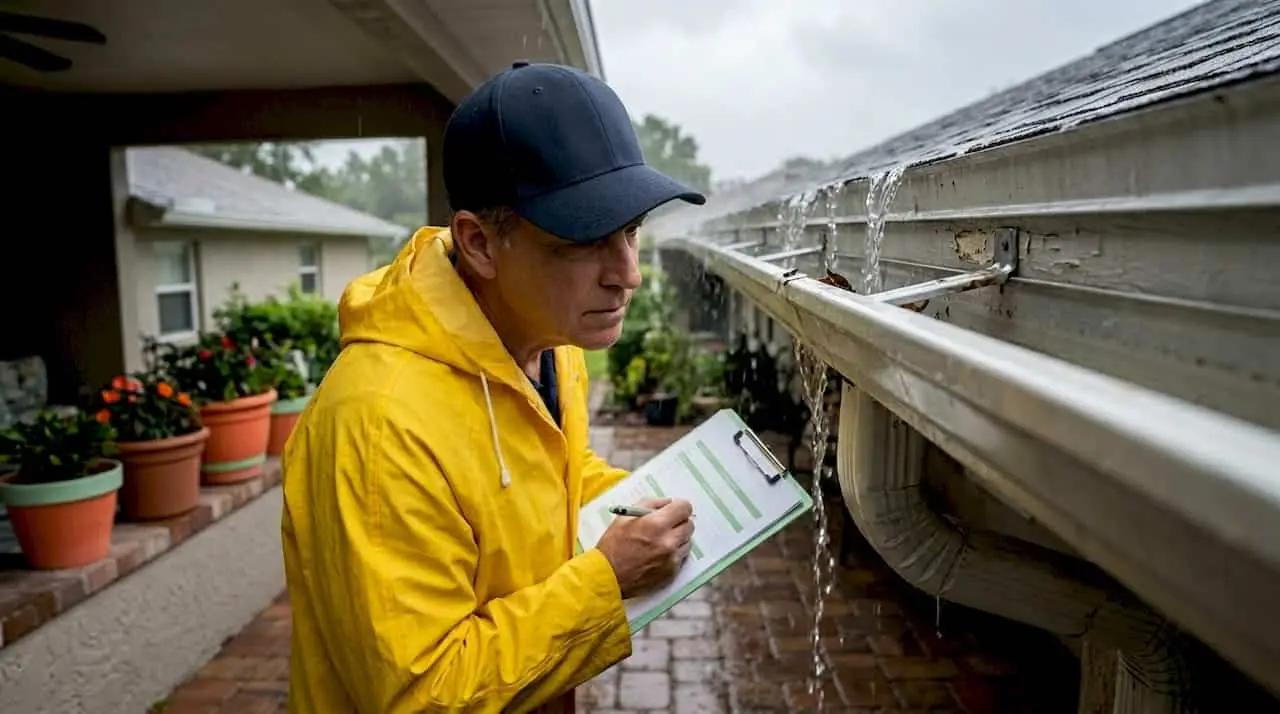
A single afternoon thunderstorm in Lake, Marion, or Sumter County can drop several inches of rain in under an hour. If your gutters aren’t designed for that kind of punishment, water will overflow, pool against your foundation, and start doing damage you won’t fully see until you’re facing a repair bill in the thousands. Choosing the right gutter system for Central Florida isn’t just about picking a product off a shelf. It’s about understanding the specific weather patterns that pound this region, the local soil conditions that make drainage errors so destructive, and the installation details that separate a system that holds up from one that fails the first time a tropical band moves through.
Table of Contents
- Top weather factors to evaluate when choosing gutters
- How rainfall intensity and code standards affect gutter sizing
- Key solutions for Central Florida: Practical options and flaws
- Addressing secondary weather risks: Cold snaps and rare freezes
- Why most Florida gutter advice misses the real weather risks
- Get weather-ready gutters for your Central Florida home
- Frequently asked questions
Key Takeaways
| Point | Details |
|---|---|
| Prioritize rainfall intensity | Select gutters based on local maximum rainfall, not just standard sizes. |
| Downspout extension is vital | Properly extend every downspout to keep water away from your foundation and prevent damage. |
| Gutter guards require care | Choose guards that handle heavy storms and avoid those that cause runoff or clogging. |
| Cold snaps are secondary | Winter gutter issues are rare but know minor freezing precautions just in case. |
Top weather factors to evaluate when choosing gutters
Not all weather is created equal, and Central Florida’s rainfall profile is genuinely extreme by national standards. Before you pick a gutter style, size, or material, you need to understand the specific Central Florida gutter challenges that local homeowners face season after season. These aren’t abstract concerns. They show up as overflow stains on your fascia, eroded landscaping, and cracked slabs.
Here are the primary weather factors to evaluate:
- Rainfall intensity. Central Florida regularly sees storms that deliver one to three inches of rain in a single hour. That’s far above the national design baseline that standard gutters are sized for.
- Downpour frequency. The rainy season runs roughly from June through September. During that stretch, heavy afternoon storms aren’t unusual events. They’re practically a daily occurrence.
- Hurricane and tropical storm exposure. Lake, Marion, and Sumter counties sit far enough inland to avoid direct storm surge, but tropical systems still deliver wind-driven rain at angles that standard gutters can’t fully intercept.
- Wind-driven rain. Sustained winds push water under eaves and sideways across gutters, meaning overflow can happen even when gutters aren’t technically full.
- Soil erosion risks. Central Florida soils, particularly the sandy varieties common in these counties, erode quickly when gutters dump concentrated runoff right at the foundation line. That erosion can undermine the slab over time.
- Foundation protection. Water intrusion near the foundation is one of the most expensive long-term consequences of gutter overflow. Keeping discharge well away from your home’s base is just as important as the gutter size itself.
Pro Tip: Don’t focus only on the gutter trough. A downspout extension that carries water at least four to six feet from your foundation works alongside the gutter to prevent soil saturation and slab movement.
One of the most important takeaways here is that overflow risk is the single highest-impact failure mode for Central Florida homes. Gutters and downspouts that can’t handle a high-intensity storm without overflowing will direct that excess water straight at your landscaping, your slab, and eventually your interior. Getting the capacity right from the start eliminates most of these risks before they develop.
How rainfall intensity and code standards affect gutter sizing
With the weather challenges in mind, it’s time to look at how much water your gutters really need to handle. The answer might surprise you, because most national building codes use conservative baseline figures that don’t come close to reflecting what actually falls on a Central Florida roof.
Most code-based gutter capacity planning uses a design rainfall intensity of around one inch per hour. That’s a reasonable starting point for many parts of the country. In Central Florida, design storm intensities can run two to three times higher, meaning gutters sized strictly to code minimums are already undersized before you even account for debris or minor clogging. The result is overflow in any storm that’s even slightly above average.
Sizing by code is only a starting point. Local rainfall data always matters more than the baseline table.
Here’s how Central Florida storm intensity compares to common code assumptions:
| Scenario | Rainfall intensity | Standard 5″ gutter capacity | 6″ gutter capacity |
|---|---|---|---|
| Code baseline | 1 in/hr | Adequate | Oversized |
| Moderate FL storm | 2 in/hr | Marginal | Adequate |
| Heavy FL storm | 3 in/hr | Overflow likely | Marginal |
| Peak tropical event | 4+ in/hr | Overflow certain | Extended capacity needed |
The table makes the issue clear. A 5-inch gutter that’s perfectly legal and “standard” by national code performs poorly in a season-typical Central Florida downpour. Upgrading to a 6-inch seamless gutter sizing guide matched to local design intensity is one of the most cost-effective improvements a homeowner in this region can make.
The other critical variable is roof surface area. A large roof drains a much greater volume of water into the same gutter run, which is why a gutter that works for a 1,200 square foot home might fail completely on a 2,400 square foot home with the same roof pitch. Understanding your gutter basics for Central Florida means thinking about total drainage load, not just the gutter width alone.
Pro Tip: NOAA Atlas 14 publishes official rainfall frequency data by location. Your county’s public works office may also publish design storm intensity numbers for local drainage projects. Use these actual figures, not generic national tables, when discussing gutter sizing with a contractor.
Key solutions for Central Florida: Practical options and flaws
Once you know how much water your gutters should manage, let’s explore the specific solutions and where Florida homes most often get it wrong. The hardware choices matter, but the installation details are what actually determine whether the system works when you need it most.
Gutter width: 5-inch vs. 6-inch
The jump from a 5-inch to a 6-inch gutter increases flow capacity by roughly 40 percent. That’s not a marginal improvement. For homes in Lake, Marion, and Sumter counties with moderately sized roofs, 6-inch gutters are often the more reliable choice for peak storm conditions. On smaller roofs or sections with short runs, 5-inch gutters may still perform adequately, but the decision should be based on actual calculations, not contractor habit.
Hanger strength and spacing
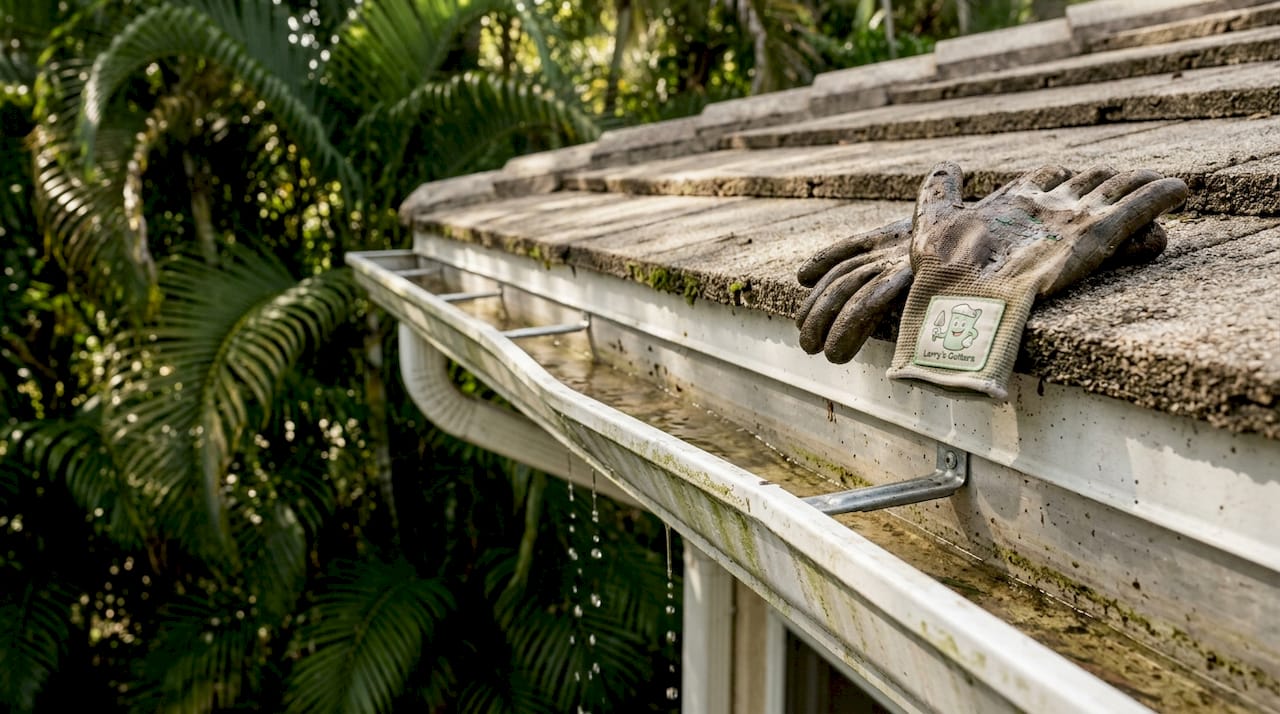
Gutters fill with water during storms. Water is heavy, roughly 8 pounds per gallon, and a full 6-inch gutter run holds a significant load. Proper pitch, slope, and hanger attachment that resists sag under storm loads is critical for long-term performance. Hangers spaced too far apart allow the gutter to flex and sag, which disrupts the slope needed for proper drainage and eventually leads to pooling inside the trough.
Downspout practices for Central Florida soils
Downspouts should be sized to match the gutter volume they serve. A 2×3-inch downspout paired with a 6-inch gutter run is frequently undersized. Upgrading to 3×4-inch downspouts dramatically reduces the risk of a backed-up system during peak flow. Following solid downspout installation steps ensures water exits the system efficiently and gets directed well away from the foundation. Poor downspout routing is one of the leading contributors to foundation damage prevention failures in this region.
Gutter guard comparison
| Guard type | Best for | Limitation in FL storms |
|---|---|---|
| Screen guards | Light debris, leaves | Can clog with fine debris; water shoots over in heavy rain |
| Micro-mesh guards | Pine needles, small debris | Higher cost; must be installed at correct pitch |
| Solid (reverse curve) | Large leaf debris | Fast runoff can overshoot the nose in intense rain |
Here’s where most Florida homeowners go wrong with guards. They buy a product marketed nationally without accounting for how intense local storms test guard geometry. In a normal drizzle, almost any guard works fine. In a three-inch-per-hour downpour, a guard that redirects water over its edge rather than into the trough becomes a problem. Match the guard to actual local gutter failure in storms conditions, not just the marketing claims on the package.
- Always verify that the guard maintains adequate open surface area for high-volume inflow.
- Choose guards that allow for inspection and cleaning. Even well-designed guards need occasional maintenance.
- Confirm the guard is compatible with your gutter width before purchase.
Pro Tip: Extensions and splash blocks at the base of your downspouts are cheap and often overlooked. They do the last mile of water management by carrying runoff away from your slab before it can saturate the soil at the foundation line.
Addressing secondary weather risks: Cold snaps and rare freezes
Beyond rain, you might wonder about less-common weather risks. Here’s how to handle those as a Central Florida homeowner.
Central Florida’s winters are mild by almost any standard. Daytime temperatures rarely drop below freezing, and when they do, it’s typically for just a few hours before sunrise. That said, rare cold snaps do happen, and they can catch homeowners off guard if gutters and guards aren’t in decent condition going into the cooler months.
Ice dam behavior in gutters is genuinely sensitive to guard geometry in cold climates, where meltwater refreezes at the gutter edge and creates damaging ice formations. In Central Florida, this should be treated as a distant secondary concern. Ice dams are not a meaningful local risk. The temperatures that create them are very rarely sustained long enough in this climate to produce that cycle.
Ice dams simply aren’t a Central Florida problem in any typical year. The real winter risk is a brief overnight freeze that causes standing water in a poorly draining gutter to expand slightly. That’s minor compared to the summer storm risks.
What you should watch for with gutter guard types during colder weather:
- Clear debris before a cold snap. Standing leaves or debris combined with freezing temperatures can weigh down gutter hangers and strain connections.
- Check for standing water in the gutter trough. Poorly sloped gutters that hold water year-round are the most vulnerable to any freeze event.
- Inspect guard attachment points. A guard that’s loose or warped going into cold weather may not seat correctly when temperatures rebound.
- Keep downspouts clear. A blocked downspout turns a small overnight freeze into a more significant problem as the ice expands in a confined space.
The key takeaway for Central Florida homeowners is to stay focused on the real threat profile. Rain volume and storm intensity are your primary concerns. Cold weather precautions are brief and simple.
Why most Florida gutter advice misses the real weather risks
Having run through the facts and fixes, here’s what most guides and many contractors overlook when it comes to your actual risks as a Lake, Marion, or Sumter County homeowner.
National gutter advice is written for a national audience. That sounds obvious, but the implications are significant. When a generic article tells you that 5-inch gutters are “standard” and “sufficient for most homes,” that’s true in Seattle or Kansas City. It is not true in Ocala during a July thunderstorm. The rainfall intensities are simply not comparable, and applying national rules to a Central Florida roof leads to undersized systems that fail on a regular schedule.
The second blind spot we see again and again is a fixation on the gutter product itself while ignoring the system behavior during actual storms. Homeowners spend time choosing between aluminum and steel, between K-style and half-round, between different brands of guards. Those choices matter at the margins. But the installation details, slope, hanger spacing, downspout sizing, and discharge routing, have a far greater impact on whether the system performs during the storms that really test it. A well-installed standard aluminum gutter will outperform a premium product hung sloppily every single time.
The uncomfortable truth about downspout routing is that it’s treated as an afterthought by far too many installers. We’ve seen lasting protection for gutters completely undermined by downspouts that terminate four inches from the slab, dumping concentrated storm water directly into the soil zone that touches the foundation. No guard product and no gutter width choice compensates for that error. A properly designed system approach to gutter protection treats every component from the roof edge to the discharge point as part of one integrated solution.
Small installation errors become major failures in a big Lake County storm. We’ve seen gutters pull away from the fascia, downspouts back up and overflow, and poorly routed discharge channels create erosion trenches through landscaping after a single bad storm. The difference between a system that holds up and one that doesn’t is almost always in those details that don’t show up on a spec sheet.
Get weather-ready gutters for your Central Florida home
Ready to put this knowledge to work? Here’s how to protect your Central Florida home from the next storm surge.
Understanding the risks is the first step. Acting on them is what actually protects your home and your investment. Weather-ready gutters aren’t expensive when you compare the upfront cost to even one foundation repair or interior water damage claim. They’re simply the right approach for this climate.

At Larry’s Gutters, we specialize in residential gutter solutions built specifically for Central Florida’s weather patterns. Whether you’re weighing seamless gutters value against sectional alternatives, need guidance on downspout installation guidance that properly routes water away from your slab, or want to explore Florida gutter guard options suited to our storm conditions, we’re here to help. Contact us today for a free quote and get a gutter system built for the rain that actually falls on your roof, not the national average.
Frequently asked questions
What gutter width is best for Central Florida storms?
Six-inch gutters are often the better choice for Central Florida’s high-intensity rainfall, though the correct size always depends on your roof’s drainage area and your local design storm intensity. A contractor should calculate both before recommending a size.
Should I install gutter guards for Florida downpours?
Properly selected gutter guards reduce clogging and maintenance demands, but the guard geometry affects performance during fast, heavy runoff. Always verify that the guard you choose won’t redirect water over the gutter edge during peak Florida storm flow rates.
How can I prevent gutters from overflowing near my foundation?
Extend every downspout at least four to six feet from your foundation, and use splash blocks or buried drain lines to carry runoff further away. Directing discharge away from the foundation is one of the most effective ways to prevent soil erosion and foundation-related water damage.
Are ice dams or freeze damage a real concern in Central Florida?
Ice dams are not a significant risk in Central Florida’s climate. As noted in research on cold-climate gutter behavior, Central Florida homeowners should treat freeze-related gutter issues as a minor secondary concern, focusing instead on storm drainage performance during the rainy season.
