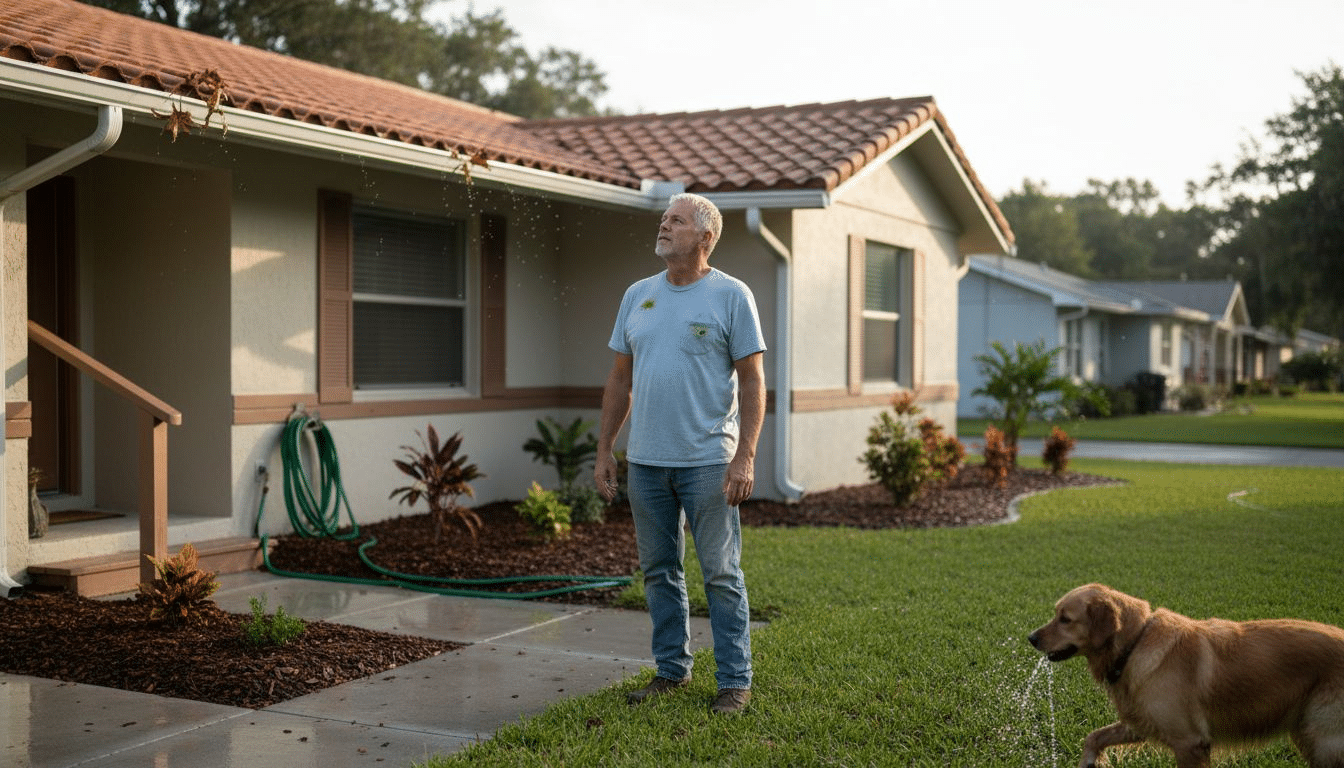
Heavy Florida rainstorms can quickly turn a quiet yard into a soggy mess, leaving landscaping and foundations at risk for serious damage. In places like Lake, Marion, and Sumter counties, protecting your property from excess water is more than a convenience—it is a necessity. Installing a rain gutter is an architectural water discharge system that channels intense rainfall away from your roof and foundation, helping maintain your home’s value and curb appeal even during the wettest months.
Table of Contents
- What Gutters Are And Why They Matter
- Types Of Gutters And Key Features
- How Gutters Protect Landscaping
- Common Landscaping Risks Without Gutters
- Choosing Seamless Gutters For Florida Weather
- Maintenance Tips For Lasting Landscaping Protection
Key Takeaways
| Point | Details |
|---|---|
| Importance of Gutters | Gutters are essential for managing rainwater and protecting your home from foundation damage during intense rainfall. |
| Seamless Gutters | Seamless gutters are recommended for Florida homes due to their durability and reduced maintenance needs. |
| Landscaping Protection | Proper gutter systems prevent soil erosion and protect landscaping investments by directing water away from the foundation. |
| Regular Maintenance | Schedule professional inspections twice a year to ensure gutters function effectively and prevent costly repairs. |
What Gutters Are and Why They Matter
Gutters are the unsung heroes of your home’s exterior. Simply put, a rain gutter is an architectural water discharge system designed to catch water flowing off your roof and direct it safely away from your home. Rather than allowing thousands of gallons of rainwater to cascade down your walls and pool around your foundation during Florida’s intense summer storms, gutters collect this water and channel it through downspouts to designated drainage areas. Think of them as the circulatory system of your home’s water management. Without them, rainwater becomes a destructive force that attacks your foundation, siding, landscaping, and everything else below the roofline.
In Central Florida’s Lake, Marion, and Sumter counties, gutters aren’t a luxury addition to your home. They’re a necessity. Our region receives significant rainfall, especially during hurricane season and summer afternoon thunderstorms. When a typical storm dumps several inches of rain in just a few hours, your gutters become critical infrastructure. Properly installed gutters and downspouts direct rainwater away from your building’s foundation and prevent the moisture problems that lead to basement flooding, structural damage, and that unmistakable smell of mold creeping into your living spaces. Without effective water management through gutters, you’re essentially inviting water damage to settle into your home’s foundation and crawl space. The complex way rainwater flows from roofs means even small failures in your gutter system can result in major problems that are far more expensive to fix than regular gutter maintenance.
Most residential gutters are fabricated from materials like aluminum, steel, or vinyl, and they attach to the edge of your roofline in a continuous channel. The best systems for Florida properties are seamless gutters, which eliminate the joints and seams where water typically leaks or debris gets stuck. These custom-fitted systems are designed to handle Florida’s specific climate challenges, from the constant heat and humidity to the occasional freeze that affects the northern parts of Lake and Marion counties. Your gutters also protect your landscaping investment by preventing soil erosion, protecting plant roots from waterlogging, and directing water away from mulch beds and garden areas where excess moisture encourages fungal growth and root rot.
Pro tip: Schedule a professional gutter inspection at the start of hurricane season (June) and again in late summer (August) to ensure your system is clear of debris and ready to handle heavy rainfall events. Two preventative checks per year can save you thousands in water damage repairs.
Types of Gutters and Key Features
Not all gutters are created equal, and choosing the right type for your Central Florida home depends on several factors including durability, maintenance requirements, and your budget. Seamless gutters have become the gold standard for Florida homeowners because they eliminate the joints and seams where traditional sectional gutters leak and accumulate debris. These custom-fitted gutters are manufactured on-site to match your exact roofline, creating one continuous channel from one end of your roof to the other. The absence of seams means fewer places for water to escape, less debris buildup, and significantly reduced maintenance compared to older sectional systems. Beyond seamless options, the material you choose matters enormously in Florida’s hot, humid climate. Modern gutters use materials such as aluminum alloys, galvanized steel, and copper, each offering different advantages depending on your home’s architecture and long-term maintenance preferences.
Aluminum gutters represent the most popular choice for residential properties in Lake, Marion, and Sumter counties. They’re lightweight, affordable, and resist rust better than older steel options, though they can dent under heavy impact from falling branches or hail. Copper gutters offer a premium aesthetic with natural beauty that develops a distinctive patina over time, but they cost significantly more and require professional installation. Galvanized steel gutters provide excellent durability and strength, making them ideal for homes in areas prone to heavy storms, though they’re heavier and require more robust support systems. For homeowners seeking low-maintenance solutions, vinyl gutters are lightweight and affordable, but Florida’s intense sun can cause them to fade and become brittle over extended periods.
Beyond material choices, gutters are also classified by their design. Eaves gutters hang beyond the roof edge and are the most common residential style. Parapet gutters sit flush with the roof edge and work well for certain architectural styles. The design and material selection directly impact water flow efficiency and durability, which is why professional guidance matters when selecting your system. Key features to evaluate include gutter width (5 or 6 inches), depth, and the capacity of your downspouts to handle Florida’s intense rainfall. A properly sized system with adequate downspouts prevents water from overflowing during heavy storms and ensures water is directed far enough away from your foundation.
Here’s a comparison of common gutter materials for Florida homes:
| Material | Durability | Maintenance Needs | Suitability for FL Climate |
|---|---|---|---|
| Aluminum | High | Low | Excellent, resists rust |
| Copper | Very High | Medium | Great, develops patina |
| Galvanized Steel | High | Medium-High | Good, but can rust over time |
| Vinyl | Moderate | Low | Poor, sun exposure causes brittleness |
Pro tip: When comparing gutter types, prioritize seamless aluminum systems for Florida properties because they offer the best balance of durability, low maintenance, and affordability while standing up to our region’s intense heat and humidity.
How Gutters Protect Landscaping
Your landscaping represents a significant investment in your home’s curb appeal and property value. Trees, shrubs, flower beds, and hardscaping all depend on proper water management to thrive. This is where gutters become your landscaping’s best defense. Without gutters, rainwater cascades off your roof in concentrated streams, hammering the soil around your foundation and garden beds with far more water than nature intended to fall in one spot. This uncontrolled water flow creates several problems that can destroy months or years of landscaping work. Standing water saturates soil, causing root rot in plants and creating boggy areas where nothing grows well. Erosion carves channels through mulch beds and displaces topsoil, leaving bare patches and destabilizing the ground around your home’s foundation. Over time, this water damage to your landscaping compounds into expensive landscape restoration projects.
Proper gutter systems direct rainwater in controlled streams away from your home and landscaping through downspouts, which channel water to designated drainage areas. This controlled flow prevents soil saturation and erosion around your property while protecting the plants that depend on balanced moisture levels. When downspouts terminate at least 4 to 6 feet away from your foundation, water disperses gradually into the lawn rather than pooling against your home. This is particularly important in Central Florida’s clay and sandy soils, which either compact and hold water indefinitely or drain too quickly without proper management. Your flower beds, shrubs, and trees can access water at consistent, healthy levels instead of alternating between drought conditions and waterlogged soil. Plant roots develop more deeply and strongly in well-drained soil, making your landscaping more resilient during Florida’s dry seasons.
Beyond foundation and plant protection, gutters prevent the formation of mud splash zones on your home’s siding and protect mulch beds from being washed away. Gutters and downspouts reduce soil erosion and displacement while maintaining healthier landscaping overall. Installing gutter guards adds another layer of protection by keeping leaves and debris out of your gutters, ensuring water flows freely during heavy storms and reducing the need for frequent cleaning. This is especially valuable in Central Florida, where oak trees shed heavily and heavy summer thunderstorms demand maximum drainage capacity. When your gutters function properly without blockages, water drains efficiently regardless of weather, protecting both your home and your landscaping investment simultaneously.
Pro tip: Install gutter guards alongside your gutters to maintain consistent water flow and reduce cleaning needs by up to 80 percent, giving your landscaping the reliable drainage it needs to flourish year-round.
Common Landscaping Risks Without Gutters
When gutters are absent or failing, your landscaping faces a cascade of problems that extend far beyond aesthetics. The most immediate threat is soil erosion, which occurs when uncontrolled water from your roof pummels the ground with concentrated force. This erosion strips away topsoil that contains nutrients your plants need to survive, exposing roots and creating bare patches in your garden beds. Over time, erosion carves gullies through your landscaping, destabilizing the ground around shrubs and trees. Once topsoil washes away, it’s gone, requiring expensive replacement material and replanting work. In Central Florida’s sandy and clay soils, erosion happens remarkably fast because water either drains too quickly, carrying soil particles away, or pools and creates waterlogged conditions that further damage plant health.
Another critical risk is landscape flooding and standing water, which creates soggy areas where roots rot and fungal diseases thrive. Without gutters directing water away, heavy downpours saturate the soil around your home’s foundation and throughout adjacent planting areas. Stagnant water becomes a breeding ground for mosquitoes and creates conditions for mold and mildew to spread across your lawn and hardscape surfaces. Additionally, uncontrolled stormwater runoff carries sediment and pollutants into waterways, potentially impacting local water quality and ecosystems. When yard debris and water flow into storm drains and streets without gutter management, it increases neighborhood flooding risk and contributes to environmental problems in Orlando’s lakes and retention ponds.
Your hardscaping investments also suffer without proper water management. Patios, walkways, and retaining walls experience accelerated deterioration from constant water exposure. Water seepage undermines pavers and erodes mortar between stones. Uncontrolled runoff creates mud splash on your home’s siding and damages paint finishes. Beyond your property, allowing yard water to enter storm drains increases nutrient pollution and contributes to harmful algae blooms in local water bodies, degrading the recreational quality of Central Florida’s lakes and natural areas. The consequences of missing or malfunctioning gutters ripple through your community’s water systems.
This summary highlights landscaping risks when gutters are missing or failing:
| Risk | Typical Effects | Impact on Property Value |
|---|---|---|
| Soil Erosion | Topsoil loss, root exposure | Decreases curb appeal, costly fixes |
| Landscape Flooding | Root rot, mold, and mildew | Harms garden health, increases pest risk |
| Hardscape Deterioration | Paver and wall damage | Requires expensive repairs |
| Stormwater Runoff Pollution | Waterway and lake pollution | Damages local ecosystem |
Pro tip: Check your gutters after heavy rainfall to ensure water flows freely and downspouts direct water at least 6 feet away from your landscaping to prevent soil saturation and erosion damage.
Choosing Seamless Gutters for Florida Weather
Florida’s weather presents unique challenges that demand gutter systems engineered specifically for our climate. The choice between seamless and sectional gutters becomes obvious when you understand what happens during our intense summer thunderstorms and hurricane season. Seamless gutters are manufactured on-site to fit your exact roofline, eliminating the overlapping seams and joints where sectional gutters inevitably leak. When Florida dumps 4 to 6 inches of rain in a single afternoon, water pressure builds at every seam in traditional gutters, forcing water through these weak points and directly onto your foundation and landscaping. Seamless systems handle this volume without the vulnerability, delivering consistent protection year after year.
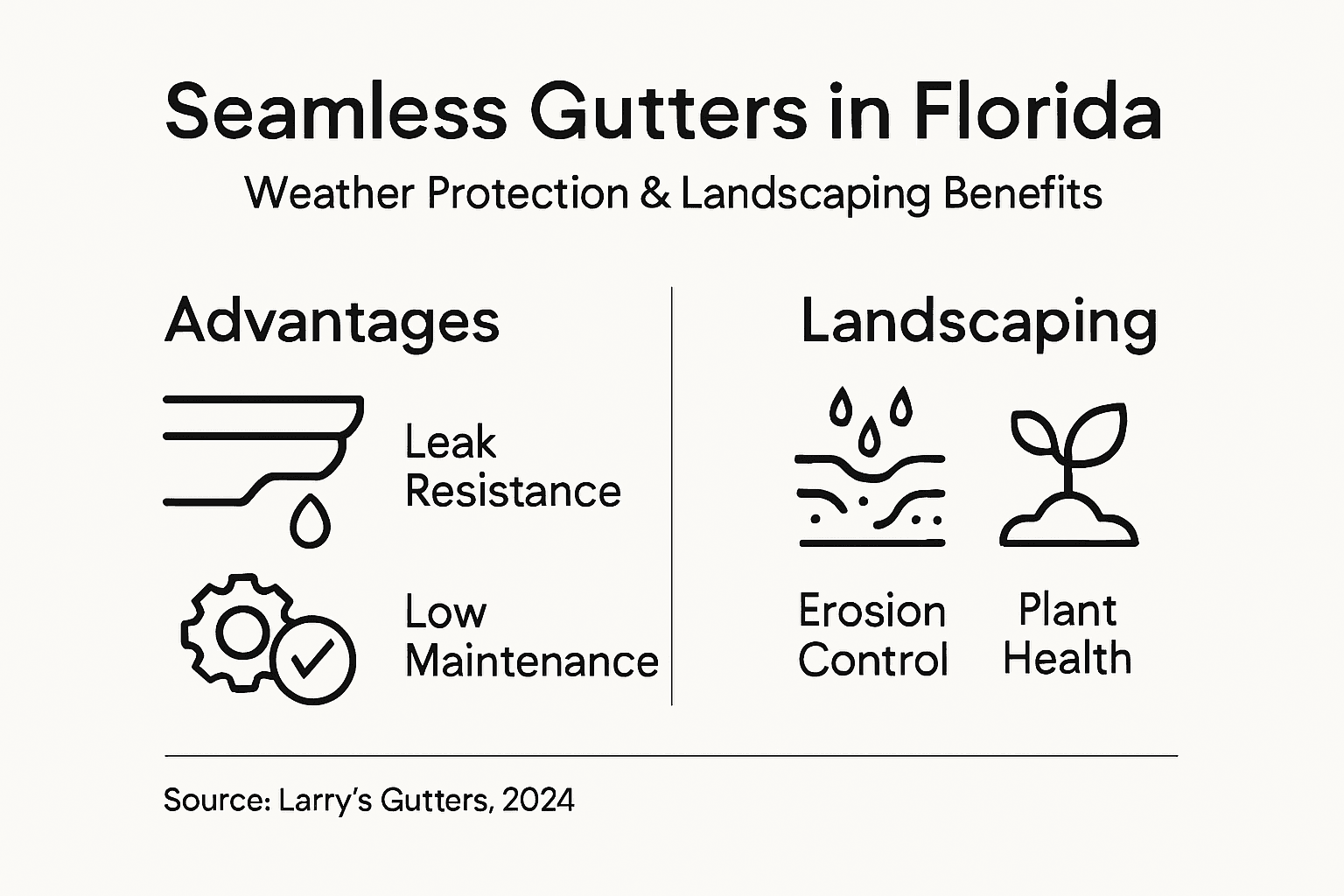
The superiority of seamless gutters in Florida’s climate comes down to physics and durability. Seamless gutters minimize leaks caused by seams and are usually made from corrosion-resistant materials like aluminum, which stands up to our constant heat, humidity, and salt air if you’re near coastal areas. Traditional sectional gutters have dozens of connection points across a typical home, and each joint requires sealant that breaks down under UV exposure. Within a few years, that sealant cracks, and the seams become leak points. Seamless aluminum gutters resist the corrosion that affects steel options, and they won’t become brittle like vinyl gutters exposed to Florida’s relentless sun. The Florida Building Code actually recognizes this advantage, requiring gutters constructed of materials compatible with collection surfaces and designed to handle the required rainwater quality and volume that our region receives. Seamless gutters exceed these standards through superior engineering.
Beyond just preventing leaks, seamless gutters significantly reduce your maintenance burden. Without seams to trap debris, leaves and pine needles flow more easily toward downspouts, especially when paired with gutter guards. You’ll spend less time climbing ladders for cleaning and less money on emergency repairs when gutters fail mid-storm. The absence of seams also means there’s nowhere for standing water to collect, reducing breeding grounds for mosquitoes and preventing the mold growth that thrives in Florida’s humidity. When you invest in seamless gutters, you’re choosing a system designed to protect your landscaping through decades of Florida weather without constantly demanding your attention or your wallet.
Pro tip: Request a professional measurement and custom seamless gutter installation rather than settling for sectional systems, because the upfront investment in seamless gutters pays for itself through years of reliable protection and reduced maintenance costs in Florida’s harsh climate.
Maintenance Tips for Lasting Landscaping Protection
Installing quality seamless gutters is only half the battle. Consistent maintenance ensures your gutters continue protecting your landscaping and foundation for decades. Think of gutter maintenance as preventative medicine for your home. Neglect it, and small issues become expensive disasters. Start with spring inspection, which catches winter damage before summer storms arrive. Walk your roof’s perimeter (safely from the ground with binoculars) and look for sagging sections, rust spots, or visible debris. Clear any leaves, pine needles, or branches from the gutters and downspouts. Spring is also the time to check that downspouts still direct water away from your foundation. After winter freeze cycles, pipes can shift, and downspout extensions may have moved closer to your home.
Summer maintenance in Central Florida shifts focus to debris removal and pest prevention. Oak trees shed throughout summer, and Florida’s summer afternoon thunderstorms can deposit significant debris in gutters within hours. Regular seasonal gutter maintenance across seasons protects homes and landscaping from water damage, foundation erosion, and pest infestations, so plan cleaning sessions before major weather events. Remove debris promptly because standing water in gutters becomes a mosquito breeding ground and creates conditions for mold growth. Summer is also when you’ll notice if your downspouts are functioning correctly during heavy rainfall. Watch during a storm to see if water overflows the gutters or if downspouts deliver water properly away from your landscaping.
Fall and winter maintenance focuses on preventing clogs and checking structural integrity. Proper maintenance includes inspecting gutters and downspouts for rust, cracks, holes, and ensuring downspouts divert water at least 4 to 6 feet from the foundation. Check gutter slope to ensure water flows toward downspouts rather than pooling, which causes rust and damage. Verify that gutters aren’t sagging under leaf weight and that fasteners remain tight. Before winter arrives, clear gutters completely so winter rains drain properly. Most importantly, ensure your gutter system has adequate slope. Even perfectly installed gutters perform poorly if they’ve settled and lost their pitch, allowing water to stand instead of flowing to downspouts.
Pro tip: Schedule professional gutter cleaning and inspection twice yearly—once in spring and once in fall—to catch damage early and maintain optimal water flow for landscaping protection.
Protect Your Landscaping with Expert Seamless Gutter Solutions
The article highlights the critical role gutters play in defending your landscaping from soil erosion, flooding, and plant damage caused by Florida’s heavy rainfall. If you are worried about protecting your home’s foundation and garden from water damage or tired of dealing with clogged, leaking gutters that fail during storms, Larry’s Gutters offers the trusted solution. Our custom seamless gutters are engineered for Central Florida’s unique climate to provide reliable, leak-free water management that safeguards your landscaping investment.
Experience peace of mind knowing your gutters will efficiently channel rainwater away from your property, preventing erosion and root rot. We also offer high-quality gutter guard installation to reduce maintenance and keep debris from blocking your system. Whether you need new gutter installation, repairs, or routine cleaning to maintain your system’s effectiveness, Larry’s Gutters is your local expert ready to help.
Ready to shield your landscaping from costly water damage before the next heavy storm? Visit Larry’s Gutters today for a free quote and discover how our seamless gutter solutions can protect your home and lawn year-round.
Discover Our Seamless Gutter Installation Services
Learn About Our Gutter Guard Options
Schedule Professional Gutter Cleaning and Repair

Don’t wait for water damage to ruin your landscaping. Contact Larry’s Gutters now and secure your home with gutters designed specifically for Florida’s challenging weather.
Frequently Asked Questions
What is the role of gutters in protecting landscaping?
Gutters collect and channel rainwater from your roof, preventing water from cascading directly onto your landscaping. This controlled flow protects against soil erosion, flooding, and root rot, ensuring your plants remain healthy and supported.
How do improper gutters affect landscaping?
Without functional gutters, water can overwhelm the soil, leading to waterlogging and erosion. This results in topsoil loss, root exposure for plants, and the potential for mold and pests, ultimately harming your landscaping investments.
Why are seamless gutters recommended for Florida homes?
Seamless gutters reduce the risk of leaks at joints and seams, which is crucial for managing heavy rainfall in Florida. They offer a more durable solution than traditional sectional gutters, minimizing maintenance needs and maximizing effectiveness.
How often should I maintain my gutters to protect my landscaping?
It’s recommended to inspect and clean your gutters at least twice a year—once in spring and again in fall. Regular maintenance helps ensure proper water flow, prevents clogs, and reduces the risk of damage to your landscaping from flooding or erosion.
Recommended
- Gutter Troubleshooting: Prevent Water Damage in Florida
- 7 Smart Gutter Upgrade Ideas for Florida Homeowners
- How Gutter Guards Work for Florida Homes
- Gutter Guard Installation Workflow for Florida Homeowners
- Role of Drain Cleaning: Protecting Tampa Bay Homes
- Gutter Services Gainesville FL
- Gutter Services The Villages FL
