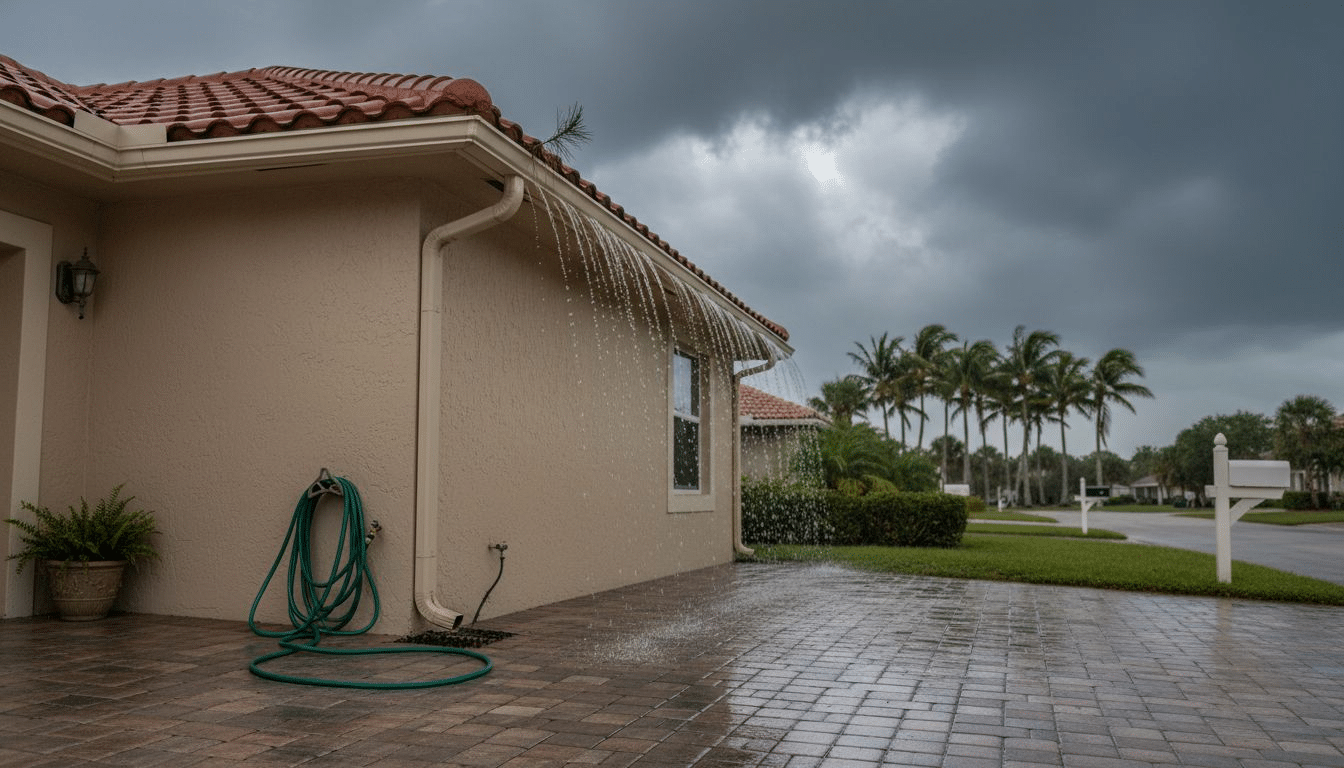
Heavy rainstorms in Lake County and Marion County can turn a peaceful afternoon into a race against water damage. For Central Florida homeowners, gutters form the crucial shield between torrential rainfall and expensive repairs. With Florida facing an annual average of 50 to 60 inches of rain, a well-designed gutter system is your home’s first defense against leaks, rot, and foundation cracking. Discover how the right installation and maintenance strategies keep your property safe through every storm.
Table of Contents
- What Gutters Do for Florida Homes
- Types of Gutter Systems Explained
- Seamless Gutters vs. Sectional Gutters
- Installation and Maintenance Essentials
- Common Gutter Problems and How to Prevent Them
Key Takeaways
| Point | Details |
|---|---|
| Importance of Gutters | Gutters protect Florida homes by directing rainwater away from foundations, preventing water damage and structural issues. |
| Seamless vs. Sectional Gutters | Seamless gutters reduce leak risks and require less maintenance compared to sectional gutters, making them a more reliable long-term investment. |
| Material Selection | Aluminum gutters are ideal for Florida’s climate due to their rust resistance and affordability, while other materials like copper may offer unique benefits at a higher cost. |
| Regular Maintenance | Routine gutter cleaning and inspections are essential to prevent clogs and water damage, particularly in Florida’s heavy rain and humidity. |
What Gutters Do for Florida Homes
Think of your gutters as the first line of defense against Florida’s relentless rain and humidity. When a afternoon thunderstorm rolls through Lake County or Marion County, your roof channels water downward at tremendous speed. Without gutters, that water crashes directly onto your foundation, seeps into your landscaping, and pools around your home’s base. Your gutters intercept this flow and direct it safely away from where it matters most. The result is straightforward: less water damage, fewer foundation problems, and a home that stays protected year after year.
What makes gutters so critical in Central Florida specifically is the volume of water we receive. Florida averages 50 to 60 inches of rain annually, and when hurricane season arrives, that number climbs dramatically. Water management through proper gutter systems prevents multiple types of damage that could otherwise devastate your property. Standing water near your foundation can lead to cracks that compromise structural integrity. Water running down your walls without gutters causes wood rot in fascia boards and siding. Landscaping erosion becomes visible within a single rainy season when water flows unchecked. Inside your home, moisture seeping through walls and into crawl spaces creates conditions where mold thrives in Florida’s humid climate. Each of these problems costs thousands to fix once they take hold.
Your gutters also protect your roof itself. By channeling water away from the roofline, gutters prevent water from backing up under shingles where it can cause leaks that deteriorate the structure underneath. They catch debris flowing down your roof during storms and keep it from accumulating against your foundation or clogging drainage systems. During heavy rainfall events, functioning gutters ensure water moves quickly and efficiently away from your home rather than pooling on the roof or overflowing onto your walls. Homeowners in Sumter County who’ve experienced burst pipes or water intrusion during storms often discover the problem started with gutters that weren’t doing their job. In Florida’s climate, where we face intense afternoon storms and tropical systems, having gutters that are properly installed and maintained isn’t optional. It’s the difference between a home that weathers the elements and one that develops expensive problems year after year.
Pro tip: Extend your downspouts at least 4 to 6 feet away from your foundation and direct water toward a drainage area that slopes away from your home, not toward it, so water flows far enough away to prevent foundation saturation.
Types of Gutter Systems Explained
When you start looking at gutter options for your Central Florida home, you’ll quickly realize that not all gutters are created equal. The style and material you choose affects how well your home handles our intense rainfall, how long your system lasts, and how much maintenance you’ll need to do. Understanding the main types available helps you make a decision that aligns with your home’s needs, your budget, and the specific challenges that come with living in Lake, Marion, or Sumter County.
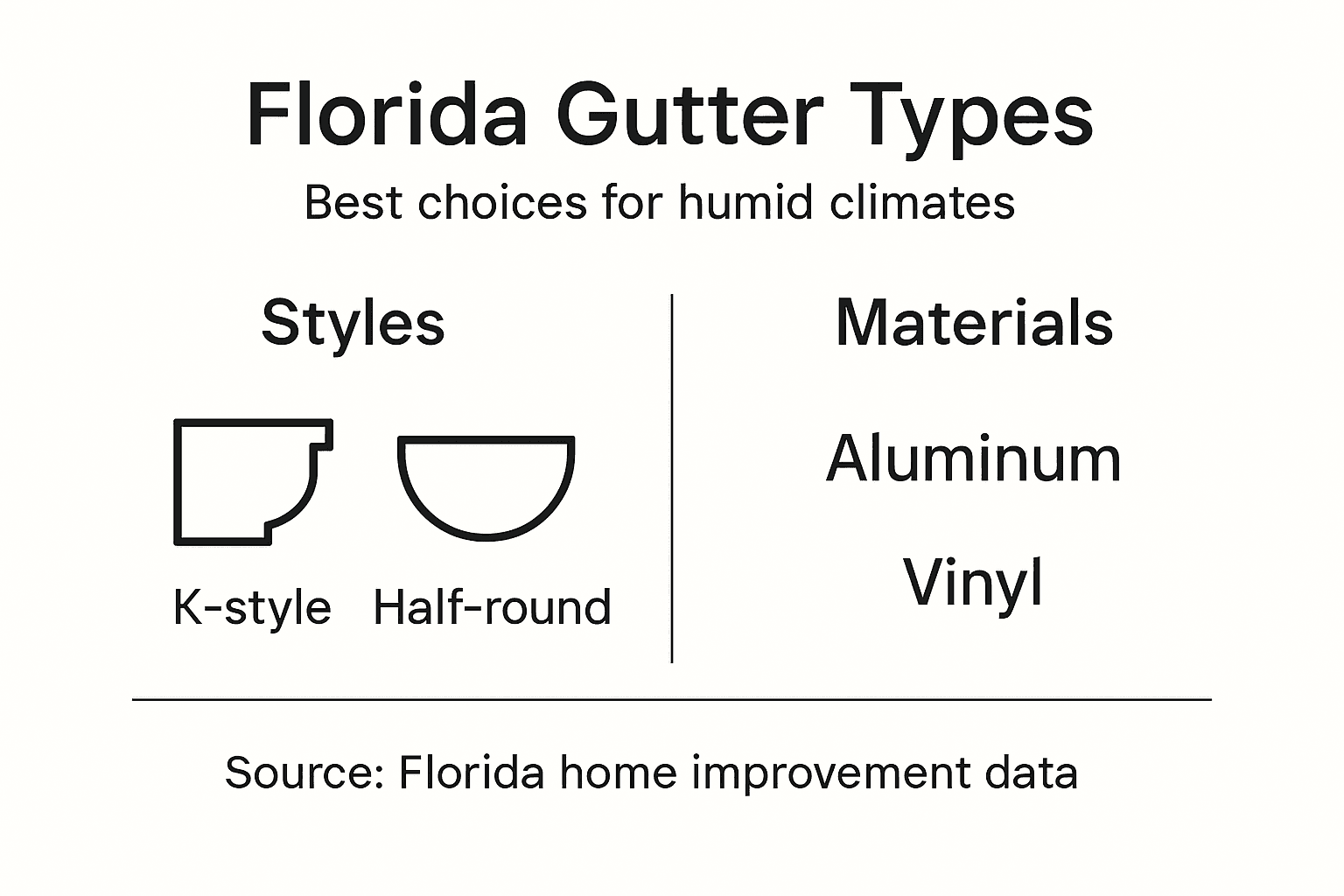
Let’s start with the two most common gutter styles you’ll encounter. K-style gutters are the most popular choice in residential neighborhoods across Florida. They have a flat bottom and sides that slope outward, resembling the letter K when viewed from the side. This design maximizes water capacity and makes installation straightforward, which is why most homes use them. The second major option is half-round gutters, which offer a classic, curved appearance that works well on older homes or those with more traditional architecture. Half-round gutters have less water-carrying capacity than K-style options, but they shed debris more easily and look sleeker. For Florida homes, K-style gutters work well because they handle the volume of water we receive during afternoon storms and hurricane season. Then there are box gutters, which are typically built directly into the roofline during construction. You’ll see these less often on residential homes, but they appear on some commercial buildings and custom homes. Box gutters offer maximum water capacity but require more complex installation and maintenance.
Material choice is equally important because Florida’s humidity, salt air near coastal areas, and intense sun exposure all affect how long your gutters last. Aluminum gutters dominate the market in Florida for good reason. They resist rust, weigh less than steel, and cost less than copper or zinc options. Aluminum also handles temperature fluctuations well, which matters when we swing from hot afternoons to cool nights. Steel gutters offer superior strength but rust more easily unless they have protective coatings, making them less practical for Florida’s climate. Copper gutters are premium options that develop a distinctive green patina over time and can last 50 years or more, but the cost is significantly higher. Vinyl gutters appeal to budget-conscious homeowners because they’re inexpensive and never rust, though they become brittle in extreme heat and may not hold up as well under Florida’s sun. Zinc gutters fall somewhere in the middle, offering durability and rust resistance, though they’re less common than aluminum. For most homeowners in Central Florida, seamless aluminum gutters represent the sweet spot between durability, affordability, and performance. They can be custom-fitted to your home’s exact dimensions, eliminating joints where leaks often develop.
Here’s a concise comparison of common gutter materials for Florida homes:
| Material | Pros | Cons | Best For |
|---|---|---|---|
| Aluminum | Rust resistant, affordable, lightweight | Can dent, needs regular cleaning | Most Florida homes |
| Steel | Very strong, durable | Prone to rust in humidity | Heavy-duty applications |
| Copper | Extremely long-lasting, unique patina | High cost, labor intensive to install | Premium or historic use |
| Vinyl | Low cost, never rusts | Brittle in high heat, less durable | Strict-budget projects |
| Zinc | Durable, resists corrosion | Expensive, less widely available | Upscale custom homes |
Your choice ultimately depends on several practical factors. Consider your home’s architectural style first. A Victorian-era home looks better with half-round gutters, while most modern ranch and suburban homes pair well with K-style gutters. Think about your maintenance tolerance. Aluminum gutters require regular cleaning to prevent debris buildup, especially if you have large trees near your roof. Vinyl gutters need the same maintenance but don’t repair as easily if damaged. Your budget matters too. Aluminum seamless gutters cost more upfront than sectional vinyl options, but they last longer and protect your home better during heavy Florida storms. Finally, consider local weather exposure. If your home is near the coast, salt spray corrosion is a real concern that pushes you toward aluminum or copper. Inland homeowners in Sumter County may have more flexibility with material choices. Talk to a gutter specialist who understands your specific location and can recommend systems that match both your home’s needs and Florida’s demanding climate.
Pro tip: Choose seamless aluminum gutters for Florida homes because they eliminate joint leak points, handle heavy rainfall efficiently, and resist the corrosion that sectional or vinyl systems struggle with in our humid, salty environment.
Seamless Gutters vs. Sectional Gutters
If you’ve started researching gutter options for your Central Florida home, you’ve probably encountered two main camps: seamless gutters and sectional gutters. The choice between them affects everything from how often you call for repairs to how much you pay upfront. Understanding the real differences helps you make a decision based on your home’s actual needs rather than just the price tag at checkout.
Let’s start with what makes them different at the most basic level. Sectional gutters come in predetermined lengths, usually 10 feet or so, that are connected together with seams and fasteners. Think of them like puzzle pieces that fit together to form your complete gutter system. These sections are manufactured ahead of time, so they’re readily available at hardware stores and easier for DIY installers to work with. Seamless gutters, by contrast, are custom-made right on your property using specialized equipment that rolls out one continuous piece fitted exactly to your roofline. There are no joints running along your gutters except at the corners and where gutters connect to downspouts. This fundamental difference in design creates a cascade of consequences for performance, durability, and maintenance.
The biggest practical difference shows up in leaks. Sectional gutters develop problems at their seams because that’s where water penetration happens most often. Over Florida’s hot, humid summers and through our intense rainfall seasons, caulk and sealant at these joints break down. Water finds its way through, creating drips that damage fascia boards and siding. Seamless gutters eliminate those joint leak points entirely, which means fewer emergency calls for repairs and less water damage to your home’s exterior. Homeowners in Lake and Marion Counties who’ve chosen seamless systems report fewer maintenance issues year after year. Sectional gutters, while budget-friendly initially, often cost more over their lifetime when you factor in repeated repairs and eventual replacement. Seamless gutters also look cleaner and more polished because they form a smooth line across your roofline without visible seams breaking up the view. If curb appeal matters to you, this visual difference is noticeable.
Maintenance demands differ significantly between the two systems. Sectional gutters require more frequent inspections because the seams need regular checking and resealing. Debris gets caught at joint connections more easily, and when standing water sits at a seam during our heavy afternoon storms, it accelerates deterioration. You’ll likely find yourself cleaning and maintaining sectional systems more often. Seamless gutters demand regular cleaning too since both systems need debris removal, but the lack of seams means less places for problems to hide. Repair work is also simpler on seamless systems because a professional can patch or section out a damaged area without compromising multiple joints.
The cost conversation is more nuanced than “seamless costs more.” Yes, seamless gutter installation has a higher upfront cost because of the custom fabrication and professional installation required. Sectional gutters cost less to purchase and install, and some homeowners with DIY skills can install them themselves. But here’s where the math shifts: seamless gutters last significantly longer, require fewer repairs, and protect your home better during Florida’s intense storms. When you calculate the total cost over 20 years including repairs, maintenance, and eventual replacement, seamless systems often come out ahead. For homeowners planning to stay in their home long-term and who value reliability, seamless gutters make financial sense. For those flipping a property or on an extremely tight budget, sectional gutters might work in the short term.
One more consideration matters for Central Florida specifically. Our weather includes intense afternoon thunderstorms and occasional tropical systems that dump massive amounts of water in short timeframes. Seamless gutters handle these volume spikes better because their continuous design moves water more efficiently without the friction and pooling that happens at sectional joints. Sectional systems can overflow more easily during peak rainfall, allowing water to cascade over the edge instead of flowing safely to downspouts. If you’re in Sumter County or anywhere in Central Florida where heavy rain is the norm, this performance advantage of seamless systems becomes practically important.
Pro tip: Request quotes for seamless aluminum gutters rather than settling for sectional options because the long-term protection, fewer repairs, and superior performance during Florida’s heavy rainfall make the initial investment worthwhile.
The table below summarizes key differences between seamless and sectional gutters:
| Feature | Seamless Gutters | Sectional Gutters |
|---|---|---|
| Leak Risk | Minimal, only at corners | High, at every seam |
| Installation | Custom-fabricated on-site | Pre-cut sections, DIY possible |
| Visual Appeal | Smooth, streamlined appearance | Visible seams along roofline |
| Longevity | 20+ years with maintenance | 10–15 years, requires upkeep |
| Upfront Cost | Higher initial investment | Lower initial investment |
| Maintenance Needs | Fewer repairs over time | Frequent checking for leaks |
Installation and Maintenance Essentials
Getting your gutter system right starts with proper installation, but the real work happens during the years afterward. Many homeowners think installation is a one-time event and then forget about their gutters until a problem forces their hand. That approach costs money. A well-installed system paired with consistent maintenance keeps your Central Florida home protected and extends the life of your investment significantly. Understanding what proper installation looks like and what maintenance actually requires helps you stay ahead of problems rather than constantly reacting to them.
Proper installation begins with accurate measurements and correct positioning. Your gutters need to slope gently toward downspouts so water flows naturally without pooling or running backward. The slope should be subtle, about one-quarter inch for every 10 feet of gutter length. If the slope is too steep, water rushes and debris doesn’t get flushed out. If there’s no slope at all, standing water collects and becomes a breeding ground for mosquitoes in Florida’s humid climate. Hangers that attach your gutters to the fascia board must be spaced correctly, usually every 24 to 32 inches, to prevent sagging under the weight of heavy rainfall. For seamless gutters, a professional installer takes exact measurements of your roofline and fabricates the system on-site to fit perfectly. The placement of your gutters also matters. They should sit just slightly below your roof’s edge so water falling from shingles flows into them rather than behind them, which would cause water damage to fascia and siding. Your downspouts need attention too. Effective downspout placement requires directing water at least 5 feet away from your foundation to prevent foundation cracking, basement flooding, and soil erosion around your home. In areas with poor drainage, you might need downspout extensions or even underground drainage pipes to move water far enough away.
Maintenance is where many homeowners struggle because they underestimate how much debris accumulates on Central Florida roofs. Oak trees, pine needles, palm fronds, and shingle granules all end up in your gutters. The combination creates a muddy sludge that clogs downspouts and allows water to back up onto your roof. Regular cleaning at least twice yearly is essential, ideally once in spring after trees finish shedding and again in fall when leaves drop. However, if you have large trees directly over your roof, cleaning every three months makes more sense. While you’re cleaning, inspect for damage like dents, rust spots, separation of seams, or areas where water is escaping. Look for sagging sections that indicate hangers are failing or the gutter is overloaded. Check that downspouts aren’t cracked or pulling away from the gutters. Pay attention to how water flows during rain. Does it all go into the downspout, or does some cascade over the edge? Overflowing during heavy rain might mean your gutters are undersized for Florida’s rainfall volume, or it could simply indicate debris that needs clearing. Address leaks quickly because small drips rapidly become major water damage problems. A professional can patch minor holes or replace short sections of damaged gutter. Don’t ignore the temptation to patch gutters with roofing cement or sealant. These temporary fixes fail within a season or two in Florida’s sun and heat.
Gutter guards reduce maintenance frequency but they’re not maintenance eliminators. These mesh or solid covers prevent leaves and large debris from entering your gutters while allowing water to flow through. They’re genuinely useful if you have extensive tree coverage, but they still need occasional cleaning because smaller debris and dust accumulate on top. If you invest in gutter guards, you’re shifting from cleaning inside the gutters to cleaning guard surfaces, which is easier and safer than climbing a ladder. Still, twice yearly inspections of the entire system remain important. Think of routine gutter clearing and damage inspection as preventive medicine. A $200 cleaning appointment every six months costs far less than the thousands you’ll spend replacing soggy fascia boards, repairing foundation cracks, or addressing mold growth from water intrusion. Some homeowners hire professionals for cleaning while others handle it themselves with proper safety equipment. Whatever approach you choose, consistency matters more than who does the work.
Pro tip: Schedule professional gutter cleaning and inspection immediately after hurricane season ends and again before the rainy season begins so you catch damage early and prevent water from backing up during heavy downpours.
Common Gutter Problems and How to Prevent Them
Your gutters face constant challenges in Central Florida. Between heavy rainfall, intense sun, humidity, and debris from nearby trees, problems develop faster here than in other parts of the country. The good news is that most gutter problems are preventable. Understanding what goes wrong and recognizing early warning signs lets you address issues before they become expensive repairs. Waiting until water is actively damaging your home costs exponentially more than catching problems early.
The most common issue homeowners face is gutter clogging from debris accumulation. When leaves, pine needles, palm fronds, and shingle granules pack into your gutters, water cannot flow freely toward downspouts. Instead, it backs up and overflows onto your fascia boards and siding. In heavy rain, this overflow can cascade down your walls and pool around your foundation. The standing water then seeps into your crawl space or basement, creating moisture conditions where mold thrives. Sagging gutters represent another major problem, usually caused by the weight of water and debris combined with loose or failing hangers. You’ll notice a section of gutter drooping visibly, creating an uneven line across your roofline. This sagging prevents proper water flow and concentrates weight on remaining hangers, causing a domino effect of failures. Leaks at seams occur as caulk and sealant deteriorate from Florida’s sun and temperature swings. Water slowly drips down behind the gutter onto fascia boards and siding, causing wood rot that weakens your home’s structure. Improper pitch or slope prevents water from flowing naturally toward downspouts. If your gutters are level instead of sloped slightly downward, water pools in low spots where it sits stagnant, breeding mosquitoes and algae. Corrosion and rust develop over time, especially on steel gutters or aluminum systems that aren’t properly maintained. Small rust spots grow larger, eventually creating holes that leak.
Prevention starts with regular maintenance. Common gutter problems including debris clogs and sagging can be prevented through routine cleaning and proper hanger maintenance. Schedule cleaning at least twice yearly, or more frequently if you have significant tree coverage. During cleaning, inspect the entire system for rust spots, leaks, sagging sections, and separation at seams. Install gutter guards if debris accumulation is a persistent issue. These systems reduce the frequency of cleaning needed and prevent leaves and twigs from entering your gutters. However, they still require occasional maintenance because dust and smaller debris accumulate on top. Ensure your hangers are properly spaced and secure. If you notice sagging, tighten or replace hangers immediately rather than waiting for complete failure. Seal any leaks you discover at seams using quality gutter sealant designed to flex with temperature changes. Don’t rely on roofing cement or temporary patches because Florida’s heat causes these materials to fail within months. Verify that your gutters have proper slope by watching water flow during rain. It should move steadily toward downspouts, not pool anywhere. If you see standing water or uneven flow, you may need hangers adjusted or the system releveled. Check downspouts too. They should be clear of debris and properly positioned to direct water at least 5 to 6 feet away from your foundation.
Florida’s specific weather patterns create unique challenges for gutters. Our afternoon thunderstorms dump massive amounts of water in short timeframes. If your gutters are undersized or clogged, they overflow during these peak periods, creating water damage that happens faster than you’d expect. Hurricane season brings sustained heavy rain plus wind that can damage gutters directly. After any tropical system, inspect your gutters carefully for impact damage, dents, or separation. Humidity and salt air near coastal areas accelerate corrosion. If you’re in Marion County near the coast, aluminum gutters will deteriorate faster than those in inland Sumter County. The intense Florida sun breaks down sealant at seams quicker than in northern climates. What this means practically is that preventive maintenance matters more here than almost anywhere else. A $200 cleaning appointment twice yearly prevents tens of thousands in foundation repair, basement restoration, and wood rot remediation. Many homeowners rationalize skipping maintenance to save money short-term, only to face massive expenses when water damage becomes visible.
Pro tip: Take photos of your gutters from the ground each spring and fall so you can track changes in condition, catch rust spots or sagging before they worsen, and document the system’s state for your insurance company.
Protect Your Florida Home with Custom Seamless Gutters from Larry’s Gutters
Managing the heavy rainfall and humidity unique to Central Florida demands more than basic gutters. If you want to stop water damage, foundation issues, and costly repairs caused by clogged or poorly installed systems, then investing in high-quality, custom-fit seamless gutters is essential. Larry’s Gutters specializes in tailored residential gutter solutions designed specifically for Florida’s challenging weather conditions. Our seamless aluminum gutters minimize leak risks and handle intense storms efficiently, just as the article highlights.
Key benefits include:
- Expert installation that ensures proper slope and downspout placement
- Durable materials that resist corrosion and sun damage
- Maintenance and repair services to extend system life
- Optional gutter guard installation to reduce clogging

Take control of your home’s protection now by visiting Larry’s Gutters. Discover our commitment to quality gutter installation, routine cleaning, and repair services that safeguard your investment. Don’t wait until water damage happens. Request a free quote today and experience peace of mind with gutters that work as hard as Florida’s weather demands.
Frequently Asked Questions
What role do gutters play in protecting a home?
Gutters act as the first line of defense against rain, channeling water away from the roof and foundation, preventing water damage, erosion, and structural issues.
How do I maintain my gutters to prevent common problems?
Regular cleaning at least twice a year, checking for clogs and damage, and ensuring downspouts direct water away from the foundation are essential for maintenance.
What are the differences between seamless and sectional gutters?
Seamless gutters are custom-made to fit your roofline without joints, reducing leak risks and maintenance needs, while sectional gutters consist of pre-cut sections that can develop leaks at seams.
Which gutter materials are best for climates with high humidity and rain?
Aluminum gutters are often the best choice due to their rust resistance and durability, while copper gutters, although more expensive, also offer long-lasting performance in humid conditions.
Recommended
- Gutter Troubleshooting: Prevent Water Damage in Florida
- 7 Smart Gutter Upgrade Ideas for Florida Homeowners
- 7 Essential Gutter Repair Tips for Florida Homeowners
- 7 Essential Gutter Repair Tips 2025 for Florida Homeowners
- Tagrenderensning Gadevang – Professionel service til dit hjem
- Gutter Services Gainesville FL
- Gutter Services The Villages FL
