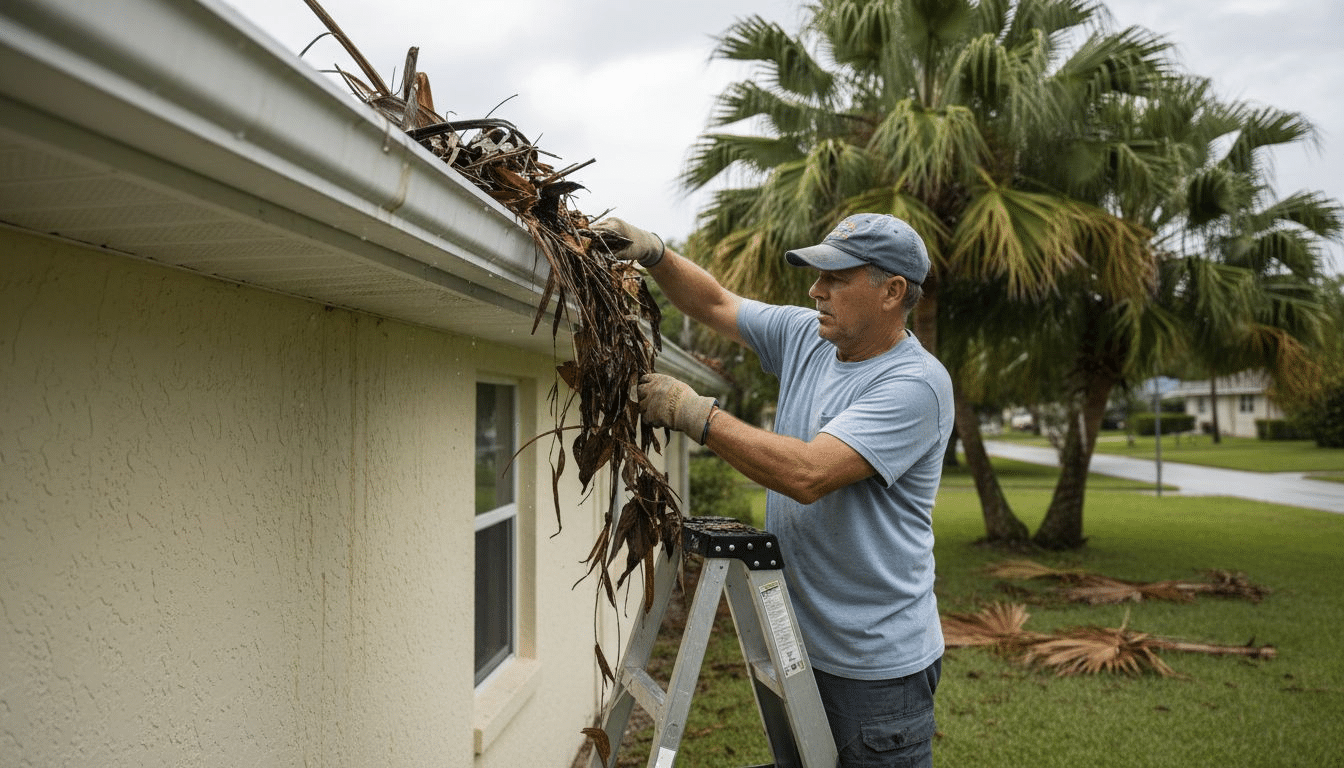
Heavy summer storms send thousands of gallons of water rushing off every American roof in Central Florida each year, putting homes in Lake, Marion, and Sumter counties at real risk. For many homeowners, failing gutters lead to costly repairs and unexpected headaches. You will discover straightforward, affordable solutions that keep your gutter system working and your home safe no matter how much rain Florida delivers.
Table of Contents
- Inspect Gutters Regularly For Leaks And Blockages
- Seal Joints And Cracks Using Waterproof Caulk
- Replace Damaged Gutter Sections Promptly
- Ensure Proper Gutter Slope For Water Flow
- Clean Out Leaves And Debris To Prevent Clogs
- Install Gutter Guards For Lasting Protection
- Check Downspouts For Effective Water Drainage
Quick Summary
| Takeaway | Explanation |
|---|---|
| 1. Inspect gutters quarterly | Regular inspections are essential to identify leaks, blockages, and damage, especially after storms in Florida’s wet climate. |
| 2. Seal joints with waterproof caulk | Use urethane-based caulk for flexible, durable seals to prevent water infiltration at joints and cracks in gutters. |
| 3. Promptly replace damaged sections | Timely replacement of rusted or sagging gutter sections prevents costly water damage to your home’s foundation and structure. |
| 4. Maintain proper gutter slope | Ensure a 1/16 to 1/4 inch slope toward downspouts for effective water drainage; check visually and with a level. |
| 5. Install gutter guards for protection | Gutter guards help prevent debris accumulation, reducing maintenance and protecting against water damage during heavy rainfall. |
1. Inspect Gutters Regularly for Leaks and Blockages
In the unpredictable Florida climate, your home’s gutters are your first line of defense against water damage. Regular inspection is critical to protecting your property from potentially devastating moisture issues.
Maintaining functional gutters requires consistent attention. Proper gutter maintenance involves checking for signs of leaks, blockages, and structural damage that could compromise water drainage. Most Florida homeowners should perform inspections at least quarterly, with additional checks after severe storms or hurricane season.
During your inspection, look for several key indicators of gutter problems. Warning signs include:
- Water stains on exterior walls
- Sagging or pulling away from the roofline
- Rust spots or visible holes
- Debris accumulation
- Improper water flow during rainfall
Successful gutter inspection means examining both the interior and exterior components. Start by clearing out leaves, twigs, and sediment that can obstruct water flow. Check downspouts to ensure they direct water at least 4 to 6 feet away from your home’s foundation, preventing potential soil saturation and moisture infiltration.
Pro tip: Use a garden hose to simulate rainfall and observe how water moves through your gutter system during your inspection.
2. Seal Joints and Cracks Using Waterproof Caulk
In Florida’s challenging climate, your gutters need more than just routine cleaning. Preventing water damage requires a proactive approach to sealing potential entry points where moisture can compromise your home’s structural integrity.
Urethane-based caulks provide an excellent solution for protecting gutter joints and preventing water infiltration. These specialized sealants offer superior flexibility and durability particularly important in Florida’s temperature fluctuating environment.
Key Factors for Effective Caulking:
- Clean surface preparation is critical
- Apply when temperatures are above 40°F
- Choose urethane caulks for exterior applications
- Ensure complete coverage of gaps and joints
- Remove old caulk before applying new sealant
When applying caulk, work systematically along gutter seams and potential leak points. Pay special attention to corner joints where water tends to accumulate. Use a steady hand and smooth the caulk to create an even seal that prevents water penetration.
Pro tip: Test your caulk application by running water through the gutters to confirm a watertight seal and check for any remaining gaps or leaks.
3. Replace Damaged Gutter Sections Promptly
Florida homeowners face constant challenges from intense rainfall and extreme weather conditions that can quickly deteriorate gutter systems. Gutter replacement steps are crucial for maintaining your home’s water management infrastructure.
Identifying Damaged Gutter Sections:
- Visible rust or corrosion
- Sagging or misaligned segments
- Cracks or holes
- Separation from roofline
- Water stains on exterior walls
Ignoring damaged gutter sections can lead to significant structural problems. Water pooling around your home’s foundation can cause moisture infiltration, potentially resulting in expensive foundation repairs and structural damage. Immediate replacement prevents these costly complications.
When replacing gutter sections, ensure you match the existing material and style. Seamless aluminum gutters are often recommended for Florida homes due to their durability and resistance to corrosion. Measure carefully and consider professional installation for complex replacements.
Pro tip: Take photographs of your current gutter system before purchasing replacement sections to ensure accurate matching and size compatibility.
4. Ensure Proper Gutter Slope for Water Flow
In Florida’s intense rainfall environment, your gutter system’s slope can mean the difference between effective water management and potential home damage. Gutter system basics are critical for protecting your property from water related issues.
The ideal gutter slope is subtle but precise. Professionals recommend a downward angle of approximately 1/16 to 1/4 inch per foot toward the downspout. This gentle gradient ensures water flows smoothly without pooling or overflowing.
Signs of Improper Gutter Slope:
- Standing water in gutter channels
- Water spilling over gutter edges
- Rust or sediment accumulation
- Corners showing consistent moisture
- Water stains on exterior walls
Measuring the slope does not require complex tools. A simple carpenter’s level or string line can help you assess whether your gutters maintain the correct angle. Visual inspection during rainfall provides the most direct evidence of drainage performance.
Pro tip: Use a garden hose to simulate rainfall and observe water flow during your gutter slope assessment to identify potential drainage issues.
5. Clean Out Leaves and Debris to Prevent Clogs
Florida homeowners know that rapid vegetation growth means constant gutter maintenance challenges. Seasonal gutter cleaning is critical to prevent water damage and protect your home’s foundation.
In Central Florida, leaves and debris accumulate quickly due to the region’s lush landscape. Your gutter system acts like a critical drainage network that requires regular attention to function effectively.
Common Gutter Debris Sources:
- Pine needles from surrounding trees
- Oak leaves and acorns
- Small branches and twigs
- Moss and organic matter
- Seed pods and flower debris
Clogged gutters can lead to serious problems like foundation erosion, roof damage, and potential interior water intrusion. Semi annual cleaning during spring and fall helps maintain proper water flow and prevents expensive repairs.
When cleaning, use protective gloves and a sturdy ladder. Remove debris by hand or with specialized gutter cleaning tools. Flush the system with a garden hose to ensure smooth water movement and check for any remaining blockages.
Pro tip: Install gutter guards to significantly reduce debris accumulation and minimize the frequency of manual cleaning.
6. Install Gutter Guards for Lasting Protection
Florida’s lush landscape and frequent rainfall make gutter guards an essential investment for homeowners. Gutter guard installation can dramatically reduce maintenance and protect your home from potential water damage.
Gutter guards serve as a critical barrier against debris accumulation. These innovative protective systems prevent leaves, twigs, and organic matter from clogging your gutters while allowing water to flow freely.
Gutter Guard Types:
- Micro mesh guards
- Solid surface guards
- Screen style guards
- Foam insert guards
- Brush style guards
Each guard type offers unique benefits depending on your specific environmental conditions. Micro mesh guards work exceptionally well in Florida’s dense vegetation areas, providing superior filtration while maintaining optimal water drainage.
When selecting gutter guards, consider factors like local tree density, roof pitch, and annual rainfall. Professional installation ensures maximum effectiveness and long term protection against potential water related home damage.
Pro tip: Choose gutter guards specifically rated for Florida’s unique climate conditions to ensure maximum durability and performance.
7. Check Downspouts for Effective Water Drainage
In Florida’s challenging climate, your home’s drainage system plays a critical role in protecting against water damage. Gutter maintenance guide experts emphasize the importance of proper downspout functionality.
Downspouts are your home’s first line of defense against water infiltration. These vertical pipes direct rainwater away from your foundation, preventing potentially catastrophic moisture damage that can compromise your home’s structural integrity.
Critical Downspout Inspection Points:
- Water discharge distance from foundation
- Pipe alignment and slope
- Absence of blockages or debris
- Secure attachment to gutter system
- No visible cracks or damage
Home inspectors recommend ensuring downspouts extend at least 4 to 6 feet from your home’s foundation. In Florida’s heavy rainfall regions, this becomes even more crucial. Consider installing extensions or underground drainage pipes to effectively manage water runoff.
Periodic visual inspections during and after rainstorms can help you catch potential issues early. Look for signs of water pooling near the foundation or unusual water flow patterns around your downspouts.
Pro tip: Install splash blocks or flexible downspout extensions to improve water redirection and prevent soil erosion around your home’s foundation.
Below is a comprehensive table summarizing practical tips for maintaining gutter systems in Florida’s climate as outlined in the article.
| Aspect | Key Recommendations | Benefits |
|---|---|---|
| Inspect Gutters | Perform quarterly inspections and after severe weather conditions; check for blockages, leaks, and water damage. | Prevents water damage to property and ensures functionality. |
| Seal Joints and Cracks | Use urethane-based waterproof caulk; clean surfaces and apply systematically to affected areas. | Enhances the longevity and durability of the gutter system. |
| Replace Damaged Sections | Address visible rust, cracks, sagging, or separation promptly; match materials and consider professional installation. | Prevents structural damage and mitigates costly repairs. |
| Maintain Proper Slope | Ensure a gutter slope of 1/16 to 1/4 inch per foot toward downspouts for proper drainage. | Supports efficient water management, avoiding overflow and pooling. |
| Remove Debris | Clean gutters semi-annually, focusing on common debris like leaves and organic matter; consider using gloves and specific tools. | Reduces clogging and ensures consistent water flow. |
| Install Gutter Guards | Choose guards suited to the climate, such as micro-mesh or solid surface types; consult professionals for installation. | Minimizes maintenance frequency and prevents debris accumulation. |
| Check Downspouts | Ensure effective water discharge at least 4-6 feet from foundation; inspect during rainfall for issues. | Protects against foundation erosion and moisture damage. |
Protect Your Florida Home with Expert Gutter Solutions Today
Managing gutter leaks, blockages, and damage is essential to guarding your Florida home against costly water damage. If you have noticed signs like sagging gutters, rust spots, or improper water flow from your downspouts it is time to take action. Real peace of mind comes from professional inspection, sealing, cleaning, or replacement of damaged sections—all tailored to withstand Florida’s heavy rainfall and unpredictable weather.
At Larry’s Gutters, we specialize in high-quality, custom-fit seamless gutters and durable gutter guards designed precisely for Central Florida homes. Our skilled team addresses issues like clogged downspouts and improper gutter slope ensuring your water drainage works flawlessly year-round. Don’t let clogged gutters or leaks threaten your home’s foundation.

Take control of your home’s protection now by contacting Larry’s Gutters for a free quote. Visit our gutter guard installation page or explore comprehensive gutter maintenance and repair services crafted to keep your gutters flowing and your home safe. Act today to prevent water damage before it starts.
Frequently Asked Questions
How often should I inspect my gutters for leaks and blockages?
Regular gutter inspections should be conducted at least quarterly and after severe weather events. Schedule additional checks during hurricane season to ensure your gutters remain clear and functional.
What type of caulk is recommended for sealing gutter joints and cracks?
Use urethane-based caulks specifically designed for exterior applications when sealing gutters. Ensure that the surface is clean before applying to achieve the best seal and extend the lifespan of your gutters.
How can I determine if a gutter section needs to be replaced?
Check for visible signs of damage such as rust, sagging, or separation from the roofline. If you notice cracks, holes, or water stains on the exterior walls, replace the damaged sections promptly to prevent costly repairs.
What is the proper slope for gutters to ensure effective drainage?
Gutters should slope at a downward angle of approximately 1/16 to 1/4 inch per foot towards the downspouts. Use a simple level or string line to measure the slope and adjust as needed to avoid standing water.
How often should I clean my gutters to prevent clogs?
You should clean your gutters at least twice a year, ideally during spring and fall. Regular cleaning prevents debris accumulation that could lead to blockages and water damage.
What are the benefits of installing gutter guards?
Gutter guards help reduce debris accumulation in your gutters, minimizing maintenance efforts and protecting your home from water damage. Investing in quality gutter guards can lead to less frequent manual cleaning, saving time and effort.
Recommended
- Why Repair Gutters – Protecting Florida Homes Now
- What Is Gutter Maintenance and Why Florida Homes Need It
- Importance of Gutter Repair for Florida Homes
- Gutter Replacement Steps for Florida Homeowners
- 7 Essential Locksmith Checklist Tips for Homeowners
- Gutter Installation Gainesville FL
- Gutter Installation Alachua FL
