TL;DR:
- Choosing the correct gutter hangers is essential to prevent sagging, leaks, and early gutter failure. Proper selection depends on gutter profile, roofline, fascia condition, and climate, with spacing typically ranging from 16 to 36 inches. Regular inspection and maintenance ensure the long-term performance and durability of your gutter system.
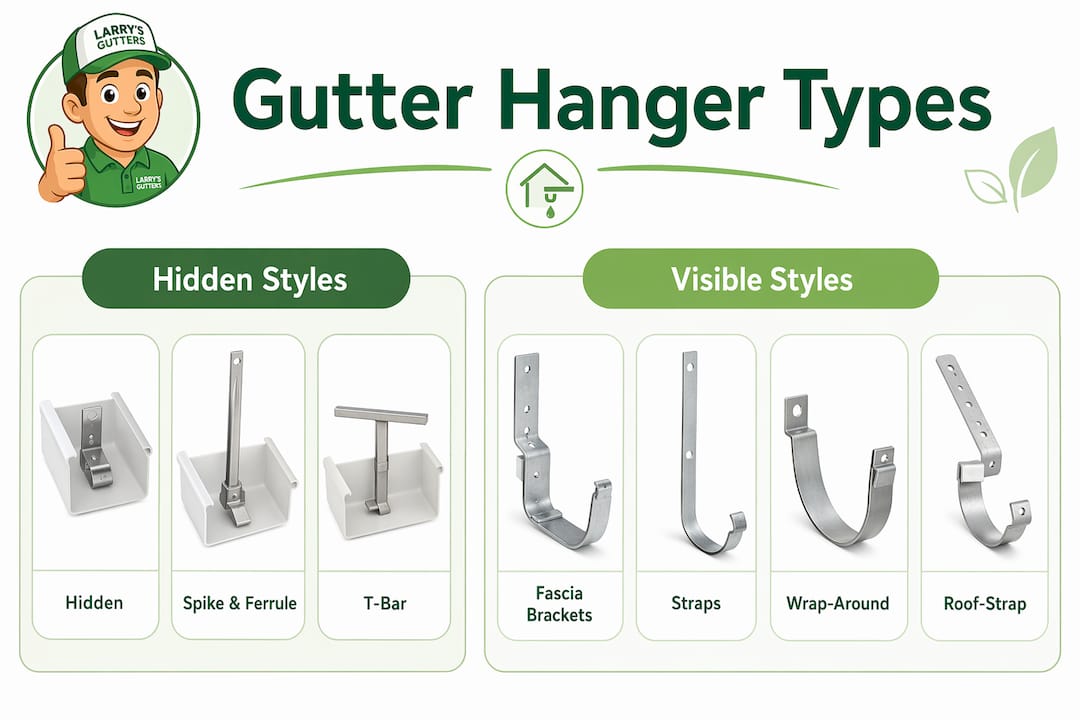
Gutter hangers are the hardware fasteners that secure gutters directly to a home’s fascia board or roof structure, and choosing the wrong type causes sagging, leaks, and premature gutter failure. With seven primary hanger categories used in residential construction across the U.S., including hidden hangers, spike and ferrule, fascia brackets, straps, T-bar, wrap-around, and roof-strap hangers, understanding the differences is the first step toward a lasting installation. The right fastener type depends on your gutter profile, roofline, local weather, and fascia condition. Get it wrong, and no amount of caulk or patching will save your gutters long-term.
Gutter hanger types explained: all 7 categories
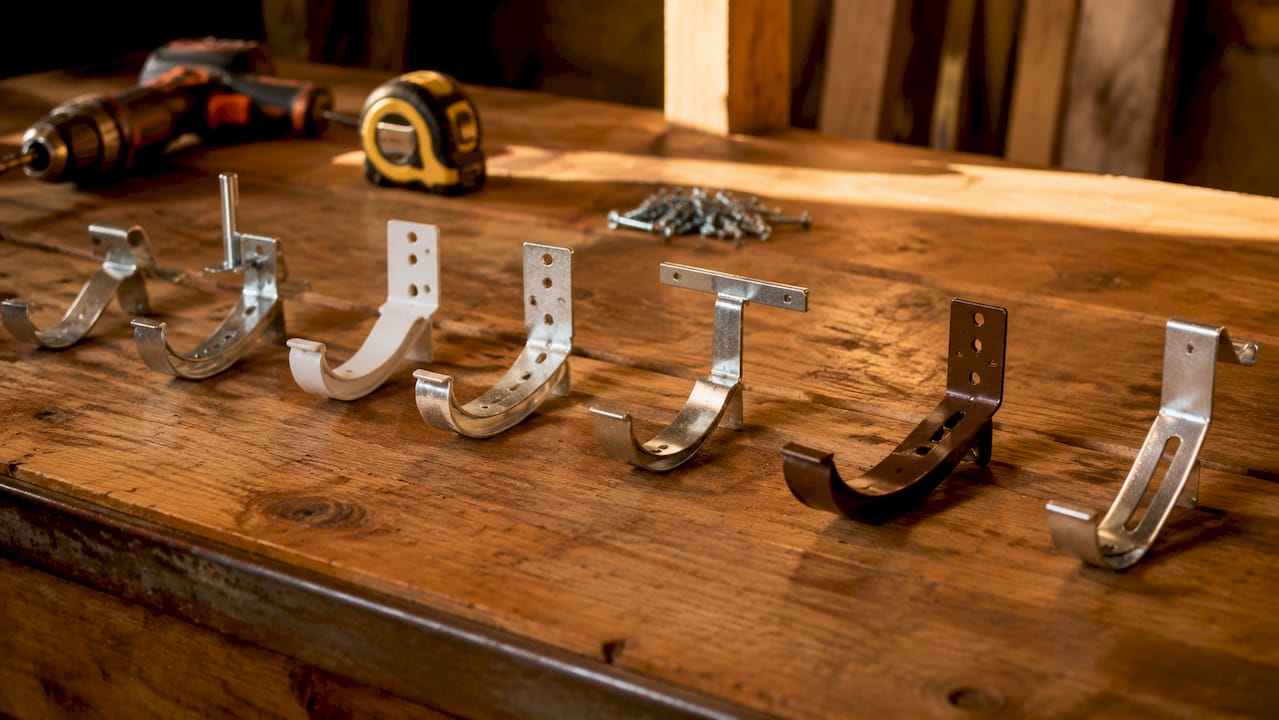
The seven distinct hanger types are categorized by load-bearing capacity, mounting method, and visual profile. Each serves a specific purpose, and none is universally superior.
Hidden hangers
Hidden hangers clip inside the gutter channel and attach to the fascia with screws. They are invisible from the ground, which makes them the most popular choice for modern K-style gutters. Hidden aluminum hangers with long, quality screws are the current industry standard for new installations. They offer high load capacity and a clean finished look.
Spike and ferrule
Spike and ferrule systems use a long metal spike driven through a cylindrical ferrule and into the fascia. This was the dominant method for decades, but spikes loosen over time as wood expands and contracts. Most contractors have moved away from this system in favor of screw-based hangers. If you have an older home, this is likely what you are working with.
Fascia brackets
Fascia brackets mount directly to the face of the fascia board and cradle the outside of the gutter. They are visible and add a decorative element, which makes them a good fit for traditional or craftsman-style homes. They work with both K-style and half-round gutter profiles.
Straps
Strap hangers wrap over the top of the gutter and attach to the roof deck or rafter tails above the fascia. They are the go-to choice when the fascia board is deteriorated or missing entirely. Straps distribute load across a wider surface area, which helps in high-wind zones.
T-bar hangers
T-bar hangers use a T-shaped bracket that slides into the back of the gutter and screws into the fascia. They provide solid support for heavier aluminum or steel gutters. You will find them most often in commercial applications, though they appear in heavy-duty residential installs too.
Wrap-around hangers
Wrap-around hangers encircle the entire gutter body, providing support from both sides. This design resists outward bowing under heavy water or debris loads. They are particularly effective for half-round gutters on older or historic homes.
Roof-strap hangers
Roof-strap hangers attach to the roof sheathing or rafters rather than the fascia. They are used when the fascia is too weak to support the gutter system on its own. This type requires careful installation to avoid creating entry points for water under the roofing material.
Pro Tip: Never use indoor-rated fasteners on exterior gutter work. Hardware rated for indoor use fails quickly outdoors because it cannot handle UV exposure, moisture cycling, or thermal expansion.
| Hanger Type | Best Use Case | Gutter Profile |
|---|---|---|
| Hidden Hanger | Modern homes, clean look | K-style |
| Spike and Ferrule | Older homes, replacement only | K-style |
| Fascia Bracket | Decorative, traditional homes | K-style, half-round |
| Strap | Weak or missing fascia | Any profile |
| T-Bar | Heavy-duty residential or commercial | K-style, box |
| Wrap-Around | Historic homes, heavy load | Half-round |
| Roof-Strap | Compromised fascia | Any profile |
What is gutter hanger spacing and why does it matter?
Gutter hanger spacing is the measured distance between each fastener along the gutter run, and it directly controls how much weight and stress your gutter system can handle. Standard residential spacing is one hanger every 24–36 inches. That range works well in mild climates with moderate rainfall.
Florida homeowners deal with heavy seasonal downpours rather than snow loads, but wind is a real factor. In high-wind or high-load areas, spacing should tighten to 16–18 inches to prevent sagging, buckling, and gutter detachment. Tighter spacing means more fasteners, but it also means your gutters stay put during a storm.
The most common sign of inadequate spacing is a gutter that sags between hangers. You will also see gutters pulling away from the fascia at specific points, which usually marks where a hanger has failed or was never installed. Sagging gutters often indicate fastener failure or fascia deterioration, not just poor spacing.
Pro Tip: When replacing a single failed hanger, check the two hangers on either side of it. Failure rarely happens in isolation. If one is loose, the neighbors are likely stressed too.
| Condition | Recommended Spacing |
|---|---|
| Standard residential, mild climate | 24–36 inches |
| High wind or heavy rain zones | 16–18 inches |
| Heavy snow load areas | 16–18 inches |
| Long gutter runs over 40 feet | 24 inches maximum |
How do you choose the right gutter hanger for your home?
Selecting the right hanger type comes down to four factors: gutter profile, roofline and climate, fascia condition, and material compatibility. Skipping any one of these leads to premature failure.
Gutter Profile
Architectural style heavily influences hanger choice. K-style gutters pair best with hidden hangers or fascia brackets. Half-round gutters, common on older craftsman and colonial homes, require wrap-around hangers or exposed brackets that cradle the rounded bottom. Using the wrong hanger type for your gutter profile creates stress points that crack the gutter over time.
Roofline and Climate
Steep roof pitches increase water velocity into the gutter, which adds load. In Central Florida, heavy summer rainfall puts real stress on the system even without snow. Homes with wide overhangs or complex rooflines may need strap or roof-strap hangers to reach solid mounting points. Review your gutter installation steps before committing to a hanger type, since roofline geometry changes what is accessible.
Fascia Condition
Rotted or soft fascia is the number one reason gutter hangers fail prematurely. Screws driven into decayed wood have almost no holding power. Longer heavy-duty fasteners that anchor into rafter tails behind the fascia are the correct fix when the fascia is compromised. If the rot is extensive, replace the fascia board before installing any hanger system.
Material Compatibility
Metal hangers are prone to galvanic corrosion when they contact dissimilar metals. Aluminum hangers touching copper gutters will corrode faster than expected. Use coated fasteners or isolation tape between dissimilar metals to prevent this. Stainless steel screws are the safest all-around choice for exterior gutter work.
- Match hanger material to gutter material whenever possible
- Use stainless steel or coated screws, never zinc-plated drywall screws
- Check gutter bracket function before selecting a mounting style
- Avoid mixing copper and aluminum components without isolation
How do you inspect and maintain gutter hangers?
Gutter hanger maintenance is straightforward, but most homeowners skip it until the gutter is already pulling away from the house. A twice-yearly inspection catches problems before they become expensive.
- Walk the perimeter and look up. Check for any visible gaps between the gutter back and the fascia. A gap wider than a quarter inch means a hanger has failed or loosened.
- Press gently on the gutter front. A properly secured gutter should not flex or move. Movement means the fastener has lost its grip.
- Check for rust streaks or staining. Orange streaks on the fascia or gutter exterior signal corroding fasteners. This is an early warning before structural failure.
- Inspect the fascia wood behind each hanger. Soft or spongy wood means rot has set in. Driving a new screw into rotted wood will not hold. Address the wood first.
- Look for sagging between hangers. A gutter that dips between two fastener points needs an additional hanger installed at the midpoint.
Loose hangers are a primary indicator of overall gutter system health. When you find one, treat it as a signal to inspect the entire run. For gutters that show multiple failures or persistent sagging, review the full signs your gutters need replacing before investing in repairs that will not last.
Most single-hanger repairs are a genuine DIY fix. Remove the old fastener, fill the hole with exterior wood filler if needed, let it cure, then drive a new longer screw into solid wood. If the fascia is too far gone, call a professional. Driving screws into rotted wood is money wasted.
Key takeaways
The right gutter hanger type, matched to your gutter profile and installed at the correct spacing, is the single most important factor in long-term gutter performance.
| Point | Details |
|---|---|
| Seven hanger types exist | Hidden, spike and ferrule, fascia bracket, strap, T-bar, wrap-around, and roof-strap each serve different needs. |
| Spacing controls load capacity | Standard spacing is 24–36 inches; tighten to 16–18 inches in high-wind or heavy-rain zones. |
| Fascia condition determines fastener choice | Rotted fascia requires longer screws into rafter tails or a full fascia replacement before rehanging. |
| Material compatibility matters | Avoid mixing aluminum and copper without isolation to prevent galvanic corrosion and premature failure. |
| Inspection catches failures early | Check hangers twice yearly for gaps, flex, rust streaks, and sagging between fastener points. |
What i have learned after years of watching gutters fail
The most common mistake I see is homeowners treating hanger selection as an afterthought. They focus on gutter color, profile, and price, then grab whatever fastener is on the shelf at the hardware store. That approach fails within a few years, every time.
The second mistake is ignoring the fascia. A new hanger screwed into rotted wood is not a repair. It is a delay. I have seen brand-new gutters fall off a house within a season because nobody checked the board behind them. Spend ten minutes probing the fascia before you buy a single hanger.
My honest recommendation for most DIY installs: use hidden aluminum hangers with stainless steel screws, space them at 24 inches maximum, and go tighter if your area gets serious wind or rain. That combination handles the majority of residential situations without overcomplicating the job. If you are working on a historic home with half-round gutters, wrap-around hangers with exposed brackets are the right call both structurally and visually.
Maintenance is where most homeowners leave money on the table. A twice-yearly walk-around costs nothing and catches problems that would otherwise turn into a full gutter repair or replacement job. Proactive beats reactive every time.
— Larrysgutters
Get the right gutter system installed the first time
Understanding gutter fastener types is only half the equation. The other half is making sure your entire gutter system is built to last, with the right profile, the right hangers, and the right installation technique for your home and climate.

Larrysgutters specializes in seamless gutter installation across Central Florida, custom-fitting every run to your roofline so hangers seat correctly and gutters drain the way they should. Seamless gutters eliminate the joint failures that plague sectional systems, and when paired with properly spaced hangers, they handle Florida’s heavy rainfall without sagging or pulling away. If you are ready to stop patching and start protecting, explore the seamless gutter installation process or reach out to Larrysgutters directly for a free quote.
FAQ
What is the most common gutter hanger type for modern homes?
Hidden aluminum hangers with long screws are the industry standard for modern K-style gutters. They offer high load capacity and stay invisible from the ground.
How far apart should gutter hangers be spaced?
Standard spacing is 24–36 inches for most residential installations. In high-wind or heavy-rain areas, reduce spacing to 16–18 inches to prevent sagging and detachment.
Can i replace gutter hangers myself?
Yes, single-hanger replacement is a straightforward DIY repair. Remove the old fastener, drive a longer screw into solid wood or a rafter tail, and confirm the gutter sits flush against the fascia.
Why do gutter hangers fail prematurely?
The two most common causes are rotted fascia that cannot hold screws and indoor-rated fasteners that corrode outdoors. Always use outdoor-rated, coated, or stainless steel hardware for any exterior gutter work.
Do half-round gutters need different hangers than k-style gutters?
Yes. Half-round gutters require wrap-around hangers or exposed fascia brackets that cradle the rounded gutter body. K-style gutters use hidden hangers or T-bar brackets that clip to the flat back panel.