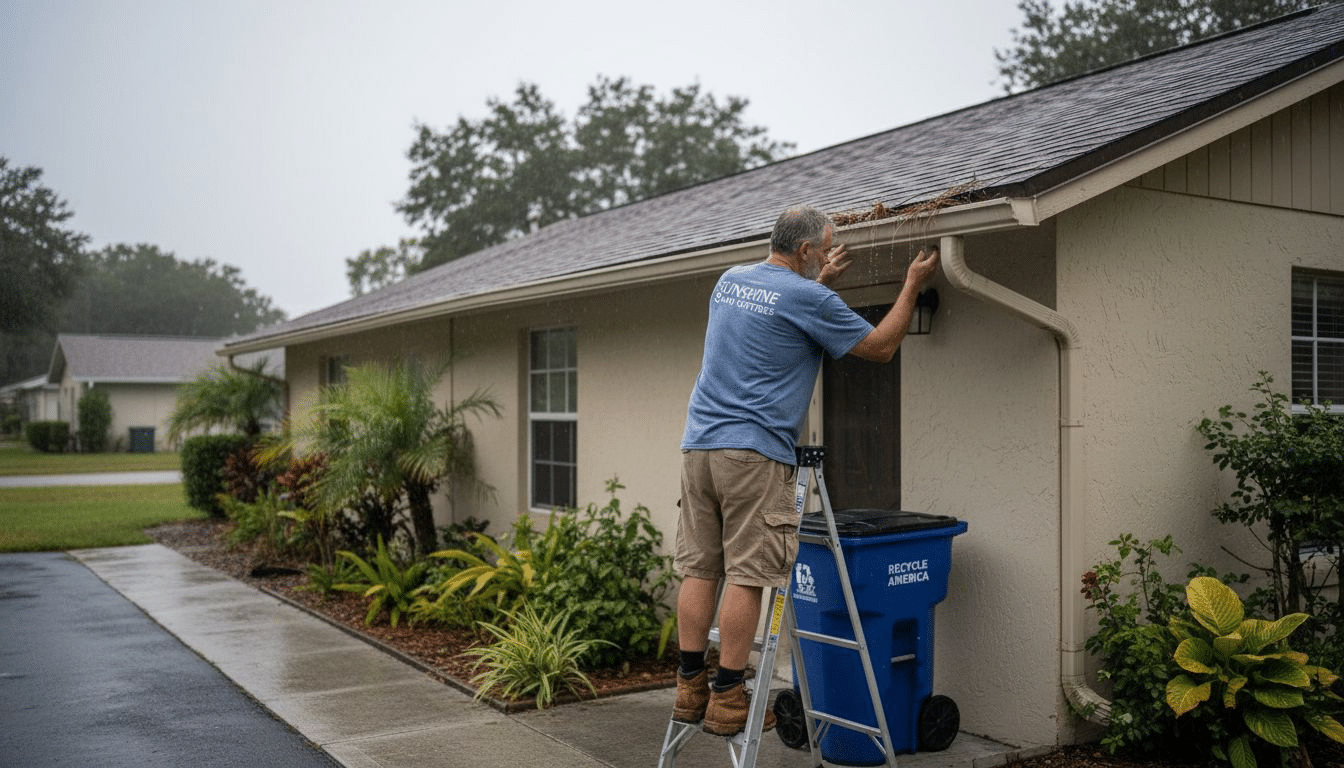
Central Florida homeowners know the anxiety of watching rain pour off the roof during a storm, especially with intense downpours common from June to October. Gutter sizing plays a vital role in protecting homes in Lake, Marion, and Sumter counties, as undersized systems can lead to overflow and costly damage. This guide brings clarity to water management precision, helping you understand how choosing the right gutter size shields your property from Florida’s unpredictable rainfall.
Table of Contents
- What Is Gutter Sizing and Why It Matters
- Florida Rainfall and Gutter Size Requirements
- Popular Gutter Materials and Sizing Options
- Proper Installation for Maximum Protection
- Avoiding Costly Gutter Sizing Mistakes
Key Takeaways
| Point | Details |
|---|---|
| Gutter Sizing is Essential | Proper gutter sizing is crucial for effective water management, especially in areas with heavy rainfall like Central Florida. |
| Material Selection Matters | Choosing the right gutter material affects durability and maintenance; common options include Aluminum, Copper, and Stainless Steel. |
| Professional Measurements are Crucial | Hiring professionals for accurate measurements ensures gutters can handle local rainfall dynamics and prevent costly damage. |
| Installation Techniques Impact Performance | Proper installation requires attention to slope, attachment, and positioning to optimize water diversion away from foundations. |
What Is Gutter Sizing and Why It Matters
Gutter sizing represents a critical yet often overlooked aspect of home water management, especially in Central Florida’s intense rainfall environment. Proper gutter sizing/Book%3A_To_Catch_the_Rain_(Grafman)/04%3A_Calculations/4.03%3A_Gutter_and_Downspout_Sizing) involves calculating the precise capacity needed to effectively channel rainwater away from your home’s foundation and structural elements.
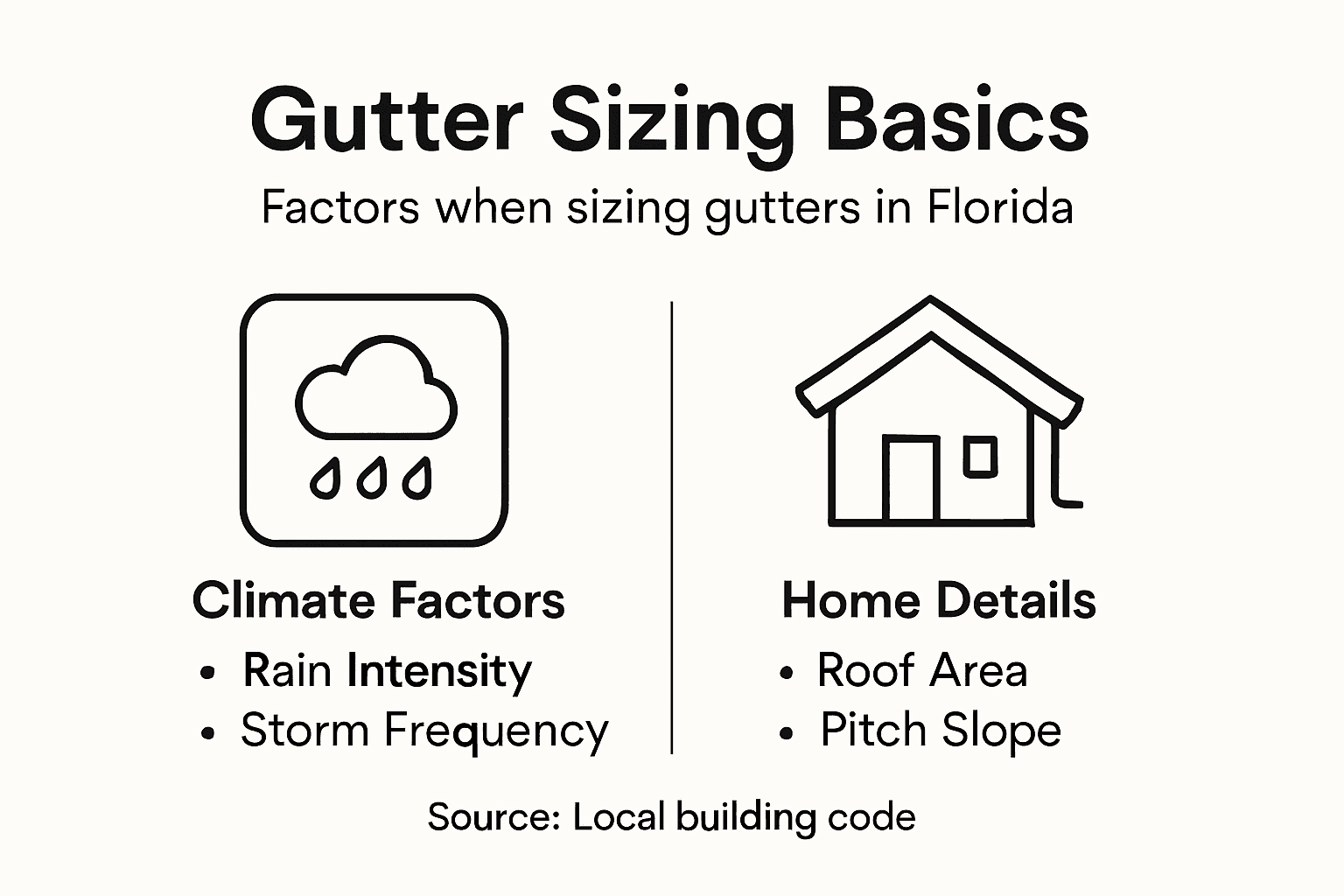
At its core, gutter sizing determines how much water volume a drainage system can handle based on several key factors:
- Roof surface area
- Local rainfall intensity
- Gutter shape and dimensions
- Downspout capacity
- Roof pitch and water flow characteristics
When gutters are improperly sized, homeowners face significant risks. Undersized gutters cannot manage heavy rainfall, leading to potential water overflow, foundation damage, landscape erosion, and structural integrity issues. Conversely, oversized gutters represent unnecessary expense without proportional benefits.
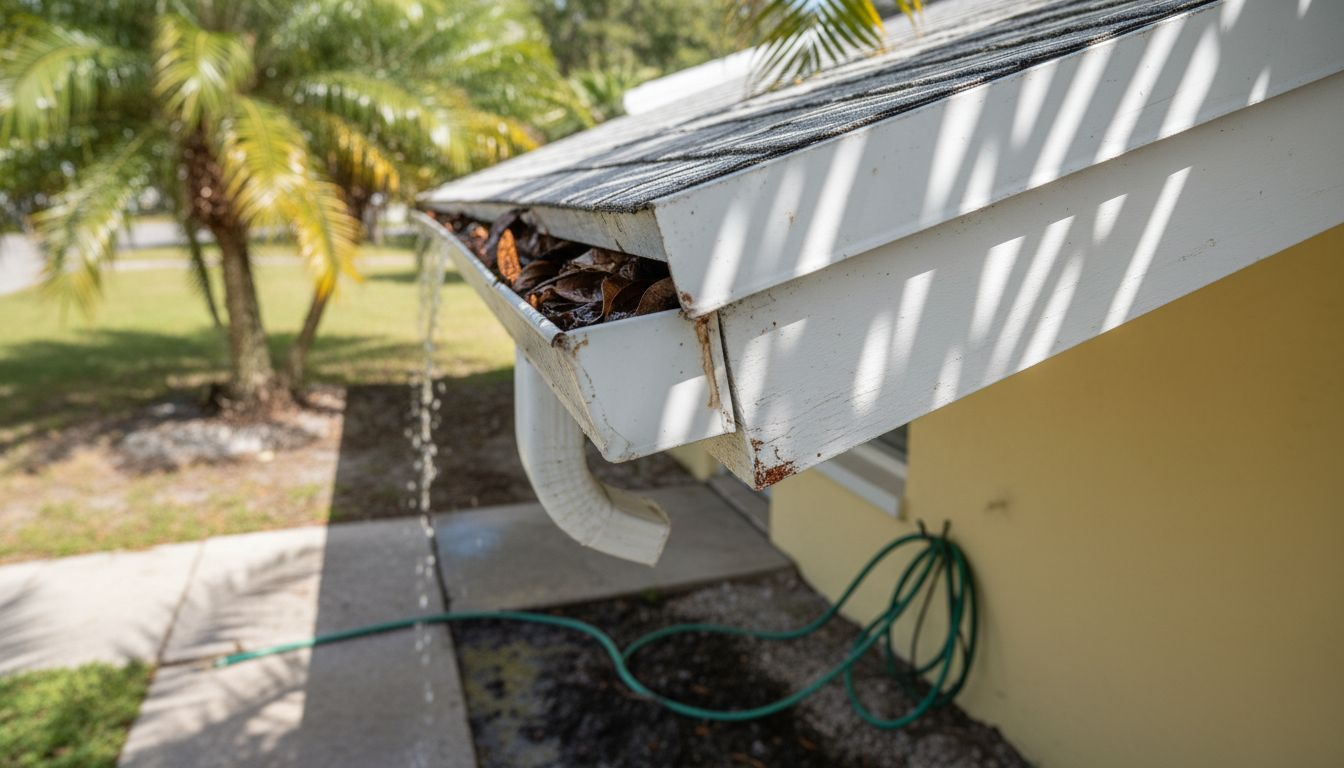
Water Management Precision is the ultimate goal. By carefully calculating gutter dimensions, Central Florida homeowners can create a robust drainage system that protects their most significant investment – their home. Professional measurements consider local precipitation patterns, roof geometry, and specific property characteristics to recommend optimal gutter configurations.
Here’s a quick reference for the factors affecting gutter sizing in Central Florida:
| Factor | Impact on Gutter Sizing | Why It Matters |
|---|---|---|
| Roof Area | Determines water volume | Larger roofs need bigger gutters |
| Rainfall Intensity | Sets drainage needs | High storms demand greater capacity |
| Roof Pitch | Influences water speed | Steep roofs shed water faster |
| Downspout Size | Controls water exit | Must match gutter flow rate |
| Local Codes | Guide minimum standards | Ensures compliance and safety |
Pro tip: Have a professional measure your specific roof and rainfall requirements to ensure maximum water management efficiency.
Florida Rainfall and Gutter Size Requirements
Central Florida experiences unique rainfall patterns that dramatically impact gutter sizing requirements. Florida Building Code guidelines specify precise measurement standards for managing water drainage in this challenging climate.
The region’s wet season, spanning June through October, presents significant water management challenges for homeowners. Key rainfall characteristics include:
- Annual precipitation ranges from 40 to 60 inches
- Frequent thunderstorms with intense, localized rainfall
- High variability in precipitation distribution
- Potential for sudden, heavy downpours
- Hurricane season adding additional water volume considerations
Professional gutter designers must account for these complex rainfall dynamics when determining appropriate gutter dimensions. Rainfall Intensity Mapping becomes crucial in selecting gutter systems that can effectively channel water away from home foundations and landscaping.
Most Central Florida counties recommend designing gutter systems capable of managing 10-year or 100-year design storm events. This means constructing drainage systems that can handle extreme rainfall scenarios without overwhelming the property’s water management infrastructure.
Pro tip: Consult a local gutter professional who understands Central Florida’s specific rainfall patterns and can recommend customized gutter sizing for your exact property.
Popular Gutter Materials and Sizing Options
Central Florida homeowners face unique challenges when selecting gutter materials that can withstand intense rainfall and humid conditions. Gutter material specifications reveal critical considerations for durability and performance in this challenging environment.
The most popular gutter materials for Florida homes include:
- Aluminum: Lightweight, rust-resistant, and cost-effective
- Copper: Exceptional durability and aesthetic appeal
- Stainless Steel: Maximum corrosion resistance
- Coated Steel: Enhanced protection against environmental wear
- Vinyl: Budget-friendly option with limited longevity
Material Selection depends on several key factors beyond just cost. Homeowners must consider rainfall intensity, roof configuration, and long-term maintenance requirements when choosing their gutter system. Copper gutters, while more expensive, offer remarkable resistance to Florida’s harsh weather conditions and can last decades with proper installation.
Here’s how common gutter materials compare for Central Florida homes:
| Material | Durability in Humid Climate | Typical Lifespan | Maintenance Needs |
|---|---|---|---|
| Aluminum | Resistant to rust and corrosion | 20-25 years | Occasional cleaning |
| Copper | Outstanding weather resistance | 50+ years | Patina may need care |
| Stainless Steel | Superior corrosion resistance | 30-40 years | Minimal upkeep required |
| Coated Steel | Strong with protective finish | 15-20 years | Inspect coating regularly |
| Vinyl | Sensitive to heat and UV | 10 years | Needs frequent checks |
Professional gutter designers recommend matching material properties with specific sizing requirements. This means calculating exact cross-sectional areas that can handle expected water volume without risking joint stress or potential overflow. The goal is creating a seamless, efficient water management system tailored to each unique property.
Pro tip: Invest in professional measurement and consultation to ensure your gutter material and sizing perfectly match your home’s specific architectural characteristics and local rainfall patterns.
Proper Installation for Maximum Protection
Gutter installation is far more complex than simply attaching metal channels to your roofline. Gutter installation techniques require precision engineering to ensure maximum water management and home protection in Central Florida’s challenging climate.
Critical installation considerations include:
- Proper Slope: 1/16-inch per foot toward downspouts
- Secure Attachment: Prevents sagging and water pooling
- Correct Positioning: Ensures optimal water flow away from foundation
- Material Compatibility: Matching gutter materials to local conditions
- Thermal Movement Allowance: Preventing structural stress
Water Diversion Strategy is paramount. Downspouts must extend several feet from the home’s foundation to prevent soil saturation and potential moisture intrusion. Professional installers use strategic placement and advanced techniques to create a comprehensive water management system that protects your home’s structural integrity.
The installation process involves careful measurement, precise angle calculations, and understanding local rainfall patterns. Thermal expansion, material properties, and roof geometry all play crucial roles in creating a gutter system that functions effectively throughout Florida’s extreme weather conditions.
Pro tip: Always hire certified professionals who understand Central Florida’s specific environmental challenges and can customize your gutter installation accordingly.
Avoiding Costly Gutter Sizing Mistakes
Gutter sizing is a precise science, not a guessing game for Central Florida homeowners. Common gutter sizing errors/Book%3A_To_Catch_the_Rain_(Grafman)/04%3A_Calculations/4.03%3A_Gutter_and_Downspout_Sizing) can lead to expensive water damage and structural complications that far exceed the cost of proper initial installation.
The most critical mistakes homeowners frequently make include:
- Underestimating Rainfall Intensity: Failing to account for Florida’s extreme precipitation
- Ignoring Roof Geometry: Overlooking unique roof slopes and surface areas
- Incorrect Downspout Sizing: Using inadequate drainage pathways
- Material Incompatibility: Selecting gutters not suited to local environmental conditions
- Neglecting Professional Measurements: Relying on DIY estimates
Water Management Precision requires understanding the intricate relationship between roof surface area, rainfall intensity, and drainage capacity. Improper calculations can result in gutters that overflow during heavy storms, causing potential foundation damage, landscape erosion, and structural integrity issues.
Professional gutter designers use advanced calculation methods that consider multiple variables, including local rainfall data, roof pitch, and specific property characteristics. These comprehensive assessments ensure that your gutter system can effectively manage water flow during Florida’s most challenging weather conditions.
Pro tip: Invest in a professional gutter assessment that includes precise measurements and calculations specific to your home’s unique architectural characteristics.
Ensure Your Florida Home Stays Protected with Expert Gutter Sizing and Installation
Understanding the importance of proper gutter sizing is key to preventing costly water damage in Central Florida homes. From handling intense rainfall to matching roof geometry and selecting durable materials, every detail matters for effective water management. If you want to avoid common pitfalls like undersized gutters or poor installation that threaten your foundation and landscaping, professional solutions are essential.
Larry’s Gutters specializes in custom-fit, seamless gutter systems designed specifically to manage Florida’s challenging weather conditions. Our expert team provides precise measurements and durable installations that match your roof’s unique needs and local rainfall intensity. We also offer gutter guard installation and comprehensive repair services to keep your drainage system functioning flawlessly.
Take control of your home’s water protection today. Experience peace of mind knowing your gutters are tailored for performance and durability. Visit Larry’s Gutters to learn more about our services.

Don’t wait for the next storm to expose your gutters’ weaknesses. Contact us now for a free quote and professional assessment. Get the right gutter sizing and installation that safeguards your home year-round at Seamless Gutter Installation.
Frequently Asked Questions
What factors influence gutter sizing for my home?
Proper gutter sizing is influenced by multiple factors, including roof surface area, local rainfall intensity, gutter shape and dimensions, downspout capacity, and the pitch of the roof. These elements determine the system’s overall efficiency in directing water away from your home.
Why is it important to have properly sized gutters?
Having properly sized gutters is crucial to prevent water overflow, which can lead to foundation damage, erosion, and other structural integrity issues. Undersized gutters may not handle heavy rainfall effectively, while oversized ones can be unnecessarily costly.
What are popular gutter materials suitable for Florida homes?
Common gutter materials for Florida homes include aluminum, copper, stainless steel, coated steel, and vinyl. Each material offers unique benefits, such as corrosion resistance and durability, which are important for withstanding Florida’s climate.
How can I avoid costly mistakes during gutter sizing?
To avoid costly mistakes, ensure you accurately measure your roof area, account for local rainfall intensity, and consult with professional gutter designers. Neglecting any of these aspects can result in an ineffective drainage system that leads to water-related issues.
