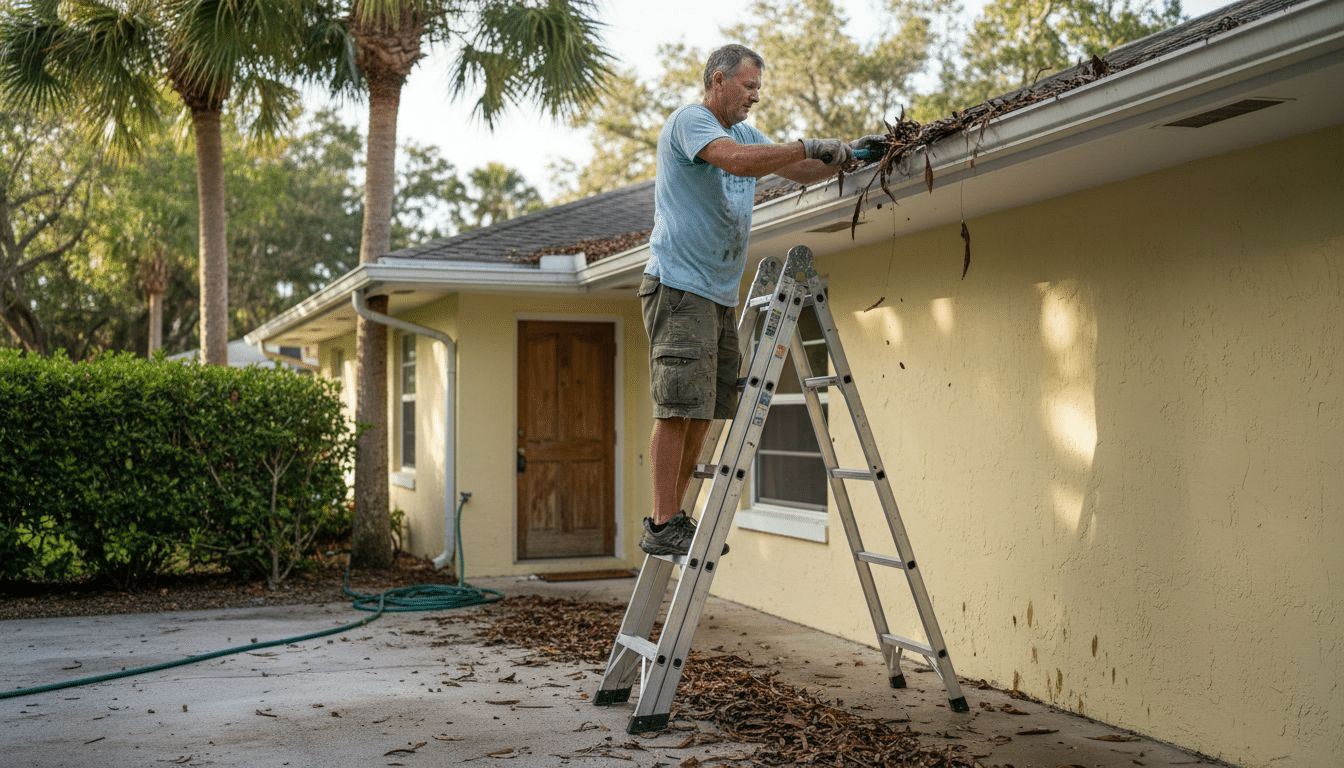
Stormy afternoons are almost a given during rainy season in Central Florida, and that means clogged gutters can quickly lead to unwanted headaches for homeowners in Lake, Marion, and Sumter counties. Safe, thorough gutter cleaning is your first line of defense against water intrusion and foundation damage. This guide walks you through each simple step, giving you confidence to maintain your seamless gutter system against even the heaviest downpour, all while putting safety first.
Table of Contents
- Step 1: Gather Tools And Safety Gear
- Step 2: Clear Loose Debris From Gutters
- Step 3: Flush Gutters And Downspouts
- Step 4: Inspect For Damage And Blockages
- Step 5: Test Water Flow And Ensure Cleanliness
Quick Summary
| Essential Insight | Explanation |
|---|---|
| 1. Use Proper Safety Gear | Always wear gloves, safety glasses, and non-slip shoes to protect yourself during gutter cleaning. A safety harness is crucial for two-story homes. |
| 2. Clear Debris Efficiently | Begin at the downspout and work systematically, removing leaves, twigs, and dirt into a bucket to avoid messy cleanup. |
| 3. Flush Gutters and Downspouts | After clearing debris, use a garden hose to ensure smooth water flow, checking for clogs or leaks that can cause damage. |
| 4. Inspect for Damage | Look for rust, cracks, or separation from the roofline that can lead to costly repairs. Address minor issues immediately to prevent worsening. |
| 5. Test Water Flow Regularly | Simulate rainfall with a garden hose to ensure proper drainage, observing for pooling, leaks, or slow drainage that indicate problems. |
Step 1: Gather Tools and Safety Gear
Successfully cleaning gutters requires the right equipment and safety precautions. In this section, you’ll learn exactly what tools and protective gear you need to tackle your Florida home’s gutter maintenance safely and effectively.
Your gutter cleaning toolkit should include several essential items to protect yourself and get the job done right. Start by gathering these critical tools:
- Extension ladder with stabilizers
- Sturdy work gloves
- Safety glasses or protective eyewear
- Non-slip shoes with good traction
- Gutter scoop or plastic trowel
- Garden hose
- Bucket for debris collection
Safety equipment guidance from occupational safety experts emphasizes the importance of proper protective gear. Before starting, carefully inspect all your tools for damage and ensure your ladder is in good condition.
Pay special attention to your personal protective equipment. Wear fitted clothing that won’t catch on tools or ladders. Avoid loose jewelry or hanging accessories that could snag or create a safety hazard. If you’re working on a two-story home or have steep roof angles common in Central Florida, consider using a safety harness for additional protection.
Pro tip: Always have a spotter or partner nearby when working on ladders, especially in areas with uneven ground or potential obstacles.
Step 2: Clear Loose Debris from Gutters
Now that you’re equipped with the right safety gear, it’s time to tackle the core task of gutter maintenance: removing loose debris that can compromise your Florida home’s drainage system. Understanding how to efficiently clear your gutters will help prevent potential water damage and protect your property’s foundation.
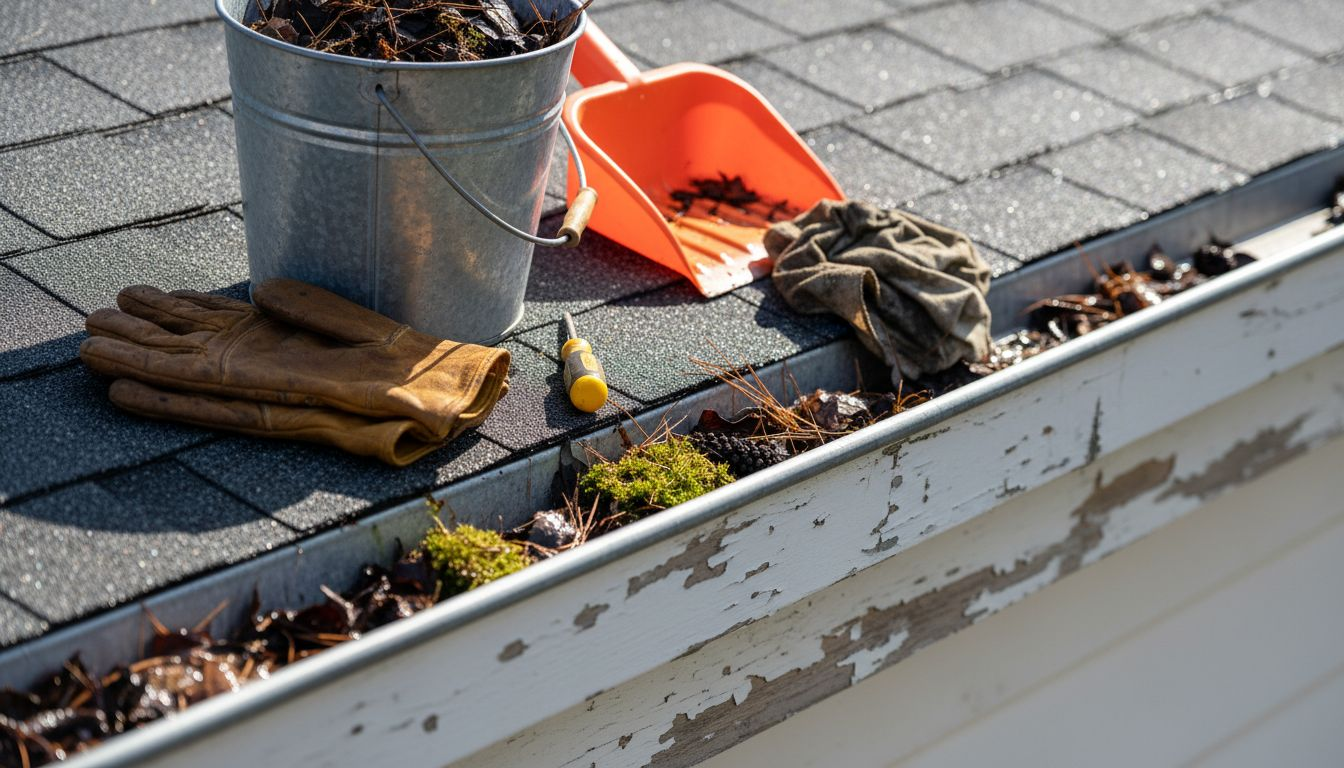
Begin by positioning your ladder securely and working in small sections. Start at the downspout end and methodically work your way across the gutter system. Use your gutter scoop or plastic trowel to remove leaves, twigs, and accumulated dirt. Effective debris management practices help minimize potential water overflow and reduce moisture-related issues.
Pay special attention to the different types of debris you’ll encounter:
- Dry leaves and pine needles
- Small branches and twigs
- Accumulated dirt and sediment
- Organic matter like moss or algae
- Potential small animal nests
Work systematically and place debris directly into your bucket to prevent creating a messy cleanup later. If you’re working on a two-story home, use ladder stabilizers and move the ladder frequently to ensure you can reach all sections safely.
Proper gutter cleaning isn’t just about home maintenance — it’s about protecting your property’s long-term structural integrity.
As you clear debris, inspect the gutter system for signs of damage like rust, holes, or separation from the roofline. These visual checks can help you catch potential issues before they become expensive repairs.
Pro tip: Consider wearing a dust mask during debris removal to protect yourself from potential allergens and dust particles stirred up during cleaning.
Step 3: Flush Gutters and Downspouts
After clearing loose debris, the next critical step in gutter maintenance is flushing your system to ensure smooth water flow and identify any hidden blockages. This process will help you verify that your gutters and downspouts are functioning correctly and prevent potential water damage to your Florida home.
Prepare your garden hose with a spray nozzle attachment for controlled water pressure. Gutter and downspout flushing techniques/Book%3A_To_Catch_the_Rain_(Grafman)/04%3A_Calculations/4.03%3A_Gutter_and_Downspout_Sizing) are essential for removing fine sediments and checking system performance. Start at the end opposite the downspout, gradually working your way toward it.
Here are key steps for effective gutter flushing:
- Run water slowly at first to check for proper drainage
- Observe water flow and look for any leaks or unusual dripping
- Check that water moves smoothly through downspouts
- Ensure water is directed away from your home’s foundation
- Listen for gurgling or backing up that might indicate blockages
Watch for potential issues while flushing. If water pools in certain sections or doesn’t flow freely, you may have:
- Misaligned gutter sections
- Clogged downspouts
- Improper gutter slope
- Damaged gutter segments
Consistent water flow is the key indicator of a well-maintained gutter system.
In Florida’s humid climate, thorough flushing helps prevent potential water damage and identifies maintenance needs before they become costly repairs. Pay special attention to downspouts, ensuring they direct water at least 4-6 feet away from your home’s foundation.
Pro tip: Consider installing downspout extensions or splash blocks to further protect your home’s foundation from water runoff during heavy Florida rainstorms.
Step 4: Inspect for Damage and Blockages
After cleaning and flushing your gutters, a thorough damage inspection is crucial for preventing potential water damage to your Florida home. This step helps you catch minor issues before they become expensive repairs and ensures your gutter system remains in top condition.
Carefully examine each gutter segment for signs of wear and potential problems. Comprehensive gutter inspection techniques reveal critical details about your system’s health. Look for these specific indicators of potential damage:
- Rust spots or corrosion
- Visible cracks or holes
- Separation from fascia board
- Bent or sagging sections
- Loose gutter hangers
- Water stains on exterior walls
Check downspout connections and ensure they’re securely attached. Pay special attention to areas where water might pool or leak. In Florida’s humid climate, even small cracks can lead to significant moisture damage if left unchecked.
Your inspection should focus on these critical areas:
- Gutter seams and joints
- Attachment points to the roofline
- Downspout connections
- Overall water flow direction
Small issues today can prevent major repairs tomorrow.
If you discover significant damage, take immediate action. Minor repairs can often be completed with gutter sealant, while more extensive damage might require professional replacement. Remember that Florida’s intense rainfall makes a well-maintained gutter system essential for protecting your home.
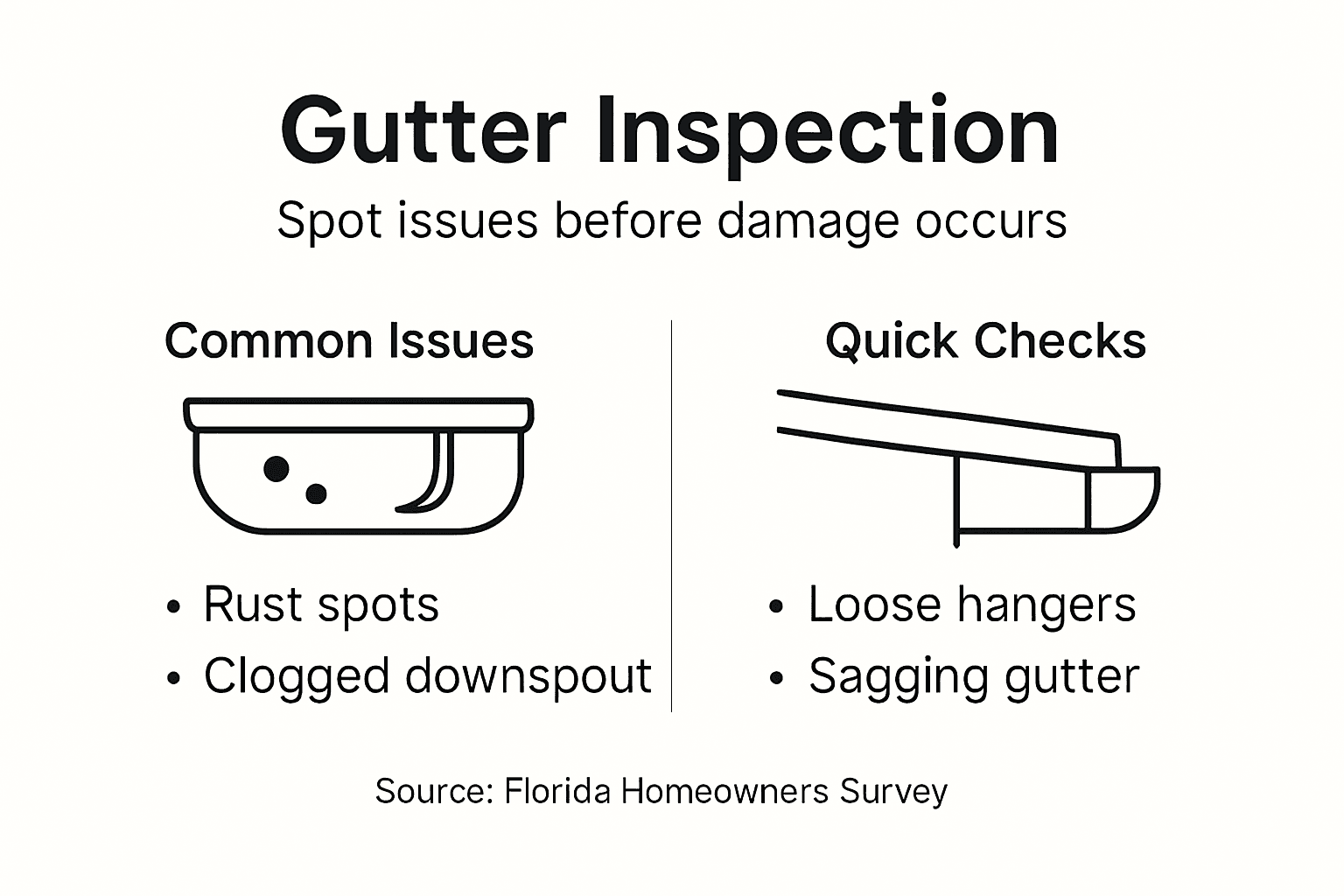
Here’s a summary of common gutter issues in Florida and their recommended solutions:
| Issue | Common Cause | Potential Impact | Recommended Solution |
|---|---|---|---|
| Rust or corrosion | High humidity, rainfall | Small leaks, gutter breakdown | Apply sealant or replace |
| Sagging gutter sections | Debris weight, loose hangers | Water overflow, foundation erosion | Reinforce hangers, readjust |
| Clogged downspouts | Leaves, sediment buildup | Pooling around foundation | Flush with hose, clear blockages |
| Separation from roofline | Poor installation, wind | Reduced drainage efficiency | Re-secure gutter brackets |
Pro tip: Keep a digital photo record of your gutter inspection to track changes and help professional maintenance teams understand your system’s history.
Step 5: Test Water Flow and Ensure Cleanliness
With your gutters cleaned and inspected, the final step is to verify proper water flow and overall system performance. This crucial testing phase ensures your gutter system will effectively protect your Florida home during heavy rainstorms and sudden downpours.
Run a comprehensive water test to simulate actual rainfall conditions. Water management techniques help homeowners identify potential drainage issues before they become serious problems. Use your garden hose to simulate rain, starting at the point furthest from the downspout and gradually working your way toward it.
Watch carefully for these key performance indicators during your water flow test:
- Smooth, uninterrupted water movement
- No pooling or standing water in gutter channels
- Clean water discharge from downspouts
- Water directed at least 4-6 feet away from foundation
- No unexpected leaks or dripping
- Consistent water stream without interruptions
Pay special attention to how water moves through different sections of your gutter system:
- Start with low water pressure
- Gradually increase water volume
- Observe water behavior at each section
- Check downspout exit points
- Verify water dispersal pattern
Proper water flow is the ultimate test of a well-maintained gutter system.
If you notice any irregular water behavior, such as unexpected dripping or slow drainage, you may need to readjust gutter slopes or clear remaining minor blockages. In Florida’s challenging climate, even small drainage issues can lead to significant water damage.
Pro tip: Perform this water flow test during daylight hours and wear polarized sunglasses to help you better detect subtle water movement and potential leaks.
Compare these gutter maintenance strategies for Florida homes:
| Strategy | Frequency | Benefit | Extra Consideration |
|---|---|---|---|
| DIY cleaning | 1-2 times/year | Cost savings, direct control | Requires safety precautions |
| Professional cleaning | 2-4 times/year | Expert assessment, thoroughness | Higher cost, scheduling needed |
| Gutter guards installation | 1 time install | Reduces debris accumulation | Initial investment, periodic checks |
Protect Your Florida Home with Expert Gutter Solutions
Cleaning gutters safely and effectively is crucial to preventing costly water damage and foundation issues in Florida homes. As the article highlights, challenges like heavy rainfall, debris buildup, and potential gutter damage require more than just occasional DIY efforts. Whether you struggle with clogged downspouts, sagging gutters, or want to avoid frequent cleanings, expert help can make all the difference in maintaining your seamless gutter system’s performance.
At Larry’s Gutters, we specialize in installing, repairing, and maintaining custom-fit gutters designed specifically for Central Florida’s weather. Our services include professional seamless gutter installation and gutter guard installation to reduce debris accumulation and protect your home year-round. With our trusted solutions, you can enjoy peace of mind knowing your gutters will efficiently manage even the heaviest rainstorms.

Don’t wait for the next downpour to reveal hidden gutter problems. Take control now by requesting a free quote or contacting us directly at Larry’s Gutters. Protect your home with expert care tailored for Florida’s unique climate and keep your gutters flowing flawlessly.
Frequently Asked Questions
How often should Florida homeowners clean their gutters?
Cleaning your gutters at least once or twice a year is essential for Florida homeowners. Focus on doing this once in the spring and once in the fall to prevent blockages from seasonal debris.
What safety gear do I need for DIY gutter cleaning?
You should wear sturdy work gloves, safety glasses, and non-slip shoes with good traction for added protection. Additionally, consider using a fitted harness if you’re working on a two-story home to enhance your safety while on a ladder.
What tools are necessary for efficient gutter cleaning?
Essential tools include an extension ladder with stabilizers, a gutter scoop or plastic trowel for debris removal, a garden hose with a spray nozzle, and a bucket for debris collection. Assemble this toolkit to streamline your cleaning process and make it safer.
How do I flush my gutters and downspouts after cleaning them?
To flush your gutters, attach a spray nozzle to your garden hose and start at the upper end of the gutter. Gradually move toward the downspout, observing the flow of water to ensure there are no blockages or leaks.
What signs should I look for when inspecting my gutters for damage?
Check for rust spots, cracks, loose connections, or sagging sections of the gutters. Identifying these issues early can prevent costly repairs, so conduct a thorough inspection after cleaning.
What steps should I take if I discover a blockage in my downspout?
Clear any visible debris you can access with your hands or a plumbing snake. If the blockage persists, consider using a hose to flush through the downspout, ensuring water flow is restored and direct it away from your foundation.
Recommended
- 7 Gutter Cleaning Tips Every Central Florida Homeowner Needs
- Gutter Cleaning Frequency – Protecting Florida Homes
- Why Seasonal Gutter Cleaning Matters in Florida
- What Is Gutter Cleaning? Protecting Florida Homes
- Eco Friendly Cleaning Tips For Busy European Mums – The Zoofamily
- Gutter Services Gainesville FL
- Gutter Services The Villages FL
