
Florida’s rainy season can dump over 50 inches of water on your roof annually, putting your home’s defenses to the test. American homeowners in Lake, Marion, and Sumter counties understand how critical well maintained seamless rain gutters are when storms hit hard and fast. From choosing reliable safety gear to preventing leaks and costly water damage, you will discover practical maintenance steps that help your gutters perform when Florida weather is at its worst.
Table of Contents
- Step 1: Gather Necessary Tools And Safety Gear
- Step 2: Remove Leaves And Debris From Gutters
- Step 3: Flush Gutters And Downspouts With Water
- Step 4: Inspect For Leaks Or Damage
- Step 5: Install Or Secure Gutter Guards
Quick Summary
| Key Point | Explanation |
|---|---|
| 1. Gather tools and safety gear | Use essential tools like a sturdy ladder, gloves, and safety glasses to ensure safety and efficiency during gutter maintenance. |
| 2. Clear debris thoroughly | Systematically remove leaves and debris with a trowel, ensuring proper disposal to prevent water damage and drainage issues. |
| 3. Flush gutters with water | Verify water flow by flushing gutters and downspouts with a garden hose to identify any blockages or misalignments. |
| 4. Inspect for leaks and damage | Conduct a visual inspection of gutters, focusing on joints and fasteners to prevent leaks and maintain structural integrity. |
| 5. Install gutter guards securely | Choose appropriate gutter guards, install them precisely, and inspect them to reduce future maintenance and enhance performance. |
Step 1: Gather necessary tools and safety gear
Before tackling rain gutter maintenance in Florida, you’ll need the right tools and safety equipment to protect yourself and work efficiently. Proper preparation can make the difference between a smooth home improvement task and a potential accident.
Start by collecting essential tools like a sturdy extension ladder, work gloves, safety glasses, a garden trowel or gutter scoop, a bucket for debris collection, and a garden hose. According to occupational safety standards, visually inspecting your tools before use is critical to prevent potential injuries. Your ladder should be in excellent condition without any visible damage or wobbly parts, and your gloves should provide a secure grip.
For Florida homeowners, additional protective gear like non slip shoes becomes crucial due to potential wet surfaces. Comprehensive safety recommendations suggest wearing eye protection and ensuring your clothing allows free movement while providing adequate coverage. Remember that working at height requires extra caution and focus.
Pro tip: Always keep a mobile phone nearby in case of emergency and consider having a spotter or helper present when working on ladders to enhance safety.
Step 2: Remove leaves and debris from gutters
Clearing leaves and debris from your gutters is a critical maintenance task that prevents water damage and protects your home from potential flooding. Research from the U.S. Geological Survey highlights how timely leaf removal can significantly reduce water quality issues by minimizing phosphorus and nitrogen runoff.
Begin by positioning your ladder securely and using a garden trowel or gutter scoop to systematically remove accumulated debris. Work in small sections, transferring leaves and organic matter into your bucket. Be thorough but careful not to damage the gutter lining or push debris into downspouts. Local city guidelines emphasize the importance of proper debris disposal, recommending you place collected materials in designated yard waste bins or compost them instead of allowing them to clog stormwater systems.
After manually removing debris, use a garden hose to flush remaining small particles, checking that water flows smoothly through the gutter and downspout system. This final rinse helps identify any potential blockages or drainage issues that might require further attention.
Pro tip: Wear waterproof gloves and consider performing gutter maintenance on a dry day to improve your grip and overall safety while working.
Step 3: Flush gutters and downspouts with water
After manually removing debris, you will now test and clean your gutter system by flushing it thoroughly with water. Professional inspection guidelines recommend using a garden hose to verify proper water flow and identify potential blockages that might compromise your home’s drainage system.
Purdue University extension experts suggest carefully directing water through the entire gutter and downspout system, starting from the highest point and working your way down. Begin by placing the hose at the end opposite the downspout and gradually moving water through the channel. Watch for smooth water movement and check that water exits cleanly through the downspout without overflowing or backing up. Pay special attention to any areas where water might pool or drain slowly, as these could indicate underlying clogs or improper gutter alignment.
Once you have confirmed clear water flow, position splash guards or downspout extensions to direct water away from your home’s foundation. This final step prevents potential water damage and ensures your gutter system functions optimally during Florida’s heavy rainfall seasons.
Pro tip: Use a steady stream of water rather than a high pressure spray to prevent potential damage to gutter seams or delicate gutter components.
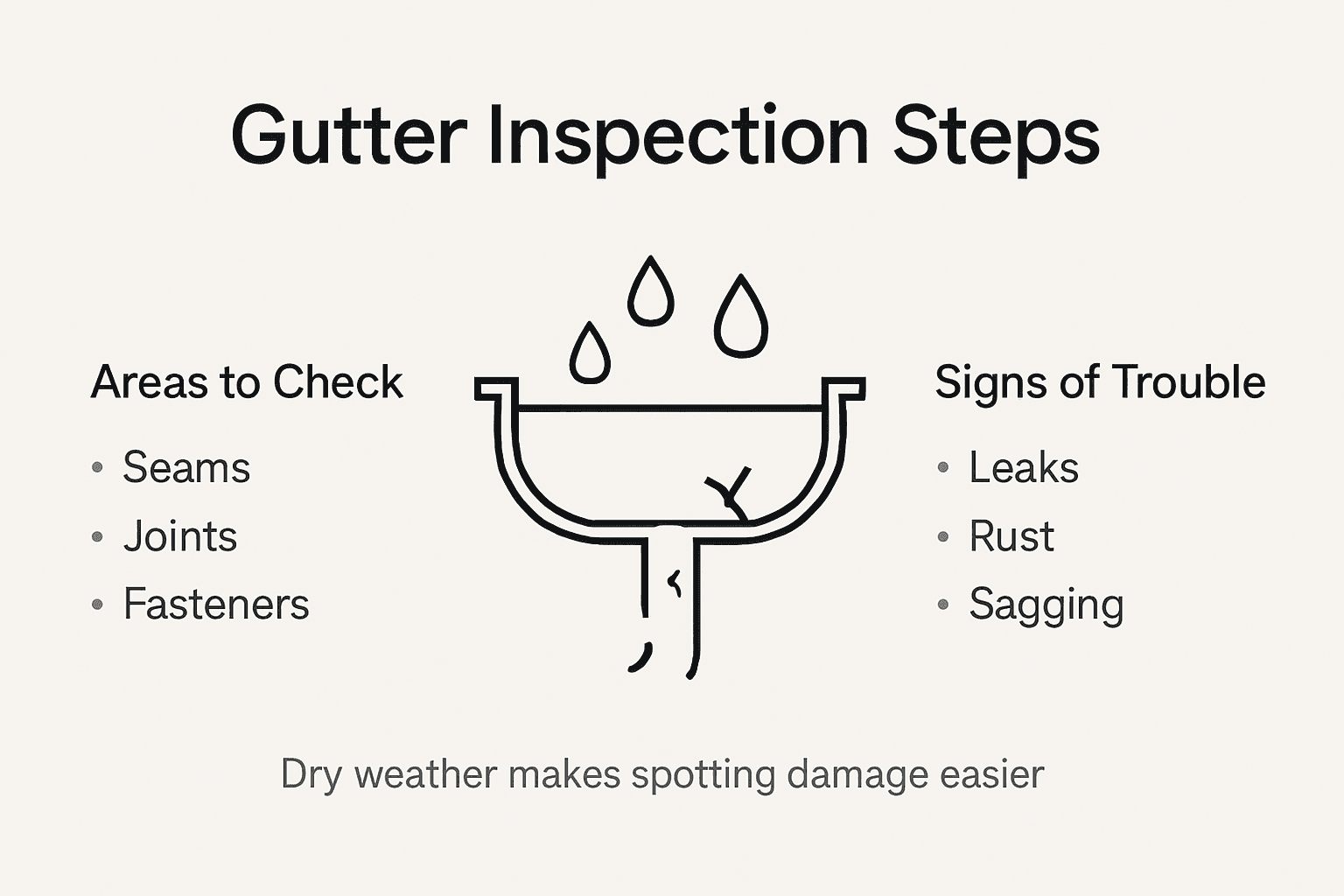
Step 4: Inspect for leaks or damage
After cleaning your gutters, a thorough inspection is crucial to catch potential issues before they become expensive repairs. Professional home inspection guidelines recommend a comprehensive visual assessment of your entire gutter system, focusing on identifying signs of wear, damage, and potential water infiltration points.
Historical preservation experts emphasize the importance of checking for specific structural problems that can compromise your gutter system. Look closely at gutter joints, checking for separation, worn sealant, or areas where fasteners have loosened. Pay special attention to spots where gutters connect to the roofline and watch for signs of rust, corrosion, or small holes that could indicate ongoing deterioration. Florida’s intense rainfall and humidity make these inspections particularly critical for preventing water damage to your home’s foundation and exterior walls.
During your inspection, use a bright flashlight to illuminate dark corners and examine seams carefully. Look for water stains on exterior walls, which can signal hidden leaks, and check that gutter slopes remain consistent to ensure proper water drainage. Note any areas that seem misaligned or show signs of sagging, as these could interrupt water flow and cause potential problems during heavy storms.
This table highlights key inspection points for gutter maintenance in humid climates:
| Inspection Focus | What to Look For | Why It Matters |
|---|---|---|
| Gutter Joints | Loose seals, separation | Prevents leaks and overflow |
| Fasteners | Rust, missing screws | Maintains gutter stability |
| Roofline Connections | Signs of corrosion | Protects home foundation |
| Slope & Alignment | Sagging, inconsistent flow | Ensures proper drainage |
Pro tip: Conduct your gutter inspection on a sunny day when surfaces are dry to make spotting subtle damage or wear much easier.
Step 5: Install or secure gutter guards
Installing gutter guards represents a critical step in protecting your home from potential water damage and reducing future maintenance requirements. Fire safety experts recommend selecting guards that effectively reduce debris accumulation and enhance gutter performance particularly in regions like Florida with frequent storms and challenging environmental conditions.
Industry associations suggest carefully matching gutter guards to your specific gutter profile and following manufacturer installation guidelines precisely. Begin by measuring your existing gutters and selecting guards that match their width and shape. Most guards can be installed using clips or screws that attach directly to the gutter edges. Work systematically along the gutter length, ensuring each guard section is securely fastened and aligned correctly to prevent gaps where debris might accumulate. Pay special attention to corners and joints where improper installation could compromise overall gutter guard effectiveness.
After installation, perform a careful visual inspection to confirm all guards are level, tightly secured, and positioned to allow water flow while blocking leaves and other potential debris. In Florida’s challenging climate, well installed gutter guards can significantly reduce the frequency of gutter maintenance and protect your home from water related damage.
Here’s a summary comparing common gutter guard types used in Florida:
| Gutter Guard Type | Advantages | Potential Drawbacks | Suitability for Florida |
|---|---|---|---|
| Mesh Screens | Blocks leaves and small debris | May clog with fine particles | Good for frequent storms |
| Foam Inserts | Easy to install, lightweight | Can deteriorate in heat | Moderate, may degrade quickly |
| Bottle Brush | Allows water flow, catches debris | Can shift under heavy rain | Effective for heavy rainfall |
| Reverse Curve | Directs water efficiently | May require professional fit | Excellent against heavy runoff |
Pro tip: Consider purchasing guards with UV resistant materials to withstand Florida’s intense sunlight and prevent premature degradation.
Protect Your Florida Home with Expert Gutter Solutions
Maintaining rain gutters in Florida is essential to prevent costly water damage caused by heavy rainfall and debris buildup. If you are feeling overwhelmed by gutter cleaning, inspecting for leaks, or securing gutter guards, you are not alone. Handling these tasks safely while ensuring your gutters perform correctly can be a challenge. Larry’s Gutters understands these concerns and offers custom-fit, durable solutions tailored to Florida’s climate, including seamless gutter installation and professional gutter guard services designed to minimize frequent maintenance.

Don’t wait until minor gutter issues lead to serious problems. Benefit from our expertise to secure your home against water damage today. Visit Larry’s Gutters to learn about our seamless gutter installation and gutter guard installation services. Contact us now for a free quote and keep your gutters clean, efficient, and ready for Florida storms.
Frequently Asked Questions
What tools do I need for rain gutter maintenance?
You need a sturdy extension ladder, work gloves, safety glasses, a garden trowel or gutter scoop, a bucket for debris, and a garden hose. Collect these items before starting your maintenance to ensure safety and efficiency during the task.
How often should I clean my gutters in Florida?
You should aim to clean your gutters at least twice a year, especially during the heavy rain season. Consider doing this in early spring and late fall to keep them functioning properly and reduce the risk of water damage.
What should I look for when inspecting my gutters?
Inspect your gutters for leaks, rust, separation at joints, and any signs of sagging. Check these areas regularly to identify any potential problems early and take action before they lead to costly repairs.
How do I install gutter guards?
To install gutter guards, measure your existing gutters and choose compatible guards. Secure them using clips or screws along the length of the gutter, ensuring a tight fit to prevent debris accumulation while allowing water to flow freely.
Why is flushing gutters important after cleaning?
Flushing gutters with water helps confirm clear drainage and reveals any remaining blockages. Do this after cleaning to ensure that water flows smoothly through the entire system, preventing future issues during heavy rain.
What are the benefits of using gutter guards?
Gutter guards reduce the frequency of debris buildup, making future maintenance easier and protecting your home from water damage. Invest in quality guards to save time and effort in maintaining your gutter system, especially in heavy rainfall conditions.
